
Payment security worries every buyer who wires money to a China sourcing agent for the first time. Our Shenzhen sourcing team hears the same fear constantly: what if the money vanishes?
To ensure payment security with a China sourcing agent, verify the company's business license and bank account name, pay only registered company accounts, use Trade Assurance or escrow for first orders, and structure payments as a 30% deposit with 70% released after inspection.
That short answer hides a lot of detail. The work happens before any money moves. In this guide, I will walk through the safest payment methods, the verification steps I run for every client, how milestone payments work, and the red flags that should freeze a transfer instantly.
What Payment Methods Are Safest When Working With a China Sourcing Agent?
Last month a US brand founder messaged our sourcing desk: "Allen, should I just wire the full amount?" I said no, and here is why.
The safest payment methods when working with a China sourcing agent are Alibaba Trade Assurance for first orders, telegraphic transfer to a verified company account with a 30/70 split for repeat orders, and a Letter of Credit for large orders. Avoid Western Union, MoneyGram, cash, and cryptocurrency.

No single method fits every deal. The right choice depends on three things: how well you know the receiving party, how big the order is, and whether a protected payment path exists. Here is how I compare the main options for our clients.
Comparing the Main Payment Rails
| Method | Best For | Protection Level | Main Weakness |
|---|---|---|---|
| Alibaba Trade Assurance | First orders, new relationships | High — funds released only when order conditions are met | Protection is voided if any part of the payment moves off-platform |
| Telegraphic Transfer (T/T) | Verified, established relationships | Medium — safe with a 30/70 split and a confirmed beneficiary | Irreversible once the wire clears |
| Letter of Credit | Large orders | High — bank-backed document control | Complex, slower, and more expensive |
| Independent Escrow Services 1 | Mid-size deals outside platforms | High — neutral third party holds funds | Fees, and both sides must agree to terms |
| Western Union / MoneyGram / crypto | Never for supplier payments | Very low | Untraceable, with almost no recourse |
Why We Route First Orders Through a Protected Platform
In my own practice, I tell first-time clients to run their first transaction through Alibaba's international platform 2 whenever the supplier supports it. Third-party payment platforms hold the money until agreed conditions are met, which removes the leap of faith. Some buyers push back and say a plain wire to a verified company account is fine. That is true — but only after the relationship is proven. On a first order, you have no track record to lean on, so the payment rail itself has to carry the trust. One more emerging option worth watching: Digital RMB (e-CNY) settlements create a government-backed, tamper-proof audit trail, which makes intermediary fund diversion far harder. It is not yet standard for cross-border SME deals, but the direction is clear.
How Do I Verify a Sourcing Agent's Legitimacy Before Sending Payment?
During a factory audit in Dongguan, our team once pulled a supplier's GSXT record and discovered the "factory" was a one-person trading shop.
Verify a sourcing agent's legitimacy by checking its business license and 18-digit Unified Social Credit Code on China's GSXT registry, screening the legal representative against the Supreme People's Court dishonest debtor blacklist, confirming the bank beneficiary matches the licensed company name, and requesting references and shipment records.
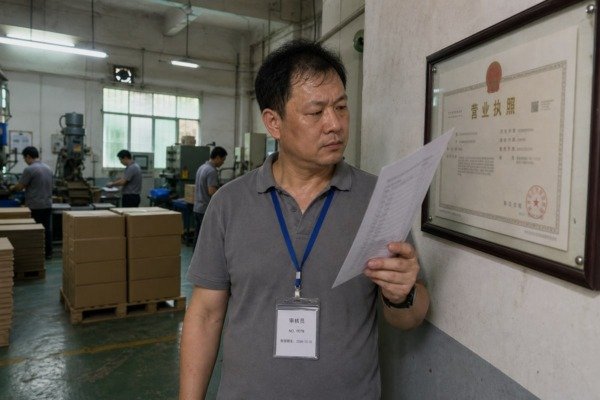
Here is the core belief that shapes how I work: securing your funds is not mainly about the transaction itself. It is about everything you prepare before the transaction. The single most important preparation is confirming that the party you pay is a real factory or a properly registered company — not a simple middleman or a SOHO seller. Why does this matter so much? Because a one-person operator has almost nothing to lose by breaking the deal. A registered company with assets, staff, and a public record faces a much higher cost for walking away. That asymmetry drives everything in supplier due diligence.
A Seven-Step Supplier Due Diligence Process
- Request the business license. Every legal Chinese company has one, and refusal is an immediate stop signal.
- Check the 18-digit Unified Social Credit Code on the National Enterprise Credit Information Publicity System (GSXT). Confirm the company is active and its business scope covers trading or manufacturing.
- Confirm the entity type. A factory or registered trading company carries real breach costs. A SOHO middleman does not.
- Screen the legal representative on the Supreme People's Court "Lao Lai" dishonest debtor blacklist. A blacklisted representative is restricted from normal corporate financial activity.
- Match every name. The business license, procurement contract, proforma invoice, and bank beneficiary must show the exact same legal entity.
- Verify the finance chop. In Chinese commercial disputes, the corporate seal carries real legal weight; a signature alone carries very little. Payment instructions should bear the official chop.
- Confirm details out of band. Before the first transfer, verify bank details by video call or a known phone number — never by replying to the same email thread.
I run this process for every new supplier our team engages. It takes a day or two. Losing a deposit takes one click.
Should I Use Escrow or Milestone Payments to Protect My Funds?
Every client project forces us to weigh speed against control. Escrow adds a few days; skipping it can cost the whole deposit. I choose control almost every time.
Yes. Use escrow or milestone payments whenever possible. Hold funds through Trade Assurance or an escrow service on first orders, pay a 30% deposit before production, and release the 70% balance only after a passed quality control inspection or verified shipping documents like the bill of lading.

Milestone payments are the simplest form of leverage a buyer has. The logic is plain: never expose 100% of the order value before you have proof of production and quality. The 30/70 structure is the standard I recommend, and it appears again and again across the industry for good reason — it keeps your maximum loss capped at the deposit while giving the factory enough working capital to start.
A Standard Milestone Schedule
| Milestone | Payment | Release Trigger |
|---|---|---|
| Order confirmation | 30% deposit | Signed procurement contract with finance chop, verified bank details |
| Production complete | 70% balance | Passed third-party quality control inspection 3 at the factory |
| Alternative final trigger | 70% balance | Copy of the bill of lading 4 proving goods have shipped |
For higher-risk or highly customized orders, I sometimes split further — a smaller deposit, a payment after inspection, and a final slice after the bill of lading is issued. The principle stays the same: money follows proof.
Two Levers Most Buyers Never Pull
First, use your agent to negotiate the deposit down. This is one of the practical values of a good sourcing agent. My team routinely pushes suppliers to accept 30% — and sometimes lower — instead of the 50% they open with. A smaller deposit directly shrinks your worst-case loss. Second, for ongoing relationships, consider a Tripartite Payment Agreement between you, the agent, and the factory. It legally defines the agent as a fiduciary handling your funds, so the agent can never claim ownership of money passing through. Combine that with independent escrow services when platform protection is unavailable, and require a third-party quality control inspection before any balance release. The inspection verifies the goods exist, match your specification, and meet the agreed quantity — before your leverage disappears.
What Red Flags Signal a Payment Scam With a Sourcing Agent?
One hard lesson from years of coordinating supplier payments for our clients: scammers rarely look like scammers. They look helpful right up until the wire clears.
Major red flags include requests to pay a personal account, last-minute bank detail changes sent by email, pressure to skip inspection or pay immediately, demands for 100% upfront payment, mismatched company names across documents, and requests to move payment outside a protected platform.
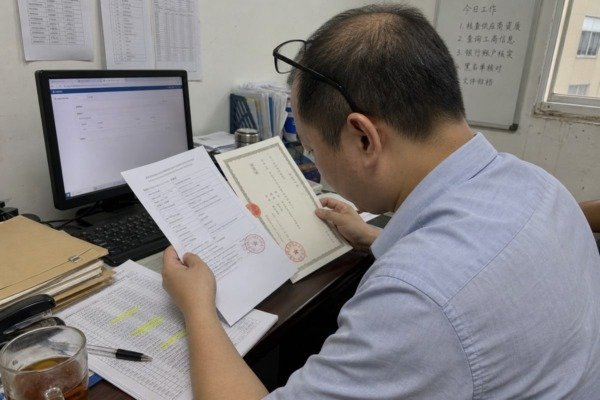
Fraud prevention is mostly pattern recognition. The schemes change, but the tells stay remarkably consistent. I keep a simple rule for our clients: any one of these flags pauses the payment, and two of them together kills the deal until everything is re-verified from scratch.
Red Flags and the Correct Response
| Red Flag | Why It Matters | What to Do |
|---|---|---|
| Personal bank account requested | Classic fund diversion; no corporate accountability | Stop. Pay verified company accounts only |
| Bank details changed via email | Signature of email-compromise fraud | Verify by video call or a known phone number before sending anything |
| 100% upfront demanded on a first order | Total exposure with zero proof | Insist on 30/70 or walk away |
| Pressure to skip inspection or pay "today" | Urgency is manufactured to bypass your controls | Hold the balance until inspection passes |
| Different names on contract, invoice, and export papers | Entity mismatch hides who you are really paying | Demand a written explanation and re-run registry checks |
| Request to settle off-platform after agreeing to Trade Assurance | Voids your protection entirely | Keep every dollar inside the protected channel |
The One Habit That Beats Most Scams
Verify independently, every time. Do not trust a confirmation that arrives in the same email thread as the request. Email accounts get hijacked mid-negotiation, and the fake bank details look identical to the real ones — same logo, same signature block, same tone. A two-minute video call to a face you know, or a call to a number you saved weeks earlier, defeats this attack completely. And document everything: keep the chopped invoices, the payment instructions, the inspection reports, and the bill of lading in one audit trail. If a dispute ever reaches a platform mediator or a court, that paper trail is your case.
Conclusion
Payment security is built before money moves: verify the entity, match every document, pay company accounts only, and release funds in stages. Preparation, not trust, protects your capital.
Footnotes
1. Official U.S. government resource explaining escrow and other secure payment methods for international trade. ↩︎
2. Official B2B marketplace providing Trade Assurance to secure international payments. ↩︎
3. Global authority for quality standards, ensuring inspections meet international compliance requirements. ↩︎
4. The Federal Maritime Commission provides regulatory oversight for the documentation used in international shipping. ↩︎