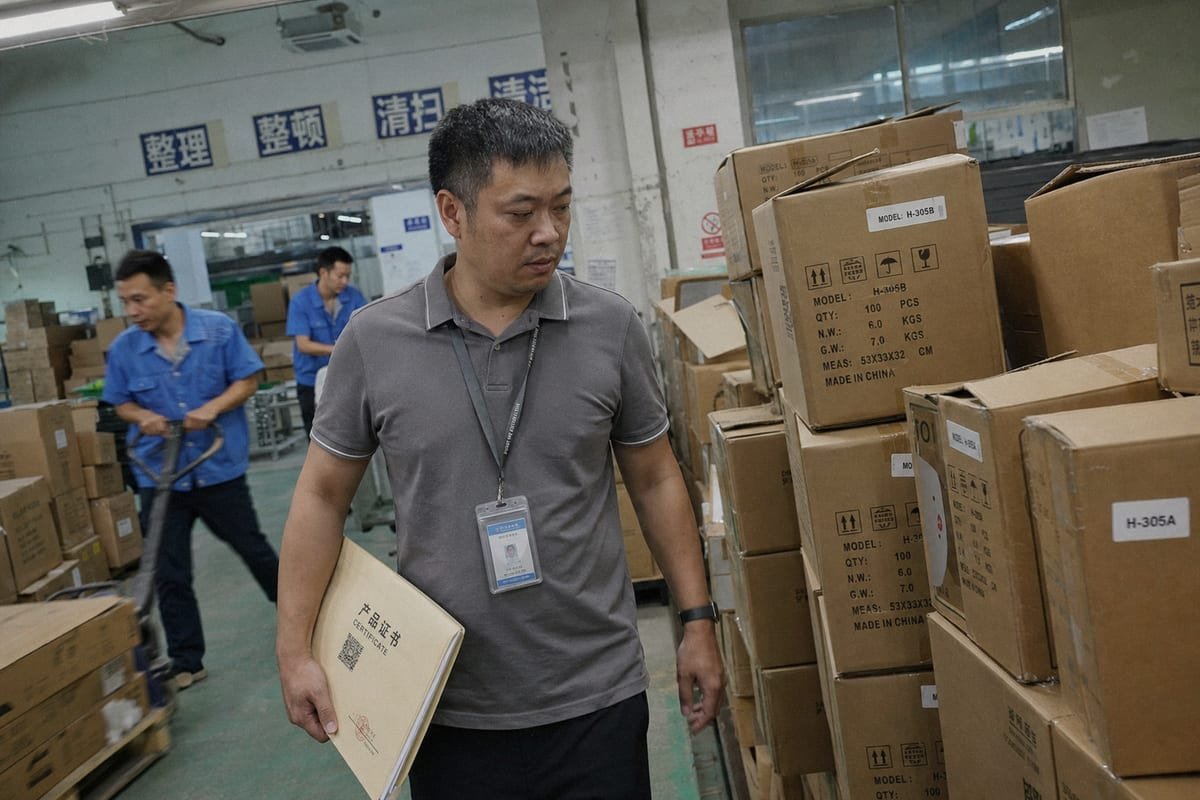
A China sourcing agent stands between your brand and a costly recall. Our Shenzhen team has seen one fake certificate destroy a client's entire EU launch plan overnight.
A China sourcing agent ensures products meet safety standards by verifying supplier certifications with issuing labs, auditing factories on-site, coordinating third-party lab testing, deploying QC engineers at production milestones, and running AQL-based pre-shipment inspections before goods ever leave China.
That is the short answer. Below, I will walk you through each step in detail, based on how we actually run these checks for our clients every week.
What Certifications and Compliance Checks Should I Expect From a Sourcing Agent?
A buyer from France once sent me a supplier's CE certificate and asked one simple question: "Is this real?" It was expired. That question shaped how we vet every factory since.
Expect a sourcing agent to verify CE, RoHS, REACH, FCC, FDA, and ISO 9001 documents directly with the issuing laboratory, check business licenses and export credentials, review technical files, and confirm each certificate covers your exact product model, not just a similar one.
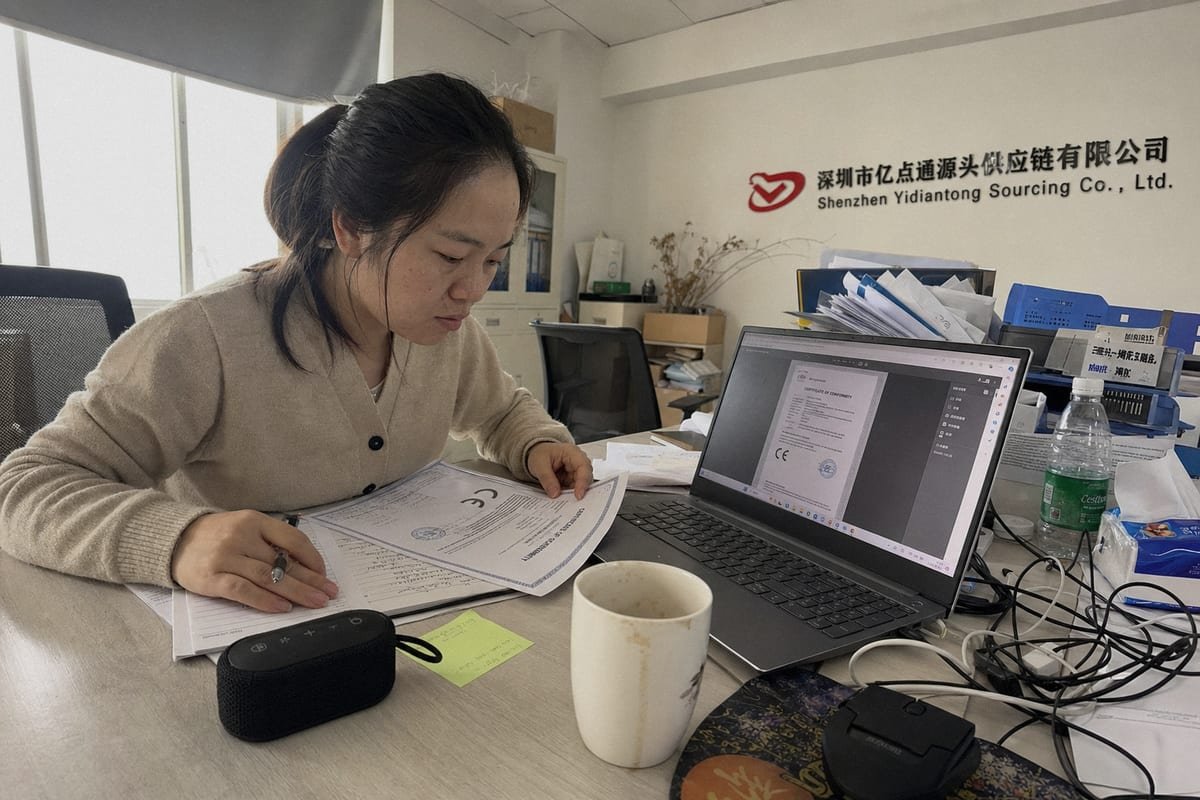
Product compliance certifications are the foundation of safe importing. But a certificate is only useful if it is genuine, current, and tied to the exact product you are buying. Many buyers do not realize that suppliers sometimes recycle certificates from older models or even borrow them from other factories. That is why we never accept a PDF at face value. We contact the issuing lab, cross-reference the certificate number against global accreditation databases, and confirm the scope of the test report.
Our clients in the EU are especially strict about this, and for good reason. European customs and market surveillance authorities actively check CE and RoHS standards, REACH regulation 1 compliance, and product-specific directives. A missing or invalid document can mean seized goods at the port.
Key Certifications by Target Market
| Market | Core Certifications | What They Cover |
|---|---|---|
| European Union | CE, RoHS, REACH, EN71 | Electrical safety, restricted substances, chemical safety, toy safety |
| United States | FCC, UL, FDA, CPC, ASTM | Electronics, fire/electrical safety, food contact, children's products |
| Australia/UK | RCM, UKCA | Electrical and radio equipment compliance |
| China Domestic | CCC | Compulsory certification for products sold inside China |
Checks Beyond the Paperwork
We also review whether ASTM international standards 2 apply to your category, whether labeling meets destination-market language rules, and whether the supplier maintains a proper technical file. For sensitive categories like beauty products, we go further. We often test the products ourselves, hands-on, to judge whether they are safe, functional, and pleasant to use. Our EU clients value this because it protects their brand before the market ever sees the product.
How Do Sourcing Agents Conduct Factory Audits to Verify Safety Compliance?
Last spring, our team spent two days inside a smart home device factory in Dongguan before recommending it to a US client. The showroom looked perfect. The raw material warehouse told a different story.
Sourcing agents conduct factory audits by visiting the facility in person, reviewing quality management systems, inspecting machinery and raw material storage, interviewing production staff, checking subcontracting practices, and compiling factory audit reports that score the supplier against international safety benchmarks.
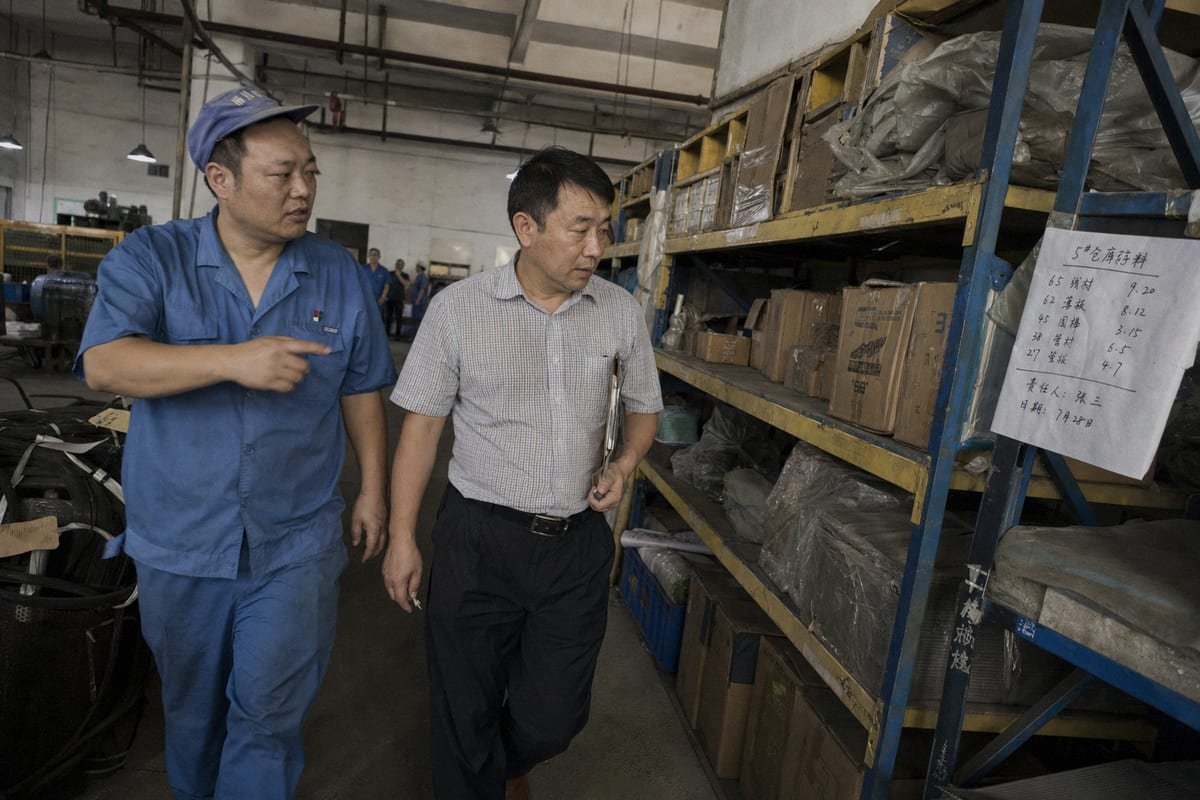
A factory audit is where paperwork meets reality. A supplier can hold ISO 9001 3 on paper yet run a chaotic floor. So we go and look. Being based in Shenzhen means we can reach most factories in Guangdong within hours, and partner regions within a day or two. That proximity matters. It lets us audit before contracts are signed, not after problems appear.
What We Actually Examine On-Site
Our audit checklist covers several layers:
- Legal identity. We match the business license, export license, and factory address. Trading companies posing as factories are still common.
- Quality systems. We check whether ISO procedures are practiced daily or just framed on the wall. We look at incoming material logs, calibration records, and defect tracking.
- Production capability. We assess machine age, maintenance records, and whether tolerances match your product's safety requirements.
- Raw material control. We inspect how materials are stored, labeled, and traced. Contaminated or substituted materials are a leading cause of failed lab tests.
- Workforce and training. Trained operators produce consistent, safe products. High turnover is a red flag.
- Subcontracting risk. We ask hard questions about outsourced processes. If a factory subcontracts to an unaudited facility, your tested sample may not match your shipped goods.
We document everything in factory audit reports 4 with photos and scores. When travel is impractical, we run live video walkthroughs first, then follow with physical visits for shortlisted suppliers. Supply chain transparency starts here, and it protects everything that comes after.
What Quality Inspection Processes Confirm My Products Meet International Safety Standards?
There is a trade-off we weigh on every project: inspect more and add days to the timeline, or inspect less and accept risk. For safety-critical products, we always choose more inspection, and we schedule around it.
Quality inspections confirm safety compliance through a multi-tiered process: pre-production material checks, in-process inspections at roughly 20%, 50%, and 80% completion, third-party lab testing of sealed production samples, and a final AQL-based pre-shipment inspection against your specification sheet.
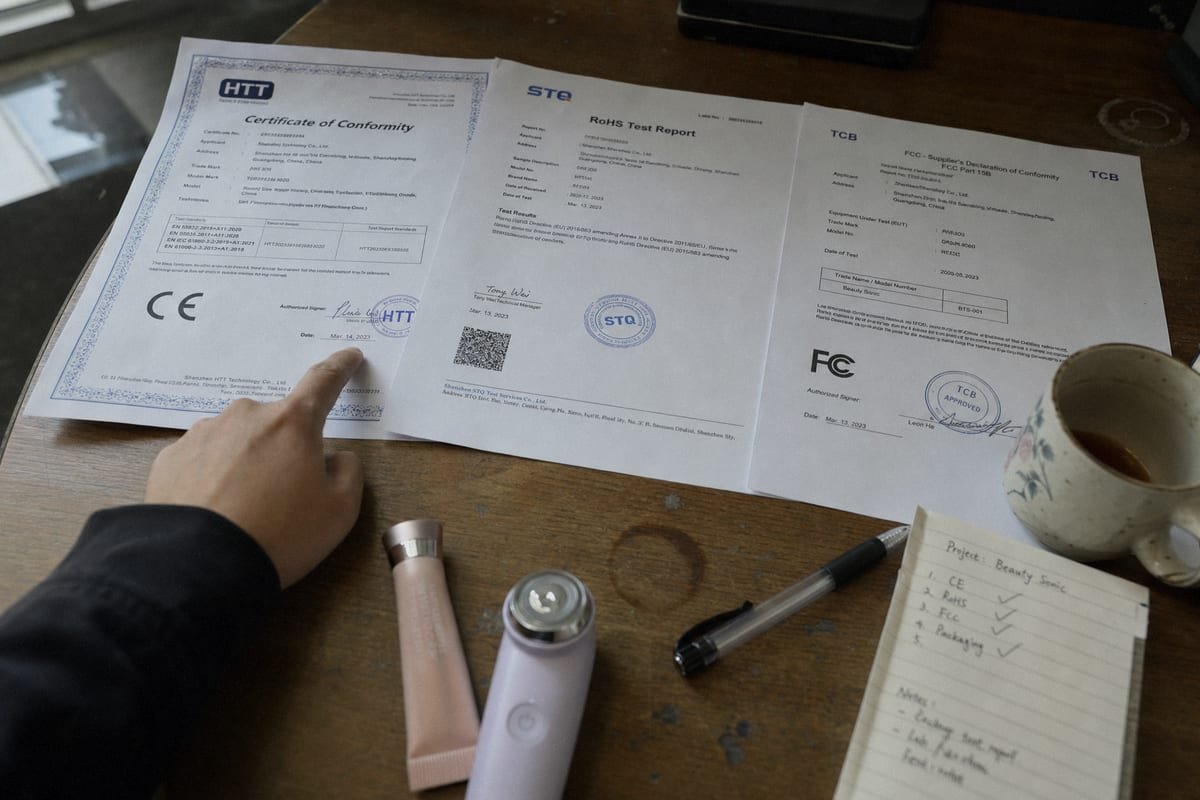
Quality control inspections are not one event. They are a sequence, and each stage catches problems the others cannot. Most buyers only know about the final check at the end. In our experience sourcing consumer electronics 5 and outdoor gear, the final check is actually the least powerful stage, because by then the goods are already made. The earlier you inspect, the cheaper the fix.
The Multi-Tiered Inspection Strategy
| Stage | Timing | What It Catches |
|---|---|---|
| Pre-production check | Before production starts | Wrong or non-compliant raw materials, incorrect components |
| In-process inspection | At 20%, 50%, 80% completion | Assembly errors, dimensional drift, process shortcuts |
| Lab testing | Mid-production, sealed samples | Restricted substances, electrical safety failures, chemical risks |
| Pre-shipment inspection | 100% produced, 80%+ packed | Cosmetic defects, packaging errors, labeling mistakes |
How AQL Sampling Works
AQL stands for Acceptable Quality Limit. It is a statistical sampling method. Instead of checking every unit, inspectors pull a defined random sample 6 and count defects against agreed thresholds for critical, major, and minor issues. For safety-related defects, we set the critical threshold at zero. One critical defect fails the batch.
Third-Party Lab Testing Done Right
We coordinate third-party lab testing 7 with accredited laboratories whose reports are accepted in your destination market. The key detail is sample integrity. We seal and sign samples on the factory floor ourselves, so the lab tests real production units, not hand-picked ones. Everything is measured against a bilingual specification sheet we draft with you upfront, defining material grades, safety benchmarks, and performance requirements in both English and Chinese. That single document removes most "misunderstandings" before they happen.
How Can I Ensure My Sourcing Agent Catches Safety Issues Before Shipment?
A startup founder once told me her previous agent only sent photos of finished cartons and called it QC. Two months later, a US retailer rejected her whole batch over labeling. That conversation still guides how we report to clients.
Ensure your agent catches safety issues by requiring a written inspection plan, milestone reports with photos, sealed-sample lab testing, a formal pre-shipment inspection with AQL results, contract clauses tying payment to passed inspections, and clear accountability for post-shipment compliance problems.
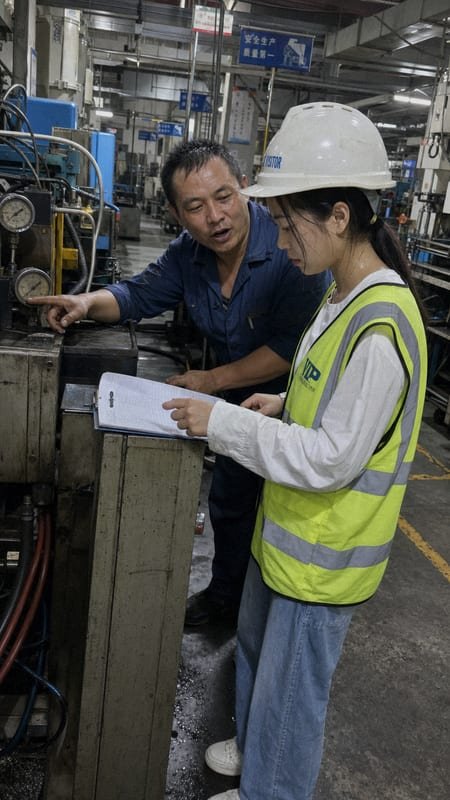
The honest truth is that not all agents work the same way. Some are simple intermediaries who forward messages and take a commission. Others act as your local compliance arm. You can tell the difference by what you demand upfront and what they agree to in writing.
What You Should Require Before Production Starts
Ask your agent for these items, in this order:
- An Inspection Test Plan. A written document defining what gets checked, when, by whom, and against which acceptance thresholds.
- Manufacturing agreement clauses that link payments to passed inspections and specify penalties for non-conforming goods.
- Milestone reporting. Photo and video reports at each production checkpoint, not just at the end.
- Sealed-sample protocol. Confirmation that lab test samples are randomly pulled and sealed on-site.
- A pre-shipment inspection report with AQL data, before you release the final payment.
Red Flags Versus Good Practice
| Red Flag | Good Practice |
|---|---|
| Agent only sends carton photos | Agent sends detailed defect data with images at each milestone |
| "The factory says it passed" | Independent inspection report with sampling numbers |
| Certificates accepted as PDFs | Certificates verified with issuing bodies |
| No accountability after shipment | Written responsibility for compliance issues found post-delivery |
On our projects, the pre-shipment inspection is a gate, not a formality. If a batch fails, we hold the shipment, negotiate rework with the factory, and re-inspect. Because our team also manages warehousing and logistics coordination, nothing ships until the paperwork and the product both pass. For our clients selling in the EU and US, we compile the full document pack — test reports, factory audit reports, inspection results — so customs clearance and retail listing go smoothly.
Conclusion
Safety compliance is not one check. It is verified certificates, real factory audits, milestone quality control inspections, sealed-sample lab testing, and a strict pre-shipment gate — managed end to end by your sourcing agent.
Footnotes
1. Authoritative EU agency site explaining the chemical safety regulation mentioned in the article. ↩︎
2. Official site for the international standards organization that develops technical safety specifications. ↩︎
3. Official ISO page for the quality management standard used to vet supplier systems. ↩︎
4. Wikipedia page explaining the purpose and process of quality audits in manufacturing and supply chains. ↩︎
5. Wikipedia overview of the consumer electronics industry, a key sector requiring strict safety compliance. ↩︎
6. Wikipedia entry explaining the statistical basis for selecting units during quality inspections. ↩︎
7. Authoritative US government guidance on conformity assessment and third-party testing requirements for product compliance. ↩︎