Most buyers are not shopping for one chair. They are assembling a range: seating, case goods, lighting, rugs, hardware and smart-home devices, often across several industrial belts. No single factory makes that range, and the hard part is not finding a factory for a piece. It is building a program — one consistent language for specification, finish, compliance and delivery across independent suppliers — and having the operational depth to keep the range coherent after it lands.
Start with the distinction that matters.
A furniture factory already manages its own frame, upholstery, finishing and packing suppliers. That coordination is its job, and it does not need a buying office to do it.
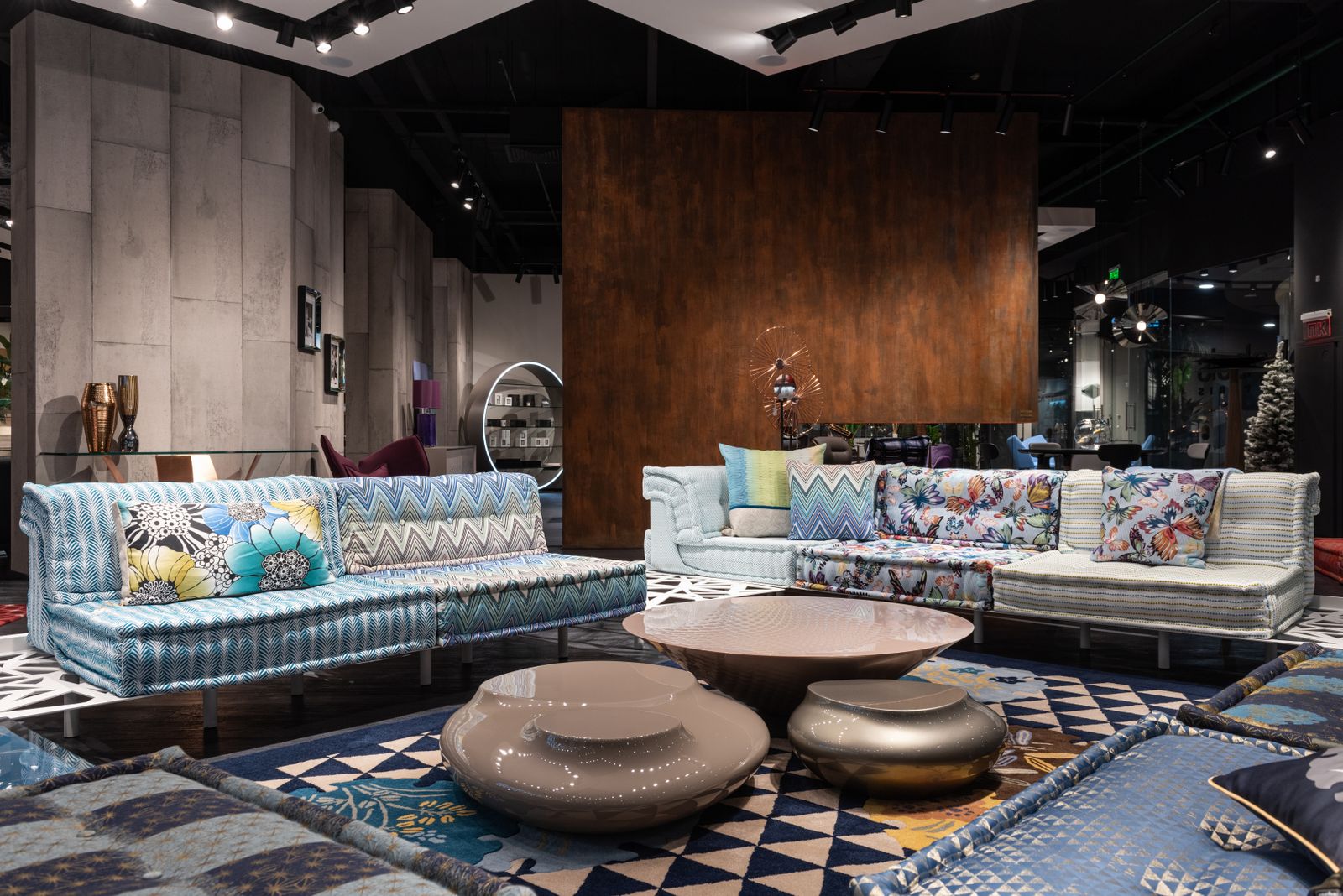
Our work begins where one factory's responsibility ends. It starts when the brief spans separate factories and separate categories, each with its own idea of what "walnut", "brushed brass" or "warm grey" means — and the buyer needs them to arrive as one coherent set.
Two shapes this takes
Both are range problems. Neither is a single factory's upstream or downstream. That is the difference, and it is worth being precise about it.
The production map is public and well documented. Two towns in Foshan's Shunde district set the pace: one is the materials-and-craft core where designs and finishing get done, the other runs the trade halls where a day of showroom visits covers more factories than a week of cold emails. In Dongguan, the exhibition town carries the showrooms, and the neighbouring town is the export-manufacturing core with the deepest US-order experience. Shenzhen handles high-end custom work.
Outside Guangdong, specialists take over by sub-category: soft seating in Zhejiang, solid wood in Shandong and Jiangxi, classical European styles near Taizhou, custom work in Hebei.
The point for a range buyer is not that one town is "best". It is that a program pulls from several of them at once — upholstery from one cluster, case goods from another, lighting and smart-home hardware from specialist bases elsewhere. A category that looks like a line item on a purchase order is often a different belt, a different minimum and a different set of documents.
This is the job we actually do. For each category in the program we verify: is this a factory that makes the part, or a company registered to trade it; what is genuinely on the floor; does it have real export experience to the destination market. Then we hold every supplier to one written standard — the same definition of finish, the same tolerance, the same compliance field, the same packing instruction.
One standard is what turns a list of categories into a program. The alternative is a range that looks consistent in a folder and arrives as ten different interpretations.
The questions that matter change by construction type:
For upholstered pieces — sofas, beds, lounge chairs
For solid-wood pieces
For every factory in the program, regardless of type
In a multi-category program the triggers stack, because they attach to categories, not to the order as a whole. The ones that catch buyers out:
| Trigger | Requirement | Note |
|---|---|---|
| Any MDF, particleboard or hardwood plywood — or a product containing them | TSCA Title VI (40 CFR 770): EPA-recognized certification body, labelling, records, import filing | A factory's own "E0" grade is not the same thing as TSCA compliance |
| Upholstered furniture | 16 CFR 1640: smoulder test per CA TB 117-2013 + permanent label | Label wording is specified; missing labels stop sales, not just imports |
| Wood furniture (HTS 94, wood/plant material) | Lacey Act declaration: species Latin name, harvest country, quantity, value | Electronic filing through ACE since January 2026 |
| Clothing-storage cabinets | STURDY Act / ASTM F2057-23 stability | A dedicated standard, not a general furniture rule |
| Children's furniture | CPSIA | Separate track from adult furniture |
| Solid-wood packaging | ISPM 15 heat-treatment mark | Applies to crates and pallets, easy to forget |
| California sales | Prop 65 warnings; flammability disclosure | State-level, but the biggest retail channel sits there |
Two of these are sourcing questions as much as legal ones. TSCA documentation decides whether a panel-goods factory can serve the US market at all — ask for the certificate body's name, not the marketing grade. And the Lacey Act declaration means the species question belongs in the specification sheet before sampling, not in the customs file after production. In a program, this is checked category by category, so a gap in one line does not hold up the whole shipment.
Range cost is decided in the factory; range margin is usually decided at consolidation. When a program pulls from several belts, the packing decision multiplies across suppliers:
We do not quote freight rates on this page. We make sure the specification decides packing deliberately across every supplier, so the freight quote is calculated on a volume you chose, not one you discovered.
No. We are a buying office. The suppliers make the goods; we hold every one of them to the same written standard and check the work at each handover.
Yes. That is the program described above: several categories from several factories, held to one written standard and consolidated as one set. If you need a single product from a single factory, going direct is the shorter path.
Because no factory makes every category. A seating factory makes seating; lighting, rugs, hardware and smart-home devices come from separate specialists, often in separate belts. The value is in holding them to one standard, not in pretending one factory covers the range.
For catalogue programs, the work continues: confirming stock or producibility before a product goes live, preparing listing data and content packs from the factory's original material, and keeping the range supplied as it sells. That operational layer is part of the program.
One written standard is issued to every supplier — the same finish definition, tolerance, compliance field and packing instruction — and the goods are checked against it before consolidation.
E0 is a marketing grade, not the US rule. Panel goods and products containing panels need TSCA Title VI documentation from an EPA-recognized certification body. We ask for the certificate, not the grade.
For wood furniture it means the species Latin name, harvest country, quantity and value are declared at import. That is why the species question is asked at sourcing, not discovered at customs.
Yes — by design, not by negotiation. Knock-down construction, vacuum-packed cushions and split packing are written into the standard once for the whole program, so the freight quote is calculated on a volume you chose.
The factory makes them. We manage the rounds, check every sample against the same written standard, and write down what is still open.
The original files as each factory issued them, a shortlist note per factory, a dated visit record with photographs, our own conclusion kept separately labelled, and the one written standard for the program.
Tell us the range you are building, the destination market and the quantities. We will state the scope, which documents the destination market will require, and the fee — before any work starts.
Ask About A Furniture Program