
Time zone and language barriers with a China sourcing agent 1 can make or break your launch. From our Shenzhen office, I've seen one misread spec erase weeks of production time.
Overcome time zone and language barriers by working with a bilingual China sourcing agent who overlaps your working hours, confirms every agreement in writing, replaces long text with visual specifications, and handles factory-side clarification locally—turning a 12-hour lag into a follow-the-sun workflow.
These barriers are real, but they are system problems, not luck problems. Below, I break down the exact routines, tools, and hiring criteria that keep our clients' projects moving around the clock.
How can I communicate effectively with my China sourcing agent despite the time difference?
A client in Texas once asked me to join calls at 3 a.m. Shenzhen time. I declined—and our project actually ran faster because of how we restructured communication.
Communicate effectively by scheduling calls in the two-to-three-hour golden window when your morning overlaps China's evening, using a follow-the-sun handoff where your end-of-day task list becomes the agent's morning action plan, and confirming decisions asynchronously in writing.

The time gap between the U.S. and China can easily exceed 12 hours. That number sounds abstract until you feel it. Every unanswered question costs a full business day. A sample revision that needs three rounds of clarification loses three days. Multiply that across sampling, tooling, and inspections, and your production lead times quietly stretch by weeks.
Find Your Golden Hour Window
The fix starts with one habit: schedule critical calls inside the narrow window when both business days 2 overlap. For most Western buyers, that means your morning meets China's evening.
| Buyer Location | Time Difference with China | Best Overlap Window (Your Time) | What to Schedule There |
|---|---|---|---|
| U.S. East Coast | 12–13 hours | 7–10 a.m. | Approvals, live decision calls |
| U.S. West Coast | 15–16 hours | 5–8 p.m. | End-of-day handoffs |
| UK / France | 7–8 hours | 8–11 a.m. | Design reviews, negotiations |
| Australia (East) | 2–3 hours | Most of the day | Real-time collaboration |
Run a Follow-the-Sun Handoff
Outside that window, go asynchronous. Your end-of-day task list becomes your agent's start-of-day action plan. While you sleep, we chase factories, check samples, and coordinate logistics. You wake up to results, not questions. Done well, this keeps a project moving nearly 24 hours a day.
One honest note from my own practice: I refuse meetings that require me to stay up late. If I break my sleep routine, my health suffers, and then my clients suffer. Time zone fit between an agent and a buyer is partly a matter of natural compatibility. Pick an agent whose routine genuinely overlaps yours, not one who promises 24/7 availability and burns out.
What tools or platforms should I use to bridge language gaps with my sourcing agent?
Clients meeting me face-to-face often assume I studied abroad. I didn't—my entire education happened in China. Yet online calls still lose signals that in-person meetings carry naturally.
Use WeChat or WhatsApp for daily real-time communication with built-in translation, project management software for task tracking, recorded video calls with AI-generated meeting summaries, and formal written documents to confirm every specification—layering casual speed with permanent records.
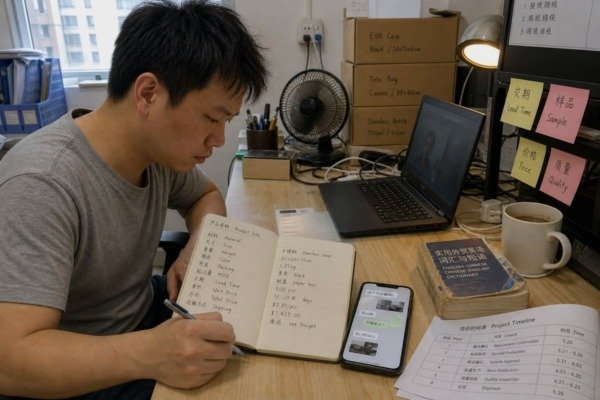
Language fluency alone does not close the gap. Video calls strip out body language, facial expression, and tone—the richer signals that face-to-face conversation delivers. That is why our team records every video meeting from start to finish, then uses AI to generate meeting minutes afterward. Both sides review the same summary. Misunderstandings surface within hours, not weeks later on a production line.
Layer Your Tool Stack
No single platform does everything. We recommend building deliberate layers.
| Layer | Tool Examples | Best For | Watch Out For |
|---|---|---|---|
| Daily chat | WeChat, WhatsApp | Quick updates, photos, instant questions | Informal agreements getting lost in the scroll |
| Translation | WeChat built-in tools, DeepL | Casual messages and updates | Contracts and compliance documents need professional Mandarin translation services |
| Project tracking | Trello, Asana, Notion | Milestones, sample status, lead times | Requires discipline from both sides |
| Video meetings | Zoom, Teams | Design reviews, dispute resolution | Always record; always issue an AI summary |
| Documentation | PDF confirmations, shared drives | Binding record of every decision | Must follow every verbal agreement, same day |
Match the Channel to the Client
Many guides tell you to centralize everything on WeChat because Chinese factories live there. That is true on the China side. But our U.S. clients—startup founders managing multiple supplier projects—usually prefer WhatsApp. A good agent adapts to your channel and translates across both ecosystems. You message once in your app; we handle the factory conversation in theirs. Real-time communication tools only work when both parties actually enjoy using them.
How do I ensure my product specifications and requirements aren't lost in translation?
One English word—flexible—once cost a client at our agency a full sample round. The factory read it as bendable; the client meant adjustable. Both were technically right.
Prevent translation loss by replacing long text with annotated photos, technical drawings, and 3D digital twins, writing specs in simplified English with absolute metrics, banning ambiguous words like flexible or standard, and requiring written confirmation of every change before production begins.
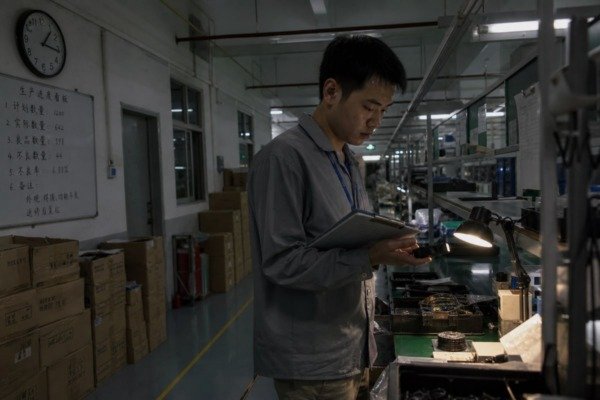
The core principle is simple: show rather than tell. Images bypass linguistic ambiguity entirely. When we develop consumer electronics 3 or outdoor gear with our clients, we push for annotated photos, dimensioned technical drawings, and 3D renders before any factory conversation starts. For complex geometry, aligning on a 3D digital twin before physical sampling begins eliminates most descriptive errors—and saves at least one revision cycle.
Write in Simplified English
Strip your specs of idioms, phrasal verbs, and complex sentences. Use short, bulleted directives. "The coating must not peel after 500 rub cycles" beats "we'd like a finish that holds up pretty well over time" every single time.
Apply Linguistic Redlining
We keep a forbidden word list—English terms that manufacturing conversations mistranslate constantly. Replace each one with an absolute metric.
| Banned Word | Why It Fails | Replace With |
|---|---|---|
| Flexible | Bendable? Adjustable? Tolerant? | Exact mechanism or tolerance range |
| Standard | Whose standard? | A named standard, e.g., FCC Part 15, EN 71 |
| Good quality | Unmeasurable | A defined AQL level for quality control inspections 4 |
| ASAP | No actual date | An exact calendar date |
| Similar to | Invites interpretation | Exact Pantone code or material grade |
Enforce the Written Confirmation Rule
Every verbal or chat-based agreement gets summarized in a formal email or PDF the same day. That confirmed spec then becomes the checklist for quality control inspections later. This is one of the cheapest risk mitigation strategies available—it costs ten minutes and prevents five-figure mistakes.
What should I look for in a sourcing agent to minimize communication delays across time zones?
Every buyer we onboard at GoSource weighs the same trade-off: pay agent fees now, or absorb the cost of delays and defects later. The math usually surprises them.
Choose an agent fluent in Mandarin and English, based near your target factories, committed to a two-to-three-hour overlap with your workday, disciplined about structured reporting and same-day written summaries, transparent about fees, and proactive in escalating problems immediately.

Here is the practical checklist I would use if I were hiring an agent for my own brand:
- Genuine bilingual depth. Fluency in trade-show small talk is not fluency in tolerances, materials, and compliance terms. Test them on your actual product.
- Structured reporting habits. Ask for a sample of their factory audit reports and weekly updates. Vague prose is a warning; photos, dates, and metrics are a green light.
- A documented supplier vetting process. They should verify business licenses, visit factories in person, and separate real manufacturers from trading companies pretending to be factories.
- Cultural fluency, not just language. Chinese cultural business etiquette—especially preserving mianzi, or face, during quality disputes—affects outcomes as much as literal translation accuracy. A skilled agent mediates disputes without triggering defensiveness.
- Full-scope capability. Contract negotiation support, logistics coordination, and supply chain management should sit under one roof, because communication failures early in the chain become shipment failures later.
- Fee transparency. Hidden markups and fake factory relationships are real risks. Demand itemized fees and the right to contact suppliers directly.
Two common objections deserve straight answers. First, "DIY is cheaper." Upfront, yes. But one 2026 guide found a good agent can reduce total landed cost by roughly 10–30% by preventing defects, revisions, customs delays, and shipping inefficiencies. Second, "agents just add another layer." A weak agent does. That is exactly why the checklist above matters—and why some buyers now run AI sentiment analysis on progress reports to catch face-saving omissions that hint at hidden production delays.
Conclusion
Time zone and language barriers are system problems, not luck. Overlap hours, visual specs, written confirmations, and a disciplined bilingual agent turn a 12-hour gap into your advantage.
Footnotes
1. The International Trade Administration provides resources for navigating foreign markets and managing international sourcing relationships. ↩︎
2. The World Bank offers global economic data and business environment insights relevant to international trade schedules. ↩︎
3. NIST provides the technical standards and measurement guidelines essential for manufacturing high-quality consumer electronics. ↩︎
4. ISO is the primary international body for establishing standardized quality management and inspection protocols in manufacturing. ↩︎