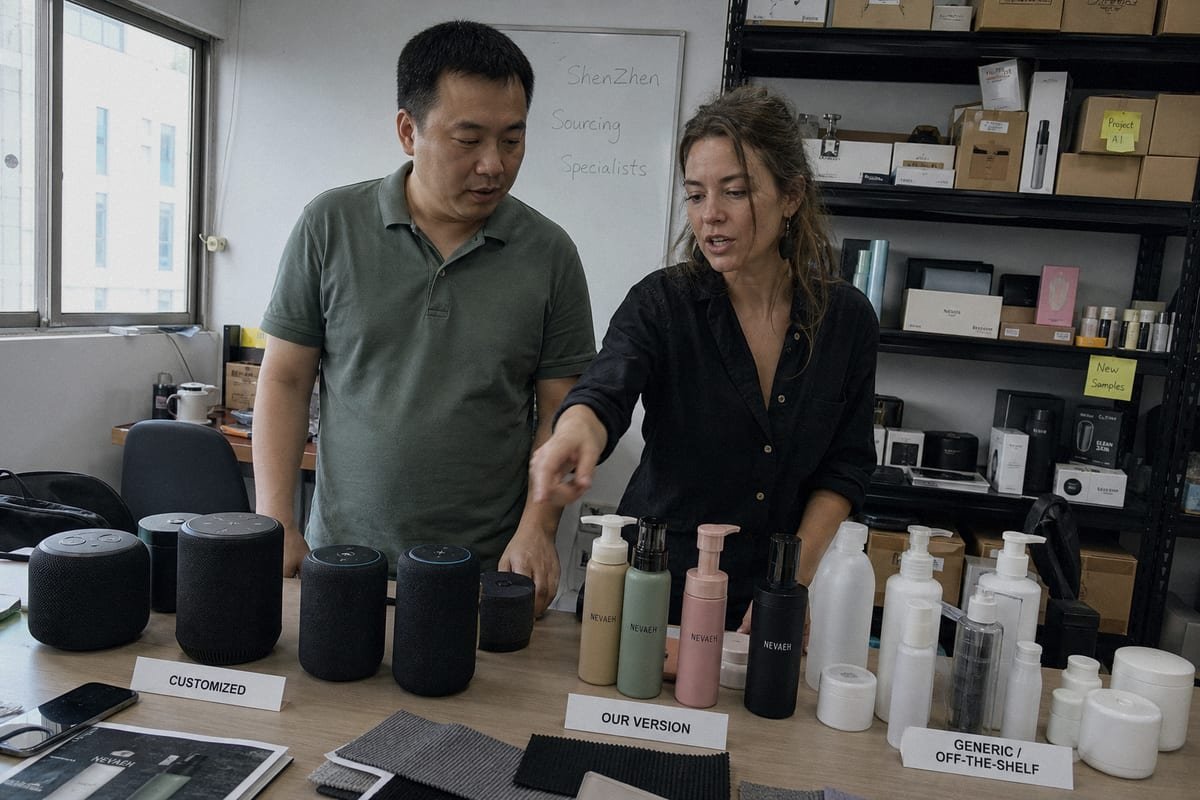
Product customization when sourcing from China stumps many new brand founders. Our sourcing team in Shenzhen sees the same fear weekly: "Will the factory butcher my design?"
Product customization when sourcing from China lets brands build unique, differentiated products at low unit costs, escape price wars with generic sellers, access flexible MOQs through OEM and ODM options, and scale quickly using China's dense supply chain — creating higher margins and stronger brand identity.
Let me break this down for you. I will cover quality, MOQ flexibility, project management, and the competitive edge customization gives your brand.
How can I customize products in China without sacrificing quality or fidelity to my design?
Last year, a startup founder sent us a smart home device 1 design with tight tolerances. Her previous supplier had changed materials without telling her. Our team rebuilt her spec sheet from scratch.
You protect quality and design fidelity by creating a detailed technical specification, approving a golden sample before mass production, running staged quality control inspections, and working with vetted factories that have proven experience in your exact product category.
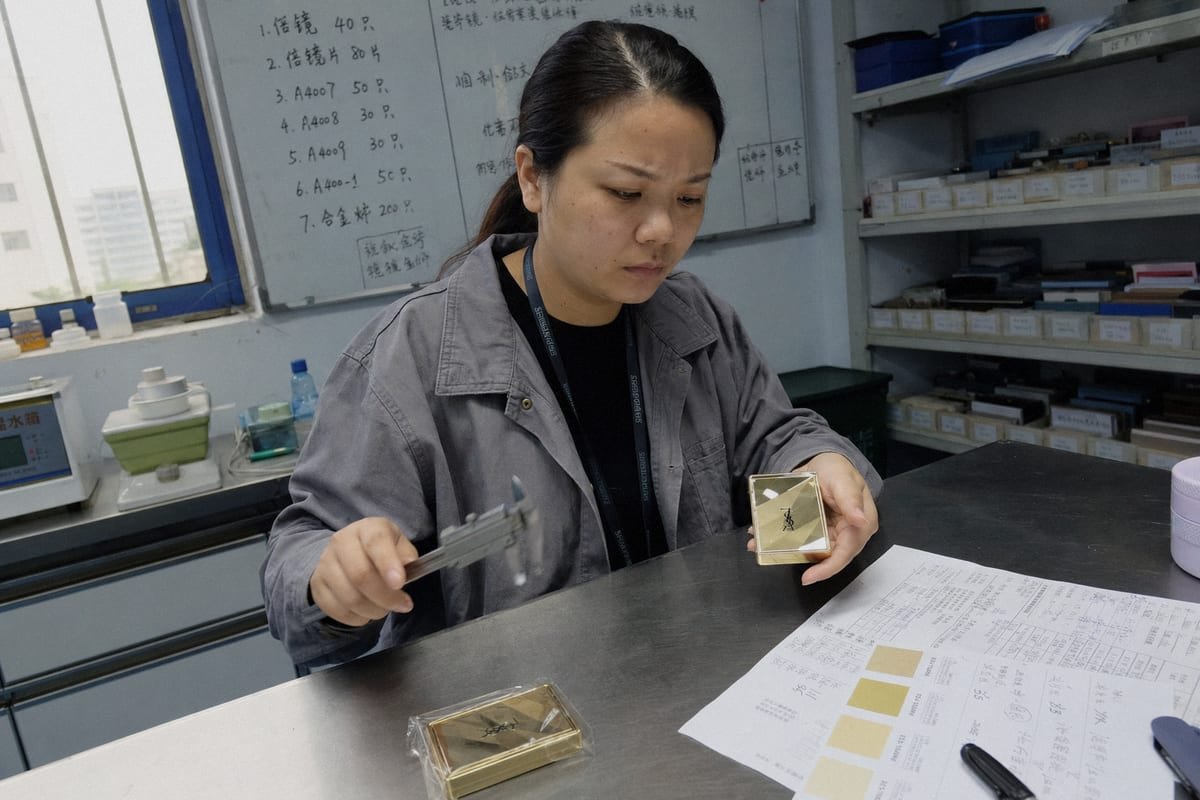
Design fidelity fails for one main reason. The buyer assumes the factory understands the design. The factory assumes it can substitute cheaper parts. Nobody writes anything down. So the fix is simple in theory: document everything, verify everything.
In our daily work sourcing consumer electronics and beauty products, we follow a strict sequence. It looks like this:
The Fidelity Protection Process
- Lock the spec sheet. Materials, dimensions, colors (Pantone codes, not "blue"), finishes, and packaging. Every detail goes on paper.
- Run prototype development first. Never jump from drawings to mass production. A physical sample exposes problems early.
- Approve a golden sample. This signed and sealed sample becomes the legal reference for the whole order.
- Inspect in stages. Pre-production checks on raw materials, during-production checks at 20–50% completion, and a final random inspection before shipping.
- Protect your design. Register your intellectual property protection in China, not just at home. An NNN agreement with the factory adds another layer.
One personal observation matters here. Several of my international clients with deep business experience have told me the same thing: China's supply chain position is hard to replace in the short term. Notice they say "supply chain," not "one supplier." Chinese products are made through an interwoven network of specialized suppliers 2 — raw materials, components, surface treatments, final assembly. That density is exactly why complex customization works here. If your product needs a special coating or an unusual fastener, someone within a two-hour drive can supply it.
Where Quality Usually Breaks
| Failure Point | Root Cause | Prevention |
|---|---|---|
| Wrong material used | Vague spec sheet | Name exact material grades in writing |
| Color drift | Verbal color approval | Pantone codes plus physical swatch |
| Loose tolerances | No golden sample | Signed reference sample held by both sides |
| Packaging damage | Ignored until shipping | Include packaging in QC scope |
Quality is not luck. It is process.
What level of MOQ flexibility can I expect when customizing products from Chinese factories?
A wholesaler client of ours once walked away from customization because one factory quoted 5,000 units. Two weeks later, we found him a comparable supplier at 500 units. The gap between quotes can be huge.
Chinese factories typically require 500–1,000 units for OEM customization, but ODM services using existing molds can drop the Minimum Order Quantity to 100–300 units. Light customization like private label branding and custom packaging often starts at just 100 units or less.
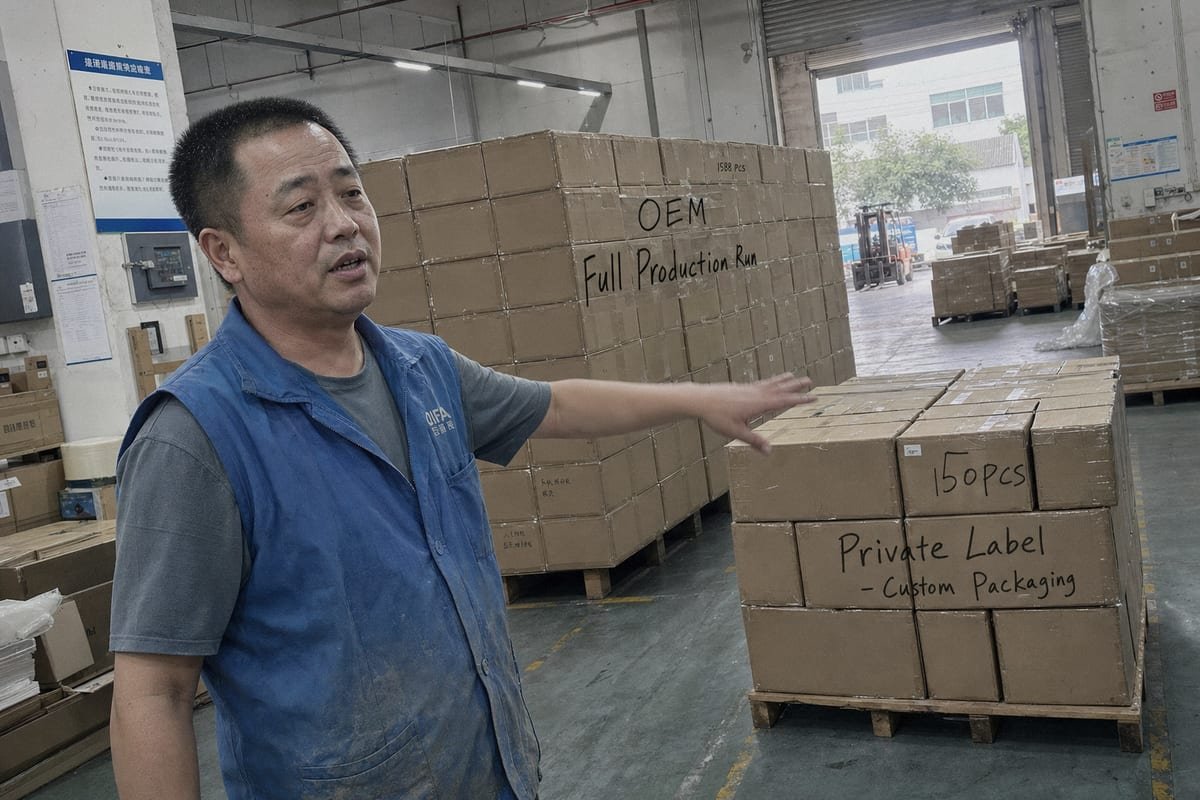
MOQ is negotiable more often than buyers think. But you need to understand why MOQs exist first. Factories set minimums to cover setup costs: mold changes, material purchasing, line changeovers. The more you change, the higher the setup cost, and the higher the MOQ.
Customization Depth vs. Typical MOQ
| Customization Level | What Changes | Typical MOQ | Setup Cost |
|---|---|---|---|
| Private label branding | Logo, packaging, manual | 100–500 units | Low |
| ODM modification | Color, material, minor features | 300–1,000 units | Medium |
| Full OEM manufacturing 3 | New design, new molds | 1,000–5,000 units | High |
This table explains a strategy we recommend constantly. Start shallow, then go deep. A new lifestyle brand should begin with ODM services 4 — take a factory's proven design, adjust the color, material, and packaging, and add your logo. You get market differentiation without paying for new tooling. Once sales prove demand, invest in full OEM manufacturing with custom molds. This staged approach also improves unit cost optimization, because you only commit heavy tooling money to validated winners.
How to Negotiate a Lower MOQ
- Offer to pay a slightly higher unit price on the first order.
- Combine multiple SKU colors into one production run.
- Commit to a repeat order schedule in writing.
- Use standard components and change only what customers actually see.
- Time your order during the factory's low season.
In our experience across the US, UK, and Australian markets, factories flex most for buyers who look like long-term partners. Show a roadmap, not just a purchase order. A factory that sees three future orders will often cut its stated MOQ in half for the first one.
How do sourcing agents help me manage QC and timelines during product customization projects?
Delays hurt more than defects, one of my American clients told me. She was managing suppliers across China, France, and India while launching a retail line, and every late shipment cascaded into missed store dates.
Sourcing agents manage QC and timelines by vetting factories before orders begin, translating specifications accurately, monitoring production milestones on-site, running staged quality control inspections, catching problems early, and coordinating warehousing and logistics — acting as your local team without the cost of an office in China.
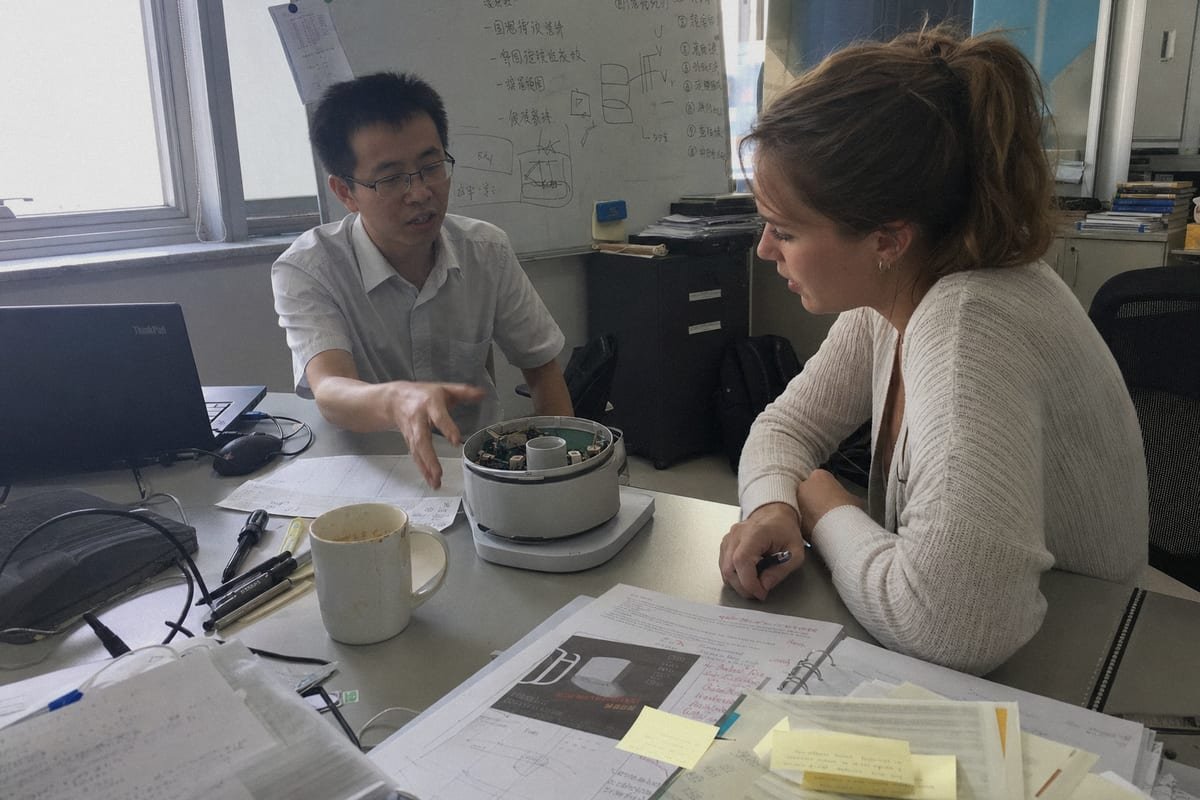
Distance is the real enemy in customization projects. When you sit ten time zones away, a small production problem 5 can hide for weeks. By the time photos reach your inbox, the factory has already produced 3,000 flawed units. A local sourcing partner collapses that distance.
Here is how our ten-person team in Shenzhen typically structures a customization project:
The Timeline Management Framework
- Factory audit before commitment. We visit the facility, check machinery, review past export records, and verify the factory actually makes your product category in-house.
- Milestone calendar. Sampling, tooling, material arrival, production start, mid-production check, final inspection, and booking of freight — each gets a hard date.
- On-site production follow-up. We physically visit during production. Photos and video go to the client the same day. Problems get flagged in hours, not weeks.
- Staged inspections. Incoming material checks, in-line checks, and a final AQL-based random inspection before any payment balance is released.
- Logistics coordination. Consolidation, warehousing, packaging verification, and freight booking, so goods do not sit idle after passing inspection.
The economics favor this model for SMEs. Flying yourself to China for every inspection costs thousands per trip. Hiring a full-time local employee costs more. A sourcing agent spreads that local presence across many clients, so each client pays a fraction.
There is also a communication layer people underestimate. Factories respond faster and more honestly to someone who speaks their language, understands their production culture 6, and can show up unannounced. Supply chain agility is not just about fast factories. It is about fast detection and fast correction when something drifts off plan. That is exactly what a local partner provides.
Can product customization from China give my brand a competitive edge in a saturated market?
The saddest listings I review are perfect clones. When helping e-commerce clients with product development, I often find fifty sellers offering the identical generic item, separated only by price. That race has no winner.
Yes. Product customization from China creates a competitive edge by differentiating your product from generic competitors, enabling premium pricing and higher margins, building brand recognition and loyalty, and letting you target niche audiences that mass-market sellers ignore — all at manufacturing costs Western factories cannot match.
Saturated markets punish sameness. If your product is identical to fifty others, the only lever left is price. Margins shrink until nobody profits. Customization breaks that trap by changing what customers compare.
The Economics of Escaping the Generic Trap
Consider the widely cited pattern in e-commerce sourcing: a generic item costs around $2 and sells for $5 in a crowded listing. Add custom features, better materials, and private label branding, and the same base product might cost $2.80 — but sell for $12 with a brand story behind it. The customization added forty cents of cost and seven dollars of perceived value. That is the core math.
| Strategy | Unit Cost | Selling Price | Competition | Margin Pressure |
|---|---|---|---|---|
| Generic resale | $2.00 | $5.00 | 50+ identical sellers | Extreme |
| Light customization | $2.40 | $8.00 | A few similar sellers | Moderate |
| Full custom + branding | $2.80 | $12.00 | Effectively none | Low |
Why China Specifically Enables This
The advantage is structural, not just cheap labor. China's industrial clusters 7 put your factory, its component suppliers, its surface-treatment shops, and its packaging printers within the same region. That network means a design tweak that would take months elsewhere takes weeks here. It also means you can start with a small pilot run, validate the market, and scale to volume without rebuilding your supply chain.
Two more edges deserve mention. First, speed: rapid sampling cycles let you chase trends while they are still trends. Second, sustainability: eco-friendly materials and recyclable packaging are increasingly available from Chinese suppliers, and sustainable customization is becoming a differentiator in its own right for environmentally conscious buyers in Western markets.
Customization is not decoration. It is defensibility.
Conclusion
Generic sourcing traps brands in price wars they cannot win. Product customization from China — done with clear specs, staged QC, and smart MOQ strategy — turns manufacturing into a lasting competitive advantage.
Footnotes
1. NIST overview of smart home technology standards and interoperability. ↩︎
2. Comprehensive overview of supply chain components and the role of specialized providers. ↩︎
3. Defines the OEM model for full custom manufacturing. ↩︎
4. Defines the ODM model which is a key customization strategy discussed. ↩︎