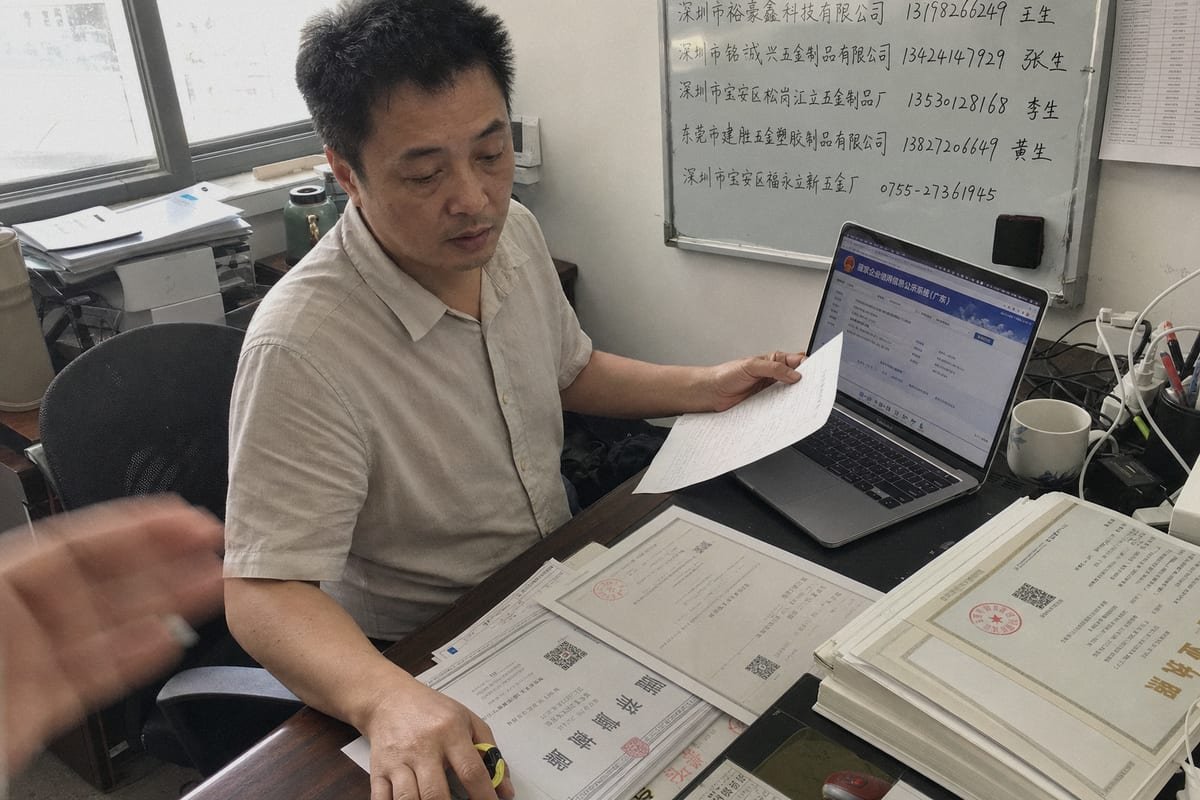
Verifying the credibility of Chinese suppliers keeps our Shenzhen sourcing team busy every week supply chains 1. One fake factory can burn a client's entire launch budget. That risk is avoidable.
To verify credibility of Chinese suppliers through a sourcing agent, require business license verification on official Chinese registries, a factory audit with photo evidence, certification cross-checks, litigation searches on Tianyancha or Qichacha, paid sample testing, and a documented due diligence report before placing any bulk order.
That is the short answer. Now let me walk you through each layer, based on what we actually do for clients sourcing electronics, smart home devices, beauty products, and outdoor gear from China.
What Documents Should I Request to Confirm a Supplier's Legitimacy?
Last quarter, our team rejected a "factory" in Dongguan after ten minutes of paperwork review. Their certificates named a completely different legal entity. Documents talk, if you know how to read them.
Request the supplier's business license with Unified Social Credit Code, ISO 9001 certification, product-specific certificates like CE or RoHS, an export license or export agent agreement, VAT invoices for raw materials, and bank account details matching the registered company name exactly.
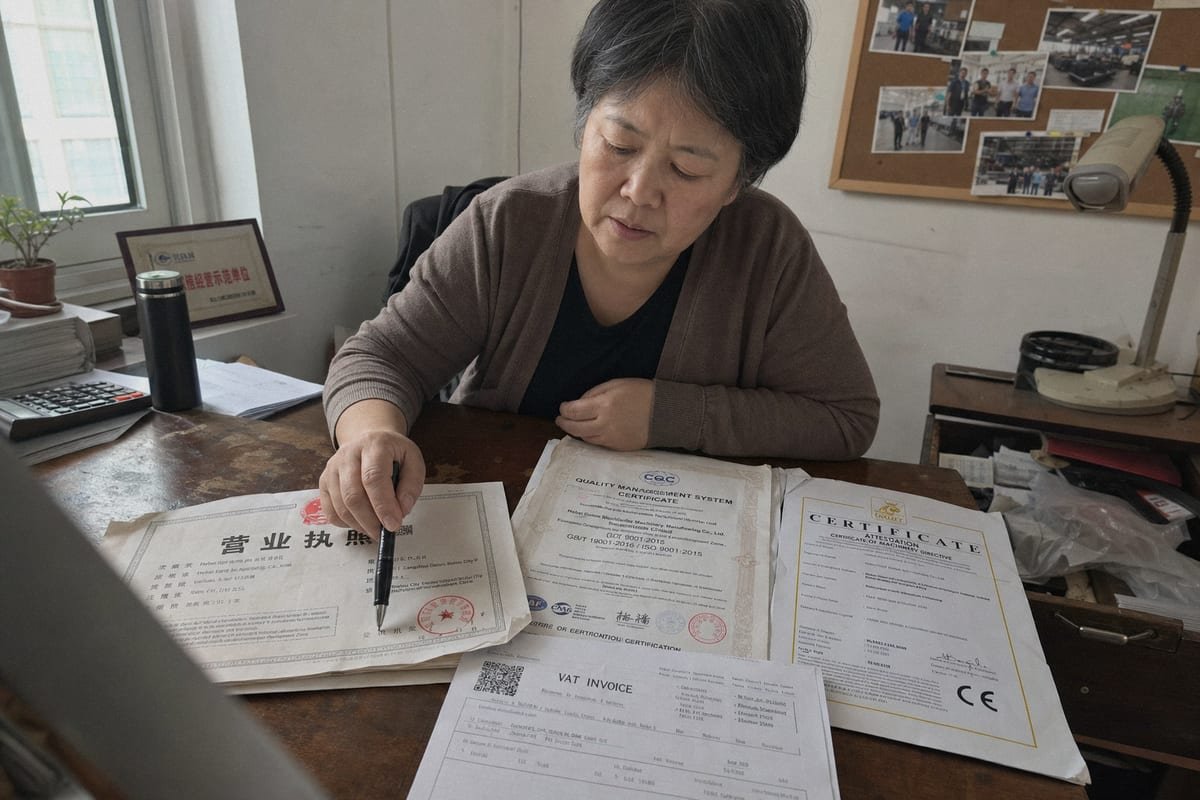
Documents are the cheapest verification layer. They cost nothing to request, and fraudulent suppliers usually stumble here first. But you need to know what each document proves, and what it does not prove.
The Core Document Checklist
Start with the business license (营业执照). Every legal Chinese company has one. It shows the Unified Social Credit Code 2, the legal representative, the registered address, registered capital, and the business scope 3. Business license verification takes minutes on China's National Enterprise Credit Information Publicity System (GSXT), and it is free. The business scope tells you something crucial: manufacturers list production activities, while trading companies list import/export activities. If you think you are buying from a factory, the scope should say so.
Here is one point most guides miss, and it comes from our daily reality in Shenzhen. Global customs data 4 is useful, but most small and mid-sized Chinese factories do not export under their own company name. The structure of the Chinese market means they ship through export agents or trading arms. So a thin customs record does not automatically mean a fake supplier. Domestic platforms like 1688 and Qichacha often hold far richer information: shareholder history, lawsuits, administrative penalties, and social credit ratings.
| Document | What It Proves | What It Does NOT Prove |
|---|---|---|
| Business license | Legal existence, scope, registered capital | Actual production capability |
| ISO 9001 certification | A quality management system exists | Consistent quality on your specific product |
| CE / FCC / RoHS certificates | Product compliance for target markets | The certificate belongs to this factory |
| Export license | Right to export directly | Whether they usually export themselves |
| VAT invoices for raw materials | Active, current manufacturing | Capacity for your order volume |
| Bank account details | Payment goes to the real entity | Nothing about quality or delivery |
Cross-Check Everything
Documents must agree with each other. The factory address on ISO or CE certificates should match the address on the business license. The bank beneficiary name must match the Chinese company name character for character. When we run a due diligence report for a client, mismatches between documents are the single most common fraud signal we find.
How Can My Sourcing Agent Help Me Verify Factory Audits and Certifications?
When we audited a smart home device factory for a US brand founder, the marketing video showed six SMT lines. On site, we found two, and one was idle. Distance hides a lot.
A capable sourcing agent conducts on-site inspection of the factory, photographs production lines and machinery, verifies ISO 9001 and product certifications against issuing bodies, cross-checks certificate addresses with the business license, and arranges third-party verification through firms like SGS or QIMA when order value justifies it.
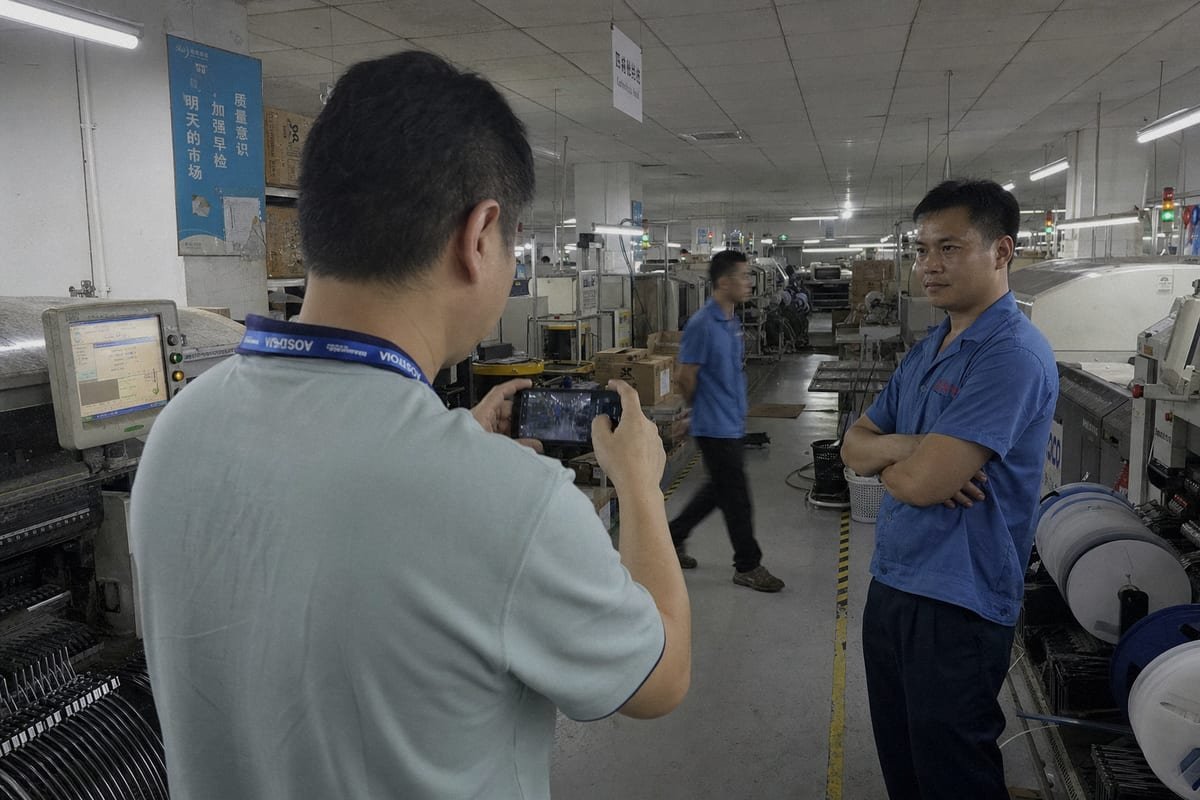
Your agent is your eyes inside China. If your agent cannot physically stand inside the factory, or at least arrange a live video walkthrough, they are not doing their job. Here is how a proper agent-led factory audit should work.
The Audit Process, Step by Step
- Pre-audit document review. We collect the license, certifications, and organization chart before travel. This filters out obvious fakes cheaply.
- Live video walkthrough. Before any visit, we ask for an unscripted WeChat video tour. Raw daily footage is much harder to stage than a polished marketing video. We request tours from two or three candidate suppliers so the client can compare manufacturing capabilities side by side.
- On-site inspection. For mid-to-large procurement projects, a physical visit is non-negotiable in our workflow. We check machinery age and maintenance logs, count active production lines, observe the workforce, and review the quality control inspection stations on the line.
- Face-to-face conversation. We sit down with the factory manager or the owner. After years of working across consumer electronics 5, beauty, and outdoor gear supply chains, we can read a lot from how an owner answers questions about defect rates, subcontracting, and peak-season capacity. That human read is something no database provides.
- Certification authentication. We verify certificates directly with issuing laboratories or their online portals. We confirm the certificate holder's name and address match the business license.
- Third-party verification. For significant orders, we recommend an independent audit 6 by SGS, Bureau Veritas, or QIMA. Costs vary by factory size and location, but the fee is small next to the cost of a failed shipment.
The output should be a written due diligence report with photos, findings, and a clear recommendation. Informal "the factory looks fine" messages are not verification.
What Red Flags Should I Watch for When Assessing Supplier Trustworthiness?
A beauty-products client once forwarded us a quote that undercut every factory we knew by thirty percent. The "supplier" also offered free samples and demanded full payment upfront. We said walk away. She did, and later saw the same company flagged for fraud.
Major red flags include prices far below market rate, free samples replacing paid production-grade samples, payment requests to personal or mismatched bank accounts, certificates naming a different entity, refusal of video tours or audits, erratic MOQs, and litigation or dishonest ratings on Qichacha or Tianyancha.
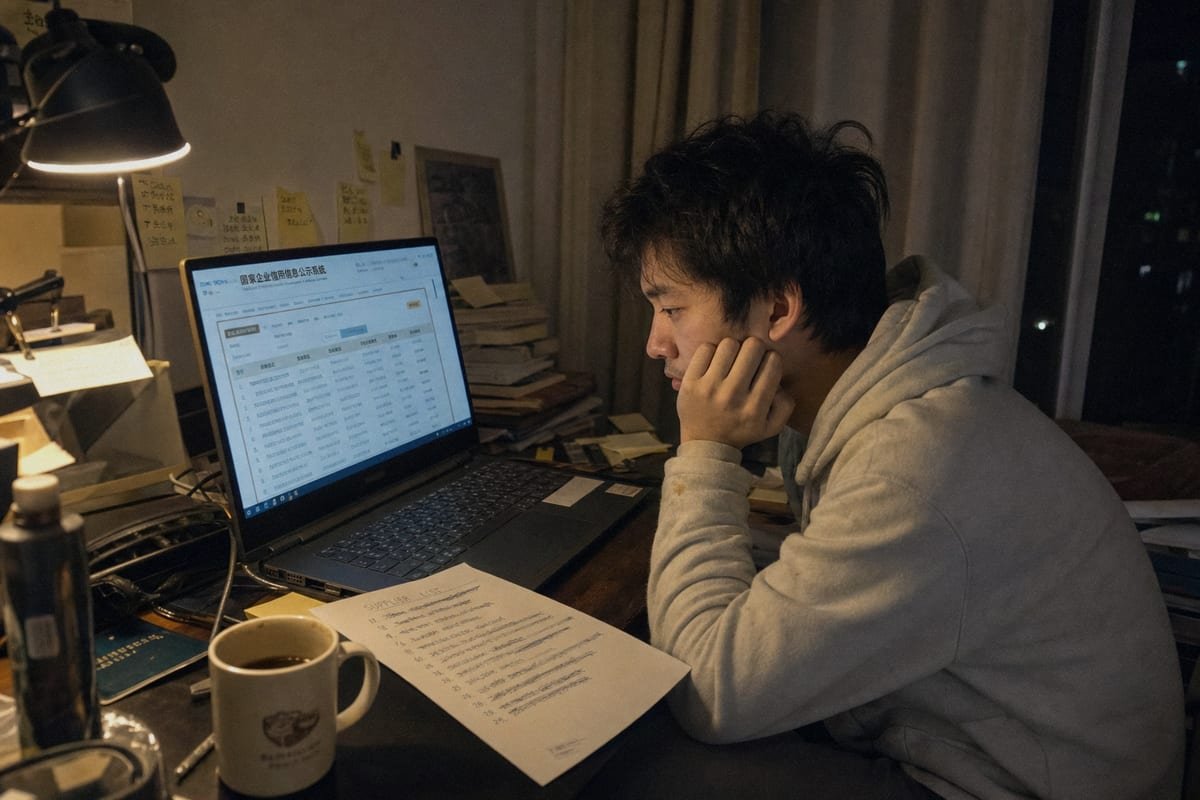
Red flags rarely appear alone. In our experience, one warning sign usually leads to three more once you start digging. The key is knowing where to dig, and China's maturing credit system gives you more places to look than most overseas buyers realize.
Behavioral Red Flags vs. Data Red Flags
We split warning signs into two groups. Behavioral flags show up in how a supplier communicates. Data flags show up in official records and public platforms.
| Red Flag | Type | Why It Matters |
|---|---|---|
| Price 25%+ below market | Behavioral | Often bait for a switch in quality or an outright scam |
| Free samples pushed aggressively | Behavioral | Free "golden samples" rarely match bulk production quality |
| Payment to a personal account | Behavioral | Legitimate companies use corporate accounts matching the license |
| Refuses live video or on-site inspection | Behavioral | A real factory has nothing to hide |
| Product catalog covers unrelated categories | Data | Genuine factories specialize; scattered catalogs signal a trader |
| Lawsuits or penalties on Tianyancha/Qichacha | Data | Labor disputes and fines predict delivery and quality problems |
| "Dishonest entity" social credit rating | Data | China's Corporate Social Credit System flags serious non-compliance |
| Certificate entity ≠ license entity | Data | Suggests borrowed or forged certifications |
Use China's Domestic Credit Ecosystem
China's credit infrastructure 7 has matured significantly, and smart buyers use it. Qichacha and Tianyancha reveal litigation history, administrative penalties, shareholder changes, and tax issues. 1688 profiles often show domestic transaction depth that Alibaba's international storefronts hide. We treat customs data as just one dimension among many; for most SME factories, domestic platforms simply carry more signal. Trade assurance programs on marketplaces add a thin layer of protection, but they should never replace independent checks.
Multi-dimensional verification is the whole game. No single database clears a supplier. Agreement across documents, data platforms, and on-the-ground observation does.
How Do I Confirm My Sourcing Agent Is Vetting Suppliers Properly on My Behalf?
The hardest question a client ever asked me was simple: "How do I know you actually checked?" Fair question. Any agent worth their fee should welcome it, and answer with evidence, not assurances.
Confirm proper vetting by verifying the agent's own business license, demanding a written service agreement with QA standards, requiring documented due diligence reports with photos, asking directly about factory commissions and selection criteria, and testing the process with a small trial order of roughly $5,000–$10,000.
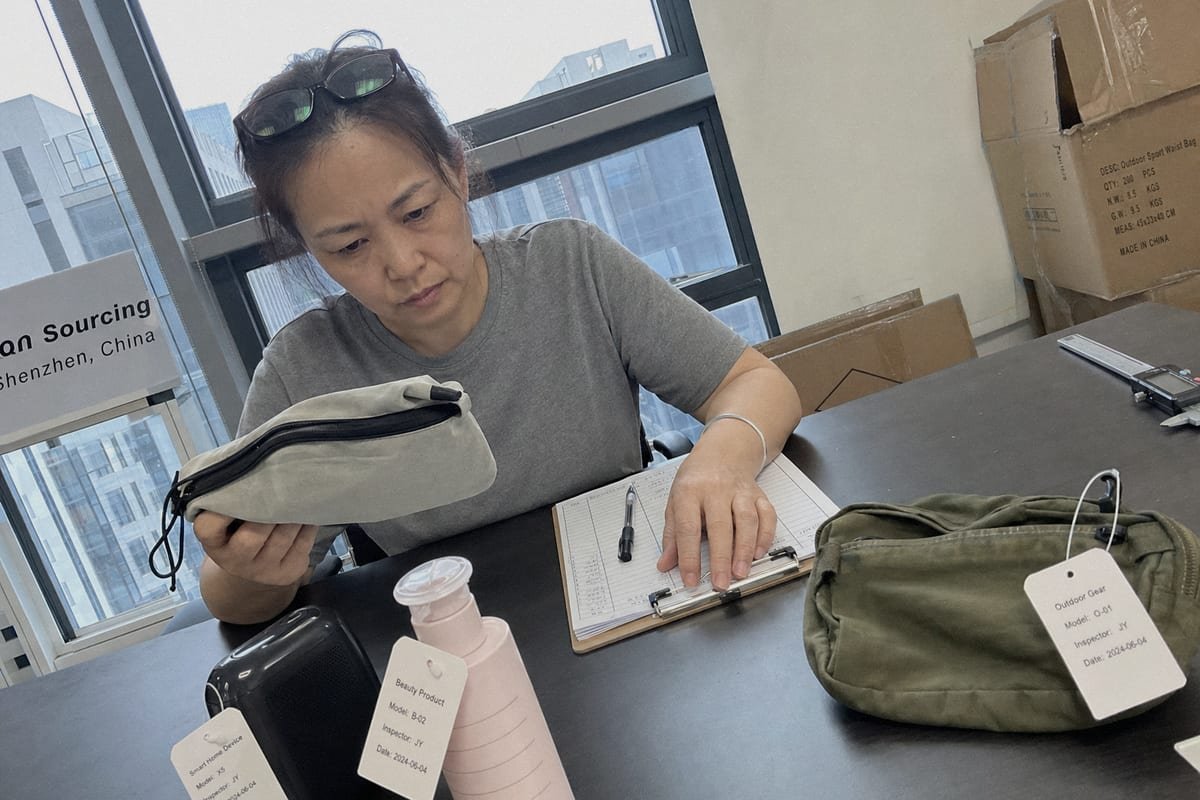
Verifying credibility of Chinese suppliers ultimately means verifying the person who verifies them. This is the dual-layer strategy: audit your agent first, then audit the agent's process. Here is how we tell clients to test us, because a good agent survives the test.
Questions Every Agent Must Answer in Writing
Ask these four questions before signing anything. Vague answers are answers.
- "Do you earn commissions from factories?" Hidden factory commissions 8 create a conflict of interest. Transparent agents disclose their full fee structure upfront.
- "How exactly do you select suppliers?" Expect a documented process: license checks, audits, sample evaluation, and comparison of at least two or three candidates.
- "What does your quality control inspection process include?" You want defined checkpoints, incoming materials, in-line inspection, and pre-shipment inspection, not informal photo updates.
- "Can I contact past clients?" References you can actually call are a strong trust indicator.
The Evidence You Should Receive
| Deliverable | When | What It Should Contain |
|---|---|---|
| Agent's own license verification | Before contract | GSXT record matching their claimed identity |
| Service agreement | Before payment | Fees, quality standards, timelines, dispute resolution |
| Supplier due diligence report | Before sample stage | License data, audit photos, certification checks, risk notes |
| Paid sample evaluation | Before trial order | Test results against your spec, ideally third-party for high-risk items |
| Pre-shipment inspection report | Before shipment release | AQL results, photos, pass/fail recommendation |
Run the Trial Order Test
The cleanest proof is a small live order, around $5,000 to $10,000. Tell the agent you will review the factory audit before issuing the PO and inspect production before authorizing shipment. Watch how they handle timeline slips, defect handling, and communication. When we onboard a new client with a full lifestyle product line, we actually prefer starting this way. A small order reveals the entire chain: sourcing judgment, factory honesty, QC discipline, and logistics execution, all at contained risk.
Conclusion
Supplier fraud in China is preventable, not inevitable. The cost of skipping checks is a lost launch. The fix is layered verification.
Verify documents on GSXT, dig into Qichacha and 1688, demand a real factory audit with an on-site inspection for larger projects, authenticate every certification, and test your agent's process with paid samples and a small trial order. Credibility is never claimed. It is proven, one cross-checked layer at a time. In our Shenzhen office, that discipline is what keeps clients' products landing on time and on spec.
Footnotes
1. Comprehensive Wikipedia entry covering supply chain definitions and structures. ↩︎
2. Official identifier for Chinese businesses used for verification on government registries. ↩︎
3. Defines the legal activities a company can perform under Chinese law. ↩︎
4. Official U.S. government portal for foreign trade data and statistics. ↩︎
5. Overview of the industry sector including man