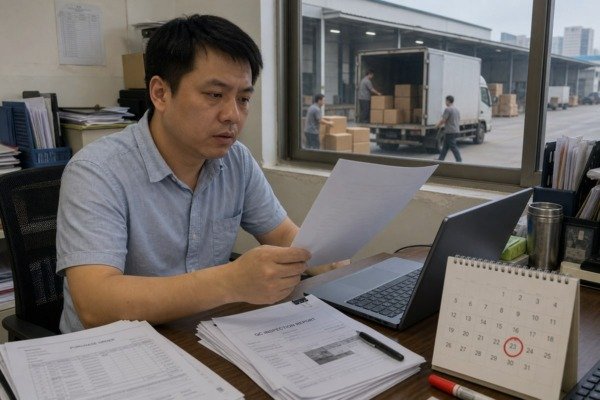
Last quarter, a client's smart home order slipped two weeks at the factory. Suddenly, expedited air freight charges threatened her entire launch margin. Our Shenzhen sourcing team sees this constantly.
To handle expedited air freight charges caused by supplier fault, document the agreed delivery date, prove the supplier's delay with QC reports and timestamped records, then have your China procurement agent negotiate reimbursement, payment deductions, or freight credits under written purchase order terms.
The real fight is rarely about the freight bill itself. It is about who caused the rush and who agreed to pay for it. Here is how I break that down for our clients, step by step.
How do I determine whether my supplier or I should cover expedited air freight costs caused by their delay?
A Texas wholesaler once messaged me at midnight: "The factory is late, so why is the air freight bill mine?" Fair question. We answered it with the paperwork.
The supplier should cover expedited air freight costs when documented evidence shows the delay came from their side—late production, failed quality inspections, or export readiness failures. You cover costs when you changed specifications, delayed approvals, or voluntarily chose air shipment for commercial reasons.
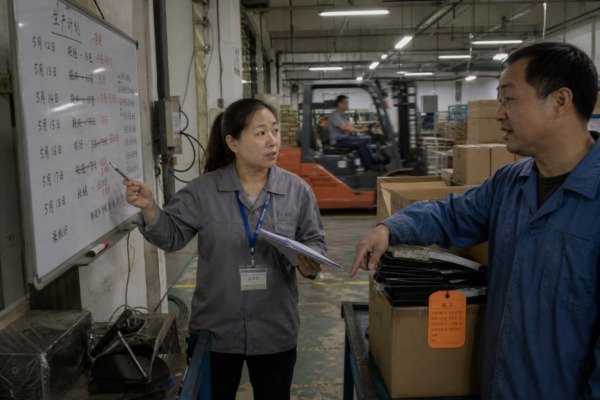
The starting point is causation, not the invoice. Before I argue with any factory, I map out exactly what caused the missed "Ready to Ship" date. Then I match the cause against the purchase order terms and conditions.
What Counts as Supplier Fault?
In our sourcing work, these scenarios almost always land on the supplier's side of the ledger:
- Late production due to internal scheduling or labor shortages
- A quality control inspection failure that forced rework
- Wrong labeling or packaging that had to be redone
- Incorrect export documents or missed customs readiness
- A missed pickup because the factory simply was not ready
- Booking delays caused by the supplier's nominated forwarder
Why Incoterms Liability Is Not the Whole Answer
Buyers often assume FOB or EXW terms 1 settle everything. They do not. Incoterms liability allocates normal transport cost and risk transfer. It says nothing about damages from a missed deadline. The price difference between the sea freight 2 you planned and the air freight you were forced into is a separate compensation claim. That claim lives in your contract, not in the Incoterm.
Use a Tiered Fault-Responsibility Matrix
The cleanest tool we use is a tiered fault-responsibility matrix, agreed before production starts. It pre-negotiates cost-sharing percentages by cause, so nobody argues after the fact.
| Cause of Delay | Typical Allocation | Notes |
|---|---|---|
| Factory labor shortage or scheduling failure | 100% supplier | Fully within factory control |
| Quality control inspection failure and rework | 100% supplier | QC report is the proof |
| Regional raw material spike or shortage | 50% supplier / 50% buyer | Shared upstream risk |
| Buyer spec change after production start | 100% buyer | Check approval timestamps |
| Force majeure (typhoon, mandated shutdown) | Negotiated case by case | Document the event |
One caution from experience: factories will often claim you changed the specs. Check your approval dates before you push back. If your confirmation came late, expect to share the cost.
Can my China procurement agent help me negotiate compensation from the supplier for these extra freight charges?
Every dispute forces us to weigh one trade-off: push the factory too hard and lose the relationship, push too softly and eat the loss. Leverage matters.
Yes. A China procurement agent can negotiate production delay compensation through payment deductions, direct reimbursement, offsets against future orders, or amortized freight credits. Their local presence, factory relationships, and control over remaining payments give them leverage that remote buyers rarely have.
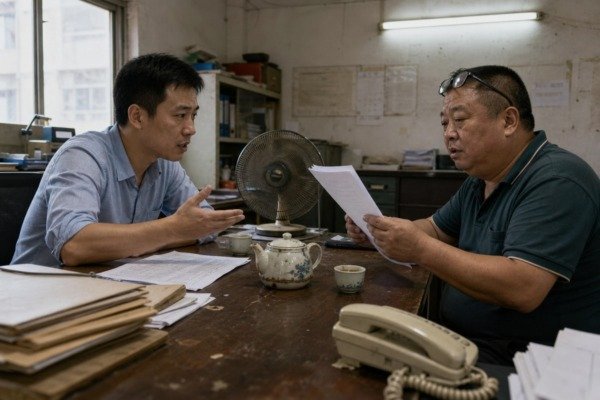
Air freight cost recovery works very differently on the ground than it does over email. When I sit across from a factory owner in Dongguan, the conversation changes. Face-to-face, guanxi-based mediation almost always yields better cost-sharing outcomes than remote demands sent from another time zone. The factory owner has a reputation to protect, and a local agent represents future orders, not just one angry invoice.
That said, I want to address a fair objection. Some agents will argue they only coordinated the shipping and cannot guarantee supplier performance. There is a real distinction here between an agent who is merely buying freight as a pass-through and one who is managing freight as a service. You should define this in your service agreement upfront. At our agency, we treat sourcing agent dispute resolution as part of the job: we gather the evidence, present the fault chain to the factory, and negotiate the split.
Recovery Paths Your Agent Can Pursue
| Recovery Path | How It Works | Best When |
|---|---|---|
| Balance payment deduction | Withhold the sea-air cost difference from the final payment | The balance is still unpaid |
| Direct reimbursement | Supplier wires the difference back | Evidence is airtight |
| Offset against future orders | Credit applied to the next PO | Relationship is ongoing |
| Amortized freight credit | Per-unit discount spread across the next three sea-freight orders | Supplier's cash flow is tight |
| Contract clause claim | Enforce a liquidated damages clause in the PI | The clause was written in advance |
The amortized freight credit deserves special mention. Factories resist writing a check, but they rarely resist a small per-unit discount on future orders. It preserves their immediate cash flow while you recoup the loss. We also recommend writing a chargeback policy for shipping directly into the sourcing agreement, so deductions do not become their own dispute.
What proof or documentation do I need to hold my supplier accountable for causing the delay?
One lost dispute taught our team a hard lesson: without timestamped records, a factory's verbal promise means nothing. Since then, we log everything before production starts.
To hold a supplier accountable, you need the purchase order with the agreed delivery date, timestamped WeChat or email records confirming deadlines, QC reports proving the fault, the original sea freight quote, the actual air freight invoice, and written approval for the mode change.
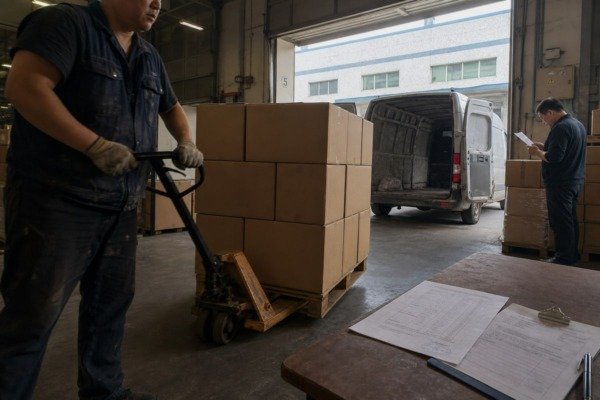
Chinese legal standards and platform dispute processes both require documented proof of agreed deadlines. That is why we maintain a centralized, timestamped log of all WeChat, email, and DingTalk communications for every order we manage. Screenshots taken months later carry far less weight than records preserved in sequence from day one.
The Evidence Checklist We Build for Every Claim
| Evidence Item | What It Proves |
|---|---|
| Signed PO with delivery date | The deadline actually existed |
| Timestamped WeChat, email, DingTalk logs | The supplier confirmed readiness dates |
| Third-party QC report | A quality control inspection failure caused the rework |
| Production timeline and handoff dates | Exactly where the slip happened |
| Sea freight quote before booking | Your baseline shipping cost |
| Air freight invoice after booking | The actual cost; the delta is your claim |
| Written approval for the air upgrade | The switch was a forced remedy, not your choice |
| Supplier corrective action report | The supplier acknowledged the root cause in writing |
Run a Root Cause Analysis, Then Get It Signed
Evidence alone is not the finish line. We push the factory to complete a formal root cause analysis and issue a supplier corrective action report. Once the supplier signs a document naming its own failure, the compensation conversation gets dramatically shorter.
One more technical point: your claim amount is the difference between modes, not the full air bill. Remember that air freight is billed by chargeable weight 3, so volumetric weight can matter as much as actual weight. Verify the forwarder's calculation before you present the number, because an inflated claim gives the factory an easy excuse to reject everything.
How can I work with my sourcing agent to prevent future supplier delays from forcing costly air freight again?
In our sourcing projects across consumer electronics and outdoor gear, supplier delays happen nine times out of ten. Prevention is not optional. It is the whole game.
Prevent forced air freight by building 15–20% lead time buffers, requiring DUPRO inspections at 30% and 70% production milestones, verifying raw material inventory before production, adding liquidated damages clauses to purchase orders, and having your sourcing agent monitor regional risks like power rationing.

Here is a truth I tell every new client. Overseas buyers assume the factory controls everything on its own production line. But a supply chain is called a chain precisely because it is not a single factory. The factory taking your order sits downstream of many other factories—component makers 4, material vendors, packaging printers. One weak upstream link cascades into delays through every link below it. Prevention has to account for that whole chain, not just your direct supplier.
This is the process we now run on every managed order:
- Build a contractual lead time buffer. Set the contractual deadline 15–20% shorter than your true required date. Minor slips get absorbed silently instead of triggering expedited air freight charges.
- Verify raw material inventory before production begins. Many "supplier fault" delays actually start with unconfirmed upstream supply. We check stock physically, not by asking.
- Schedule DUPRO inspections at the 30% and 70% milestones. During-production checks catch bottlenecks early enough to adjust logistics without an emergency.
- Embed a liquidated damages clause in the PI. It should specifically mandate that the supplier covers the sea-air price difference if the Ready to Ship date is missed.
- Use escrow-linked freight holdbacks. A percentage of the final payment sits in a third-party account and releases only against a sea freight Bill of Lading. If the supplier fails, that money funds the air upgrade.
- Monitor macro risks. We track provincial power rationing and environmental "Blue Sky" factory shutdown windows, then shift schedules before they bite.
- Track lead time variance on a supplier scorecard. Repeat offenders lose orders; consistent performers earn flexibility.
One final piece of advice drawn from years of doing this: leave generous time in the new product development stage, rather than compressing all the pressure into production. Only after the first development runs smoothly can you gradually tighten delivery cycles with confidence.
Conclusion
Expedited air freight is a symptom, not the disease. Fix your contract clauses, evidence trail, and lead time buffers, and your procurement agent can recover costs—or prevent them entirely.
Footnotes
1. Official ICC rules defining the allocation of costs and risks in international trade transactions. ↩︎
2. The United Nations agency responsible for the safety, security, and efficiency of international shipping. ↩︎
3. IATA standards for air cargo billing based on the greater of actual or volumetric weight. ↩︎
4. U.S. government resource providing technical support and supply chain integration for small and medium-sized manufacturers. ↩︎