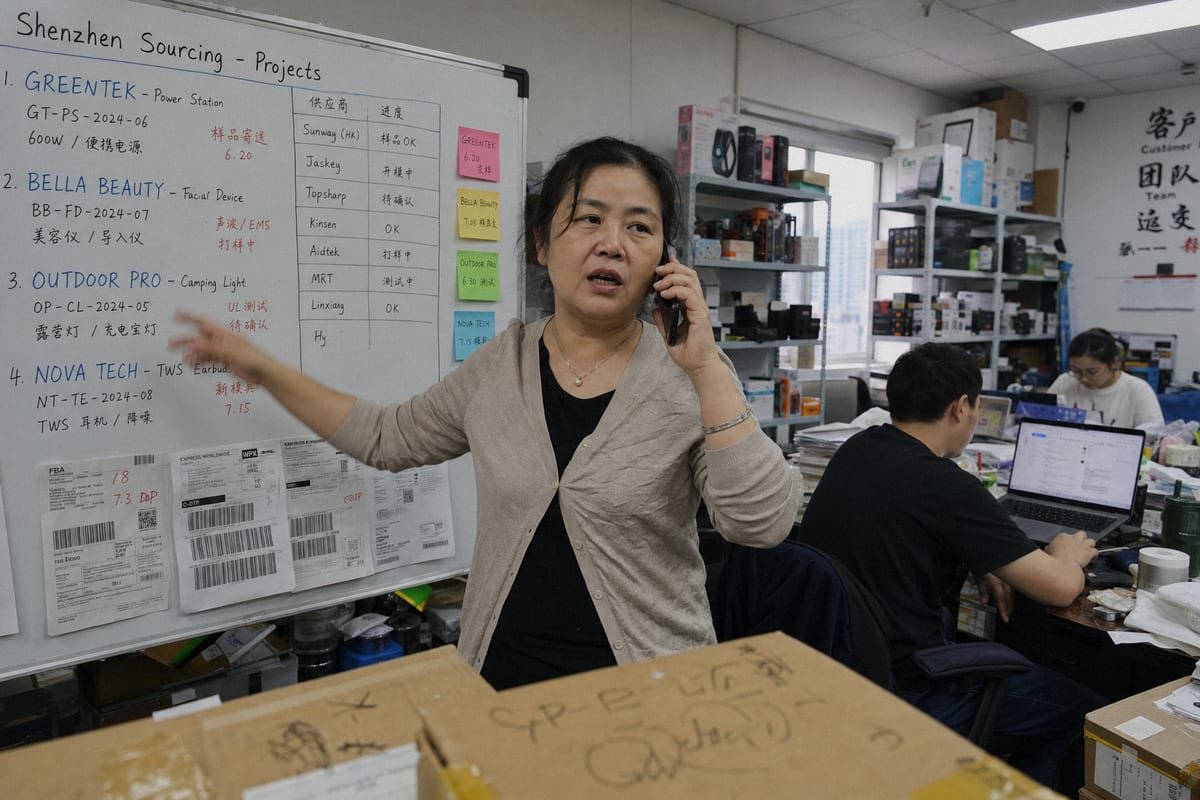
Last quarter, our Shenzhen team ran fourteen active client projects at once. A China purchasing agent lives inside that chaos daily—and learns how to tame it.
A China purchasing agent streamlines multi-project procurement by acting as one command center that handles supplier verification, negotiation, quality control inspections, and consolidated shipping. This gives buyers single-point accountability across all product lines, cutting duplicated communication, inconsistent QC, and inflated logistics costs.
That is the short answer. Below, I will break down exactly how this works in practice, using real workflows from our own sourcing projects.
How can I manage multiple China sourcing projects at once without losing quality control?
A founder we work with once juggled six suppliers across three provinces on her own. By month two, her inbox had become her full-time job. Quality slipped first.
You manage multiple China sourcing projects without losing quality by centralizing everything through one accountable partner: unified supplier verification, shared QC checklists across product lines, staged inspections at each factory, and one communication channel that replaces dozens of fragmented supplier threads.
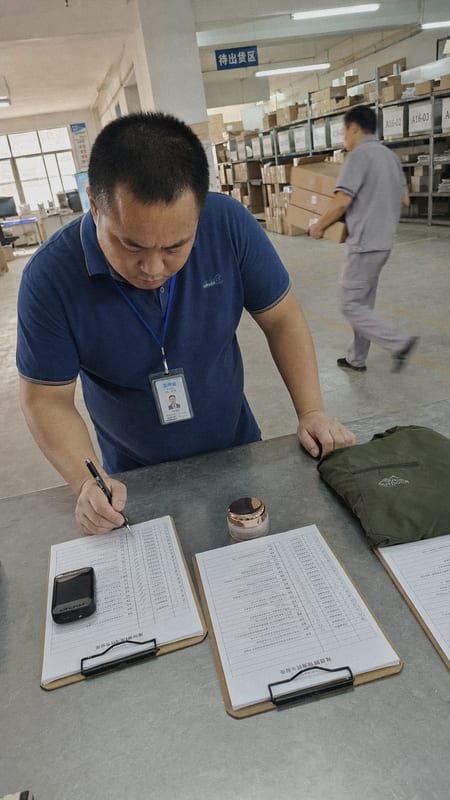
The core problem is fragmentation. When you source consumer electronics 1 from Shenzhen, beauty products from Guangzhou, and outdoor gear from Ningbo, you are really running three separate supply chains. Each one has its own language gaps, its own quality standards, and its own logistics coordination headaches. Without a central hub, you duplicate every task three times.
The fragmentation tax
Here is what fragmented multi-project sourcing actually costs you. We see this pattern with almost every new client who comes to us after trying to do it alone.
| Fragmented Approach | Centralized Agent Approach |
|---|---|
| Separate email threads per supplier | One project dashboard and one contact |
| Different QC criteria per factory | Unified inspection checklists across all SKUs |
| Individual small shipments | Consolidated shipping into shared containers |
| You chase every delay yourself | Agent surfaces delays before they become crises |
| Supplier verification done ad hoc | Systematic factory audits before any order |
One accountability chain, not many
In our own work, we do something that surprises many clients. To control quality and price, we trace the supply chain upstream—raw materials 2, components, packaging. But we do not force the client to manage all those upstream suppliers. Instead, we recommend the vetted upstream suppliers directly to the main downstream factory. That factory then takes unified responsibility for all delivery quality. One product, one accountable party. This structure is the single biggest reason quality stays consistent when project count grows. You get upstream cost transparency without upstream management burden. It is supply chain management by design, not by firefighting.
What should I look for in a purchasing agent who can handle complex, multi-project procurement?
There is a trade-off I weigh with every new client engagement: breadth of category knowledge versus depth in one niche. Multi-project work demands both, which is rare.
Look for a purchasing agent with proven multi-category experience, a documented supplier verification process, in-house or coordinated quality control inspections, transparent fee structures, factory-neutral sourcing, and end-to-end capability spanning sampling, production follow-up, warehousing, and freight forwarding under one roof.

Not every agent can handle complexity. Some are excellent at one product category and lost outside it. Others are really trading companies in disguise, quietly steering you toward factories they have undisclosed ties with. For multi-project procurement, the bar is higher. You need a partner who understands product development, not just purchasing.
The evaluation checklist
Ask these questions before signing anything:
- Can they show a documented vetting process? Real agents pre-filter suppliers by production capacity 3, certifications, quality history, and MOQ before showing you a shortlist. Ask to see how they run factory audits.
- Are they factory-neutral? An agent affiliated with specific factories will bias your supplier selection. Reputable agents disclose relationships and vet openly.
- Do they cover the full chain? Sourcing alone is not enough. You want negotiation, sampling, production follow-up, quality control inspections, packaging, and logistics coordination in one accountable package.
- How do they charge? Typical fees run 3–10% of order value, or a fixed project fee. Both models are legitimate, but demand transparency upfront.
Fee models compared
| Model | Best For | Watch Out For |
|---|---|---|
| Percentage (3–10%) | Variable order sizes, new categories | Costs escalate on large orders |
| Fixed project fee | Predictable multi-project budgets | May not scale with added complexity |
| Hybrid retainer | Ongoing multi-SKU brands | Requires clear scope definition |
In our experience serving startup founders and e-commerce sellers across the US, UK, and Australia, the agents who succeed at complex work also bring adjacent knowledge—branding, intellectual property 4, market trends. That context helps them make judgment calls on your behalf instead of just relaying messages. Understanding how procurement agents assign and train project managers for each client engagement also reveals how well an agent can actually scale across multiple projects.
How does a China purchasing agent keep timelines on track when I'm juggling several product lines?
A client once asked me why her smart home order slipped two weeks while her beauty line shipped early. The answer sat in regional factors she could never have seen from abroad.
A purchasing agent keeps timelines on track by building realistic buffers around regional factors like seasonal closures and power restrictions, running on-site production follow-up, staging inspections at milestones, escalating delays early in Mandarin, and synchronizing multiple factories toward shared consolidated shipping dates.
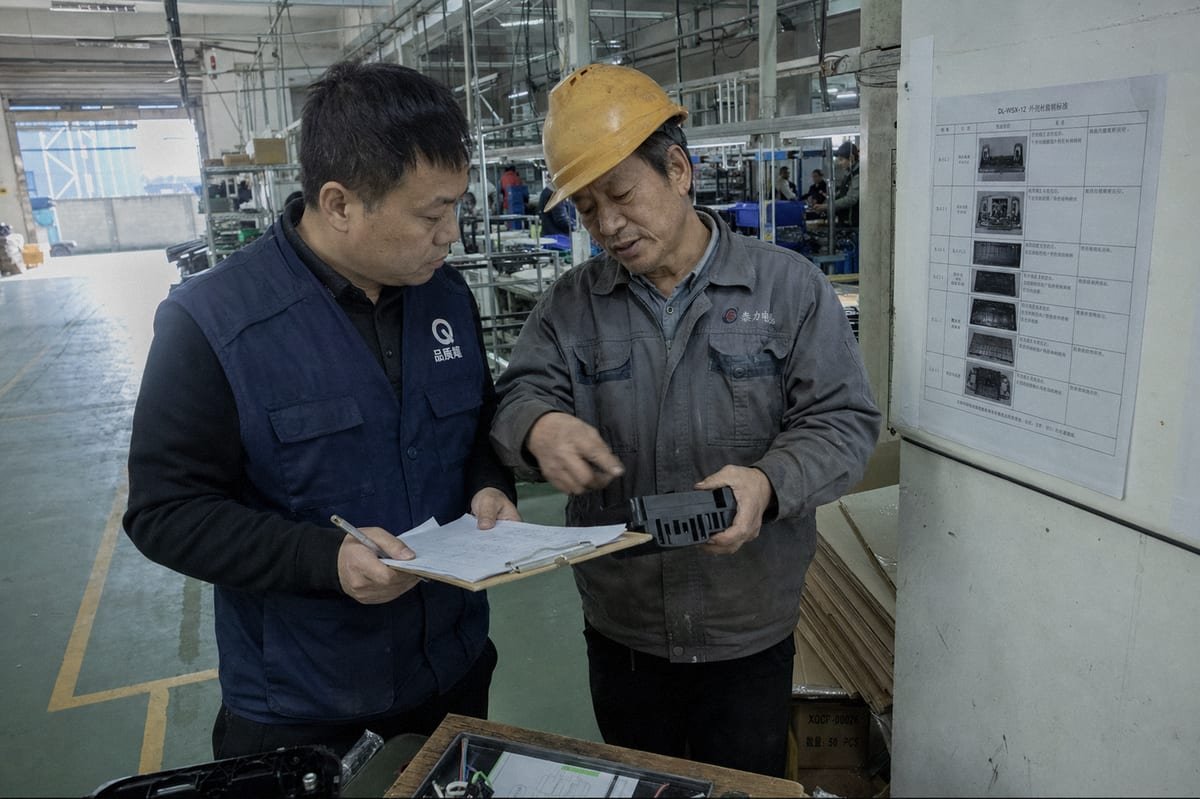
Lead time optimization across multiple product lines is not about pushing factories harder. It is about seeing problems before they exist. From our Shenzhen office, we track things a remote buyer simply cannot: which regions face power rationing this quarter, when migrant labor flows shift around Chinese New Year, and which factories quietly overbook capacity during peak season.
How on-the-ground timeline management works
The process runs in stages. First, we set realistic production schedules 5 per product line, with buffers sized to each region and season. A molded outdoor gear part in Zhejiang carries different risk than a PCB assembly in Shenzhen. Second, we run production follow-up visits at defined milestones—materials arrival, first article, mid-production, pre-packing. Third, we align completion dates across factories so goods can meet at one consolidation point instead of shipping piecemeal.
Why early escalation matters most
Cultural fluency drives timeline honesty. Factories in China often avoid delivering bad news directly, especially to foreign buyers, because of how face works in business relationships. A local agent reads the early signals—vague answers, postponed calls, missing photos—and surfaces production delays weeks before they would otherwise appear. Then we resolve them without damaging the relationship, which keeps the factory motivated rather than defensive. That soft skill, more than any tracking software, is what keeps several product lines moving in parallel. Strategic sourcing decisions made early, like choosing factories with genuinely available capacity, prevent most delays before production even starts.
Can a sourcing agent help me maintain design fidelity and QC standards across multiple factories?
During a sampling round for a lifestyle brand's product line, we caught a factory substituting a coating that looked identical but felt wrong in hand. The founder never saw the risk—we did, at the sample stage.
Yes. A sourcing agent maintains design fidelity through detailed spec sheets, golden samples signed by all parties, staged quality control inspections at every factory, unified defect standards across product categories, and third-party audits where impartiality matters—ensuring every factory builds to the same documented standard.
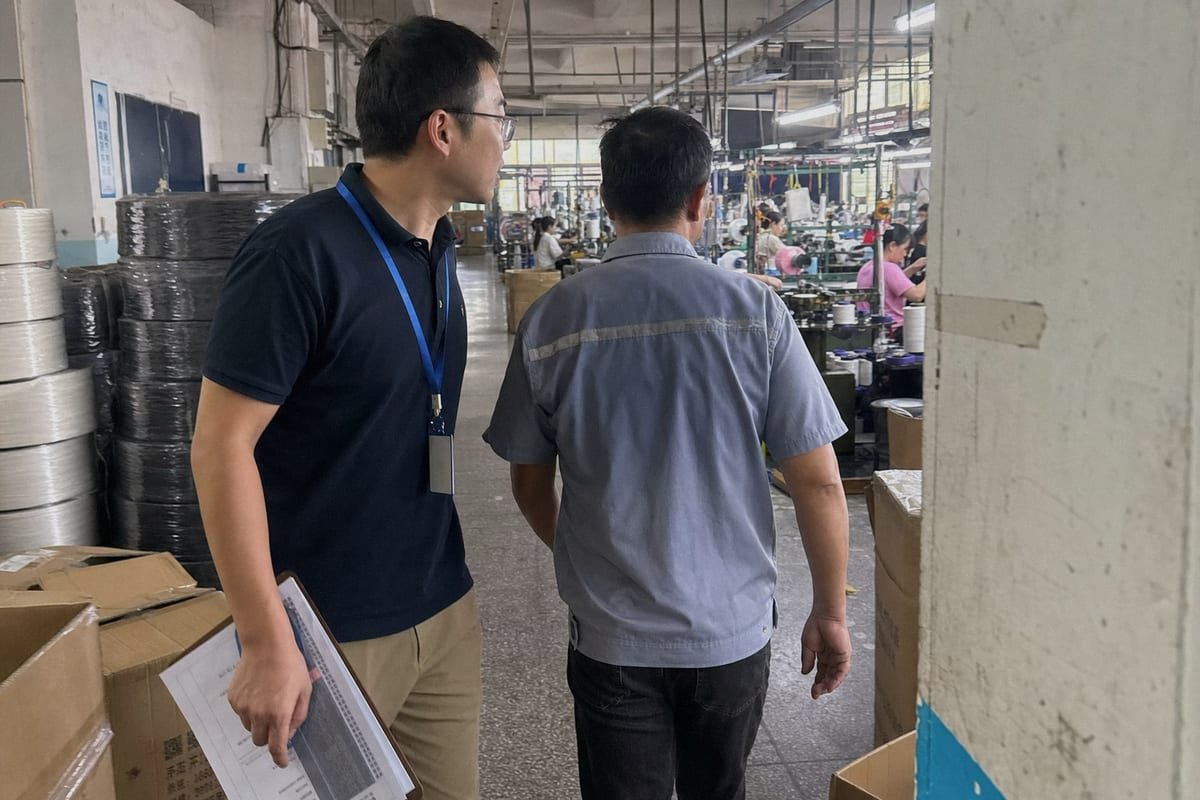
Design fidelity fails quietly. A factory swaps a fastener grade. A colorway drifts half a shade. Each change seems minor to the factory, but the accumulated drift destroys a brand's consistency. When you run multiple factories, this risk multiplies, because each factory drifts in its own direction.
The multi-stage inspection framework
We anchor every project to the same inspection ladder, regardless of category:
| Stage | What It Checks | When It Happens |
|---|---|---|
| Factory audit | Capacity, licenses, real facilities, quality history | Before any order |
| Pre-production check | Materials, components, approved golden sample | Before mass production starts |
| During-production (DUPRO) | Workmanship, spec adherence, defect rates | At 20–50% completion |
| Pre-shipment (PSI) | AQL sampling, packaging, labeling, compliance marks | At 100% completion, before payment |
Golden samples and unified standards
Every project gets a signed golden sample—one physical reference that the factory, the client, and our QC team all approve. Written specs that communicate requirements cover tolerances, materials, finishes, and packaging. When we source across categories like consumer electronics and beauty products, we translate each client's brand standard into factory-floor checklists so inspectors apply identical rigor everywhere. For impartiality on high-stakes orders, we coordinate third-party inspection firms alongside our own checks. We also manage compliance documentation—certifications, commercial invoices, packing lists—so customs clearance 6 never stalls a shipment that passed QC. Bulk order management across factories only works when the standard travels with the product, not with the individual factory's habits.
Conclusion
Multi-project sourcing fails when fragmented. A China purchasing agent replaces that chaos with one accountable command center—unifying vetting, QC, timelines, and consolidated shipping so your brand scales without breaking.
Footnotes
1. Authoritative Wikipedia overview of the consumer electronics industry and product categories. ↩︎
2. Comprehensive overview of raw materials and their role in the global manufacturing supply chain. ↩︎
3. Official U.S. Census Bureau data and definitions regarding manufacturing plant capacity and utilization. ↩︎
4. Global forum for intellectual property services, policy, and information provided by the United Nations. ↩︎
5. Corrected Wikipedia link for the process of arranging and optimizing manufacturing workloads. ↩︎
6. Official U.S. government guide for the legal requirements and procedures of importing goods through customs. ↩︎