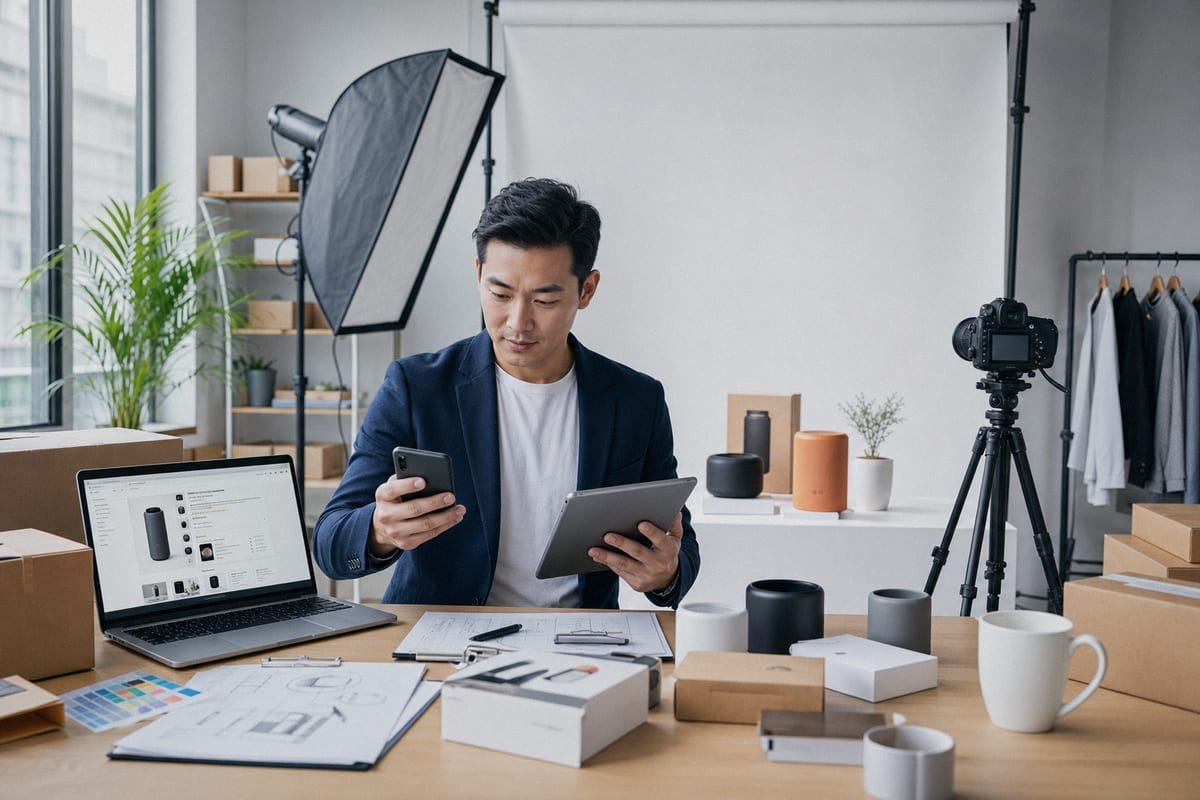
Waiting weeks for samples to cross the ocean just for photos? Our Shenzhen team sees this drain client budgets constantly. A China sourcing agent can break that loop entirely.
Yes, a China sourcing agent should provide basic product photography as a value-added service, because shooting during sampling saves weeks and shipping costs. However, deep content creation and brand storytelling are best kept with the buyer, who understands the target market's culture.
Let me explain what agents can realistically deliver, what it costs, and where the line should be drawn. I will share how we handle this for our own clients.
What Types of Product Photography Can I Expect From My China Sourcing Agent?
Last month, a startup founder asked us to shoot her smart home device 1 the same day the sample arrived at our office. She needed images for a pre-launch campaign, fast.
Most sourcing agents provide functional e-commerce photography: white background images, action shots, dimension infographics, and basic lifestyle product photography. High-end creative shoots with models and styled sets usually require a specialized studio, which the agent can coordinate for you.
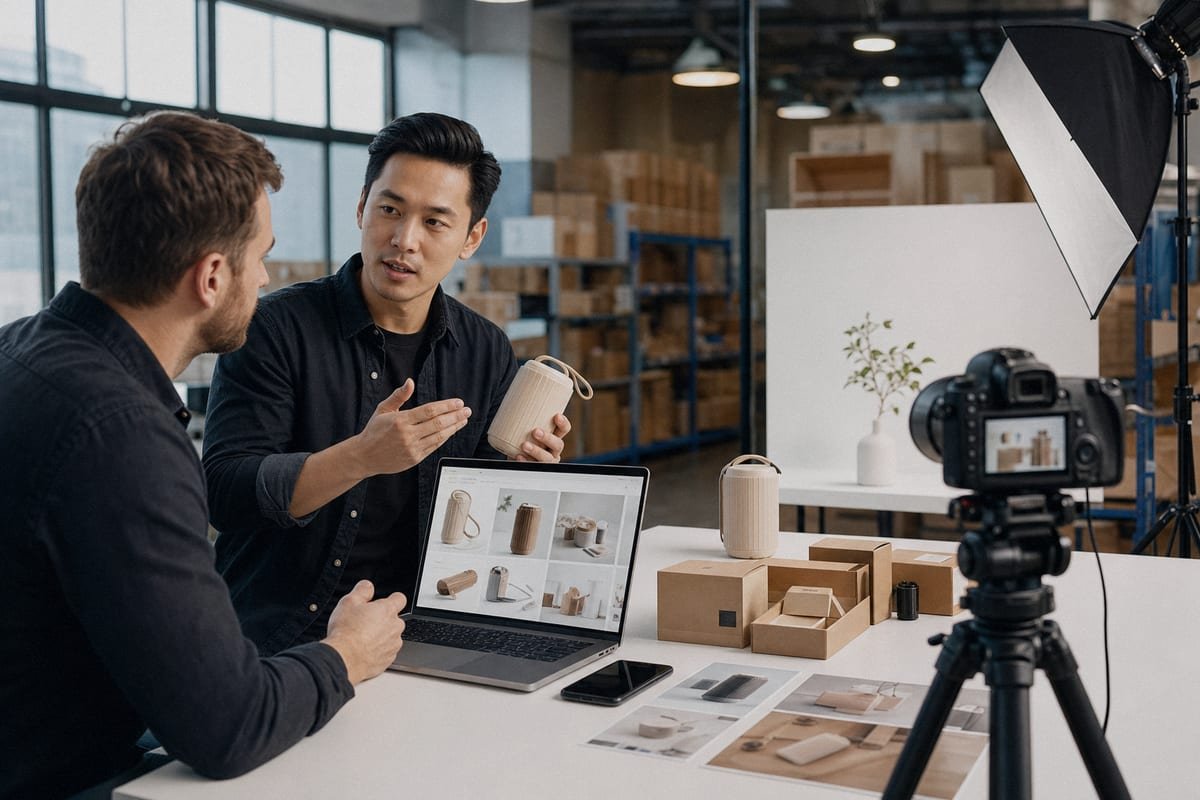
We often provide simple product photography for clients, and it almost always happens for one reason: the client wants to launch or promote before mass production is finished. Shooting during the sampling stage 2 in China removes the need to ship a sample home first. That alone can save two to four weeks.
Here is the honest truth about scope. Our team is a sourcing and supply chain consulting operation, not a creative agency. So we focus on functional images that serve a listing, not award-winning brand campaigns.
The Four Common Photo Types
| Photo Type | Purpose | Typical Agent Capability |
|---|---|---|
| White background images | Platform main image compliance | Strong — standard offering |
| Action / usage shots | Show the product in real use | Good — simple setups |
| Infographics | Dimensions, features, materials | Good — with your input on copy |
| Lifestyle product photography | Atmosphere and context | Basic — often done via editing or AI |
Why AI Changed the Math
Here is something interesting we have noticed. Because AI image technology has advanced so quickly, even a very ordinary product photo we take can be processed into a polished, high-end result. A plain shot on a white table becomes a styled kitchen scene in minutes. This means the raw photo from your agent matters less than it used to. What matters is that the image shows the real product, taken before mass production, so what you market matches what ships. Photos also double as informal quality control inspection records, which is a bonus most buyers overlook.
How Do I Know If My Sourcing Agent's Content Creation Services Are Worth the Cost?
One trade-off we weigh constantly: should we spend an hour photographing a client's beauty product, or an hour chasing the factory about a delayed mold? Both create value, but differently.
Agent photography is worth it when it replaces international sample shipping, costs less than roughly $50 per product, and delivers platform-compliant images. It is not worth it if the agent charges studio rates for basic shots or claims marketing expertise they lack.
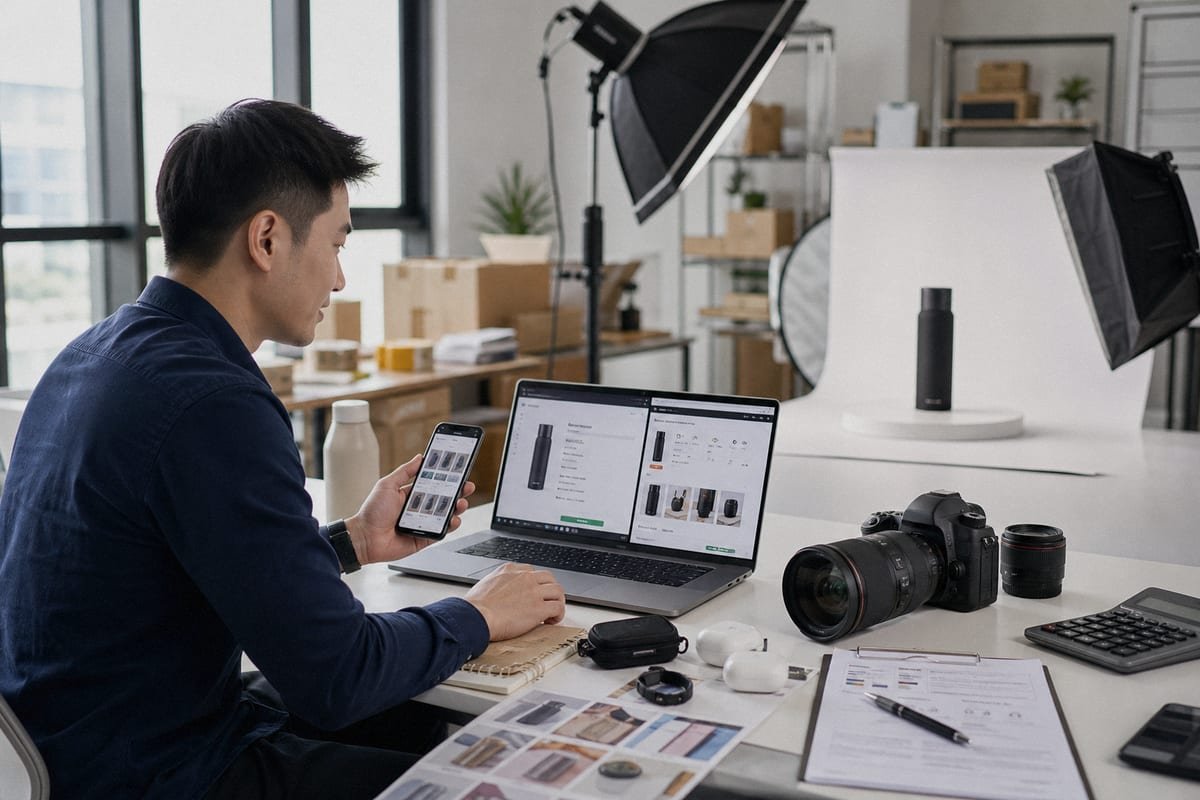
The economics here are simple, but buyers rarely run the numbers. Shipping a sample from Shenzhen to the US often costs $50 to $150, and shipping it back doubles that. Compare that with agent pricing, where basic photos are frequently bundled free with orders, and extras cost a few dollars each. Value-added sourcing services like this exist because the marginal cost for the agent is low. The sample is already on our desk. The camera is already in the office.
A Simple Cost Comparison
| Option | Typical Cost | Hidden Cost | Time Impact |
|---|---|---|---|
| Ship sample home, shoot yourself | $50–$150 shipping each way | Your own time and gear | +2 to 4 weeks |
| Hire a freelancer in China | Varies by hourly rate | You manage shipping, vetting, revisions | +1 to 2 weeks |
| Agent-provided photography | Often free to ~$50 bundled | Limited creative direction | Days, not weeks |
Where I Draw the Line on Content
Now, content creation is a different question. Clients understand their own target market and cultural context far better than we do. So we rarely push content advice on clients. We stick to what we are professionally accountable for. I actually spent years in brand marketing and digital marketing, and even founded ventures in those industries. But branding is a communication craft built on a specific cultural mindset. An agent sitting in Shenzhen should not write your American ad copy. That is why we chose to prioritize doing supply chain management consulting 3 well, and let clients own the storytelling. If your agent claims to be your full marketing department, treat that as a yellow flag, not a bonus.
Can My China Sourcing Agent Help Me Create Content for Amazon or Shopify Listings?
A client building a private label manufacturing 4 program once sent us Amazon's image guidelines and asked us to shoot directly against them. That request taught us how listing-ready photos really work.
Yes, a good sourcing agent can supply the core visual assets for Amazon FBA listing and Shopify pages: compliant white background main images, feature infographics, and usage shots. The buyer should still handle listing copy, keywords, and brand voice for their market.
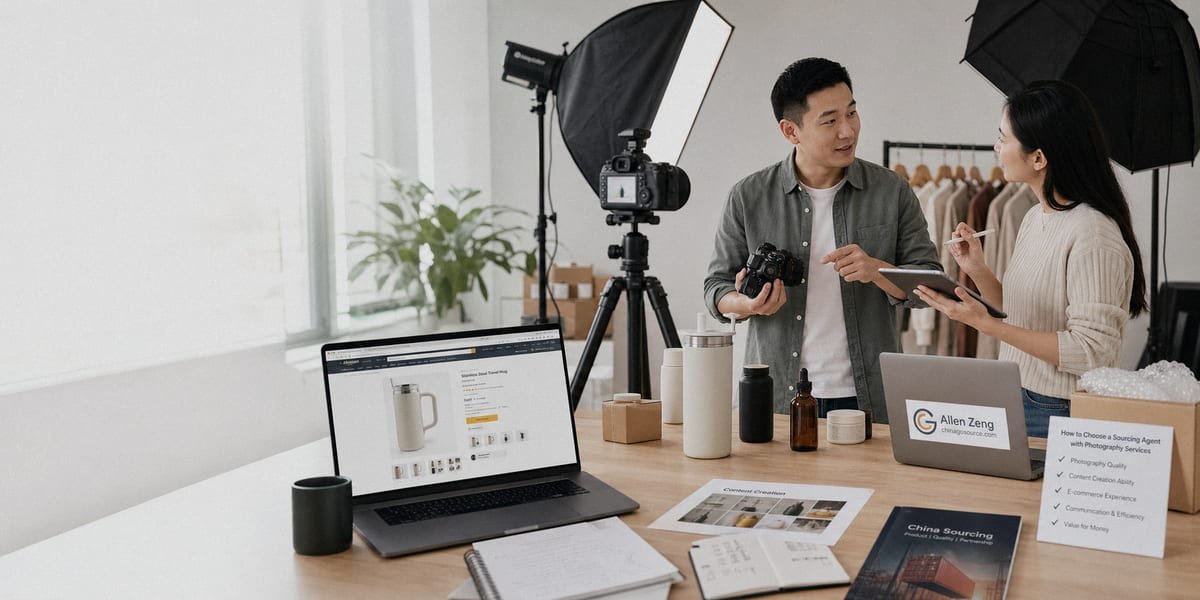
E-commerce visual content follows rules, not artistic taste. Amazon requires a pure white background 5 on the main image. It rejects images with watermarks, borders, or misleading props. Shopify is more flexible, but conversion still depends on clear, consistent photos. This is exactly the kind of structured work an agent can do well, because compliance is a checklist, not a creative judgment.
What We Deliver vs. What You Should Own
The split works like this:
- Agent delivers: raw compliant photos, accurate dimension shots, packaging photos, and simple demo videos of the product working.
- Buyer owns: listing titles, bullet points, keyword strategy, A+ Content narrative, and any culturally specific messaging.
- Shared work: infographics, where we provide the images and measurements, and you provide the selling points in your market's language.
There is another advantage buyers rarely consider: supply chain transparency. When we photograph products during our pre-shipment quality check 6, those same images can support "made with care" storytelling on your listing. Some clients even request short factory clips for social content. We also see clients pair sample consolidation services with photography, where samples from several factories arrive at our warehouse, get compared, photographed, and shipped in one box. One shipment, one photo session, multiple sourcing decisions made faster. That combination is where an agent genuinely earns their fee.
What Should I Look for When Choosing a Sourcing Agent That Offers Photography Services?
The hardest lesson we learned early on: saying yes to every photo request without defining scope creates disappointed clients. Clear expectations beat impressive promises every time.
Choose a sourcing agent whose photography is integrated into sampling and quality inspection, priced transparently, and honest about creative limits. Avoid agents who oversell marketing skills, hide photo fees in vague charges, or cannot show real sample photos from past projects.
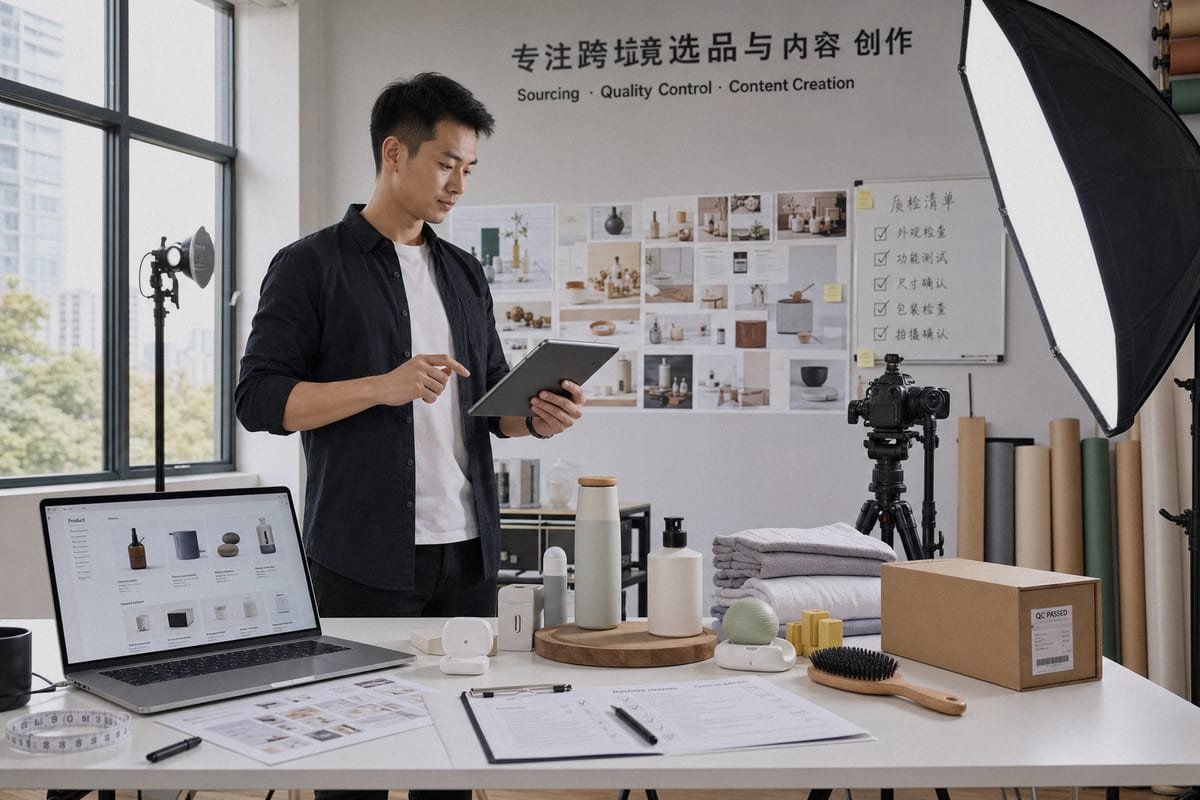
Photography should be a natural extension of the agent's core workflow, not a bolted-on upsell. When we run a factory audit or a pre-shipment quality check, taking photos is already part of the job. The question is whether the agent can raise those photos to listing quality when you need it, and whether they are honest when a job exceeds their skill.
Evaluation Checklist
| What to Check | Green Flag | Red Flag |
|---|---|---|
| Pricing | Clear per-photo or bundled rates | "We'll figure it out later" |
| Workflow | Photos taken during sampling and QC | Photos only after full production |
| Honesty about limits | Refers you to studios for model shoots | Claims to do everything in-house |
| Sample work | Shows real client photo sets | Only shows stock-like images |
| Platform knowledge | Understands Amazon image rules | Never mentions compliance |
Ask These Questions Before You Commit
First, ask whether photos are taken at the sampling stage or only pre-shipment. Early photos let you start "coming soon" campaigns while production runs. Second, ask who actually holds the camera. Some agents manage third-party studios rather than shooting in-house, which is fine, as long as they say so. Third, ask how photos connect to quality control inspection reports. In our own process, the same visit that verifies stitching tolerances on outdoor gear also produces usable product shots. That integration is the real value. An agent who treats photography as documentation-plus is far more useful than one who treats it as a separate profit center. Finally, test them with one small product before trusting them with a full catalog.
Conclusion
Launching without local photos means weeks lost and budgets bleeding on double shipping. The fix is simple: let your China sourcing agent handle functional product photography during sampling, while you keep ownership of brand content and cultural messaging. In our Shenzhen practice, this split works because a plain, accurate photo plus modern AI editing covers most e-commerce needs, and nobody understands your market better than you. Use the agent for speed, compliance, and supply chain transparency. Keep the storytelling. Audit your current agent's service list this week, and ask them one question: can you photograph my next sample before it ships?
Footnotes
1. Provides a comprehensive overview of smart home technology and the types of devices involved in the ecosystem. ↩︎
2. Official ISO standard for sampling procedures used in manufacturing and quality inspection processes. ↩︎
3. Authoritative Wikipedia entry covering the fundamentals and scope of supply chain management. ↩︎
4. Reliable Wikipedia resource defining private label products and manufacturing processes. ↩︎
5. Authoritative Wikipedia section defining product photography standards and commercial techniques. ↩︎
6. Authoritative definition of the pre-shipment inspection process used in global trade. ↩︎