
Working alongside hundreds of brands sourcing from China, our team has seen one costly mistake repeat itself: businesses invest heavily in product development 1 but treat packaging as an afterthought. The result? Products that look generic on the shelf, damaged goods on arrival, and a brand image 2 that never quite connects with customers.
Product packaging is critical for brand image when using China sourcing agents because it serves as your brand's first physical touchpoint with consumers. A skilled sourcing agent ensures your packaging design, materials, and quality stay consistent from the factory floor in China to the retail shelf in your target market, protecting both your products and your reputation.
Some products rely on packaging as part of the product itself FDA requirements 3. Gifts, for example, depend on packaging for both function and emotional value. Think about Apple — their entire unboxing experience is engineered to feel premium. Whether you sell beauty tools, consumer electronics, or smart home devices, packaging shapes how customers perceive your brand before they even touch the product. Let's break down exactly how your China sourcing agent can help you get this right.
When we ship products to U.S.-based brand owners, one thing becomes immediately clear: American consumers judge products by their packaging long before they test the product itself. A flimsy box or a poorly printed label can kill a sale instantly.
Premium packaging sourced from China significantly elevates your brand's perceived value in the U.S. market by delivering high-quality materials, sophisticated printing, and custom finishes at a fraction of domestic costs — allowing brands to compete visually with established players without overspending on production.
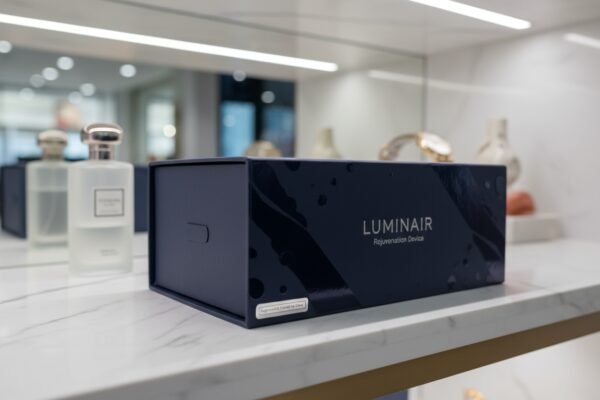
Why Packaging Perception Matters More Than You Think
Research shows that 72% of consumers say packaging design 4 influences their purchasing decisions. In the U.S. market, where shelves are crowded and online competition is fierce, your packaging is often the only thing standing between a sale and a scroll-past. Premium packaging communicates quality, care, and professionalism. It tells the customer: "This brand takes itself seriously."
From our experience coordinating exports to the U.S., we've seen brands double their repeat purchase rates simply by upgrading from a plain brown box to a custom rigid box with embossed logos and magnetic closures. The product inside didn't change. The perception did.
What "Premium" Looks Like in Practice
Premium doesn't always mean expensive. It means intentional. Here are the most common premium packaging elements we help clients source from China:
| Packaging Element | Effect on Brand Perception | Typical Cost Impact |
|---|---|---|
| Matte lamination | Conveys sophistication and modernity | Low |
| Metallic foil stamping | Signals luxury and exclusivity | Moderate |
| Custom inserts (EVA/foam) | Shows product care and protection | Moderate |
| Magnetic closure boxes | Creates a memorable unboxing experience | Higher |
| Spot UV coating | Adds tactile and visual contrast | Low to Moderate |
The Cost Advantage of China Sourcing
One of the biggest misconceptions is that premium packaging from China means compromising on quality. In reality, Chinese packaging manufacturers have invested heavily in advanced printing technology, die-cutting equipment, and finishing capabilities. Many factories serve global luxury brands and maintain ISO certifications 5.
The real advantage? Cost efficiency. Chinese manufacturers can often complete packaging production in about 2 weeks, and even with 3–4 weeks of shipping, the total timeline is only about 2 weeks longer than domestic sourcing. The cost savings, however, can be 40–60% compared to U.S. packaging suppliers. Those savings can be reinvested into better materials, better design, or higher marketing budgets — all of which strengthen your brand's position in the market.
Emotional Value and the Unboxing Moment
In today's social media environment, unboxing videos 6 drive massive organic reach. A well-designed package doesn't just impress the buyer — it impresses the buyer's audience. When your packaging looks premium, customers are more likely to share it online, creating free marketing for your brand. This is especially powerful for beauty equipment and consumer electronics, where visual presentation carries enormous weight.
Can my sourcing agent help me design custom packaging that aligns with my brand identity?
Many of our clients come to us with a logo and a vision but no packaging design files. Others have detailed brand guidelines but no idea how to translate them into a manufacturable package. Either way, this is where a sourcing agent becomes essential.
Yes, a skilled sourcing agent acts as the bridge between your brand vision and the factory's production capabilities. They coordinate with designers and manufacturers to translate your brand colors, logos, typography, and messaging into custom packaging that is both visually aligned with your identity and structurally optimized for production and shipping.

From Brand Guidelines to Production Files
The journey from concept to finished packaging involves multiple steps. Your sourcing agent manages this entire process so you don't have to navigate language barriers, technical specifications, or factory communication on your own.
Here is a typical workflow our team follows:
| Step | What Happens | Who Is Responsible |
|---|---|---|
| 1. Brand brief collection | Client shares logos, color codes, brand guidelines, and references | Client |
| 2. Structural design | Agent coordinates with factory to propose box styles, sizes, and materials | Sourcing Agent + Factory |
| 3. Graphic design | Designer creates artwork using brand assets; agent reviews for print accuracy | Designer + Sourcing Agent |
| 4. Sample production | Factory produces a physical sample for client approval | Factory |
| 5. Revisions | Agent communicates client feedback and manages corrections | Sourcing Agent |
| 6. Mass production | Final approved design goes into full production | Factory |
Ensuring Brand Consistency Across Product Lines
One challenge we see frequently: a brand launches multiple products over time, each sourced from different factories. Without centralized packaging oversight, the shade of blue on Product A doesn't match Product B. The font weight varies. The logo placement shifts. These inconsistencies erode brand trust.
A dedicated sourcing agent maintains a master file of your brand assets and packaging specifications. Every new product runs through the same approval process, ensuring visual consistency whether you're producing one SKU or fifty. This consistency is what builds the kind of brand recognition that makes consumers reach for your product instinctively.
Custom Features That Strengthen Identity
Beyond basic printing, your sourcing agent can help you explore custom features that reinforce your brand story:
- Authenticity QR codes printed on packaging to combat counterfeiting and build consumer trust
- Sustainable materials like kraft paper or biodegradable inserts for eco-conscious positioning
- Custom tissue paper and thank-you cards that enhance the unboxing experience
- Embossed or debossed logos that add a tactile dimension to your brand
Each of these elements communicates something specific about your brand. A sourcing agent who understands both Chinese manufacturing capabilities and your target market can recommend the right combination without inflating your budget unnecessarily.
Communication Is Everything
The biggest risk in custom packaging design isn't the factory's capability — it's miscommunication. Color references can shift between screens. "Matte" means different things to different people. Dimensions get confused between metric and imperial. A sourcing agent eliminates these gaps by speaking both languages — literally and figuratively. They confirm Pantone colors, verify dieline dimensions, and ensure nothing gets lost in translation between your brand team and the production floor.
What role does my sourcing agent play in performing quality control on my product packaging?
Our quality inspection team has caught packaging defects that would have been invisible on a screen — misaligned prints, weak adhesive on magnetic closures, color shifts between batches. These are the kinds of issues that only show up when someone physically checks the product on the factory floor.
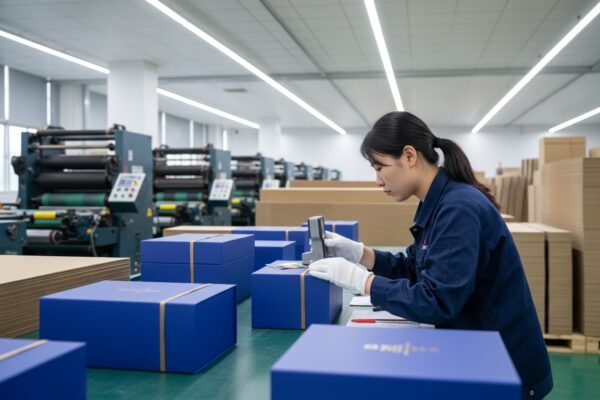
Your sourcing agent performs critical quality control on packaging by conducting on-site inspections at key production stages — including pre-production samples, inline checks during printing and assembly, and final random inspections before shipment — ensuring every unit meets your brand standards before it leaves China.
Why Packaging QC Is Different from Product QC
Many brands focus their quality control budget entirely on the product itself. But packaging failures damage your brand just as much. A scratched box, a smeared logo, or a color that doesn't match your website — these tell the customer that you cut corners. Your sourcing agent should treat packaging QC with the same rigor as product QC.
The Three-Stage Inspection Process
Effective packaging quality control happens at three distinct stages:
Pre-production check: Before mass production begins, the agent verifies the sample against your approved design file. They check colors using Pantone references, measure dimensions, test material thickness, and evaluate structural integrity. This is the cheapest point to catch errors.
Inline inspection: During production, the agent visits the factory to monitor print quality, cutting accuracy, and assembly. This is especially important for large orders where quality can drift over a long print run.
Final inspection: Before shipment, the agent conducts a random sample inspection using AQL standards. They check for visual defects, structural damage, correct labeling, and packaging functionality (does the box close properly? do inserts hold the product securely?).
Common Packaging Defects to Watch For
| Defect Type | Description | Impact on Brand Image |
|---|---|---|
| Color inconsistency | Print color doesn't match Pantone reference or varies between units | Brand looks unprofessional and inconsistent |
| Misaligned printing | Text or logos are off-center or crooked | Signals low manufacturing standards |
| Weak structural integrity | Box collapses, bends, or tears easily | Product appears cheap and unprotected |
| Adhesive failure | Glued sections separate during transit or handling | Creates a messy, unfinished appearance |
| Incorrect labeling | Wrong barcodes, missing regulatory info, or typos | Can cause customs delays and legal issues |
| Scuffing or scratching | Surface marks from handling during production | Reduces perceived value at point of sale |
The Sourcing Agent as Your Eyes and Ears
You can't fly to China for every production run. Your sourcing agent is your permanent presence on the ground. They know what to look for because they've seen thousands of packaging runs go right — and wrong. They also build relationships with factory managers, which means issues get resolved faster and with less friction than if you tried to manage the factory directly from the U.S.
A good agent also documents everything. Photos, measurements, inspection reports — all shared with you in real time. This transparency gives you confidence that your brand standards are being upheld, even when you're thousands of miles away.
Regulatory Compliance Matters Too
For products entering the U.S. market, packaging must comply with specific labeling requirements Regulatory Compliance 8 — including FCC marks for electronics, FDA requirements for beauty devices, or state-level regulations like California's Prop 65 warnings. Your sourcing agent should verify that all required markings, certifications, and legal text are present and correctly placed on every package. Missing a compliance label doesn't just risk your brand image — it can result in shipments being held at customs or rejected entirely.
How do I prevent packaging damage during transit to ensure my brand image stays intact?
We've had clients receive containers where the outer cartons looked perfect, but the retail-ready packaging inside was crushed, water-stained, or scuffed beyond use. That's not just a logistics problem — it's a brand image crisis. Every damaged box is a lost sale or, worse, a returned order with a negative review attached.
To prevent packaging damage during transit, work with your sourcing agent to specify proper inner packing methods, use reinforced outer cartons, add moisture-barrier protection, conduct pre-shipment drop tests, and choose reliable freight partners — ensuring your retail-ready packaging arrives in pristine condition and your brand image remains intact.

Understanding Where Damage Happens
Transit from China to the U.S. involves multiple handling points: factory to warehouse, warehouse to port, loading onto the vessel, ocean transit, unloading, customs clearance, and final delivery. At each point, packages are stacked, shifted, lifted, and sometimes dropped. Your packaging strategy must account for every one of these touchpoints.
Protective Packing Best Practices
Your sourcing agent should implement a layered protection strategy:
Inner protection: Each retail box should be individually wrapped or separated with dividers to prevent scratching and scuffing. For premium packaging, foam corners, bubble wrap, or shrink wrap provide additional security.
Outer carton strength: The outer shipping carton must be strong enough to withstand stacking pressure. A common mistake is using single-wall corrugated cartons for heavy products. Double-wall or triple-wall corrugated cartons are worth the small cost increase.
Moisture protection: Ocean freight 9 containers can experience significant temperature and humidity changes, leading to condensation. Moisture-barrier bags, silica gel packets, and desiccant strips protect packaging from water damage, warping, and mold.
Pallet configuration: How cartons are stacked on pallets matters. Your agent should ensure proper palletization with stretch wrap and corner protectors to prevent shifting during transit.
Drop Test and Compression Test
Before mass shipment, your sourcing agent should request or conduct basic drop tests and compression tests on packed cartons. A drop test simulates the impact of a carton falling from handling height. A compression test simulates the weight of cartons stacked on top during container loading. These simple tests reveal weaknesses in your packing design before thousands of units are at risk.
Choosing the Right Freight Method
The shipping method also affects damage risk. Air freight involves less handling time and fewer touchpoints but costs more. Ocean freight is cost-effective for large orders but exposes products to longer transit times, more handling, and moisture risks. Your sourcing agent can recommend the best method based on your product type, order volume, and budget.
Real-World Impact on Brand Image
When a customer receives a product in damaged packaging, they don't blame the shipping company. They blame your brand. A crushed box suggests carelessness. A water-stained label looks like neglect. Even if the product inside works perfectly, the first impression is already tainted. For brands selling through Amazon or other e-commerce platforms 10, damaged packaging leads directly to negative reviews, higher return rates, and lower search rankings. Prevention is always cheaper than damage control.
Your sourcing agent's job doesn't end when the product leaves the factory. It ends when the product arrives at your warehouse in the same condition it left the production line. That's the standard we hold ourselves to, and it's the standard you should demand from any agent you work with.
Conclusion
Product packaging is not separate from your brand — it is your brand in physical form. From design and production to quality control and transit protection, your China sourcing agent plays a central role in ensuring every package your customer receives reflects the quality and professionalism your brand promises.
Footnotes
- Found a comprehensive guide on product development stages and frameworks from a reputable source. ↩︎
- Discusses how brand image is formed and influenced by consumer perceptions. ↩︎
- Provides specific information on FDA regulations for food contact substances and packaging. ↩︎
- Found a relevant article discussing the importance of packaging design in branding, covering perception, recognition, and loyalty. ↩︎
- Found a comprehensive explanation of ISO certifications, including definition, process, and FAQs from a professional services firm. ↩︎
- Explains the phenomenon and marketing impact of unboxing videos. ↩︎
- Defines quality control and its importance in manufacturing processes. ↩︎
- Details the necessity of adhering to regulations for product packaging in the US. ↩︎
- Explains the characteristics, advantages, and disadvantages of ocean freight shipping. ↩︎
- Describes the nature and key features of e-commerce platforms for online selling. ↩︎