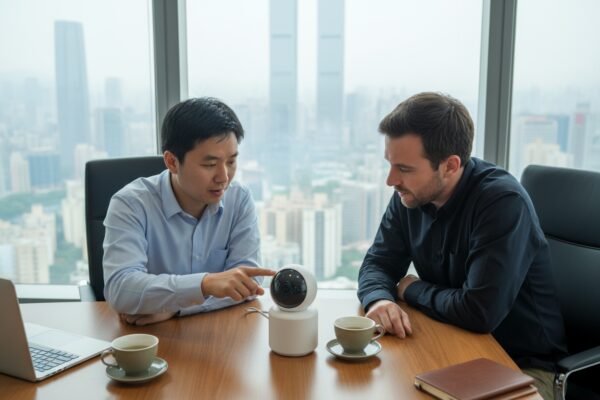
Every week, our team in Shenzhen fields calls from overseas founders who tried sourcing from China 1 alone and hit walls — wrong suppliers, surprise defects, or shipments stuck in customs for weeks.
To source products from China using a sourcing agent, you first identify a trustworthy agent with verified credentials and product expertise, share your specifications, then let them find suppliers, negotiate prices, manage quality inspections, and coordinate shipping — all while you focus on growing your business.
In this guide, I'll walk you through how to find the right sourcing agent, what the working process looks like from start to finish, how agents handle quality control 2 and logistics, and what fees you should budget for. Let's get into it.
How do I find a reliable sourcing agent in China for my specific product needs?
When our clients first reach out — many of them founders of consumer electronics 3 or beauty equipment brands in the U.S. — their biggest worry is not price. It's trust. They've been burned by middlemen who vanished after payment or sent products that looked nothing like the samples production timelines 4.
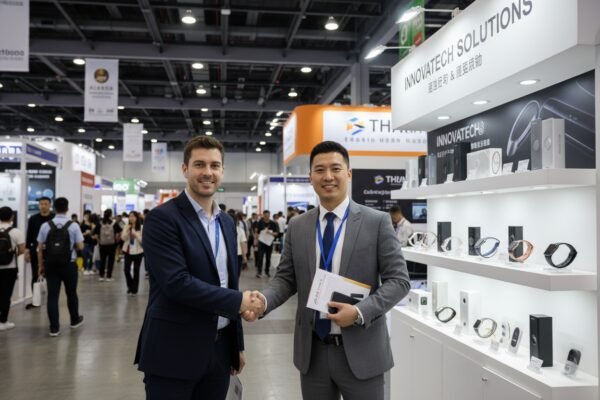
You can find a reliable sourcing agent by attending trade shows, searching B2B platforms, or getting referrals from other importers. Prioritize agents who are legally registered companies, have their own warehouses and inspection teams, speak fluent English and Chinese, and specialize in your product category.
Where to Start Your Search
There are several channels you can use to locate a qualified sourcing agent. Each has its own strengths and weaknesses.
| Channel | Pros | Cons |
|---|---|---|
| Trade shows 5 (Canton Fair, Global Sources) | Meet agents face-to-face; verify credentials on site | Requires travel; time-intensive |
| B2B platforms 6 (Alibaba, Made-in-China) | Large pool of options; easy to compare | Hard to distinguish agents from trading companies |
| Freelance platforms (Fiverr, Upwork) | Quick access; budget-friendly for small tasks | Quality varies widely; limited accountability |
| Google search | Can find established agencies with full websites | Requires careful vetting; SEO rankings ≠ quality |
| Referrals from other importers | High trust level; proven track record | Limited options; may not match your product niche |
Trade shows remain one of the most reliable methods. You shake hands with real people. You see their business cards. You can ask hard questions and watch their reactions. But not everyone can fly to Guangzhou twice a year. That's where online research comes in.
Key Criteria to Evaluate
Don't just pick the cheapest agent. Here is what actually matters:
- Legal registration. Ask for their Chinese business license 7. Freelancers operating without a registered company are a risk you don't need.
- Own warehouse and QC team. If an agent has to outsource every inspection, you lose speed and control.
- Bilingual fluency. Your agent must be able to read Chinese supplier contracts and explain issues to you in clear English. This is non-negotiable.
- Product specialization. An agent who knows consumer electronics inside out will spot a counterfeit component faster than a generalist.
- Transparency. Here's a personal insight I always share with new clients: if a sourcing agent is willing to send you the original 1688 or Taobao product links — or even screenshots of the supplier's listing page — that's a green flag. It means they have nothing to hide and aren't trying to pocket a hidden markup on the product cost. Agents who operate this way are straightforward, and those are the ones worth partnering with.
Red Flags to Watch For
Be cautious if an agent refuses to share supplier details, cannot provide references from past clients, or pressures you to pay large sums upfront before any work is done. Also, if they claim to be an "expert" in every product category from textiles to semiconductors, that's usually a sign they specialize in nothing.
What is the step-by-step process I follow when working with a China sourcing partner?
From our daily operations managing procurement for U.S.-based brands, we've refined a workflow that keeps projects on track and clients in the loop at every stage. If you've never worked with a sourcing agent before, knowing the process upfront removes a lot of anxiety.
The typical process involves sharing your product requirements, receiving supplier recommendations, reviewing quotes and samples, approving production, undergoing quality inspections, and coordinating shipment — with your sourcing agent managing each stage and reporting progress to you throughout.
The Full Workflow, Stage by Stage
Here is how a typical engagement looks from the first message to final delivery.
| Stage | What Happens | Your Role | Agent's Role |
|---|---|---|---|
| 1. Initial Contact | You reach out with product details | Provide specs, target price, quantity | Assess feasibility; ask clarifying questions |
| 2. Supplier Search | Agent taps their network and databases | Review supplier shortlist | Source, vet, and present 3–5 options |
| 3. Quotation & Negotiation | Prices and terms are discussed | Approve or adjust budget | Negotiate MOQ, unit price, payment terms |
| 4. Sample Order | Physical samples are produced and shipped | Evaluate samples; give feedback | Coordinate sample production and shipping |
| 5. Production | Full order is manufactured | Monitor progress reports | Oversee production timeline and milestones |
| 6. Quality Inspection | Pre-shipment QC is conducted | Review inspection report | Inspect goods; flag and resolve defects |
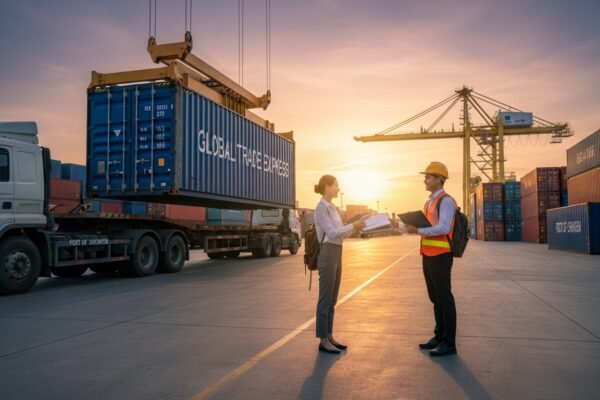
| 7. Shipping & Logistics | Goods are packed and shipped | Confirm shipping method and address | Arrange freight, customs docs, tracking |
| 8. After-Sales | Any issues post-delivery are handled | Report problems if any | Mediate with supplier for resolution |
How Communication Works
Most agents communicate via WhatsApp, email, or Zoom. In our experience, WhatsApp works best for quick updates and photo sharing during production. Email is better for formal approvals and record-keeping. Video calls are useful for initial meetings and complex issue resolution.
A good agent sends you weekly updates during production. They don't wait for you to ask. If something goes wrong — a material shortage, a color mismatch, a delayed shipment — you hear about it early, not after the goods are on a container ship.
From Sample to Scale
The sample stage is where most decisions are made or broken. Never skip it. Even if you've sourced a similar product before, every factory is different. Request at least two to three samples from different suppliers. Compare build quality, packaging, and attention to detail. Once you approve a sample, make sure your agent keeps a reference unit at their warehouse. This becomes the benchmark for the full production run.
After sample approval, you move into bulk production. Your agent should provide a production schedule with clear milestones — raw material procurement, assembly, finishing, and packing. At each milestone, they should report status and flag any risk of delay.
Payment Structure
Most sourcing engagements use a 30/70 payment split: 30% deposit before production begins, and 70% balance after you approve the pre-shipment inspection 8 report. Some agents accept payment via wire transfer, PayPal, or even Payoneer. Confirm the payment method and currency before you start.
How can a sourcing agent help me manage quality control and avoid delivery delays?
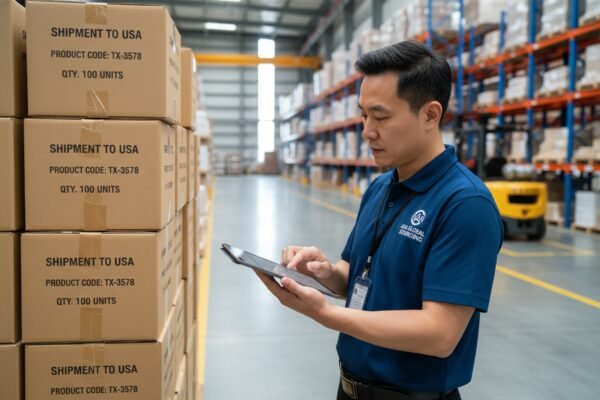
In our warehouses, we see the consequences of poor quality control every month — cracked casings, misaligned connectors, wrong color batches. These aren't rare events. They happen when nobody is watching the production floor. And delivery delays? They cascade. One week late from the factory becomes three weeks late to your customer.
A sourcing agent manages quality control by conducting factory audits before production, performing in-line inspections during manufacturing, and executing pre-shipment inspections before goods leave China — while coordinating production timelines and logistics to prevent delays from reaching your end customers.

The Three Layers of Quality Control
Quality control is not a single event. It's a process with multiple checkpoints.
Layer 1: Factory Audit. Before you place any order, your agent should visit the factory. They check production capacity, equipment condition, worker skill levels, and past quality records. This tells you if the factory can actually deliver what they promise.
Layer 2: In-Line Inspection. During production — usually when about 20% to 30% of the order is complete — the agent inspects the first batch. This catches systematic defects early. If a mold is slightly off or a component is wrong, fixing it at this stage costs almost nothing compared to discovering it after the full run is done.
Layer 3: Pre-Shipment Inspection. Once production is finished and goods are packed, the agent does a final check. They use AQL (Acceptable Quality Level) sampling standards 9. They measure dimensions, test functionality, check labeling, and photograph everything. You receive a detailed report with photos and pass/fail status.
How Agents Prevent Delivery Delays
Delays come from many sources: raw material shortages, factory capacity overload, holidays (especially Chinese New Year), customs documentation errors, and shipping bottlenecks. Here's how a good agent addresses each.
| Delay Cause | How a Sourcing Agent Prevents It |
|---|---|
| Raw material shortage | Confirms material availability before order placement |
| Factory overbooked | Verifies current production load and capacity |
| Chinese holidays | Plans production timeline around known shutdowns |
| Documentation errors | Prepares customs paperwork correctly the first time |
| Shipping delays | Books freight early; monitors vessel schedules |
| Unexpected defects | Catches issues during in-line inspection, not after |
Protecting Your Intellectual Property
If you're sourcing custom or proprietary products, your agent should help you draft and enforce NNN agreements 10 — Non-Disclosure, Non-Use, Non-Circumvention. These are specifically designed for the Chinese legal system and offer stronger protection than a standard NDA. Your agent should also monitor whether your supplier is selling your design to other buyers.
When Things Go Wrong
No system is perfect. Sometimes defects slip through. Sometimes a typhoon shuts down a port. What matters is how your agent responds. A reliable agent has a backup plan. They know alternative factories. They have relationships with multiple freight forwarders. They don't disappear when problems arise — they solve them.
One thing I tell every new client: ask your potential agent what they do when a shipment fails inspection. Their answer tells you everything about how they operate.
What are the typical fees and costs I should expect to pay for professional sourcing services?
When we onboard new clients, the first question after "Can you find this product?" is almost always "How much do you charge?" It's a fair question. But the answer involves more than just the agent's commission. There are several layers of cost, and understanding them upfront prevents surprises later.
Professional sourcing agent fees typically range from 5% to 10% of your total purchase order value on a commission basis. Additional costs may include sample shipping, factory audit fees, third-party inspection charges, and international freight — all of which should be clearly outlined before you commit to any agreement.
Breaking Down the Fee Structure
The commission model is the most common. Your agent earns a percentage of the total order value. For a $10,000 order at 8% commission, that's $800. Simple math. But let's look at all the potential costs.
Common Cost Items
Agent commission. This is the core fee. It covers supplier search, negotiation, communication management, and general project coordination. The standard range is 5% to 10%, though this can vary based on order size, product complexity, and the scope of services included.
Sample costs. You pay for physical samples plus shipping. Samples from Chinese factories typically cost $20 to $200 each depending on the product. Shipping via express courier adds another $30 to $100.
Factory audit fees. Some agents include one factory visit in their commission. Others charge separately — usually $200 to $500 per visit depending on the factory's location relative to the agent's office.
Inspection fees. Pre-shipment inspection by the agent's in-house team is sometimes included in the commission. Third-party inspections (from companies like SGS or Bureau Veritas) cost $200 to $400 per man-day.
Freight and logistics. This is usually billed separately and depends on shipping method, weight, volume, and destination. Sea freight is cheapest for large shipments. Air freight is faster but costs three to five times more per kilogram.
When Are Agents Most Cost-Effective?
Agents provide the best value when your order volumes are small to medium, when you're sourcing a new product category for the first time, or when you lack established supplier relationships in China. For orders with MOQs of around 100 units or fewer per month, an agent's commission is almost always justified by the time savings and risk reduction.
For very large, recurring orders where you've already established trust with a factory, you may eventually transition to a direct relationship. Many of our clients start with us for the initial sourcing and vetting, then maintain the relationship for quality control and logistics even after they know the supplier.
Hidden Costs to Watch For
Some agents charge "service fees" on top of commission without clearly explaining what those fees cover. Others mark up the factory price and present it as the "supplier quote" — pocketing the difference without your knowledge. This is why transparency matters so much. An agent who shares the original 1688 or factory quotation alongside their fee is one you can trust.
Always ask for an itemized cost breakdown before signing any agreement. If an agent cannot or will not provide one, consider that a warning sign.
Conclusion
Sourcing from China with a good agent saves you time, reduces risk, and lets you focus on selling. Choose your agent carefully, demand transparency, and build the relationship step by step.
Footnotes
- Comprehensive guide on sourcing products from China. ↩︎
- Defines quality control within the broader context of quality management. ↩︎
- Replaced with the Wikipedia page for a comprehensive and authoritative definition of consumer electronics. ↩︎
- Explains how to create and manage production timelines in manufacturing. ↩︎
- Explains what trade shows are and their benefits for businesses. ↩︎
- Explains B2B marketplaces and platforms for business transactions. ↩︎
- Replaced with a comprehensive guide on verifying Chinese companies and their registration, including business licenses, from a corporate intelligence platform. ↩︎
- Explains the process and importance of pre-shipment inspections. ↩︎
- Replaced with the Wikipedia page for an authoritative definition and explanation of Acceptable Quality Level (AQL). ↩︎
- Details NNN (Non-Disclosure, Non-Use, Non-Circumvention) agreements for China. ↩︎