We often see panic in February when clients realize their first post-holiday batch differs from the last. Production consistency shouldn't be a gamble when the factory reopens.
To ensure quality after Chinese New Year, immediately verify workforce stability and conduct First Article Inspections to catch systemic errors. You must audit raw materials for moisture Moisture Sensitive Devices (MSDs) 1 damage during shutdown and mandate equipment recalibration. Prioritize onsite inspections during the first week to counter post-holiday cognitive fatigue among returning staff.
Let’s walk through the essential steps to protect your supply chain during this supply chain 2 critical restart period.
How does high worker turnover after Chinese New Year impact my product consistency?
In our Shenzhen facility, we brace for 15-30% staff attrition every March. Losing veteran assemblers threatens the intricate details of your product.
High turnover leads to inconsistent assembly techniques and a loss of tribal knowledge, resulting in higher defect rates. New hires lack familiarity with Standard Operating Procedures, often causing cosmetic flaws or functional failures. Immediate training audits and intensified line supervision are necessary to bridge this skill gap during the ramp-up.
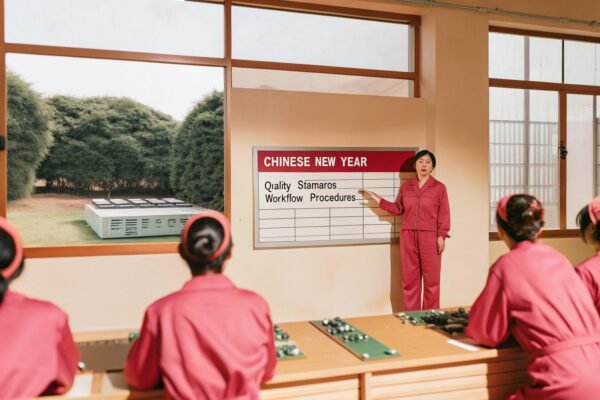
When we look at the production floor in late February, the faces often change. The Chinese New Year (CNY) is the primary window for migrant workers to switch jobs or decide not to return to the city. This creates a massive "brain drain" on the assembly line. While the factory management might remain the same, the hands building your product are likely new.
The Loss of Tribal Knowledge
Standard Operating Procedures (SOPs) are written on paper, but quality is often maintained Standard Operating Procedures (SOPs) 3 through "tribal knowledge"—the unwritten habits experienced workers develop over years. A veteran worker knows exactly how much pressure to apply when snapping a casing shut without leaving a mark. A new hire does not. When we visit factories post-CNY, we often see new workers struggling with rhythm. They follow the instructions, but they lack the finesse. This leads to a spike in cosmetic defects, such as glue spillover, scratches, or misaligned labels.
The Risk of Cognitive Fatigue
Even for the workers who do return, the first week is dangerous. They have spent three weeks celebrating, often with irregular sleep schedules. When they return to the repetitive nature of the assembly line, their attention span is lower. We call this "post-holiday cognitive fatigue." It results in slower reaction times. post-holiday cognitive fatigue 4 If a machine jams, a tired worker might force it rather than reset it, causing damage to both the product and the tool.
Managing the Transition
We advise our clients to never assume business as usual. You must demand proof of training. Before mass production resumes, we ask factory managers to show us the training logs for the specific line producing our order. If 40% of the line is new, we demand a slower production speed for the first three days. Speed kills quality when the workforce is inexperienced.
Impact of Tenure on Quality Risks
| Worker Status | Knowledge Level | Primary Risk Factor | Mitigation Strategy |
|---|---|---|---|
| Returning Veteran | High (Internalized SOPs) | Cognitive Fatigue / Complacency | refresher safety briefing; lower quotas for Week 1. |
| New Hire | Low (Learning Phase) | Misinterpretation of SOPs | 100% inspection of their first 50 units; "Buddy System" with veterans. |
| Temporary Staff | Very Low (Stop-gap) | Zero Accountability | Avoid using for critical assembly steps; limit to packaging tasks. |
What specific quality checks should I prioritize when the factory reopens?
We never rely on pre-holiday promises alone. Once the doors open, our team is on the floor to validate machine settings and personnel readiness.
Prioritize a strict First Article Inspection (FAI) to validate the initial production run against your Golden Sample. Focus on machine recalibration checks to ensure idle equipment meets tolerances. Additionally, implement specific cognitive fatigue monitoring for manual assembly lines, as worker attention spans are often lower during the first week back.
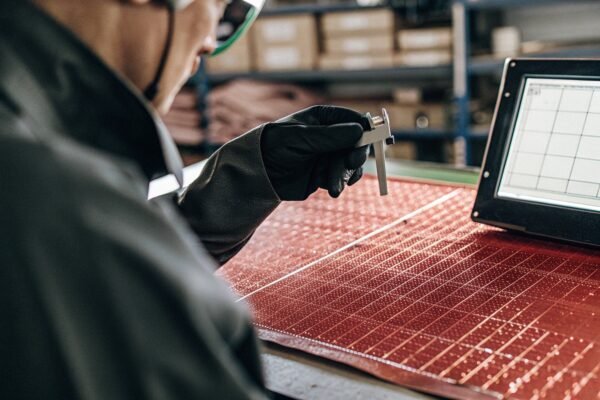
The first batch off the line in late February or early March is statistically the riskiest order of the year. To mitigate this, we shift our inspection strategy from random sampling to focused process auditing. You cannot inspect quality into a product; you have to ensure the process creating it is sound.
The Necessity of First Article Inspection (FAI)
The most critical checkpoint is the First Article Inspection (FAI). This is not just First Article Inspection (FAI) 5 looking at the first unit; it is a full validation of the process. We verify that the factory has set up the line correctly. Often, factories tear down lines before the holiday to clean or save space. When they reassemble them, settings drift. If the temperature on an injection molding machine is off by five degrees injection molding machine 6, the plastic may look fine but become brittle. FAI catches this before you run 5,000 defective units.
Recalibrating Idle Machinery
Machines are like muscles; they stiffen up when not used. Lubricants settle, belts loosen, and sensors get dusty. We frequently see issues with CNC machines losing their zero-point calibration after being zero-point calibration 7 powered down for weeks. Before your order starts, we require the factory to run a maintenance cycle. We want to see the maintenance log dated after the holiday. If the last check was January 20th, and production starts February 25th, that is a red flag.
Re-verifying the Golden Sample
Every factory keeps a "Golden Sample"—the perfect version of your product used for comparison. However, where was this sample during the break? If it was left on a supervisor's desk in a cold, damp factory, it might have warped, faded, or rusted. If the benchmark is damaged, the QC staff will measure your new production against a flawed standard. We always ask to see the Golden Sample immediately upon arrival to ensure it is still pristine.
Comparison of Inspection Types for Post-CNY
| Inspection Type | Timing | Post-CNY Focus | Importance Level |
|---|---|---|---|
| FAI (First Article) | Day 1 of Restart | Verify machine setup and "Golden Sample" accuracy. | Critical |
| DUPRO (During Prod) | 20-30% Complete | Check consistency of new workers on the line. | High |
| PSI (Pre-Shipment) | 100% Packed | Random sampling to catch batch-wide defects. | Standard |
| Loading Check | Departure | Ensure containers are dry and not damaged during holiday. | Medium |
Do I need to re-verify raw materials that were sitting in the warehouse during the break?
We have seen electronic components fail because they absorbed moisture while the HVAC was off. Warehouses are uncontrolled environments during the holiday shutdown.
Yes, re-verification is critical because uncontrolled humidity and temperature fluctuations during the shutdown can cause rust, mold, or warping. You must inspect moisture-sensitive components and demand data logs proving environmental control systems were active for at least 24 hours before materials enter the production line.

Many importers assume that if raw materials were approved before the holiday, they are still good after the holiday. This is a dangerous assumption. Most factories in China, especially in the manufacturing hubs of Guangdong or Zhejiang, do not keep climate control running during the break. The power is cut to save money.
The Humidity and Temperature Threat
Southern China can be incredibly humid in February and March. When a factory shuts down the HVAC system for three weeks, humidity accumulates. We have opened cardboard boxes of raw materials to find them soft and damp. For metal parts, this leads to flash rust. For fabrics and leather flash rust 8, it invites mold. Even if the mold is wiped off, the spores remain, and the product may smell musty when it reaches the customer.
Risks to Electronic Components
For our clients in consumer electronics, this is even more vital. PCBs (Printed Circuit Boards) Printed Circuit Boards 9 and certain chips are Moisture Sensitive Devices (MSDs). If they absorb moisture and are then put through a reflow oven, the trapped water expands and cracks the component—a phenomenon known as the "popcorn effect." popcorn effect 10 We insist that suppliers bake their moisture-sensitive components before use if they have been stored in uncontrolled conditions. We check the humidity indicator cards inside the vacuum-sealed bags. If the dot has turned pink, the parts must be treated.
The "Tier 2" Supplier Blind Spot
Your factory might be honest, but what about the factory that supplies them? If your supplier ran out of stock and is waiting for a delivery from their supplier (Tier 2), that Tier 2 factory also just reopened. They might be rushing and cutting corners on their materials. We inspect the incoming date codes on raw materials. If the materials were produced just days after the holiday, we test them rigorously because they were made in a rush. If they were produced before the holiday, we check for storage damage.
Material Vulnerability Matrix
| Material Category | Primary Post-CNY Risk | Inspection Method |
|---|---|---|
| Electronics (PCB/Chips) | Moisture absorption / Delamination | Check Humidity Indicator Cards; Request baking logs. |
| Metals (Steel/Iron) | Flash Rust / Oxidation | Visual inspection under bright light; Salt spray test. |
| Textiles / Leather | Mold / Mildew / Odor | Smell test; Moisture meter check; UV light inspection. |
| Paper / Packaging | Warping / Softening | Touch test for rigidity; Check for water stains. |
| Adhesives / Glues | Expiration / Curing issues | Check expiration dates; Test bond strength on samples. |
How can I prevent quality issues caused by the factory rushing to catch up on orders?
We constantly monitor production schedules because factories overbook. When they rush to clear backlogs, internal QC steps are the first thing they skip.
Prevent rushing by locking in realistic delivery dates and penalty clauses before the holiday begins. Monitor production daily for unrealistic acceleration that signals skipped internal QC steps. Utilize a third-party sourcing agent to maintain a physical presence, ensuring the factory does not substitute unapproved materials to bypass supply bottlenecks.

The weeks following Chinese New Year are a "seller's market." Every buyer wants their goods shipped immediately. Factories are under immense pressure to clear the backlog. In this environment, speed becomes the enemy of quality. If you push too hard for a fast delivery, the factory will give you speed, but you will pay for it in defects.
The "Phantom" Subcontracting Risk
When a factory is overwhelmed, they often silently farm out orders to smaller workshops nearby. These smaller workshops do not have the same quality standards or certifications. We have visited factories where our client's line was supposed to be running, only to find it empty. The manager then admits the work was moved to a "partner facility." This is a disaster for quality control. To prevent this, we require photos of the production line with today's newspaper or a specific sign visible. Better yet, we send an inspector to stand on the line.
Strategic Communication and Relationships
Communication during this period requires a human touch. Before the holiday, we set up "Emergency WeChat Groups" with the factory owner, the production manager, and the sales rep. We don't just rely on email, which is often ignored. We send a small digital "Red Packet" (a monetary gift) during the festival as a gesture of goodwill. This small cultural action puts us at the top of their priority list when they return. It changes the dynamic from transactional to relational.
Monitoring the "Impossible" Schedule
We analyze the production schedule mathematically. If a factory claims they can finish an order in 10 days, but we know the cycle time requires 15 days, we know they are skipping steps. They might be skipping the curing time for glue, or bypassing the burn-in test for electronics. We ask for the daily output logs. If the output suddenly doubles without new workers, they are cutting corners. We confront them with this data immediately.
Actionable Communication Plan for CNY
- Pre-Holiday (4 Weeks Out): Confirm the "Drop-dead" date for shipping. Sign a supplemental agreement detailing penalties for late delivery and quality failure.
- During Holiday: Send friendly greetings. Keep the relationship warm without talking business.
- Post-Holiday (Day 1): Verify the factory is actually open. Ask for a photo of the team (often disguised as a "Welcome Back" wish).
- Post-Holiday (Week 1): Confirm worker return rates. If they only have 50% staff, adjust your delivery expectation voluntarily. It is better to be late than to be defective.
Conclusion
Post-CNY production requires vigilance, not just trust. By enforcing strict checks and maintaining close communication, we secure product consistency despite the seasonal chaos.
Footnotes
1. Official industry standard for handling, packing, and shipping moisture-sensitive devices. ↩︎
2. Educational resource from a top university research center focused on supply chain logistics. ↩︎
3. Official government guidance on developing and maintaining standard operating procedures. ↩︎
4. Government health resources regarding work schedules and worker fatigue management. ↩︎
5. Authoritative industry definition and process overview for First Article Inspection. ↩︎
6. Product documentation from a leading global manufacturer of injection molding equipment. ↩︎
7. Official government institute standards for measurement accuracy and equipment calibration. ↩︎
8. Technical guide from a major industrial coatings company on preventing flash rust. ↩︎
9. Leading industry association establishing standards for printed circuit board manufacturing. ↩︎
10. General background information explaining the moisture expansion phenomenon in electronics. ↩︎