Every year, we watch production lines in Shenzhen go silent in February. If you rely on stable shipments, that silence is deafening and dangerous for your Q1 sales, requiring immediate proactive planning.
Conducting a supply chain risk assessment for the Spring Festival involves analyzing potential factory closures, labor shortages, and logistics bottlenecks. You must evaluate supplier solvency, inventory buffers, and quality Quality Fade 1 control plans to mitigate the 3-4 week disruption typical of the Chinese New Year shutdown.
Let’s dive into the specific mechanics of this disruption and how we can secure your supply chain against the inevitable holiday chaos.
What specific supply chain risks should I assess before the Chinese New Year shutdown?
We often see Tier-2 suppliers stop weeks early Tier-2 suppliers 2, cutting off raw materials. If we don't catch this hidden supply cliff, final assembly halts immediately regardless of our schedule.
Key risks include early closures of sub-component suppliers, logistics capacity shortages, and significant price spikes in freight. Additionally, the pre-holiday "quality fade" is a major concern as factories rush orders, followed by post-holiday labor shortages that delay production restarts.
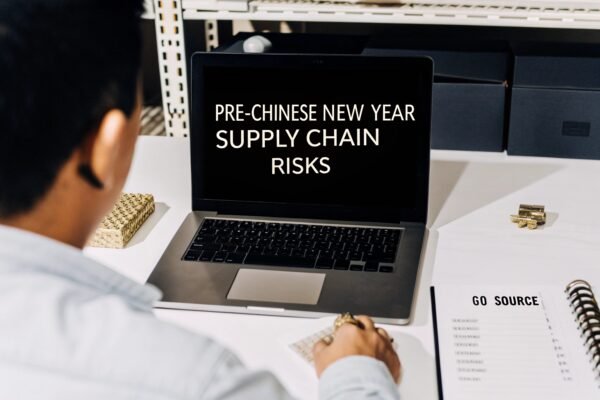
When we evaluate the landscape before the Chinese New Year (CNY), we are not just looking at a calendar event; we are looking at a complete industrial reset. The risks are multi-layered and often invisible to buyers who only communicate with sales representatives. The most critical risk we assess is the "domino effect" of shutdowns. While your final assembly factory might tell you they close on January 28th, the dye house, the packaging printer, or the chip supplier might close on January 15th. Once those upstream nodes go offline, your production is effectively dead in the water, even if the assembly line is technically open.
The Hidden Financial Pressures
Another massive risk involves supplier solvency supplier solvency 3. In China, it is customary to settle all debts before the New Year. Factory owners must pay out year-end bonuses to retain workers and settle accounts with their own material suppliers. This creates a severe cash flow crunch. If a supplier is already on shaky financial ground, the pressure of CNY can push them into insolvency. We always recommend checking in on the financial health of your partners in Q4. If they are pushing unusually hard for early payments, it might be a red flag.
The Logistics Bottleneck
Logistics risks spike dramatically Logistics risks 4. It is not just about the port; it is about the truck drivers. Most drivers are migrants who leave early to beat the rush. This means that even if your goods are finished, you might not find a truck to get them to the port, or the trucking fees might triple overnight.
Risk Assessment Matrix
To help you visualize where to focus your attention, we use a risk matrix during this period.
| Risk Category | Timing of Impact | Potential Consequence | Mitigation Strategy |
|---|---|---|---|
| Upstream Supply Cutoff | 2-3 weeks before holiday | Production halts due to missing components. | Confirm closing dates of Tier-2/3 suppliers, not just the main factory. |
| Logistics Congestion | 4-6 weeks before holiday | Missed vessels, rolled cargo, tripled costs. | Book freight space 4-6 weeks in advance; consider air freight for urgent batches. |
| Quality Fade | 2 weeks before holiday | High defect rates due to rushed assembly. | Implement "During Production" inspections; do not pressure for unrealistic ETAs. |
| Labor Turnover | 2-4 weeks after holiday | Slow ramp-up, untrained workers making errors. | Forecast lower output in Q1; audit workforce return rates post-holiday. |
By breaking these risks down, we can see that the "holiday" is actually a quarter-long disruption event. Assessing these risks requires deep communication with your suppliers, asking the hard questions about their sub-suppliers and their workforce stability.
How will the Spring Festival holiday impact my production schedules and lead times?
When we plan production in Shenzhen, we calculate a full month of disruption. It is never just a seven-day pause; the ripple effects stretch lead times significantly.
The official holiday may only last one week, but actual production impacts span 30 to 45 days. Factories wind down operations early for worker migration and require weeks to ramp back up, extending lead times significantly for orders placed in January and February.

The impact on schedules is often the most misunderstood aspect of sourcing from China sourcing from China 5. Many buyers see the official "Golden Week" on a calendar and assume a 7-day delay. In reality, the disruption curve is bell-shaped and wide. The impact begins roughly two weeks before the holiday and extends for at least three weeks after.
The "Chunyun" Migration Effect
The primary driver of this schedule impact is the Chunyun Chunyun (Spring Festival travel rush) 6 (Spring Festival travel rush), the largest annual human migration on Earth. Hundreds of millions of workers travel from industrial coastal cities back to inland provinces. Because tickets are hard to get and the journey is long, workers often leave 10 to 14 days before the official holiday starts. Our production lines start thinning out in mid-January. By the time the official holiday hits, the factory is a ghost town.
The Slow Ramp-Up
The return journey is equally staggered. When the holiday ends, not everyone comes back on day one. Some extend their stay; others decide not to return at all (we will discuss this more in the workforce section). This means that on the first First In, First Out 7 "official" work day after CNY, a factory might only have 30% of its workforce present. It takes roughly two to three weeks to get back to 100% capacity.
If you place an order in late January, do not expect it to start production until late February. The "First In, First Out" rule applies strictly here. The backlog of orders placed before the holiday will be cleared first. If you enter the queue late, your lead time could easily double from 30 days to 60 or even 90 days during this specific season.
Critical Schedule Milestones
To manage expectations, we track specific milestones. If you miss the "Cut-Off" dates, your goods will likely be stuck in China until March.
- Production Cut-Off: Orders must usually be confirmed by mid-November to guarantee shipment before CNY.
- Logistics Cut-Off: Freight bookings must be secured by early January.
- The "Blackout" Period: For roughly 3 weeks (1 week before, 2 weeks of holiday/recovery), absolutely zero production occurs.
- The Recovery Phase: The first 2 weeks of March are often spent clearing the backlog.
Understanding this timeline helps us set realistic expectations with your downstream customers. If you promise a delivery in February based on standard lead times, you will almost certainly fail. We have to pad the schedule by at least 4 weeks for any Q1 order.
Should I increase my inventory levels to prepare for the factory closures in China?
Our warehouse team always advises clients to front-load orders in December. Relying on "just-in-time" delivery during the Chinese New Year is a recipe for a stock Safety Stock 8-out disaster.
Yes, you should increase inventory levels by 30-40% to cover a 6-8 week supply gap. This "front-loading" strategy ensures you have sufficient stock during the manufacturing blackout and buffers against the logistics congestion that occurs immediately after factories reopen.

The short answer is absolutely yes. The risk of holding extra inventory pales in comparison to the cost of a stock-out. In the e-commerce and retail world, going out of stock doesn't just mean lost sales for those days; it means losing your organic ranking algorithms on platforms like Amazon and losing customer trust.
The Math Behind the Buffer
We don't just guess a number. We use a specific logic to calculate the necessary buffer. You need to cover the "Blackout Period" plus the "Recovery Period." Standard lead times do not apply. If you usually sell 1,000 units a month, and your lead time is 30 days, you might hold 1,500 units. But during CNY, the lead time effectively becomes 75 days.
We suggest a formula:
- (Average Daily Sales) x (Standard Lead Time + 45 Days Disruption) + Safety Stock
This often results in increasing your Q1 inventory orders by roughly 30% to 40% compared to a normal quarter. This stock needs to be on the water before the holiday starts. If you try to ship it immediately after the holiday, you will get stuck in the logistics bottleneck where everyone else is trying to ship their delayed goods.
Cost Benefit Analysis
Many clients worry about the cash flow implications of buying so much stock upfront. However, consider the alternative costs:
- Expedited Shipping: If you run low in March, you might be forced to use air freight, which can be air freight 9 10x the cost of sea freight, wiping out your margins.
- Lost Market Share: If you are empty, your competitors who stocked up will take your customers.
- Price Increases: Post-CNY material costs often fluctuate. Locking in prices before the holiday creates financial certainty.
Strategic Inventory Planning Table
Here is how we categorize inventory priority to manage cash flow while staying safe.
| Inventory Priority | Description | Recommended Action |
|---|---|---|
| Hero Products | Top 20% of SKUs generating 80% of revenue. | Aggressive Stocking. secure 8-10 weeks of coverage. Do not risk a stock-out here. |
| Steady Sellers | Consistent sales, lower volume. | Moderate Stocking. Secure 6 weeks of coverage. |
| New/Test Items | Unproven products or seasonal tests. | Minimal Stocking. Do not tie up cash here before the holiday. Wait until production stabilizes in March. |
| Components | Raw materials for local assembly. | Full Buffer. If you assemble locally, ensure you have all Chinese components to last through April. |
By segmenting your inventory, we ensure that your capital is deployed where it protects your revenue most effectively.
How can I ensure my product quality remains high during the pre-holiday rush?
We strictly monitor assembly lines in January because workers are mentally already on holiday. This distraction leads to mistakes that we simply cannot afford to ship.
To maintain quality, implement strict pre-shipment inspections (PSI) and avoid placing "rush orders" that force corners to be cut. We recommend deploying third-party inspectors to the factory floor during the final weeks to catch defects before goods are sealed in containers.

Quality issues during the CNY season generally stem from two distinct phases: the pre-holiday rush and the post-holiday brain drain. As a sourcing team on the ground, this is the time of year we lose the most sleep, because the pressure to ship often overrides the discipline to check.
The "Rush" Mentality
In the weeks leading up to the holiday, factories are under immense pressure to clear their order books so they can collect payments. This creates an environment where "good enough" becomes the standard. Production lines run faster, curing times for glues might be shortened, and QC checks might be skipped to catch the last truck to the port. We call this "Quality Fade."
To combat this, we refuse to accept "rush orders" placed in late January. If an order cannot be finished with standard QC times, we advise delaying it until after the holiday. It is better to be late than to ship a container full of defects.
Post-Holiday Workforce Turnover
The deeper issue happens after the holiday. As mentioned in the insights, migrant workers in China often use the New Year break to assess their life choices. They talk to friends, find opportunities closer to home, or decide to switch industries. Consequently, factories often lose 10% to 30% of their skilled workforce annually skilled workforce 10.
When the factory reopens, they have to hire new, unskilled workers to fill the gaps. These new workers do not know your product standards. They don't know that your specific plastic housing scratches easily, or that your electronics need a specific soldering technique. This leads to a spike in defects in March and April.
Managing the Human Element
This is where training and auditing become vital. We cannot assume the person assembling your product in March is the same person who did it in December.
Quality Control Action Plan
We implement a defensive QC strategy during this season.
| Phase | Risk Factor | QC Action Required |
|---|---|---|
| Pre-Holiday (Jan) | Rushing, fatigue, cutting corners. | 100% Final Inspection. Do not rely on sampling. Check finished goods before they leave the floor. |
| During Holiday | Theft, moisture damage in storage. | Secure Warehousing. Ensure goods left behind are sealed and stored in climate-controlled areas. |
| Post-Holiday (Mar) | New workers, lack of training. | Process Audit & First Article Inspection. Visit the factory to verify new workers are trained. Check the first 5% of output rigorously. |
| Outsourcing Risk | Unauthorized subcontracting to clear backlog. | Unannounced Visits. Verify production is happening at the approved facility, not a cheaper subcontractor. |
The key takeaway is vigilance. We assume that the factory is operating in "crisis mode" and we adjust our oversight to match. You cannot govern a factory by email during the Spring Festival; you need eyes on the production line.
Conclusion
Planning ahead prevents Q1 disasters. By assessing these risks now—covering inventory gaps, securing logistics, and tightening quality controls—we ensure your supply chain remains resilient despite the inevitable holiday chaos.
Footnotes
1. Academic article from Wharton explaining the specific phenomenon of quality fade in manufacturing. ↩︎
2. Defines the concept of multi-tier supply chains from a leading procurement institute. ↩︎
3. Official US government guidance on conducting financial due diligence on foreign partners. ↩︎
4. Insights on supply chain resilience from a major global logistics company. ↩︎
5. Official UK government regulations and procedures for importing goods. ↩︎
6. Provides general background context on the scale of this specific migration event. ↩︎
7. Educational resource defining this standard inventory management and accounting method. ↩︎
8. Technical explanation of safety stock calculations from a major ERP software provider. ↩︎
9. Industry standards and market analysis from the International Air Transport Association. ↩︎
10. Global data on talent shortages and workforce trends from a major HR consultancy. ↩︎