
When we analyze the production costs for our smart home devices in Shenzhen, the shifting landscape of international trade is the first variable we calculate. Managing a supply chain today feels less like traditional manufacturing and more like navigating a minefield of regulations. We see firsthand how unexpected duty hikes disrupt the profit margins of the US brands we support, forcing us to rethink every step from raw material procurement 1 to final assembly.
US-China trade tariffs significantly increase import costs, making hiring a China sourcing agent crucial for survival. Agents mitigate these expenses by verifying HS codes, negotiating factory prices to share the tax burden, and facilitating diversification into Southeast Asia to bypass duties on specific product categories.
To understand whether this partnership is right for your business, we need to break down the financial and strategic realities of the current trade environment.
How can a sourcing agent help me lower my total landed costs despite high tariffs?
We constantly adjust our material procurement strategies to keep our export pricing competitive, knowing that every dollar saved on the factory floor matters more when duties are high. In our daily negotiations with sub-suppliers, we leverage volume to secure better terms, ensuring that the base unit price provides some buffer against the tariffs our clients face upon entry into the US.
A sourcing agent lowers total landed costs by negotiating lower ex-factory prices to offset tariff hikes and optimizing logistics to reduce freight expenses per unit. They also identify compliant exemptions and manage supply chain efficiency, ensuring that the final delivered price remains viable for your market.
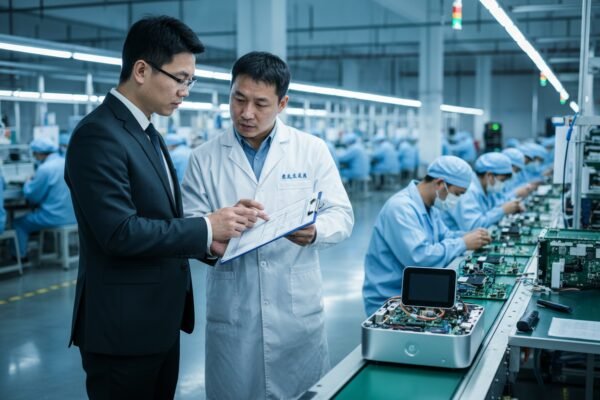
The landscape of US-China trade has evolved rapidly, especially with the intensified tariff measures introduced in 2025 and 2026. For businesses importing goods, the concept of "landed cost"—the total price of a product once it arrives at your doorstep—has skyrocketed. This is where the strategic value of a sourcing agent transforms from a convenience into a necessity. A sourcing agent does not just find a factory; they engineer the cost structure of your product to survive a high-tariff environment.
One of the primary ways we tackle this is through aggressive supply chain auditing. When tariffs like the Section 301 duties 2 are applied, they are calculated based on the Commercial Invoice value. Therefore, reducing the FOB (Free on Board) price 3 legitimately is the most direct way to lower the tariff amount. We do this by going upstream in the supply chain—negotiating directly with raw material providers rather than just the final assembly plant. For example, if we can lower the cost of the plastic injection molding 4 for a consumer electronics casing by 15%, that reduction lowers the base upon which the 25% or higher tariff is applied.
Furthermore, the legal landscape is in flux. With the February 2026 SCOTUS ruling invalidating some IEEPA-based tariffs 5, effective rates have fluctuated wildly. An agent stays abreast of these changes to ensure you aren't overpaying based on outdated data. We also focus heavily on logistics optimization. By consolidating shipments from multiple suppliers into a single container, we reduce per-unit shipping costs, which helps offset the bite taken by customs duties.
Cost Impact Analysis: Direct Sourcing vs. Agent Optimization
The following table illustrates a hypothetical scenario for importing 1,000 units of a smart home device under a 25% tariff regime.
| Cost Component | Direct Sourcing (No Agent) | Sourcing via Agent (Optimized) | Savings / Impact |
|---|---|---|---|
| Ex-Factory Price (FOB) | $20.00 | $17.50 (Negotiated) | -$2.50 per unit |
| Shipping & Insurance | $2.00 | $1.50 (Consolidated) | -$0.50 per unit |
| Customs Value | $20.00 | $17.50 | Lower Tax Base |
| Tariff Duty (25%) | $5.00 | $4.38 | -$0.62 per unit |
| Agent Commission (5%) | $0.00 | $0.88 | +$0.88 per unit |
| Total Landed Cost | $27.00 | $24.26 | Savings: $2.74 per unit |
As shown above, even after paying the agent's commission, the comprehensive reduction in the base price and logistics results in a lower landed cost. In a trade war, these margins define whether a product remains viable on Amazon or Walmart shelves.
Will an agent assist me in finding the correct HS codes to minimize my tax burden?
Our logistics team often spots classification errors that cost clients thousands in unnecessary duties or result in shipment holds at the border. We know that a single digit difference in paperwork can shift a product from a duty-free category to one hit with a massive surcharge, so we scrutinize every component description before it leaves the warehouse.
Experienced agents assist in identifying the most accurate HS codes for your goods, ensuring you do not pay higher duties than necessary. They navigate complex customs rulings and exclusion lists to find legal tax reductions while avoiding the severe penalties associated with misclassification or tariff evasion.

Harmonized System (HS) codes 6 are the language of international trade, and in a trade war, they are the difference between profit and loss. Many importers default to the HS code suggested by the factory, but factories are experts in manufacturing, not US Customs law. They often provide generic codes that might attract higher tariffs than necessary. A specialized sourcing agent works to identify the specific features of a product that might qualify it for a different, lower-tariff classification—a practice known as legitimate classification, not to be confused with illegal evasion.
For instance, a "digital alarm clock" might face a high consumer electronics tariff. However, if that same device functions primarily as a "smart home hub" with a clock feature, it might fall under a telecommunications category with a significantly lower duty rate. We utilize our knowledge of the product's technical specifications to argue for the most favorable, compliant code. This is particularly relevant given the recent moves to close "De Minimis" loopholes, which previously allowed small shipments to evade scrutiny. De Minimis loopholes 7 Now, every shipment is under the microscope.
Furthermore, we monitor the ever-changing list of Section 301 exclusions. The US Trade Representative (USTR) occasionally grants exclusions for products that cannot be sourced outside of China. An agent can help you determine if your product meets these criteria and assist in preparing the necessary documentation to claim a refund or exemption.
Common HS Code Pitfalls & Opportunities
Understanding the nuance in product description is vital. Below are examples where specific knowledge can alter the tax burden.
| Product Category | Generic Classification (High Tariff) | Optimized Classification (Potential Lower Tariff) | Why it Works |
|---|---|---|---|
| Kitchenware | 7323.93 (Stainless Steel Tableware) | 8509.40 (Electro-mechanical Appliance) | If the item has a motor/electric function, it may move to a different chapter. |
| Tech Bags | 4202.92 (Textile Bags/Cases) | 8473.30 (Computer Accessories) | Specific cases designed only for laptops may qualify as accessories rather than luggage. |
| LED Lights | 9405.40 (General Lamps) | 8541.40 (Photosensitive/LED Diodes) | Components vs. finished fixtures have vastly different rates. |
Navigating this requires a deep understanding of the General Rules of Interpretation (GRIs) used by customs. We ensure that the classification is defensible, providing product manuals, schematics, and lab test results to back up the chosen code if Customs and Border Protection (CBP) ever issues a Request for Information (CBP Form 28).
Should I use my China sourcing agent to help me diversify production into Southeast Asia?
We have observed many of our long-term partners asking about moving assembly lines to Vietnam or India to escape the tariff drag. While we are proud of our domestic manufacturing capabilities, we recognize the need for flexibility and have expanded our own networks to support clients who require a "China Plus One" strategy.
Using your China sourcing agent for diversification is highly recommended, as they can leverage existing networks to manage "China Plus One" strategies. They vet factories in Vietnam or India while maintaining quality control standards that often lag behind China’s mature manufacturing ecosystem, minimizing the risks of transition.
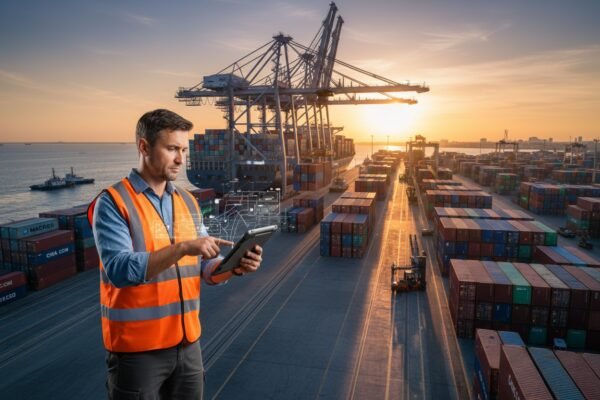
The "China Plus One" strategy has graduated from a buzzword to a survival tactic. China Plus One strategy 8 Data from JPMorgan indicates a 20% drop in US midsize firm outflows to China between 2024 and 2026, with much of that volume redirecting to Southeast Asia. However, shifting production is not as simple as changing the shipping address. The manufacturing infrastructure in Vietnam, India, or Thailand is often less mature than the highly integrated ecosystem in Shenzhen or Ningbo. This is where a China-based agent becomes your bridge.
Many Chinese factory owners have also recognized this shift and have opened satellite factories in Southeast Asia to help their clients avoid tariffs. As your agent, we can often facilitate a transition to these Chinese-owned facilities abroad. This offers the best of both worlds: you get the tariff-free origin of Southeast Asia (compliant with substantial transformation rules) while retaining the management style, quality expectations, and communication efficiency of your Chinese partners.
However, the "Total Cost of Ownership" in Southeast Asia can be deceptive. While labor might be cheaper and tariffs lower, raw materials often still need to be imported from China, increasing lead times and logistics complexity. An agent helps you weigh these trade-offs. We manage the cross-border supply chain, ensuring that components move smoothly from Chinese sub-suppliers to the Vietnamese assembly plant, and we place our own QC teams on the ground to prevent the quality fade that often plagues new production lines.
Strategic Comparison: China vs. Southeast Asia
| Feature | China (Mainland) | Southeast Asia (Vietnam/India) | Agent's Role |
|---|---|---|---|
| Tariff Exposure | High (Section 301 + Retaliatory) | Low / Preferential Trade Agreements | Calculate net savings after logistics. |
| Supply Chain Depth | Very Deep (Raw materials local) | Shallow (Imports often needed) | Coordinate cross-border material flow. |
| Labor Skill/Efficiency | High / Mature | Variable / Developing | Implement rigorous SOPs and training. |
| Logistics Infrastructure | World-class Ports/Roads | Improving but prone to congestion | Plan buffer times for transit. |
If you attempt to source directly from Vietnam or India without an agent, you may face cultural barriers and quality control issues that were solved in China a decade ago. We act as the consistent project manager, ensuring that "diversification" doesn't result in "disaster."
Is hiring a sourcing agent still a cost-effective move for my business during a trade war?
In our dealings with US clients, the conversation has shifted from product features to margin survival, and we have to prove our worth on every invoice. We focus on eliminating the hidden costs of international trade—defective batches and compliance fines—because in this climate, our clients simply cannot afford mistakes.
Hiring a sourcing agent remains a cost-effective strategy during a trade war because the savings from quality control, error prevention, and supply chain optimization typically exceed the service fees. Agents act as a buffer against volatility, protecting your business from costly compliance mistakes and sudden regulatory shifts.

When tariffs squeeze margins, the instinct is often to cut costs by eliminating intermediaries. However, this is often a false economy. The macro-economic data paints a grim picture: Yale Budget Lab projections suggest higher US unemployment and slower GDP growth due to tariff impacts, meaning consumer spending power is fragile. In such a market, you cannot afford to receive a shipment of defective goods. A bad batch coupled with a 25% tariff is a business-ending event.
A sourcing agent functions as an insurance policy against these catastrophic risks. The cost of an agent (typically 5-10% of the order value) is dwarfed by the potential losses of a failed shipment or a customs penalty. With monthly tariff payments tripling for many midsize firms post-April 2025, the margin for error is zero. We provide the "boots on the ground" to perform Pre-Shipment Inspections (PSI) 9, ensuring that you only pay duty on sellable, high-quality goods.
Furthermore, the trade war environment is characterized by legal flux—such as the threat of 100% tariffs on specific goods or new retaliation measures. An agent provides "future-proofing" by constantly scouting alternative suppliers and keeping a pulse on the political climate. We help you make data-driven decisions, such as pre-ordering inventory before a scheduled tariff hike or pivoting to a different material composition to avoid a specific duty category.
The ROI of Risk Management
Consider the cost of a single major error versus the cost of an agent over a year.
- Compliance Errors: Mislabeling country of origin can lead to a hold on goods and legal fees exceeding $10,000.
- Quality Failures: Returning defective goods to China is virtually impossible due to shipping costs and customs re-entry issues. You lose the product cost + shipping + tariff.
- Negotiation leverage: As mentioned earlier, a $2.50 reduction in unit price on a 10,000 unit order saves $25,000—covering the agent's fee and then some.
In this light, the agent is not an expense; they are a revenue protection unit. We absorb the complexity so you can focus on sales and marketing in a turbulent US economy.
Conclusion
The era of easy, low-cost sourcing from China has evolved into a complex game of strategy, compliance, and agility. While US-China trade tariffs have undeniably raised the barrier to entry, they have also elevated the role of the China sourcing agent from a simple finder of goods to a critical strategic partner. By leveraging an agent's expertise in cost negotiation, HS code compliance, and regional diversification, you can navigate the turbulence of the trade war. We don't just help you buy products; we help you build a resilient supply chain that protects your margins against geopolitical uncertainty.
Footnotes
1. Explains the process and strategies for acquiring raw materials in supply chain management. ↩︎
2. Official USTR page detailing Section 301 investigations and their purpose. ↩︎
3. Defines Free On Board (FOB) Incoterm, specifying obligations, costs, and risks in shipping. ↩︎
4. Explains the manufacturing process of plastic injection molding for producing parts. ↩︎
5. Discusses the Supreme Court's ruling on tariffs imposed under the International Emergency Economic Powers Act (IEEPA). ↩︎
6. Official explanation of Harmonized System (HS) codes for classifying traded products. ↩︎
7. Explains the U.S. de minimis rule in customs law and its impact on trade. ↩︎
8. Describes the China Plus One strategy for diversifying manufacturing operations outside China. ↩︎
9. Defines Pre-Shipment Inspection (PSI) as a quality control method in supply chain management. ↩︎