
Last month a client asked our Shenzhen sourcing team a simple question: does this factory truly accept L/C payment? The supplier said yes. The paperwork said otherwise — and that gap costs buyers real money.
To tell if a supplier accepts L/C payment, have your China sourcing agent request the business license, export license, and past L/C documents, confirm the beneficiary name matches the registered entity, verify the factory's bank supports SWIFT MT700 credits, and review a draft L/C before ordering.
A verbal "yes" is not proof. Acceptance means the supplier can comply with documentary credit 1 conditions without triggering discrepancies. In this guide, I will walk you through the exact checks we run for our clients, step by step, so you can confirm L/C readiness before a single dollar moves.
What documents should I request to verify a supplier's L/C payment capability?
A US client once forwarded me a supplier's message: "L/C no problem." Two weeks later, that same supplier could not produce a single draft shipping document. Documents tell the truth.
Request the supplier's business license, export license, bank account permit, and samples of past L/C documents — commercial invoice, packing list, bill of lading, certificate of origin, and inspection certificates. A supplier who provides these quickly and accurately shows genuine documentary compliance capability.

Words are cheap in sourcing. Documents are not. When we vet factories for consumer electronics or outdoor gear clients, we treat the document request as a stress test. A supplier that handles international trade payment terms regularly will respond within a day or two. A supplier that has never touched a documentary credit will stall, deflect, or send files that do not match.
The core verification package
Here is the exact set we ask for, and what each item actually proves.
| Document | What it proves | How your agent verifies it |
|---|---|---|
| Business license | The legal entity exists and its exact Chinese name | Cross-check against government registration data |
| Export license 2 | The supplier can export directly, not via a middleman | Export license verification with customs records |
| Bank account permit | The beneficiary account belongs to the registered entity | Match account holder name to the license, character by character |
| Past L/C or SWIFT copy | The supplier has settled documentary credits before | Redacted copies are fine; the format tells the story |
| Draft document set | The supplier can meet documentary compliance today | Request drafts before the L/C is opened |
Why export license verification matters most
A supplier that refuses an L/C often lacks a formal export license. That means they rely on third-party export agents, and those agents typically demand T/T payments to protect their own cash flow. So a missing export license quietly explains a lot of L/C resistance.
Test the full documentary set
Ask for a draft proforma invoice, commercial invoice, packing list, bill of lading requirements, and a certificate of origin 3 or Form A. Then compare them. The company name, address, and stamp must match across every file. In our experience, suppliers who can discuss document wording in detail almost always execute L/Cs cleanly. Suppliers who only talk about "advance payment" usually cannot.
How can my China sourcing agent confirm a factory's bank supports L/C transactions?
Every payment term carries a trade-off. On our Shenzhen team, we weigh bank capability against speed before recommending an L/C, because a weak bank kills a good credit.
Your sourcing agent confirms bank support by identifying the factory's export bank, matching the beneficiary account name to the registered entity, verifying the branch can receive SWIFT MT700 credits, and requesting proof of previous L/C settlements through an independent phone call, not just the email thread.
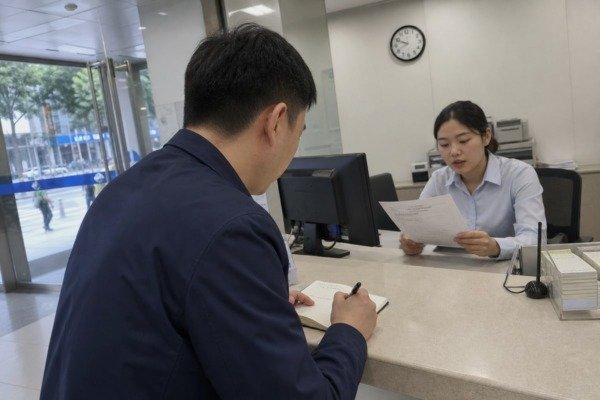
Not every Chinese bank branch handles documentary credits smoothly. Some rural branches route everything through a provincial head office, which adds days to advising and negotiation. That is why we run what we call a bankability audit before any client opens a credit. It follows five steps.
- Identify the export bank. We ask which bank handles the factory's export receipts most often. Suppliers who name a major institution like Bank of China without hesitation usually have real trade finance experience. Chinese suppliers also prefer L/Cs issued by top-tier global banks, because those credits are easier to use as collateral for their own local financing.
- Match the beneficiary account. The account holder name must match the registered company name exactly. Any gap here is a stop signal, not a detail.
- Verify SWIFT capability. The advising branch must be able to receive an SWIFT MT700 4 message from your issuing bank. We confirm this directly with the branch, using a phone number we source independently — never one pulled from the supplier's email signature.
- Check the discrepancy history. We ask whether the factory has faced document discrepancies in past L/C transactions. A history of discrepancies predicts shipment delays and payment freezes.
- Assess financing incentives. Factories rated "A" or "B" in China's Corporate Social Credit System are notably more willing to accept L/Cs, because they can use the instrument to secure Export Tax Rebate Financing from their bank. A supplier with that incentive negotiates faster.
A modern litmus test
We also ask whether the supplier has used digital L/C platforms, such as blockchain-based systems like Contour. Few say yes today, but the ones who do are almost always transparent, technically mature exporters.
What red flags suggest a supplier is unfamiliar with L/C payment terms?
I learned this lesson the hard way during a smart home project: a factory that hesitates on document questions will hesitate at the bank counter too.
Red flags include a supplier who cannot name the required documents, a beneficiary account that does not match the business license, requests for payment to personal accounts, last-minute bank detail changes, refusal to share an export license, and inconsistent company names across quotation, invoice, and bank instructions.
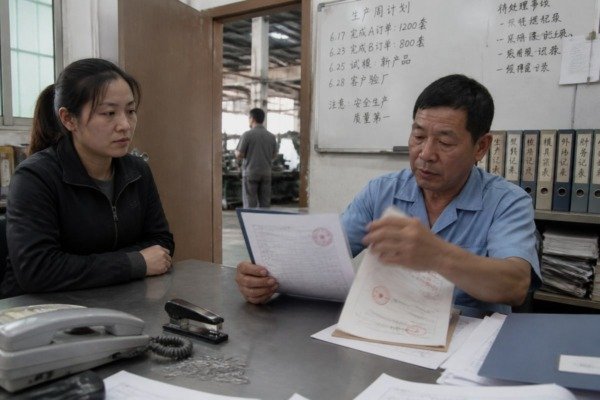
Trade finance risk is rarely about the bank. It is about identity. The modern view among sourcing professionals — one we fully share after years of audits — is that payment risk is an identity problem before it is a pricing problem. Who is the supplier legally? Who issues the invoice? Who owns the account receiving funds? When those three answers point to different entities, walk carefully or walk away.
The red flag matrix
| Red flag | What it usually means | Recommended action |
|---|---|---|
| "We accept L/C" but cannot list required documents | No real documentary credit experience | Request a draft document set as a test |
| Beneficiary name differs from the business license | Unauthorized third party or fraud risk | Demand written authorization or stop |
| Payment requested to a personal account | No formal export structure, high scam risk | Decline and reverify the entity |
| Bank details changed at the last minute | Possible email compromise | Confirm by independent phone call only |
| Refusal to share business or export license | Hiding entity status or export rights | Treat as a deal-breaker |
| Different names on quotation, invoice, and email domain | Fragmented or borrowed identity | Full re-verification before any commitment |
One nuance worth knowing
A mismatch is not always fraud. Some legitimate factories collect through an affiliated trading company. But the burden of proof sits with the supplier. We require written proof of the relationship and written authorization for third-party collection. If they cannot produce it in writing, we do not proceed — no exceptions, even for suppliers we like.
Why should I ask my sourcing agent to negotiate L/C terms before placing an order?
Here is a pattern from years of negotiating for clients: suppliers gladly handle L/Cs on high-margin or large orders, but small, thin-margin orders rarely justify the effort for them.
Negotiating L/C terms before ordering filters out unready suppliers, prevents wasted bank fees and document rejection, and locks the payment structure while you still have leverage. It works best on larger orders, typically above $50,000, where suppliers see enough margin to justify the paperwork.

Timing is leverage. Once you have committed to a factory, invested in tooling, or approved samples, your negotiating position shrinks. That is why we raise payment terms during the initial inquiry, and we frame the L/C as a corporate compliance policy rather than a personal preference. That framing filters out smaller, high-risk workshops early, before anyone wastes time on quotes.
My honest read on supplier psychology is simple. When an order carries strong profit or a large value, the supplier will happily spend the time on L/C paperwork. When the order is small and the margin is thin, they will not bother — and pushing them rarely ends well. The general viability floor is around $50,000 USD, because bank fees and the administrative load on the supplier's finance team eat into anything smaller. Large manufacturers and state-owned enterprises handle this best, since they run accounting departments built for strict UCP 600 documentation.
Matching payment structure to the order
| Order profile | Recommended structure | Why it works |
|---|---|---|
| Large order, L/C-ready supplier | Irrevocable Letter of Credit at sight | A sight L/C ties payment to compliant documents, not trust |
| Supplier demands a raw material deposit | Red-Clause L/C | The bank releases a partial advance pre-shipment, safer than a T/T deposit |
| Buyer wants capital protection via the agent | Back-to-Back L/C | Your credit backs a secondary L/C the agent opens to the factory |
| Small or low-margin order | T/T with milestone releases | The L/C paperwork burden is not worth it for either side |
| Entity or bank details do not match | Walk away | No payment structure fixes an identity problem |
What early negotiation actually settles
Before any order, we lock the beneficiary name, the exact document list, the latest shipment date, and the presentation period. We also confirm the supplier can accept an irrevocable L/C at sight and has served US or EU buyers under similar terms. Settling this early means the proforma invoice, contract, and eventual credit all say the same thing — which is what prevents discrepancies later.
Conclusion
A verbal yes on L/C payment means little. Verify documents, banks, and entities before you commit. Our GoSource team does this daily — early verification saves fees, time, and shipments.
Footnotes
1. The ICC establishes the global standards and rules for documentary credits used in international trade. ↩︎
2. Trade.gov provides official resources on international trade requirements, including the necessity of valid export licenses. ↩︎
3. The World Customs Organization provides international standards for essential trade documents like certificates of origin. ↩︎
4. SWIFT is the global provider of secure financial messaging used for transmitting Letter of Credit data. ↩︎