
Every week, our team coordinates dozens of orders across multiple Chinese factories, and the difference between a smooth delivery and a costly delay often comes down to one thing: technology ERP dashboards 1. supply chain management 2
Technology optimizes supply chain management with a China sourcing agent by enabling real-time production tracking, digital quality inspections, cloud-based collaboration, and data-driven cost analysis. These tools turn fragmented manual processes into a transparent, accountable workflow that reduces errors, speeds up communication, and lowers landed costs for buyers.
This article walks through four critical areas where technology transforms how you work with a sourcing agent in China. Whether you source beauty equipment, consumer electronics, or smart home products, the tools we discuss below will help you gain visibility, control quality, communicate faster, and make smarter decisions. Let us dig in.
How can I use digital tracking tools to get real-time visibility into my China production status?
When we manage production for clients shipping to the U.S. or Europe, the number one frustration we hear is simple: "I have no idea where my order stands right now." real-time production tracking 3
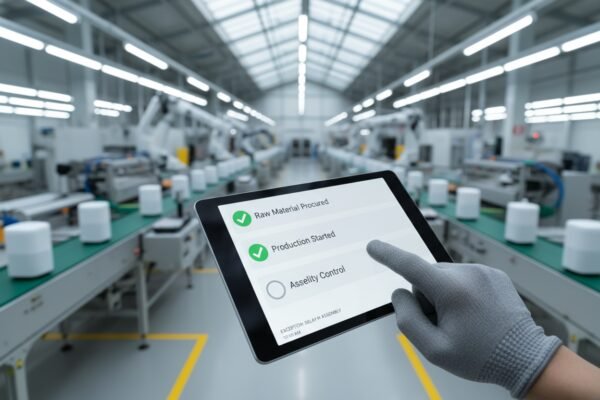
Digital tracking tools give you real-time visibility into your China production status by combining ERP dashboards, milestone-based PO tracking, and automated alerts. These systems show order progress from raw material procurement through final shipment, so you manage by exception instead of chasing updates manually.
Why Manual Tracking Fails at Scale
Most sourcing relationships start with email and WeChat. Your agent texts you a photo from the factory floor. You reply asking for a shipping date. They forward your message to the supplier. The supplier replies two days later with a vague answer. This back-and-forth creates blind spots. When you manage three or four SKUs, it is manageable. When you manage twenty or thirty, it breaks down fast.
Manual tracking relies on someone remembering to check in. That means delays get discovered late. A missed fabric delivery on day five becomes a two-week shipment delay by day twenty. The root problem is not laziness. It is that spreadsheets and chat apps were never designed to manage multi-step manufacturing workflows.
What Digital Tracking Actually Looks Like
Modern sourcing agents use order management platforms that break production into milestones. Each milestone has an expected date and an actual date. When the gap between those two dates exceeds a threshold, the system sends an alert to both the agent and the buyer. No one has to remember to ask.
Here is what a typical milestone tracker covers:
| Milestone | What It Tracks | Who Updates It |
|---|---|---|
| Order Confirmed | PO accepted by factory, deposit received | Sourcing agent |
| Raw Material Procured | Key materials arrive at factory | Factory liaison |
| Production Started | First units enter the production line | Factory liaison |
| Inline Inspection Done | Mid-production quality check completed | QC inspector |
| Production Completed | All units finished and packed | Factory liaison |
| Pre-Shipment Inspection | Final quality check before loading | QC inspector |
| Shipment Dispatched | Goods leave factory for port or warehouse | Logistics coordinator |
| Customs Cleared | Export customs documents processed | Freight forwarder |
| Vessel Departed | Container on board the ship | Shipping line / forwarder |
| Arrival at Destination | Goods arrive at buyer's port or warehouse | Logistics coordinator |
IoT and Sensor-Based Visibility
Beyond software dashboards, IoT devices 4 add a physical layer of tracking. GPS sensors on containers show real-time location. Temperature and humidity sensors protect sensitive electronics or beauty equipment during transit. Machine-uptime sensors inside advanced factories can confirm whether your production line is actually running or sitting idle.
For our clients shipping consumer electronics, we have seen IoT tracking catch problems that no amount of WeChat messages would reveal. A container sitting at a port for five extra days due to a customs documentation error, for example, showed up immediately on the tracking map. We escalated it the same day.
The Shift from "Checking In" to "Managing by Exception"
The real power of digital tracking is not more information. It is better information at the right time. You stop asking "What is the status?" and start receiving alerts only when something goes wrong. That saves hours every week and lets you focus on selling, not chasing.
What digital quality control tools should my sourcing agent use to ensure my product standards are met?
Our QC inspectors visit factories across Guangdong and Zhejiang every single week, and the shift from paper checklists to digital inspection platforms has completely changed how we catch and prevent defects. digital quality control 5
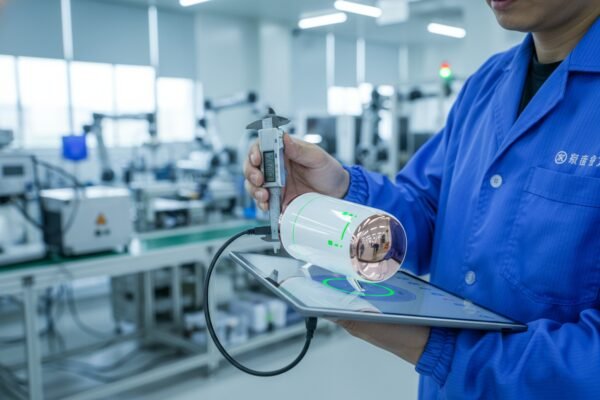
Your sourcing agent should use digital inspection apps with photo-documented checklists, defect-tracking databases, and cloud-based reporting dashboards. These tools create timestamped, auditable quality records that move QC from reactive spot checks to continuous, data-driven traceability across every production batch.
The Problem with Traditional QC
Traditional quality control in China sourcing works like this: an inspector visits the factory, fills out a paper form, takes some photos on a personal phone, and emails a PDF report to the buyer. The buyer reviews it, maybe asks a few questions, and approves or rejects the batch. This process has three big weaknesses. First, paper forms are easy to falsify or fill in carelessly. Second, photos are disconnected from the report and hard to reference later. Third, there is no historical database linking defect patterns to specific factories or product lines.
What Digital QC Tools Do Differently
Digital inspection platforms solve these problems by combining structured checklists, in-app photography, and cloud storage into one workflow. Here is how the key tools compare:
| Tool Type | Function | Benefit to Buyer |
|---|---|---|
| Digital Inspection App | Guided checklist with mandatory photo fields | Ensures every check is documented with visual proof |
| Defect Tracking Database | Logs defect type, severity, and frequency per supplier | Reveals which factories have recurring quality issues |
| Cloud Reporting Dashboard | Centralized view of all inspection results | Buyer can review reports in real time from anywhere |
| Computer Vision AI 6 | Automated surface defect detection on production line | Catches micro-defects human eyes may miss at speed |
| Barcode / QR Traceability | Links each unit or batch to its inspection record | Enables post-sale root cause analysis if complaints arise |
How Defect Data Builds Over Time
One inspection tells you about one batch. Fifty inspections tell you about a supplier's true capability. When your sourcing agent uses a digital defect tracking system, every rejected unit, every scratched surface, every misaligned component gets logged. Over months, this data reveals patterns. Maybe Factory A has a 0.8% defect rate on plastic housings but a 3.2% defect rate on metal parts. That tells you where to focus audits and where to negotiate for tighter controls.
Blockchain for Traceability and Trust
For buyers in regulated industries or categories with counterfeit risk, blockchain traceability adds another layer. Blockchain for Traceability 7 Each inspection result, material certificate, and compliance document gets recorded on an immutable ledger. This means no one can retroactively alter a test result or swap a certificate. However, blockchain is only as good as the data that goes in. If the underlying inspection is sloppy, the blockchain just locks in bad data. That is why digital QC tools and blockchain work best together, not separately.
Computer Vision on the Factory Floor
Some of the more advanced factories our team works with now use AI-powered computer vision systems on their production lines. Cameras scan every unit as it moves through assembly. The system flags anomalies like scratches, color inconsistencies, or dimensional deviations. This does not replace your sourcing agent's inspectors. It supplements them by catching defects at machine speed. For consumer electronics and beauty equipment, where surface finish matters to end consumers, this technology reduces return rates significantly.
How does cloud-based collaboration technology help me overcome communication barriers with my Chinese agent?
Working across a 12-to-15-hour time zone gap with our U.S. clients taught us early on that communication breakdowns cause more project failures than bad factories do. Cloud-based collaboration technology 8
Cloud-based collaboration technology overcomes communication barriers by providing shared project workspaces, real-time document editing, automated translation, and asynchronous messaging with full audit trails. These tools ensure nothing gets lost between time zones, languages, or communication channels.

The Real Communication Problem
The communication challenge between a U.S. buyer and a China sourcing agent is not just language. It is fragmentation. A typical sourcing project involves conversations across WeChat, WhatsApp, email, phone calls, and sometimes even Alibaba's messaging system. Product specs live in one email thread. Price negotiations happen in another. Inspection photos sit in a WeChat group. Shipping documents arrive as email attachments. When something goes wrong, nobody can piece together the full picture quickly.
How Cloud Platforms Centralize Everything
Cloud-based project management tools like shared workspaces bring all sourcing communication into one place. Every message, file, approval, and decision gets logged against the specific order or product it relates to. Here is a comparison of common tools and their sourcing applications:
| Tool Category | Examples | Sourcing Use Case |
|---|---|---|
| Project Management | Asana, Monday.com, Trello | Track order milestones, assign tasks, set deadlines |
| Cloud Storage | Google Drive, Dropbox, OneDrive | Store and share specs, contracts, inspection reports |
| Real-Time Messaging | Slack, Microsoft Teams | Quick questions, status updates, team coordination |
| Video Conferencing | Zoom, Google Meet | Virtual factory tours, design reviews, weekly check-ins |
| AI Translation | DeepL, Google Translate, ChatGPT | Translate supplier communications, technical documents |
| Document Collaboration | Google Docs, Notion | Co-edit product specs, SOPs, QC checklists in real time |
Generative AI for Documents and Translation
One of the most practical technology advances for cross-border sourcing is generative AI 9. It can draft purchase orders, translate technical specifications into Chinese, review supplier contracts for risky clauses, and even summarize long email threads into bullet points. For our team, AI translation tools have cut the time we spend on document preparation by roughly half. We still have bilingual team members review every critical document. But the first draft is faster and more consistent now.
Asynchronous Work Across Time Zones
Cloud collaboration works especially well for asynchronous communication. Your sourcing agent in Shenzhen updates the project board at the end of their day. You review it when your morning starts in New York. You leave comments and approvals. They pick those up when their next day begins. Nothing waits for a live phone call. Nothing gets lost in a chat scroll.
This matters because many sourcing delays happen not because of slow factories, but because of slow decisions. A buyer takes three days to approve a sample revision because the message got buried in email. Cloud tools with notification systems and task assignments make approvals visible and urgent.
Building an Audit Trail
Every interaction logged in a cloud workspace becomes part of your project's audit trail. If a dispute arises over whether a spec change was approved, you can trace it back to the exact message, timestamp, and person. This protects both the buyer and the agent. It also makes onboarding new team members easier because the full project history is accessible in one place.
How can data analytics help me optimize my landed costs and predict potential supply chain disruptions?
Every quarter, we review landed cost breakdowns for our clients, and the patterns hiding in that data have saved some of them thousands of dollars per shipment simply by adjusting order timing or consolidation strategies.
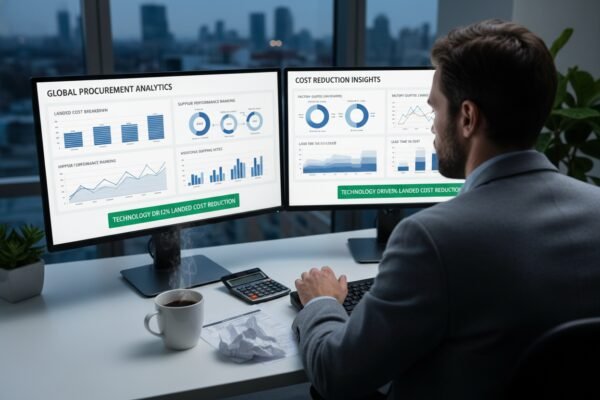
Data analytics optimizes landed costs by aggregating historical pricing, freight rates, tariff classifications, and supplier performance into actionable models. Predictive analytics further identifies disruption risks like port congestion, raw material shortages, or seasonal factory slowdowns, allowing you to plan proactively instead of reacting to crises.
What Landed Cost Data Actually Includes
Landed cost is not just the price your supplier quotes. It includes the product unit cost, tooling amortization, domestic freight in China, export customs fees, ocean or air freight, import duties and tariffs, customs brokerage, last-mile delivery, warehousing, and insurance. Most buyers track the unit cost closely but treat everything else as a vague lump sum. Data analytics 10 breaks each component apart and tracks it over time.
How Analytics Reveals Hidden Savings
When you have six months or more of order data, patterns emerge. Maybe ocean freight rates from Shenzhen to Los Angeles spike every August before the holiday shipping rush. Maybe your supplier's raw material costs drop in Q1 because of seasonal surplus. Maybe consolidating two smaller orders into one larger shipment saves 15% on per-unit freight. None of these insights are visible in a single invoice. They only appear when you look across multiple orders in a structured dataset.
Predictive Analytics for Disruption Risk
AI-powered predictive models go further. They analyze external data sources like shipping lane congestion reports, weather patterns, commodity price indices, and factory holiday calendars to flag risks before they hit your supply chain. The global factory logistics market was valued at US$12.3 billion in 2023 and is projected to reach US$19.5 billion by 2028, with China driving a large share of that growth. This tells you that logistics digitization is not a niche experiment. It is a major commercial shift.
For our clients in consumer electronics, we have seen predictive tools flag potential port delays in Yantian two weeks before they impacted shipments. That early warning gave us time to reroute through Nansha and avoid a costly three-week delay.
Digital Twins for Scenario Planning
A more advanced application is the digital twin. This is a virtual replica of your supply chain that lets you simulate "what if" scenarios. What if your primary supplier has a two-week shutdown? What if tariffs increase by 10%? What if you shift 30% of volume to a backup factory in Vietnam? Digital twins let you test these scenarios without disrupting your real operations. They are especially useful for buyers who source multiple product categories from different regions and need to balance cost, speed, and risk across the entire portfolio.
Practical Steps to Start Using Data
You do not need a million-dollar platform to begin. Start with these steps:
- Ask your sourcing agent for itemized cost breakdowns on every order, not just total prices.
- Build a simple spreadsheet or database that logs each cost component per order, per supplier.
- Review the data quarterly. Look for trends in freight, material costs, and lead times.
- Use free or low-cost analytics tools to visualize patterns and set alerts for cost spikes.
- Once you have enough data, explore predictive analytics platforms that incorporate external risk signals.
The key insight is that data does not replace your sourcing agent. It makes your conversations with them sharper. Instead of asking "Can you get me a better price?" you ask "Why did our per-unit freight cost increase 18% between Q2 and Q3, and what can we do about it?" That is a much more productive discussion.
Conclusion
Technology does not replace your China sourcing agent. It makes them faster, more transparent, and more accountable. Choose an agent who uses digital tools to give you visibility, not just promises.
Footnotes
Related Reading
Related Reading
1. Defines ERP dashboards as visual interfaces for real-time business data and performance metrics. ↩︎
2. Provides a comprehensive definition and overview from a leading industry association. ↩︎
3. Explains the concept and benefits of monitoring manufacturing output without delays. ↩︎
4. Describes how interconnected devices revolutionize supply chain tracking and management. ↩︎
5. Explains the use of technology to monitor and verify product and process quality standards. ↩︎
6. Details how artificial intelligence uses visual data for quality control and automation. ↩︎
7. Explains how blockchain technology ensures secure, transparent, and immutable tracking of goods. ↩︎
8. Found an authoritative Wikipedia article defining cloud collaboration. ↩︎
9. Defines artificial intelligence capable of creating new content, data, or designs. ↩︎
10. Explains the process of examining data to uncover patterns and support decision-making. ↩︎