
Running a sourcing agency in Shenzhen, we see it all the time — importers come to us after being burned by agents who quietly collected kickbacks from factories while charging service fees on top.
To spot hidden kickbacks and factory ties, watch for agents who refuse factory visits, push a single supplier despite quality concerns, hide factory identities, request payments to personal accounts, or cannot provide transparent cost breakdowns. Asking direct, uncomfortable questions and requesting third-party audits are your best defenses.
This guide breaks down the exact warning signs, real fraud cases, and practical steps you can use to protect your business third-party audits 1. Let's get into the details.
How can I tell if my sourcing agent is receiving secret kickbacks from the factory?
Over the years, our team has helped clients untangle supplier relationships that turned out to be far more expensive than they appeared secret kickbacks 2. The problem with kickbacks is that they are designed to be invisible — but they always leave traces.
You can detect secret kickbacks by comparing your agent's quoted price against independent factory quotes, requesting detailed cost breakdowns, insisting on direct factory visits, and watching for behavioral red flags like hesitation when you ask to contact the factory yourself.

What Exactly Is a Kickback in China Sourcing?
A kickback — known as "回扣" (huí kòu) in Chinese — is a secret payment from the factory to the sourcing agent financial arrangement 3. 回扣 (huí kòu) 4 The factory inflates the product price, ships the goods to you at the higher cost, and then quietly sends a percentage back to your agent. You never see the real price. Your agent profits twice: once from your service fee, and again from the factory's kickback itemized cost breakdowns 5.
This is not a rare practice. In discussions across importing forums and trade communities, hidden commissions are described as "very common" and "normal" in China sourcing. Especially when you're sourcing new products, factories can easily build kickbacks into their pricing because you have no benchmark.
Behavioral Signs Your Agent May Be Taking Kickbacks
Here's what to look for in your agent's behavior:
| Red Flag | What It Looks Like | Why It Matters |
|---|---|---|
| Refuses factory visits | "The factory is too far" or "They don't allow visitors" | Legitimate factories welcome buyer visits |
| Hesitates on video calls | Pauses, changes subject when asked about factory details | Indicates hidden information |
| Cannot provide cost breakdowns | Gives only a lump-sum quote with no line items | Hides where the markup sits |
| Pushes one factory only | Dismisses alternatives without solid reasoning | May have a kickback deal with that factory |
| Payments to personal accounts | Asks you to wire money to an individual, not a company | Bypasses financial oversight |
| Discourages third-party inspections | Says "it's not necessary" or "too expensive" | Wants to control what you see |
The "Factory Visit" Test
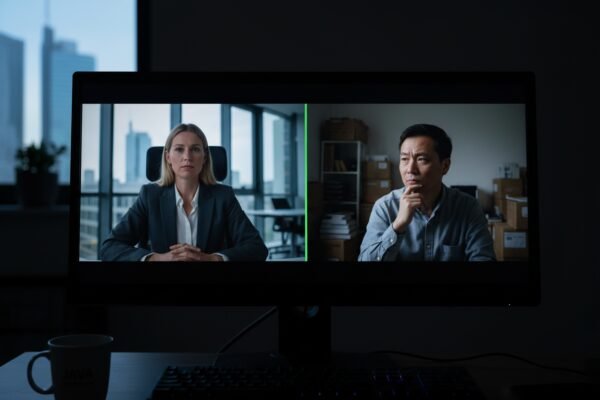
Here is a personal insight I always share with importers: if an agent is collecting kickbacks from the supplier behind your back, they are essentially someone working against your interests while pretending to work for you. You should ask sensitive questions like, "Can I visit the factory in person?" If there is any hidden arrangement, they will hesitate. This hesitation becomes especially obvious during video calls — their facial expression and body language will betray them. A transparent agent will say "yes" immediately and even help arrange the trip.
Price Verification Tactics
Do not rely solely on your agent's quote. Here are steps you can take:
- Get quotes directly from Alibaba or Made-in-China for the same product specifications.
- Ask a second sourcing agent to quote the same product without revealing your first agent.
- Request the factory's proforma invoice 6 directly — not a reformatted version from your agent.
- Compare landed costs 7 across at least three independent sources.
If your agent's quote is 15-35% above what you find independently, there is likely a hidden commission baked in. In one documented case, an agent inflated electronics prices by 35% and then collected an additional 10-15% kickback from the factory.
Why is my agent insisting on one specific supplier despite my concerns about price or quality?
When we onboard new clients at Go Source, one of the first things we do is present multiple supplier options with transparent pricing. So when someone tells us their previous agent only ever recommended one factory, that immediately raises a red flag for us.
An agent who insists on one specific supplier likely has a financial arrangement with that factory — such as a kickback agreement, a long-term commission deal, or even partial ownership. Legitimate agents present multiple options and let you choose based on price, quality, and capacity.
Why Would an Agent Lock You Into One Factory?
There are several reasons, and none of them benefit you:
- Kickback agreements. The factory pays them a percentage on every order you place. More orders to that factory means more money for the agent.
- Ownership ties. Some agents are actually part-owners of the factory, or the factory is run by a relative. They are not independent — they are a sales channel.
- Laziness. Building new supplier relationships takes effort. Some agents simply default to whoever they already know, regardless of fit.
- Volume commitments. The agent may have promised the factory a certain order volume in exchange for a higher commission rate.
How to Push Back Effectively
When your agent pushes one supplier, ask direct questions:
- "Can you provide three alternative suppliers with comparable quotes?"
- "What is your relationship with this factory? Do you have any financial interest in them?"
- "Can I contact this factory directly to discuss technical specifications?"
Watch how they respond. A trustworthy agent answers quickly and openly. A compromised agent deflects, delays, or gets defensive.
Comparing Single-Source vs. Multi-Source Agent Behavior
| Behavior | Trustworthy Agent | Compromised Agent |
|---|---|---|
| Number of supplier options | 3-5 per product | 1, always the same |
| Response to quality complaints | Investigates and finds alternatives | Defends the factory, blames you |
| Willingness to share factory info | Provides name, address, contacts | Keeps factory identity hidden |
| Reaction to your own research | Welcomes it, offers to help | Discourages it, says "trust me" |
| Fee structure | Transparent flat fee or clear percentage | Vague, bundled into product cost |
A Real Pattern We See
A garment importer reported facing 15% annual price increases that were directly tied to their agent's growing commission demands from the factory. Because the agent was the sole gatekeeper, the importer had no leverage and no alternatives. It was only after they engaged a second, independent agent to audit the supply chain that the inflated pricing was exposed.
In another case, a furniture buyer discovered that their agent had been demanding 10% of all payments from the supplier. The supplier was quietly raising prices to cover this cost, and the buyer was unknowingly paying for it.
The lesson is simple: if your agent only ever has one answer to "who should make this?" — you need to start asking why.
Working inside the Chinese supply chain every day, our team knows exactly how factory pricing works — raw materials, labor, overhead, margin, and MOQ thresholds. When a client sends us a quote from another agent and asks us to verify it, we can usually spot an inflated price within minutes.
To verify your agent's price, request itemized cost breakdowns covering raw materials, labor, packaging, and factory margin. Cross-check with independent quotes from Alibaba, trade shows, or a second agent. Use third-party factory audits to confirm actual production costs and expose hidden markups.
The Anatomy of a Hidden Markup
A typical hidden commission works like this: the factory's real FOB price 8 for your product is $5.00 per unit. Your agent tells the factory to quote $5.75. The factory invoices you at $5.75, and after you pay, the factory sends $0.75 per unit back to the agent. You see a clean invoice from the factory at $5.75. Nothing looks wrong — unless you know the real price.
This 1-5% markup range is common, but in extreme cases, markups can reach 35-40%. In one documented fraud case involving a $1 million order, the buyer paid the full amount while the factory only received $600,000. The agent pocketed $400,000. On top of that, the buyer paid approximately $220,000 extra in tariffs calculated on the inflated invoice value.
Step-by-Step Price Verification Process
Here is a practical process you can follow:
- Request a detailed cost breakdown. Ask your agent to separate raw materials, labor, tooling, packaging, factory profit, and their service fee. A transparent agent will provide this.
- Get independent quotes. Contact 2-3 factories directly through Alibaba, Global Sources, or trade shows. Use the same product specifications.
- Use a cost estimation tool. Some industry associations publish material cost indices. Check current prices for steel, plastic resin, fabric, or whatever applies to your product.
- Hire a third-party inspector. Companies like SGS, Bureau Veritas, or Asia Inspection can visit the factory and provide independent cost assessments.
- Ask for the factory's original proforma invoice. Not a reformatted document from your agent — the actual invoice with the factory's letterhead and bank details.
Price Comparison Framework
| Cost Component | What to Verify | How to Verify |
|---|---|---|
| Raw materials | Current market price of materials used | Check commodity indices, contact material suppliers |
| Labor cost | Reasonable for the region and product complexity | Compare with industry benchmarks for that province |
| Tooling/molds | One-time vs. amortized cost | Ask factory directly for tooling invoice |
| Packaging | Standard vs. custom packaging costs | Get quotes from packaging suppliers |
| Factory margin | Typically 5-15% for most products | Compare with direct factory quotes |
| Agent service fee | Should be stated separately | Demand transparent fee structure |
| Hidden markup | Should not exist | Compare total with independent quotes |
Why Flat-Fee Models Reduce Risk
When an agent charges a percentage of your order value, their incentive is misaligned with yours. The higher your product costs, the more they earn. A flat-fee model — where the agent charges a fixed amount per project or per month — removes this conflict.
At Go Source, we advocate for transparent pricing because it builds long-term relationships. If your current agent resists a flat-fee arrangement or cannot clearly separate their fee from the product cost, that is worth investigating further.
The Invoice Audit Trick
Ask your agent for both the commercial invoice and the packing list from the factory. Then, separately ask the factory for the same documents. If the numbers don't match, you have found your hidden commission. This simple audit has exposed countless cases of price inflation.
What are the red flags that my sourcing agent is actually a sales front for the manufacturer?
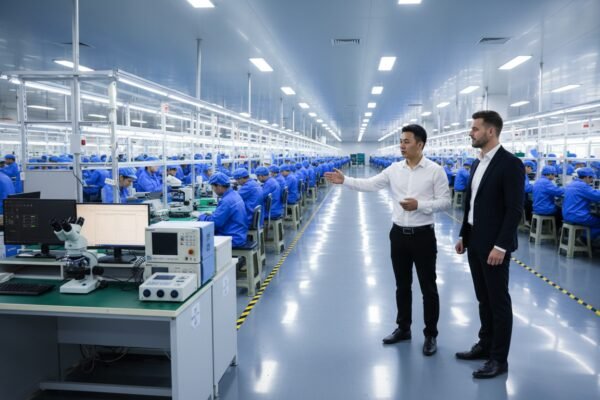
Our team in Shenzhen regularly encounters so-called "sourcing agents" who are actually trading companies or direct sales arms of a single factory. They present themselves as independent, but every recommendation they make leads back to the same production facility. We have learned to spot these arrangements quickly — and you can too.
Red flags that your agent is a factory sales front include: they only recommend one factory, they share an office address or phone number with the factory, they cannot provide references from multiple unrelated suppliers, and they discourage you from contacting the factory directly or visiting the production site.

The Trading Company Problem
In China, many trading companies operate as factory extensions. They are legally separate entities but financially connected. The factory sets up a trading company with a polished English website, hires a few English-speaking salespeople, and markets itself as an "independent sourcing agent." Everything looks legitimate until you realize every product they source comes from one factory — or a small cluster of related factories.
This is not always bad. Some trading companies provide genuine value through quality control, logistics coordination, and communication management. The problem arises when they pretend to be independent while only serving one factory's interests. You lose the benefit of competitive sourcing.
How to Investigate Your Agent's Independence
Here are concrete steps to verify whether your agent is truly independent:
Check business registration. In China, you can verify a company's registration through the National Enterprise Credit Information Publicity System 9 (国家企业信用信息公示系统). Look at the registered address, the legal representative, and the shareholders. If the agent's company shares shareholders or directors with a factory, they are not independent.
Perform a reverse image search. Take any factory photos your agent provides and run them through Google Reverse Image Search or TinEye. If those photos appear on other factory websites or stock photo libraries, your agent may be misrepresenting their facilities.
Check the address. If your agent's office address is the same as or adjacent to a factory address, they are likely connected. Use Baidu Maps or Google Maps to verify.
Request references from multiple factories. A real sourcing agent works with dozens of factories across different product categories. Ask them to provide references from at least three unrelated factories they have worked with in the past year.
Digital Due Diligence Checklist
Go beyond the agent's official website. Check their presence on Chinese social media platforms like WeChat official accounts, Douyin, and industry forums. Look for authentic engagement — real posts about sourcing trips, factory visits, and team activities. A factory sales front typically has minimal independent online presence beyond product listings.
You can also use emerging AI-powered due diligence tools to cross-reference public data sources in China. These tools can scan legal records, customs data, and news archives to uncover hidden affiliations, past litigation, or negative reports associated with the agent or their claimed factories.
Contract Protections You Should Demand
Include these clauses in your agent agreement:
- Anti-bribery clause. Explicitly prohibit the agent from receiving any payments, gifts, or rebates from factories on your behalf.
- Full disclosure requirement. Require the agent to disclose any financial interest in recommended factories.
- Right to audit. Reserve the right to audit factory invoices, payment records, and communication logs.
- Factory contact access. Insist on having direct contact with factory management, not just through the agent.
- Termination for breach. Allow immediate contract termination if undisclosed factory ties are discovered.
Pro-Agent vs. Direct Sourcing: An Honest Comparison
Some experienced importers argue that all agents carry the risk of double-dipping, and direct sourcing is always preferable. Others say agents are essential for navigating language barriers and non-English-speaking factories. The truth is somewhere in the middle.
A hybrid approach is gaining traction: use agents for new product sourcing where their expertise adds value, but transition to direct factory relationships for stable, repeat orders where you have established quality benchmarks and pricing knowledge. This gives you the best of both worlds — expertise when you need it, and control when you have earned it.
Conclusion
Hidden kickbacks and factory ties cost importers thousands of dollars every year. Protect yourself by asking hard questions, verifying prices independently, and demanding transparency in every sourcing relationship.
Footnotes
1. Explains the purpose and benefits of independent third-party audits for compliance and quality. ↩︎
2. Defines kickbacks as secret, illegal payments for preferential treatment, often involving bribery. ↩︎
3. Defines financial arrangements as structured agreements for managing, investing, borrowing, or allocating funds. ↩︎
4. Provides the definition of "回扣" as brokerage, commission, or euphemism for a bribe/kickback. ↩︎
5. Explains a cost breakdown structure as a hierarchical view of all project-related costs, itemized into components. ↩︎
6. Explains a proforma invoice as a preliminary document outlining costs before a sale is finalized. ↩︎
7. Defines landed cost as the total cost of a product from origin to customer's door, including all expenses. ↩︎
8. Explains FOB (Free On Board) as an Incoterm defining when seller responsibility and risk transfer to the buyer. ↩︎
9. Official Chinese government platform for disclosing corporate registration and credit information to the public. ↩︎
10. Defines ownership ties as co-ownership connections between firms, signaling influence and control. ↩︎