
Wiring 100% upfront to a stranger overseas keeps buyers awake at night. From our Shenzhen sourcing office, I negotiate installment payment terms with a China sourcing agent's leverage every single week.
To negotiate installment payment terms with a China sourcing agent, propose a 30% T/T deposit with the 70% balance tied to a passed third-party inspection, offer volume commitments or a Letter of Intent in exchange, and write every milestone trigger into a signed Purchase Order agreement.
That is the short answer. The longer answer involves understanding why factories resist, which splits are realistic, and how to protect each payment. Let me walk you through all of it.
How do I convince my China sourcing agent to accept installment payments instead of full upfront?
A US brand founder once messaged me on WhatsApp: "Allen, why does everyone in China want money first?" Our team hears this question from almost every new client we onboard.
Convince your sourcing agent by acknowledging factory cash-flow needs, then trading something valuable in return: a signed Letter of Intent for annual volume, a higher MOQ, or slightly better unit prices. Start with a standard 30/70 split, and commit to independent inspections that de-risk each payment release.

Here is the honest truth from someone who negotiates with factories daily. Your sourcing agent is usually not the one refusing installments. The factory behind the agent is. Chinese factories must buy raw materials, pay workers, and manage tight working capital 1 before your goods even exist. That is why upfront deposits remain the norm. Better supplier credit terms are not automatically available just because a buyer asks nicely. They are earned, or they are purchased with a trade-off.
Why Factories Push Back
A factory that accepts a small deposit carries your risk. If you cancel mid-production, they hold custom goods nobody else wants. So when you request installments, you are asking them to finance your order. You need to make that worthwhile.
What to Offer in Exchange
Successful negotiation means viewing the total package. You trade something measurable for payment flexibility. Here is what actually moves the needle in our experience:
| What You Offer | Why the Factory Says Yes |
|---|---|
| Letter of Intent for annual purchase volumes | Predictable revenue justifies lower initial deposits |
| Slightly higher unit price | Compensates for their financing cost |
| Higher MOQ commitment | Improves their production efficiency |
| Independent third-party inspection | Reduces disputes, so delayed balances feel safer |
| Small cancellation fee clause | Protects them if you walk away |
One more practical note from years of doing this: the smaller the order value, the fewer installments make sense. For small orders, many of our clients simply pay in one go to save hassle. For large orders, splitting into two or even three installments becomes standard and expected. Match your request to your order size, and your agent can sell it to the factory.
What payment split (like 30/70 or 50/50) should I negotiate with my sourcing agent?
Every quote our team prepares forces the same trade-off: a lower deposit shifts risk to the factory, and the factory prices that risk back into your unit cost.
Negotiate 30/70 T/T for first orders, 30/40/30 for larger or complex orders, and 20/80 after successful cycles. Small orders are often paid in one lump sum for convenience, while large orders justify two or three installments. Reserve Net 30 or Net 60 for proven relationships.
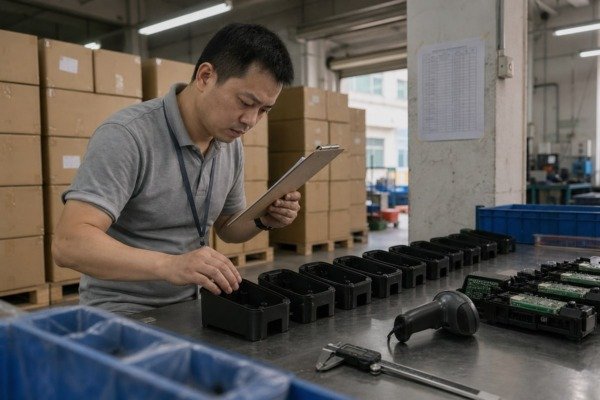
Let me lay out the realistic options side by side, because choosing the wrong structure for your order size is the most common mistake I see:
| Payment Split | Best For | How It Works |
|---|---|---|
| 100% upfront | Avoid on first orders | Full payment before production; maximum buyer risk |
| One lump sum | Very small orders | Many clients pay once to save hassle on low-value POs |
| 30/70 T/T | First orders, new relationships | 30% deposit to start; 70% balance after inspection |
| 50/50 | Mid-size custom orders | Half upfront, half against shipping documents |
| 30/40/30 | Large or complex orders | Deposit, mid-production inspection payment, final balance |
| 20/80 | After 1–2 successful orders | Lower deposit earned through clean payment history |
| Net 30 / Net 60 | Established repeat partners | Open account terms after trust is built |
Matching the Split to Order Size
Here is the pattern I have watched play out across hundreds of orders: the smaller the order amount, the fewer the installments. On small consumer electronics runs, clients frequently choose a single payment because chasing three small wires wastes everyone's time. On large orders, two installments are standard, and three installments with a milestone payment schedule are entirely negotiable. The T/T deposit and balance model scales naturally: 30/70 becomes 30/40/30 when the order is big enough to justify a mid-production checkpoint.
When a Letter of Credit Makes Sense
For orders above roughly $30,000, a Letter of Credit 2 (L/C) becomes worth its bank fees. An L/C gives both sides bank-backed security: the factory knows funds exist, and you know payment only releases against documents like the Bill of Lading (B/L) copy. Below that threshold, the paperwork burden usually outweighs the protection.
One warning I give every client: moving to Net 30 or Net 60 typically requires two to three successful, on-time payment cycles first. That relationship capital, what Chinese business culture calls guanxi, is the real currency here. Asking for open account terms on order one signals inexperience and weakens your whole negotiation.
How can I protect my installment payments if my sourcing agent doesn't deliver as promised?
Last year our inspector rejected a smart home device batch two days before the balance payment was due. Faulty solder joints on 4% of units. That inspection gate saved the client's entire final installment.
Protect installment payments by tying each release to verifiable evidence: a passed third-party quality inspection report before the balance, a Bill of Lading copy before final funds, a 5–10% retention held in escrow for 30 days after delivery, and deferring the agent's commission until the last installment clears.
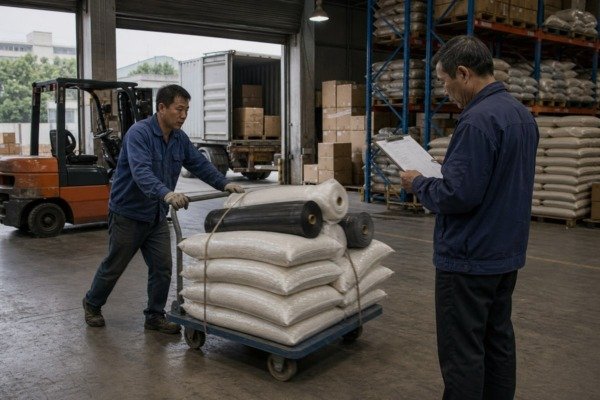
The core principle is simple: never release money against words. Release money against evidence. "Goods are packed" is not evidence. A "Passed" result on an independent quality inspection report is. Your contract should make that distinction explicit, because once a T/T wire lands in China, it is effectively gone.
Layer Your Protections by Order Value
Different tools fit different order sizes and trust levels. Here is how we structure protection for our own clients:
| Protection Tool | When to Use It | What It Protects |
|---|---|---|
| Third-party inspection gate | Every order, every time | Balance only releases after a passed report |
| B/L copy trigger | Standard sea shipments | Final payment only after goods are actually shipped |
| Escrow payment service / Trade Assurance protection | Early orders, limited trust | Platform holds funds until terms are met |
| Letter of Credit (L/C) | Orders over $30,000 | Bank-controlled document-based release |
| 5–10% retention clause | Custom or complex products | Covers latent defects found after unboxing |
| Sinosure credit limit 3 | Mature relationships | Insures the supplier, enabling open account terms |
Three Tactics Most Buyers Miss
First, the retention clause. Holding 5–10% in escrow for 30 days post-delivery protects you against defects discovered only after the container is unboxed. Second, Sinosure. If the factory obtains a Sinosure credit limit on your company, China's export credit insurer covers their risk, which lets your agent offer open account terms with minimal factory resistance. Third, commission timing. We structure deals so the agent's service commission defers until your final installment is paid. That keeps the agent applying maximum pressure on the factory through the entire production cycle, because our payday depends on your successful delivery. Emerging cross-border B2B Buy Now, Pay Later platforms add a fourth option: the platform pays the agent upfront while you repay in installments.
One caution: if a supplier you barely know offers unusually generous supplier credit terms immediately, treat it as a red flag, not a win. Verify their background or route the payment through an escrow payment service.
What contract terms should I include to make installment payments safer with my sourcing agent?
Early in my sourcing career, a client and factory disagreed over whether "after inspection" meant the factory's inspection or ours. That one vague phrase cost three weeks. I never wrote a loose payment clause again.
Include a milestone payment schedule with objective triggers, a third-party inspection clause with a named AQL standard, defect and rework remedies, a 5–10% retention clause, late-delivery penalties, deposit refund conditions, and dispute terms enforceable under Chinese law, all inside one signed Purchase Order agreement.

Vague contracts create disputes. Precise contracts prevent them. When our team drafts a Purchase Order (PO) agreement for a client, every payment clause must answer three questions: how much, triggered by what evidence, and paid within how many days. If a clause cannot answer all three, we rewrite it.
Here is the clause checklist we work through, in order:
- Milestone payment schedule. State each installment percentage and its objective trigger. For example: 30% on PO signing, 40% within 5 days of a passed mid-production inspection, 30% within 5 days of receiving the Bill of Lading copy.
- Inspection clause. Name the third-party inspection company or your right to appoint one. Specify the AQL sampling level. State that only a "Passed" quality inspection report, not a packing notification, triggers the balance.
- Defect remedies. Define what happens when inspection fails: rework at factory cost, re-inspection at factory cost, and the balance payment clock pausing until the goods pass.
- Retention clause. Hold 5–10% for 30 days post-delivery to cover latent defects found after unboxing.
- Late-delivery penalties. A daily or weekly percentage deduction keeps timelines honest, which matters enormously for clients managing launch dates.
- Deposit refund conditions. Spell out exactly when your T/T deposit and balance obligations dissolve, such as the factory failing to start production within an agreed window.
- Governing law and language. A bilingual contract enforceable under Chinese law, with the Chinese version controlling, is far more actionable against a Chinese company than a foreign-law contract they can ignore.
- Specification reference. Attach the exact product spec, materials, and packaging requirements so "quality" is defined, not debated.
Get these eight clauses right, and your installment structure stops being a promise and becomes an enforceable system.
Conclusion
Installment terms are earned, not demanded. Start at 30/70, trade volume for flexibility, tie every release to evidence, and lock it all into an enforceable contract.
Footnotes
1. World Bank resource discussing the importance of working capital and financing for small and medium-sized enterprises. ↩︎
2. Authoritative government resource explaining international payment methods including letters of credit. ↩︎
3. Official site of the China Export & Credit Insurance Corporation, which provides the credit limits used to de-risk trade. ↩︎