
Every week, our team in Shenzhen fields calls from brand founders who just received a container of defective products — and they trusted their sourcing agent to handle QC.
To manage quality control with a China sourcing agent, you must establish clear inspection protocols at four critical stages: prototype development, pre-production sampling, during-production checks for large orders, and pre-shipment inspection. Combine your agent's on-the-ground access with third-party verification and detailed QC checklists to prevent defects before they ship.
The truth is, quality control 1 is not something you can fully outsource and forget about. Even the best sourcing agent needs your input, your standards, and your oversight prototype development 2. In this guide, we break down exactly how to set up a bulletproof QC system — from writing inspection protocols to handling failures after delivery. Let's get into it.
How do I establish a foolproof quality inspection protocol with my China sourcing agent?
When we onboard a new client at Go Source, the first thing we ask for is not a product link — it's a full quality standard document Product specifications 3. Without one, even the most experienced agent is guessing at your expectations.
Establish a foolproof inspection protocol by defining quality standards at four key stages: prototype approval, pre-production sample sign-off, during-production inspection for large batches, and final pre-shipment inspection. Each stage needs written criteria, acceptable defect levels, and clear pass/fail rules shared with your agent.
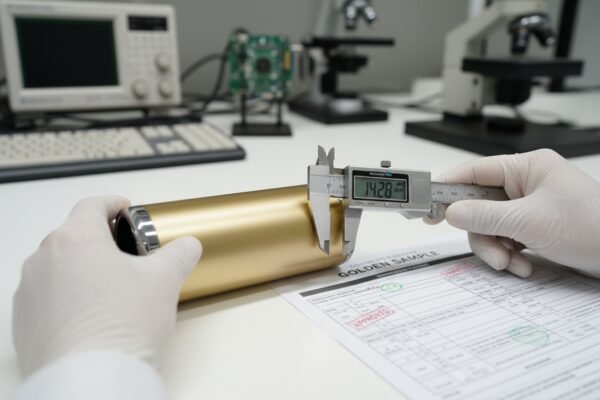
Why Most QC Failures Start Before Production Even Begins
The biggest mistake importers make is waiting until products are boxed and ready to ship before checking quality Acceptable Quality Limit (AQL) levels 4. By then, the damage is done. You have thousands of units, a factory that has already been paid, and a shipping deadline breathing down your neck. The leverage is gone.
A proper protocol starts at the very beginning. When we work with clients sourcing beauty equipment or consumer electronics, we insist on a prototype review first major defects 5. This is where you catch design flaws, material mismatches, and functional issues. It costs almost nothing compared to fixing a full production run Root Cause Analysis 6.
The Four Critical QC Stages
Here is how we structure inspection protocols for our clients:
| QC Stage | When It Happens | What You Check | Who Should Be There |
|---|---|---|---|
| Prototype Review | Before mass production order | Design accuracy, materials, basic function | Your agent + you (via video or sample shipment) |
| Pre-Production Sample | After first batch off the line | Dimensions, color matching, component fit | Your agent's QC team |
| During-Production Check | When 20–30% of order is complete | Consistency, workmanship, random sampling | Agent QC or third-party inspector |
| Pre-Shipment Inspection 7 | After 100% production, before packing | Full AQL inspection, packaging, labeling | Third-party inspector recommended |
How to Write Your Protocol Document
Keep it simple but thorough. Your protocol document should include:
- Product specifications: Exact dimensions, weight, materials, Pantone color codes.
- Acceptable Quality Limit (AQL) levels: For example, 0% tolerance for critical defects 8 (safety issues), AQL 1.0 for major defects, AQL 2.5 for minor defects 9.
- Testing requirements: Drop tests, functionality tests, waterproof tests — whatever applies to your product.
- Photo and video requirements: Ask your agent to provide timestamped photos from the factory floor at each stage.
- Pass/fail criteria: Be explicit. "Scratches longer than 2mm on the visible surface = major defect." Leave no room for interpretation.
One thing we always tell our clients: if your spec sheet could be misunderstood, it will be misunderstood. Cultural and language barriers are real. Use images, annotated diagrams, and physical reference samples whenever possible. A golden sample — a perfect unit that the factory keeps on the production line — is worth more than ten pages of text.
Set Expectations in Writing
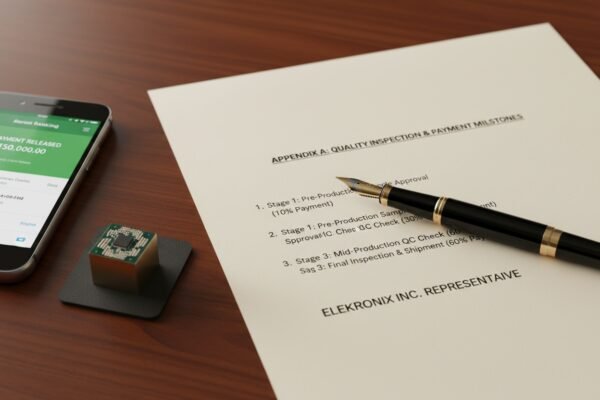
Your protocol is only useful if it is part of the contract. Include it as an appendix to your purchase agreement. State clearly that payment milestones are linked to passing each QC stage. This gives your agent real enforcement power and gives the factory a financial reason to comply.
What specific QC checklists should I provide to ensure my agent catches every defect?
Our QC inspectors in Shenzhen carry printed checklists into every factory visit. Without them, even seasoned inspectors miss things — not because they're careless, but because human memory is unreliable under time pressure.
Provide your agent with product-specific QC checklists covering visual appearance, dimensions, functionality, safety compliance, packaging, and labeling. Each checklist item should have a clear standard, measurement method, and defect classification (critical, major, or minor) so inspectors make consistent pass/fail decisions on the factory floor.

Build Your Checklist Around Defect Categories
Not all defects are equal. A scratch on the bottom of a product that no one sees is very different from a battery that overheats. Your checklist must classify every possible defect so your agent knows what to reject immediately and what to flag for your review.
| Defect Category | Definition | Example | AQL Tolerance |
|---|---|---|---|
| Critical | Poses safety risk or violates regulations | Exposed wiring, sharp edges, toxic materials | 0% — reject entire batch |
| Major | Product is unusable or looks unacceptable | Button does not work, visible cracks, wrong color | AQL 1.0 (≈1% defect rate allowed) |
| Minor | Small cosmetic issue, product still functions | Light scuff mark, slight color variation | AQL 2.5 (≈2.5% defect rate allowed) |
What to Include in Every Checklist
Here is a framework we use for consumer electronics clients. Adapt it to your product category.
Visual Inspection Items:
- Surface finish: no scratches, dents, or discoloration on visible surfaces.
- Color accuracy: must match Pantone reference or approved golden sample.
- Print quality: logos, labels, and text must be sharp, correctly positioned, and legible.
- Assembly: no gaps, loose parts, or misaligned components.
Dimensional Inspection Items:
- Measure 5 critical dimensions per unit using calipers.
- Compare against spec sheet with stated tolerances (e.g., ±0.5mm).
Functional Inspection Items:
- Power on/off cycle test (minimum 3 cycles).
- All buttons, switches, and ports tested.
- Connectivity test (Bluetooth, Wi-Fi) if applicable.
- Battery charge and discharge test for battery-powered products.
Safety and Compliance Items:
- Check for required certifications (CE, FCC, UL markings).
- Verify correct voltage/frequency labeling.
- Confirm child-safety features if applicable.
Packaging and Labeling Items:
- Correct barcodes and SKU numbers.
- Packaging protects product during shipping (drop test).
- User manual and accessories included.
- Country-of-origin labeling correct.
Make It Visual
Words alone are not enough. Attach photos to your checklist showing "acceptable" versus "not acceptable" for each item. When we prepare checklists for our clients, we include side-by-side comparison images. This eliminates ambiguity for inspectors who may not speak English fluently.
Share It Early and Update It Often
Send your checklist to the factory — not just your agent — before production starts. The factory's own QC team should use the same checklist on their line. After every order, update the checklist based on any new defects you discovered. Quality control is a living process, not a one-time document.
How can I verify the accuracy of the inspection reports my agent sends from the factory floor?
We have seen it more than once — a client receives a glowing inspection report, but the actual shipment tells a different story. The problem is not always dishonesty. Sometimes it is sampling bias, rushed inspections, or the inspector's lack of product knowledge.
Verify inspection report accuracy by cross-referencing with independent third-party inspections, requesting raw photo and video evidence with timestamps, demanding statistical sampling data (not just summaries), and occasionally conducting surprise audits. Use multiple verification layers so no single source controls your quality narrative.
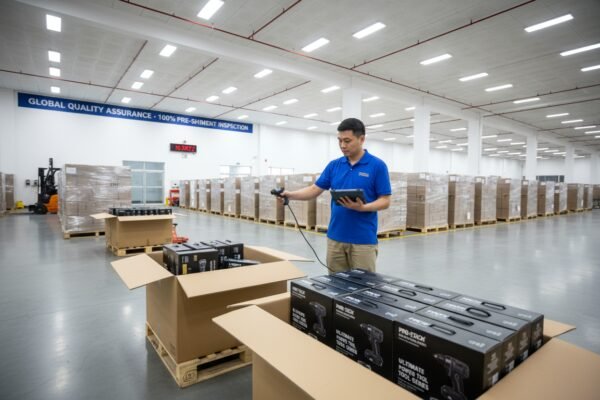
The Trust-but-Verify Approach
Your sourcing agent is your partner, not your adversary. But smart importers build verification into the system. This is not about distrust. It is about creating accountability that benefits everyone — including the agent.
Red Flags in Inspection Reports
Here are warning signs that an inspection report might not be telling the full story:
- No photos or only staged photos: Real inspections produce dozens of candid photos. If you only see a few clean product shots, ask questions.
- Round numbers everywhere: If the report says exactly 0 defects found in 200 units, be skeptical. Even good production runs have minor issues.
- Vague language: "Quality is acceptable" means nothing. You need specific data: "Inspected 125 units per AQL 2.5, found 2 minor defects (light scratches), 0 major, 0 critical. Batch passed."
- Missing timestamps or location data: Reports should include date, time, factory name, and inspector ID.
Verification Methods Compared
| Verification Method | Cost | Reliability | Best For |
|---|---|---|---|
| Third-party inspection (e.g., SGS, QIMA) | $200–$500 per visit | High — fully independent | High-value orders, first-time suppliers |
| Live video call during inspection | Free to low | Medium — limited angle/coverage | Ongoing relationships, budget-conscious buyers |
| Request raw data + photos | Free | Medium — depends on agent honesty | Every single order as a baseline |
| Surprise audit (unannounced visit) | $300–$600 | Very high | Suspected issues, large ongoing orders |
| AI-powered remote monitoring | $50–$200/month | Medium-high — improving rapidly | Tech-savvy importers, repeat products |
When to Use Third-Party Inspectors
We actually recommend our own clients use third-party inspectors for their first two or three orders with any new factory. This is not because we lack confidence in our own QC team. It is because an independent report gives you a baseline to compare against. If our internal reports and the third-party reports align closely, you know the system is working. Industry data shows that importers who use third-party inspections 10 see a 35% reduction in product defects compared to those who rely solely on supplier or agent QC.
Build a Feedback Loop
After every shipment, inspect a random sample yourself or have your warehouse team do it. Compare what you find against the agent's report. Share the results with your agent. Over time, this feedback loop tightens the system. Your agent learns exactly what you care about, and the factory learns that shortcuts will be caught.
Leverage Technology
Remote monitoring is no longer science fiction. AI-powered defect detection tools can analyze product images in real time and flag anomalies your inspector might miss. Blockchain-based traceability platforms let you track materials and components back to their source. These tools are becoming affordable even for small businesses — some start under $100 per month. They do not replace human inspectors, but they add a powerful verification layer.
What steps should I take if my sourcing agent misses a quality issue that I discover after delivery?
Last year, one of our clients discovered hairline cracks in 8% of a beauty device shipment — cracks that passed both the factory's own QC and the pre-shipment inspection. It was a painful lesson, but how we handled it made all the difference for the long-term relationship.
If your agent misses a quality issue, immediately document the defects with photos and data, formally notify your agent and factory in writing, review the inspection records to identify where the failure occurred, negotiate a resolution (replacement, refund, or credit), and update your QC protocol to prevent the same issue from recurring.
Step 1: Document Everything Immediately
The moment you discover defects, stop and document. Take clear photos and videos of every defective unit. Record the defect type, quantity affected, and batch or lot numbers. This evidence is your leverage in any negotiation. Without it, the factory will likely deny responsibility.
Step 2: Notify Your Agent in Writing
Send a formal quality complaint to your sourcing agent with all documentation attached. Use email — not just WhatsApp or WeChat — so there is a clear paper trail. State the facts without emotion. Describe the defect, reference the inspection report that missed it, and state your expected resolution.
Step 3: Root Cause Analysis
Work with your agent to figure out why the defect was missed. Common causes include:
- Sampling error: The inspector checked units from one area of the production line, missing defects concentrated in another batch.
- Defect not on the checklist: If hairline cracks were not listed as a specific inspection item, the inspector may not have looked for them.
- Time pressure: A rushed inspection at 5 PM on a Friday catches fewer defects than a thorough morning inspection.
- Inspector skill gap: The inspector may not have had the product knowledge to recognize the issue.
Step 4: Negotiate a Fair Resolution
Your options typically include:
- Full replacement: The factory produces and ships new units at their cost.
- Partial refund or credit: Applied to the current or next order.
- Rework: If defects can be fixed, the factory reworks the units and re-ships.
- Shared cost: If responsibility is genuinely shared (e.g., your spec was ambiguous), splitting the cost may be reasonable.
Your contract terms matter enormously here. If you structured payment with a percentage held until post-delivery confirmation, you have real negotiating power. If you paid 100% before shipment, your leverage is much weaker.
Step 5: Update Your QC System
This is the most important step and the one most importers skip. Every quality failure is free education. Add the missed defect to your checklist. Update your inspection protocol. If necessary, change your AQL levels or add a new testing step. Share the updated documents with your agent and factory.
When to Consider Changing Agents
One missed defect is not necessarily a reason to fire your sourcing agent. Mistakes happen in manufacturing. But patterns matter. If your agent consistently misses issues, provides defensive or dismissive responses, or fails to implement corrective actions, it is time to evaluate alternatives. A good agent takes ownership, communicates transparently, and improves the system after every failure.
Protecting Yourself Proactively
The best defense against post-delivery surprises is a proactive QC system. Request during-production inspections for large orders. Use third-party verification for high-risk products. And always, always hold back a portion of payment until you have confirmed quality on your end. These measures do not eliminate risk entirely, but they reduce it dramatically.
Conclusion
Quality control with a China sourcing agent works best when you treat it as a shared system — not a delegated task. Define your standards, inspect at every stage, verify independently, and improve continuously.
Footnotes
1. Replaced HTTP 403 link with an authoritative Wikipedia page defining quality control. ↩︎
2. Explains the definition and stages of prototype development. ↩︎
3. Details what product specifications are and their importance in manufacturing. ↩︎
4. Explains AQL as a key statistical tool in quality control inspections. ↩︎
5. Explains major defects and their impact on product functionality. ↩︎
6. Provides an authoritative definition and importance of Root Cause Analysis. ↩︎
7. Defines pre-shipment inspection and its importance in quality control. ↩︎
8. Defines critical defects in the context of product quality inspections. ↩︎
9. Describes minor defects and their minimal impact on product usability. ↩︎
10. Replaced HTTP 500 link with an authoritative SGS page on supplier and third-party inspections. ↩︎