
Every week, our team in Shenzhen coordinates shipments across dozens of freight routes — and we've seen how one weak logistics partner can unravel months of careful sourcing work cargo insurance coverage 1. You found the right product, negotiated a great price, and passed quality inspection. Then a mystery freight forwarder loses your container for three weeks less than container load (LCL) 2. Sound familiar?
To evaluate a supplier's logistics partners through your China sourcing agent, demand itemized shipping quotes, verify the forwarder's business licenses and track record, clarify Incoterms upfront, request cargo insurance proof, and insist on real-time tracking capabilities. A reliable logistics partner shows transparency — not vague promises.
In this guide, I'll walk you through exactly how to vet logistics partners, spot red flags before they cost you money, and use your sourcing agent as a strategic tool — not just a middleman. Let's dig in.
How can my sourcing agent verify if a supplier's logistics partner is actually reliable?
When we handle freight coordination for clients shipping to the U.S. or Europe, the first thing we check isn't price — it's whether the logistics partner can actually deliver on their promises. Too many importers skip this step and pay for it later.
Your sourcing agent can verify a logistics partner's reliability by checking their business licenses, import/export certifications, client references, cargo insurance coverage, and real-time tracking systems. They should also request a trial shipment and confirm the forwarder's experience with your specific cargo type and destination.
Start With Documentation and Credentials
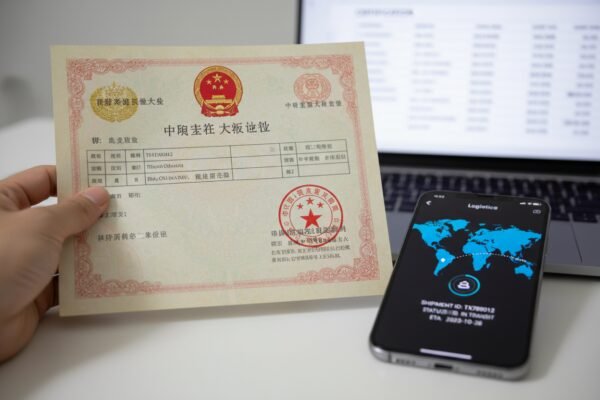
The very first step is simple: ask for paperwork. A legitimate freight forwarder in China should hold a valid MOC (Ministry of Commerce) license 3, an NVOCC (Non-Vessel Operating Common Carrier) registration, and ideally ISO certifications 4. Your sourcing agent should request these documents directly — not accept screenshots or verbal confirmations.
In our experience coordinating shipments from Guangdong province, we've found that roughly one in five logistics partners recommended by suppliers lack proper NVOCC registration 5. That's a problem because it means they're technically subletting space through another licensed operator, adding cost and reducing accountability.
Verify Track Record and References
Ask your agent to request at least three client references from the logistics partner. Better yet, ask for references from clients who ship similar products to your destination country. A forwarder experienced in shipping consumer electronics to the U.S. is very different from one that primarily handles textiles to Southeast Asia.
Here's a checklist your agent can use:
| Verification Item | What to Look For | Red Flag |
|---|---|---|
| Business license | Valid MOC registration, NVOCC | Expired or missing documents |
| Cargo insurance | Active policy with reputable insurer | "We'll handle it if something goes wrong" |
| Client references | 3+ verifiable contacts in your industry | Refusal to provide any references |
| Tracking system | Real-time updates via platform or API | Manual updates only, delays in responses |
| Customs expertise | Familiarity with destination country rules | Cannot explain HS code classification |
| Experience with your cargo | Prior handling of similar product types | No relevant experience |
Conduct a Trial Shipment
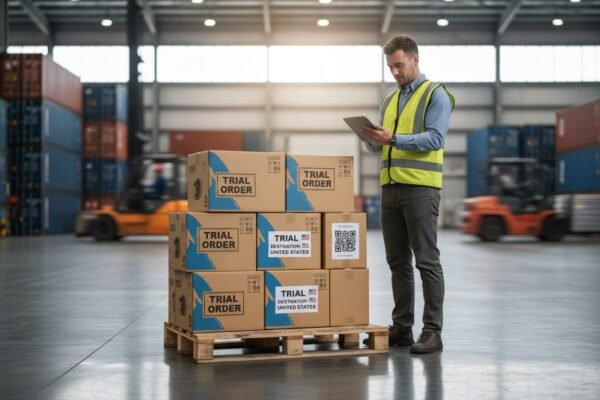
One of the most practical steps — and one that too many buyers skip — is a trial shipment. Before committing to a full container load (FCL) 6, have your agent arrange a smaller LCL (less than container load) shipment through the proposed logistics partner. Track every milestone: booking confirmation speed, warehouse handling, transit time accuracy, documentation quality, and communication responsiveness.
I always tell our clients: if someone says everything is "no problem," that's usually when problems start. Reliable people surface issues early so you can plan around them. That's a core principle we follow at Go Source — and it should be the standard you hold your logistics partners to as well.
Check Technology and Communication
In 2025, any serious freight forwarder should offer digital tracking. Whether it's through a proprietary platform, integration with your ERP, or even consistent updates via WhatsApp or email — you need visibility. Your agent should test the forwarder's communication responsiveness before any cargo moves. Send a few questions at different hours. See how fast and how clearly they respond.
A logistics partner that takes 48 hours to answer a simple question about container availability will take even longer when there's a real crisis at the port.
What specific red flags should I look for in a supplier's shipping network to avoid delays?
Our team has managed thousands of shipments out of China, and the patterns are clear — delays almost never come out of nowhere. There are always early warning signs. The trick is knowing what to look for before your goods are sitting idle at a port.
Key red flags include vague or incomplete shipping quotes, reluctance to allow factory or warehouse visits, no third-party inspection process, inability to explain Incoterms clearly, poor communication response times, and a history of missed ETDs (Estimated Time of Departure). These signals point to logistics partners who will cost you time and money.

The 8 Red Flags That Signal Trouble
Let me break down the most common warning signs we've encountered. Each one, on its own, might seem minor. But when you see two or three together, it's time to reconsider.
| Red Flag | What It Means | Risk Level |
|---|---|---|
| Vague shipping quotes with lump-sum pricing | Hidden fees will appear later (detention, documentation, fuel surcharges) | High |
| Refusal to provide cargo insurance details | You bear all risk if goods are damaged or lost | High |
| No third-party loading inspection | Product damage during container stuffing goes undetected | Medium-High |
| Cannot clearly explain FOB vs. CIF vs. EXW | Lack of professional knowledge or deliberate obscuring of cost responsibility | High |
| Slow response time (48+ hours) | Operational disorganization; worse during emergencies | Medium |
| No real-time tracking offered | You're flying blind once cargo leaves the factory | Medium |
| Hesitancy about factory or warehouse visits | Possible use of undisclosed subcontractors or poor facilities | High |
| History of missed ETDs without explanation | Systemic capacity or management issues | High |
Vague Quotes Are the Biggest Warning
I want to emphasize this point because it's the one that burns importers the most: a vague quote is not a competitive quote. It's a trap.
When we provide logistics coordination for our clients, every line item is separated — ocean freight 7, local trucking, customs brokerage fees, documentation charges, insurance, and any terminal handling charges. If your logistics partner gives you one flat number and calls it "all-inclusive," ask them to itemize it. If they can't or won't, walk away.
A detailed quote tells you the person is organized and honest. A vague quote usually means hidden fees will show up at the worst possible time — like when your container is already at the destination port and you need to pay before release.
Lack of Contingency Planning
In 2025, global shipping is still recovering from post-pandemic disruptions. Port congestion in Shenzhen, Ningbo, and Shanghai flares up regularly. A reliable logistics partner should have documented contingency plans. Ask: What happens if the primary port is congested? Do you have relationships with alternative ports? Can you reroute to Yantian if Shekou is backed up?
If the answer is "don't worry, it won't happen," that's your red flag right there.
No Pre-Shipment or Loading Inspection
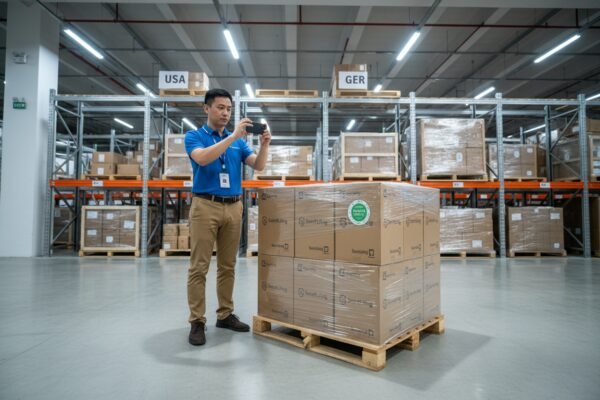
Third-party inspections before and during container loading have become standard practice for serious importers. Your sourcing agent should coordinate AQL-based inspections 8 and, critically, supervise the loading process with photo and video documentation. If a logistics partner pushes back on this or says it's "not necessary," it usually means they don't want scrutiny on how goods are handled.
We've had cases where products passed factory QC perfectly, but arrived damaged because the container loading was careless — boxes crushed, no proper bracing, temperature-sensitive items stored next to heat sources. Loading supervision prevents this.
How do I ensure my supplier isn't overcharging me for their logistics services?
When we quote logistics for our clients, we break every cost into visible line items — because we know the alternative. We've audited supplier-arranged shipping where the markup on ocean freight alone was 40% above market rate, buried inside a "convenient" door-to-door package.
To prevent overcharging, request itemized logistics quotes from your supplier, then have your sourcing agent obtain independent comparison quotes from two or three alternative freight forwarders. Cross-reference rates for ocean freight, trucking, customs brokerage, and insurance separately. Clarify Incoterms to understand exactly which costs are your responsibility.
Understand Where Hidden Costs Live
Logistics costs from China to international destinations have several components. Each one is a potential hiding spot for overcharges. Here's where to look:
| Cost Component | Typical Range (2025) | Where Overcharges Hide |
|---|---|---|
| Ocean freight (FCL 40') | $1,800–$4,500 depending on route | Inflated base rate or undisclosed fuel surcharges |
| Local trucking (factory to port) | $150–$400 | Mileage padding or "express" fees |
| Customs brokerage (origin) | $80–$200 | Duplicate documentation charges |
| Terminal handling charges | $100–$250 | Bundled into "port fees" without explanation |
| Cargo insurance | 0.3%–0.5% of cargo value | Marked up or not actually purchased |
| Documentation fees | $30–$80 | Charged multiple times across parties |
| Destination delivery charges | Varies widely | Surprise fees at arrival port |
Get Independent Benchmark Quotes
The simplest defense against overcharging is competition. Have your sourcing agent get quotes from at least two independent freight forwarders for the same route, cargo type, and timeline. You're not necessarily going to switch — you just need a benchmark.
When we help clients with this at Go Source, we typically find that supplier-arranged logistics costs 15–30% more than independently sourced alternatives. Sometimes the premium is justified — faster booking, established relationships, priority loading. But often, it's pure markup.
Clarify Your Incoterms
This is critical and often overlooked. If your purchase order says FOB (Free on Board), the supplier is responsible for costs until the goods are loaded onto the vessel. Everything after that — ocean freight, insurance, destination charges — is your responsibility. If it says CIF (Cost, Insurance, and Freight), the supplier covers freight and insurance to the destination port, but those costs are baked into the product price.
The danger zone is when Incoterms 9 aren't clearly defined in the PO. I've seen suppliers quote "FOB" but then add port handling fees, documentation charges, and inspection costs that should have been included. Your sourcing agent must ensure the PO explicitly defines which Incoterms apply and what each party covers.
Use Your Agent as a Cost Auditor
A good sourcing agent doesn't just find products — they protect your margins. Ask your agent to audit logistics invoices line by line against the original quote. Flag any new charges that weren't in the agreement. If the supplier's logistics partner adds a "congestion surcharge" or "peak season adjustment," your agent should verify this against current market conditions.
At our company, we maintain updated rate benchmarks from multiple forwarders precisely for this purpose. When a client asks "is this freight charge reasonable?", we can answer with data, not guesses.
Can my sourcing agent help me switch to a better freight forwarder if the current one fails?
We've managed mid-project logistics transitions for clients more times than I'd like to count. It's never fun, but it's always better than continuing with a forwarder who's costing you customers. One of our clients in the beauty equipment space lost a key retail placement because his supplier's forwarder missed two consecutive ETDs. We stepped in and reorganized the entire shipping chain within ten days.
Yes, a competent sourcing agent can absolutely help you switch freight forwarders mid-project. They should leverage their existing network of vetted logistics partners, negotiate new terms quickly, manage the documentation transition, and ensure no disruption to your production or shipping schedule. This is one of the highest-value services a good agent provides.
When to Pull the Trigger on a Switch
Not every shipping hiccup warrants changing your forwarder. Port delays happen. Weather disrupts schedules. But there's a difference between occasional disruptions and systemic failure. Here's how to decide:
Switch immediately if you see: two or more missed ETDs without prior notice, discovery of unlicensed operations, cargo damage due to negligent handling, or surprise charges exceeding 20% of the original quote.
Consider switching if you see: consistently slow communication, inability to provide tracking updates, refusal to provide cargo insurance documentation, or lack of contingency options during disruptions.
How Your Agent Manages the Transition
A sourcing agent with strong local networks can transition you to a new forwarder without halting production. Here's what the process typically looks like at Go Source:
First, we identify two to three alternative forwarders from our vetted network who serve your specific route and cargo type. We request quotes and compare them against your current costs. Then we handle the paperwork transition — updating shipping instructions, bill of lading details 10, customs broker assignments, and insurance coverage.
The key advantage of working through an agent is speed. Building a relationship with a new forwarder from scratch — especially across language and time zone barriers — takes weeks. Your agent already has these relationships in place.
Protecting Your Shipments During the Switch
The riskiest moment is when goods are in transit or staged at a warehouse during the transition. Your agent should ensure that all goods currently in the pipeline are tracked and accounted for. Any warehouse transfers need photo documentation. New booking confirmations should be shared with you immediately.
We also recommend adding a logistics liability clause to your purchase order. This clause should state that if the supplier's recommended logistics partner causes delays or damage beyond a defined threshold, the buyer has the right to designate an alternative forwarder at the supplier's cooperation.
Building Long-Term Logistics Resilience
The best strategy is never being dependent on a single logistics partner. Ask your sourcing agent to maintain relationships with at least two qualified forwarders for your primary shipping routes. This gives you backup capacity during peak seasons, flexibility during disruptions, and leverage during price negotiations.
In 2025 and into 2026, we're seeing more agents — including our own team — adopt this dual-forwarder model. It adds a small amount of management overhead, but the risk reduction is enormous. One of our clients shipping consumer electronics to Germany reduced their average delay rate from 18% to under 4% simply by having a secondary forwarder on standby.
The bottom line: your sourcing agent isn't just a product finder. They should be your logistics quarterback — someone who can call an audible when the play breaks down.
Conclusion
Evaluating your supplier's logistics partners isn't optional — it's essential. Use your sourcing agent to verify credentials, benchmark costs, spot red flags early, and maintain backup forwarders. Transparency wins. Vagueness costs. Stay vigilant, and your supply chain stays strong.
Footnotes
1. Describes different types and benefits of cargo insurance for shipments. ↩︎
2. Explains LCL shipping, its benefits, and how it works for smaller cargo. ↩︎
3. Explains the role of China's Ministry of Commerce in freight forwarding licenses. ↩︎
4. Explains the importance and types of ISO certifications for logistics providers. ↩︎
5. Details the requirements and process for NVOCC licensing and registration. ↩︎
6. Defines FCL shipping, its characteristics, and benefits for larger shipments. ↩︎
7. Explains ocean freight's role in global supply chains and its benefits. ↩︎
8. Describes the Acceptable Quality Limit standard for product quality inspections. ↩︎
9. Official source for international commercial terms defining shipping responsibilities. ↩︎
10. Authoritative and comprehensive explanation of a bill of lading. ↩︎