
Every week, our team handles dozens of buyer requests where something got lost between languages, and it was never just words that went missing.
Evaluate a China sourcing agent's cross-cultural communication by testing their ability to translate technical specs without ambiguity, surface bad news proactively, advocate firmly during disputes while preserving factory relationships, and bridge the gap between your quality standards and local manufacturing norms. True communication competence goes far beyond bilingual fluency.
Finding a sourcing agent is not the same as finding a translator. A good agent does not just convert your language into the supplier's language and back again. What really matters is that they understand your culture and market while also knowing the factory's language and the rules of the supply side. supply chain management 1 Beyond solving language barriers, they solve cultural differences and market rule differences. In short, a sourcing agent exists to eliminate information gaps. They are a bridge. You should feel that through them, you gain more and more information and understand the market better over time. You may grow to trust them, but they should never make you dependent. Instead, they should help you become confident and strong on your own. Let me walk you through exactly how to evaluate this critical skill.
How can I test if a sourcing agent truly understands my technical requirements or is just nodding along?
When our team relays a client's spec sheet to a factory floor manager in Dongguan, we see firsthand how easily precision gets lost between two languages.
Test a sourcing agent's technical understanding by asking them to paraphrase your requirements back to you in their own words, request translated factory instructions they have written, and review whether they ask clarifying questions. An agent who truly understands will simplify complex specs into bulletproof instructions rather than just echoing your words.
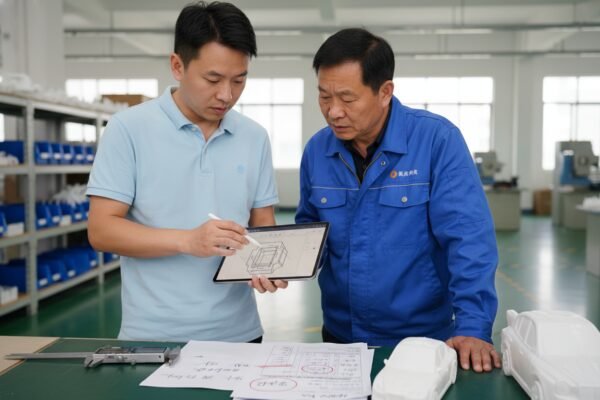
The Difference Between Hearing and Understanding
There is a common trap in cross-cultural sourcing. You explain your product requirements clearly. The agent says "okay" or "got it." You assume alignment. Then weeks later, the sample arrives and the material is wrong, the tolerance is off, or the finish looks nothing like what you described. This happens because many agents treat communication as a relay task. They pass your words forward without truly processing them.
A strong sourcing agent does something different. They digest your requirements. They ask questions that show they are thinking about how the factory will interpret each detail. They might say, "When you say 'matte finish,' do you mean sandblasted or powder-coated? Because the factory will ask." That kind of response shows real understanding.
Practical Tests You Can Use
Here are concrete ways to check if an agent truly grasps your technical needs:
| Test Method | What It Reveals | Red Flag |
|---|---|---|
| Ask them to rewrite your spec in simpler terms | Whether they understand the core requirements | They copy-paste your spec without changes |
| Request the Chinese version of your instructions | Whether they can translate technical meaning, not just words | They use Google Translate or vague phrasing |
| Introduce a deliberate inconsistency in your brief | Whether they catch errors proactively | They pass it through without noticing |
| Ask how the factory might push back on a specific requirement | Whether they understand manufacturing realities | They say "no problem" to everything |
| Request a sample approval checklist they would create | Whether they structure quality checkpoints | They have no system or template |
Why "Yes" Does Not Always Mean "Yes"
In Chinese business culture 2, saying "yes" can mean several things. It might mean "I hear you." It might mean "I'll try." It might mean "I don't want to embarrass you by disagreeing." This is rooted in the concept of face 3, or 面子. Disagreeing directly, especially with a foreign client, can feel uncomfortable.
A skilled agent knows this. When a factory says "mei wenti" (no problem), a good agent digs deeper. They ask follow-up questions. They request written confirmation of specific details. They know that politeness is not the same as commitment. If your agent never raises concerns or never pushes back on anything, that is not a sign of competence. It is a sign they might be nodding along.
Ask These Interview Questions
When evaluating a potential agent, try these questions:
- "Can you give me an example of a time when a factory misunderstood a buyer's spec? How did you catch it?"
- "How do you confirm that the factory truly understands a tolerance or material requirement?"
- "What do you do if the factory says 'yes' but you suspect they are not aligned?"
The answers will tell you whether the agent operates as a true intermediary or just a message passer.
What signs should I look for to ensure my agent can effectively advocate for my interests during a factory dispute?
In our day-to-day operations coordinating between overseas buyers and Chinese factories, we have seen how disputes over defects, delays, or pricing can either be resolved smoothly or spiral into costly standoffs. supplier dispute resolution 5
Look for an agent who communicates firmly without causing the factory to lose face, documents every agreement in writing, stays calm under pressure, and has a track record of resolving disputes by finding solutions rather than assigning blame. Their negotiation style should protect your interests while preserving the supplier relationship for future orders.

Why Dispute Handling Is a Communication Test
Disputes are where cross-cultural communication 6 skills get truly tested. When everything goes smoothly, anyone can look competent. But when a shipment arrives with defects, or the factory misses a deadline, or the price suddenly changes, you need an agent who can fight for you without burning bridges.
In China, business relationships run on guanxi 7, the web of trust and reciprocity built over time. A factory that feels attacked or publicly shamed will not cooperate. They may drag their feet on replacements, refuse future orders, or quietly reduce quality on your next run. A strong agent knows how to apply pressure in a way that gets results without destroying the relationship.
The Balance Between Firmness and Diplomacy
Some buyers prefer hard-edged, purely transactional negotiation. They want their agent to "go in tough." But in the Chinese sourcing environment, this approach often backfires. The factory may agree on the surface, then hide problems later. Or they may simply refuse to prioritize your account.
A skilled agent uses a different strategy. They acknowledge the issue clearly. They present evidence calmly. They frame the solution as a shared goal. For example, instead of saying "You made defective products and you need to pay for it," they might say "We found these issues during inspection. Let's figure out the fastest way to fix this so we can ship on time and keep this partnership strong."
Signs of a Strong Dispute Advocate
| Positive Sign | What It Means |
|---|---|
| They document issues with photos, reports, and written records | They build a factual case, not an emotional one |
| They visit the factory in person during serious disputes | They take ownership and show the factory they are serious |
| They propose solutions, not just complaints | They keep the process moving forward |
| They communicate timeline impact to you honestly | They manage your expectations while pushing the factory |
| They maintain a respectful tone even in tough conversations | They understand that saving face keeps cooperation alive |
What Weak Advocacy Looks Like
If your agent always sides with the factory or makes excuses for them, that is a problem. If they tell you "this is normal in China" without pushing for improvement, they are not advocating for you. Similarly, if they avoid confrontation entirely and just relay the factory's position without challenge, they are acting as a messenger, not a representative.
On the other hand, if the factory seems hostile or unresponsive to your agent, that may indicate the agent has damaged the relationship with overly aggressive tactics in the past.
Questions to Ask During Evaluation
- "Tell me about a time you had to push back on a factory. What happened?"
- "How do you handle complaints without damaging the supplier relationship?"
- "What do you do when a factory refuses to accept responsibility for a defect?"
Listen for specific examples. Vague answers like "We always protect the buyer" are not enough. You want stories with details.
How do I evaluate if an agent will provide transparent updates instead of hiding bad news to save face?
Our project managers deal with production delays 8, sampling issues, and unexpected material shortages every month, so we know firsthand that transparency is what separates a trustworthy agent from a risky one.
Evaluate transparency by checking whether the agent proactively reports problems before you ask, provides photographic and documentary evidence of production status, shares both good and bad news in a timely manner, and maintains a consistent paper trail. An agent who hides bad news to save face will eventually cost you more in surprises than any production issue would.

The Cultural Root of the Problem
In Chinese culture, delivering bad news directly can feel uncomfortable. The concept of face, or 面子, creates a strong incentive to avoid embarrassment for both parties. A factory sales rep may delay telling your agent about a problem, hoping to fix it quietly first. Your agent may then delay telling you for the same reason. By the time the bad news reaches you, it is often too late to act.
This is not dishonesty in the traditional sense. It is a deeply ingrained cultural pattern. But for buyers who operate on tight timelines and fixed margins, this pattern can be devastating.
How to Build a System That Encourages Transparency
You cannot simply tell an agent "be transparent" and expect results. You need to create structures that make transparency the default.
| Transparency Tool | How It Helps |
|---|---|
| Weekly written updates with photos | Forces the agent to document progress, making it hard to hide delays |
| Shared QC checklists with pass/fail criteria | Creates objective standards that leave no room for vague reassurances |
| Pre-agreed escalation triggers (e.g., 3-day delay = immediate notification) | Sets clear rules for when bad news must be communicated |
| Video calls during key production milestones | Gives you visual confirmation that cannot be faked |
| Third-party inspection at pre-shipment stage | Provides an independent check that validates the agent's reports |
Red Flags That Suggest Hidden Information
Watch for these warning signs during your working relationship:
- Updates are always positive with no mention of any challenges
- The agent only provides information when you ask, never proactively
- Timelines shift without explanation
- Vague language like "almost done" or "basically okay" without specifics
- Reluctance to share factory contact information or visit schedules
- Photos are old, recycled, or clearly staged
The Modern Transparency Standard
In 2025, sourcing teams increasingly expect real-time evidence: screenshots of WeChat conversations with factories, timestamped QC photos, factory visit summaries, decision logs, and even short video clips from the production floor. This shift is driven by remote procurement and growing supply chain risk awareness.
AI translation tools 9 have improved dramatically, but they still cannot replace human judgment when it comes to tone, implied meaning, and relationship context. A factory might send a WeChat message that literally translates to "We are working hard on it," but a culturally fluent agent will recognize that this may actually mean "We have a problem we have not told you about yet." AI cannot read between those lines.
Testing Transparency Before You Commit
During the evaluation phase, give the agent a small test project. Then observe:
- Do they send updates without being prompted?
- Do they mention any risks or concerns, even minor ones?
- Do they provide written summaries after calls or factory visits?
- Do they give you access to documentation?
An agent who surfaces small problems early is far more valuable than one who presents a perfect picture that eventually cracks.
Can I rely on their communication style to bridge the gap between my quality standards and the factory's local practices?
When our QC team inspects finished goods before shipment, we often find that the gap between what the buyer expected and what the factory produced comes down to how clearly the standards were communicated in the first place. quality standards 10
Yes, you can rely on communication style as a key indicator, but only if the agent demonstrates the ability to convert your abstract quality expectations into specific, measurable factory instructions, and then follows up with structured verification at each production stage. Communication style is not about politeness; it is about precision, consistency, and cultural translation of standards.

Why Quality Gaps Are Really Communication Gaps
Most quality failures in China sourcing are not caused by factories that cannot produce good products. They are caused by misaligned expectations. A buyer says "high quality finish." The factory interprets that through their own local standards, which may be different from yours. Without a sourcing agent who can translate your expectation into factory-language specifics, you end up with a product that the factory considers acceptable but you consider defective.
This is where cross-cultural communication becomes a sourcing capability, not a soft skill. The agent must take your quality standard, which may be expressed in brand-level language like "premium feel" or "Apple-level packaging," and convert it into factory-level language: specific material grades, surface roughness measurements, color codes, packaging dimensions, and inspection criteria.
The Communication Chain That Breaks Quality
Quality communication rarely travels in a straight line. It passes through multiple stakeholders:
- Western buyer defines expectations
- Sourcing agent translates and structures them
- Factory sales rep receives them
- Production manager interprets them for the line
- QC team inspects against them
- Logistics team packages accordingly
At every handoff, there is a chance for distortion. A strong agent keeps the message consistent across all parties. They do not just send a spec sheet and hope for the best. They confirm understanding at each step.
What Good Quality Communication Looks Like
A strong agent bridges your standards and local practices by doing these things:
- Creating a detailed product brief with photos, drawings, and physical reference samples
- Writing inspection checklists with pass/fail criteria in both English and Chinese
- Conducting a pre-production meeting with the factory to walk through every requirement
- Sending first-article samples for your approval before mass production begins
- Performing in-line inspections during production, not just at the end
- Documenting everything in writing so there is no "I thought you meant..." later
Channel Management Matters
How and where communication happens also affects quality outcomes. WeChat is the dominant business communication channel in China. It is fast and informal, which makes it great for urgent updates but risky for formal approvals. Email is better for records. Video calls are essential for complex issues that need visual demonstration.
A skilled agent knows when to use each channel:
- WeChat: Quick questions, photo updates, urgent alerts
- Email: Formal spec confirmations, approval records, contractual changes
- Video calls: Pre-production reviews, dispute resolution, complex technical discussions
- Shared documents: QC checklists, tracking sheets, spec revisions
The Role of Compliance and Traceability
Cross-cultural communication now extends into compliance territory. Buyers increasingly need documentation for supplier verification, quality certifications, audit evidence, and subcontracting transparency. An agent who communicates well also reduces compliance and fraud risk. They ensure the factory understands your regulatory requirements, not just your cosmetic ones.
Opposing View: "Direct Communication With the Factory Is Better"
Some experienced buyers prefer to communicate with factories directly, cutting out the agent as a middleman. This can work if you have deep experience with Chinese business culture and speak enough Mandarin to navigate technical discussions. But for most importers, especially those new to China sourcing, a culturally fluent intermediary prevents costly mistakes that direct communication often produces. The agent is not a barrier to the factory. They are the quality filter that keeps your project on track.
Conclusion
A great China sourcing agent makes you more informed, more confident, and more independent over time. Evaluate them by outcomes, not just words.
Footnotes
1. Provides a comprehensive definition and components of supply chain management. ↩︎
2. Offers a guide to understanding etiquette and customs in Chinese business. ↩︎
3. Explains the sociological concept of "face" in Chinese culture. ↩︎
4. Replaced with an article from Technical Writer HQ that details what a technical requirements document is, its components, and how to create one, aligning well with the original intent. ↩︎
5. Replaced with a working article from the same domain (EOXS) that provides best practices for resolving supplier conflicts, which is highly relevant to 'factory dispute'. The anchor text was updated for better precision. ↩︎
6. Replaced with a Wikipedia article providing a comprehensive overview of cross-cultural communication, an authoritative and accessible source. ↩︎
7. Defines guanxi as a social network of mutually beneficial relationships in Chinese culture. ↩︎
8. Discusses delays as a common issue leading to supplier disputes. ↩︎
9. Explores the benefits and limitations of AI translation tools for business. ↩︎
10. Defines quality standards and their critical role in manufacturing success. ↩︎