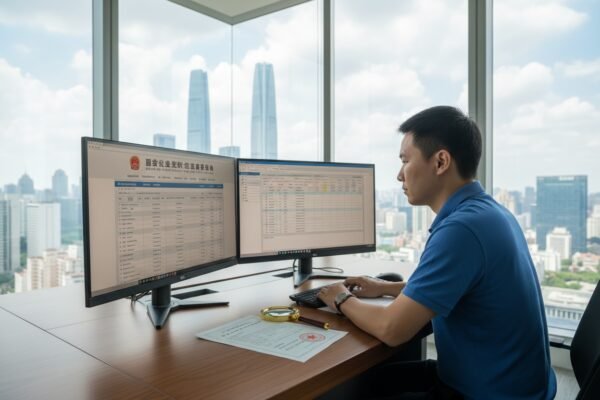
When we coordinate production for our smart home devices in Shenzhen, we constantly encounter "factories" that are actually just offices gsxt.gov.cn 1. It is frustrating to lose time on middlemen disguised as manufacturers.
To evaluate your agent, verify they utilize official Chinese registries like gsxt.gov.cn to check business scopes and require 48-hour audit reports with real-time video evidence. A competent agent must demonstrate the ability to distinguish manufacturing facilities from shared office spaces through on-site surprise visits and rigorous document analysis.
Let’s explore the specific methods we use to ensure our partners are dealing with genuine manufacturers.
How can I tell if my sourcing agent knows how to distinguish a real factory from a middleman?
In our experience exporting electronics 2 to the US, we often see suppliers claiming to own production lines while sitting in high-rise office buildings far from any industrial zone.
You can verify your agent's capability by asking them to analyze a specific supplier's operational structure and physical location. A skilled agent will immediately flag inconsistencies such as a registered address in a residential zone or a product catalog that is too diverse for a single production line.

Analyzing Operational Models and Address Data
Distinguishing a real factory from a middleman is not always black and white. In our own operations, we sometimes see a hybrid model 3 that confuses inexperienced agents. For example, some suppliers are actually technology companies that design the software and hardware but outsource the final assembly to a dedicated factory. In this case, the "supplier" owns the intellectual property and quality control but does not own the building or the conveyor belts. A good sourcing agent understands this nuance. They should be able to tell you if the supplier is a "pure trader" (who adds margin but no value) or a "solution provider" (who outsources production but controls the tech).
However, the most common deception involves pure trading companies posing as manufacturers to mark up prices by 20% to 50%. To evaluate your agent's skill here, ask them to verify the supplier's address using local mapping tools like Baidu Maps 4, not just Google Maps. A factory requires a large footprint, usually on the ground floor or in an industrial park. If the address points to a unit on the 30th floor of the "Finance Center" in downtown Shenzhen, your agent should flag this immediately as a trading office.
The Catalog Consistency Check
Another method we rely on is analyzing the product catalog. A genuine factory typically focuses on a specific niche due to machinery limitations. For instance, our production lines are calibrated for precision electronics; we cannot suddenly manufacture textiles or plastic toys. If a supplier's Alibaba page lists "Consumer Electronics," "Yoga Mats," and "Pet Supplies," they are almost certainly a trading company aggregating products from various sources.
Your agent should be able to look at a product list and determine if the manufacturing processes are related. If the processes required to make the products are vastly different (e.g., injection molding 5 vs. CNC machining vs. fabric sewing), the agent should identify this as a trader's portfolio.
Testing Response Patterns
You can also test your agent by having them ask technical questions. Factories usually answer technical queries slowly because they need to consult an engineer. Trading companies often answer quickly but vaguely, as their sales team's primary goal is to secure the deposit.
Table: Factory vs. Trader Response Indicators
| Feature | Genuine Factory Behavior | Trading Company/Middleman Behavior |
|---|---|---|
| Product Focus | Narrow, specialized (e.g., only audio boards). | Broad, unrelated categories (e.g., audio, clothes, toys). |
| Address Type | Industrial zones, suburban areas, ground floors. | CBD skyscrapers, residential buildings, co-working spaces. |
| Technical Q&A | Slow, detailed, specific answers from engineers. | Fast, generic, "yes to everything" sales responses. |
| Customization | Discusses mold costs and MOQ for changes. | Claims "easy customization" without technical details. |
| Sample Policy | May hesitate on small samples; focused on bulk. | Eager to send samples of anything (often bought from Taobao). |
What vetting steps should my agent take to prove a supplier isn't just a trading company?
When we source components for our own electronic tools, we require a strict validation process before sending any deposit, ensuring the partner has actual skin in the game.
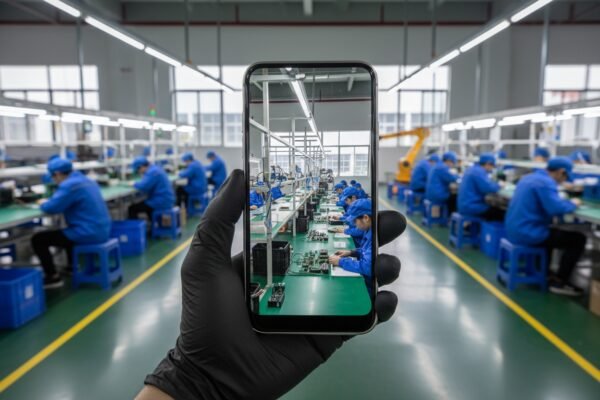
Your agent must implement a multi-layered vetting process that includes verifying the 18-digit Unified Social Credit Code and cross-referencing bank account details. They should also demand video evidence of the specific product on the production line, rather than accepting generic stock photos commonly used by trading companies.
Digital Footprint and Documentation Verification
The first step in any rigorous vetting process is digital verification, but it goes beyond simply looking at a website. Your agent needs to prove they can dig deeper than a standard Google search. One of the most critical steps is cross-referencing the contact information. If the supplier's phone number or email is linked to five different company names on various B2B directories, this is a massive red flag. It usually indicates a trading group operating multiple "storefronts" to capture different market segments.
We also verify the supplier’s history. A genuine factory usually has a digital trail of attending trade shows (like the Canton Fair 6 or Global Sources) over several years. If a supplier claims to be a "10-year manufacturer" but has no digital footprint prior to six months ago, your agent should advise caution.
The "Golden Sample" Trap
A common trick we see is the "Golden Sample." A trading company will buy a high-quality product from a top-tier factory (perhaps even a competitor like us) and send it to you as a sample. Once you approve it and place a bulk order, they source the mass production from a cheaper, lower-quality workshop to maximize their margin.
To prevent this, your agent must demand a "Video Audit" of the sample creation. They should ask the supplier to film a short video holding a piece of paper with your name and the current date next to the product while it is on the production line, not just on a desk. If the supplier refuses or makes excuses ("the factory is confidential," "it's a trade secret"), they are likely hiding the fact that they don't have access to the production floor.
Cross-Referencing Financial Data
Another vetting step involves the bank account. Genuine manufacturers almost always have a company bank account that matches their business license name exactly. If the agent notices the supplier asking for payment to a personal account, a vague offshore account in Hong Kong, or a company name that differs entirely from the Alibaba listing (e.g., "Shenzhen Logistics Ltd" instead of "Shenzhen Electronics Factory"), this is an immediate warning sign. It suggests the entity you are talking to is merely a broker.
Table: Essential Vetting Checklist for Agents
| Vetting Step | What the Agent Should Check | Why It Matters |
|---|---|---|
| Social Credit Code | Check the 18-digit code on government sites. | Confirms legal existence and capital. |
| Reverse Image Search | Run factory photos through Baidu/Google Images. | Detects stolen stock photos from other factories. |
| Video Verification | Request a video with a specific handwritten note. | Proves physical access to the product/factory. |
| Bank Match | Match Beneficiary Name to Business License. | Prevents payments to shell companies or scammers. |
| ISO Certificates | Verify the certificate number on the issuer's site. | Fake Photoshop certificates are very common. |
How do I know if my agent is actually conducting on-site factory audits to verify production lines?
We often invite clients to visit our Shenzhen facility because witnessing our assembly process builds a level of trust that emails and photos simply cannot replace.
Confirm your agent's on-site activities by requesting real-time GPS-tagged photos and unannounced live video calls during the audit. An effective agent will document specific machinery, interview production managers, and provide a detailed report on ISO compliance rather than just forwarding marketing brochures.
The Difference Between a Visit and an Audit
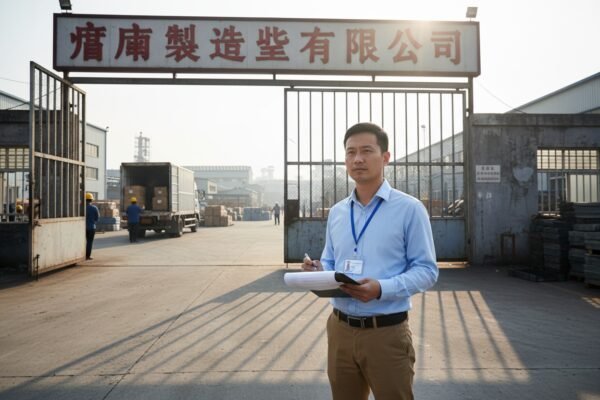
There is a significant difference between a "factory visit" and a "factory audit." A bad agent will take a train to the factory, drink tea with the boss, take a selfie at the gate, and tell you "it looks good." This is useless. When we conduct internal quality checks, or when a professional agent audits a supplier, it involves a systematic evaluation of the production capability.
To know if your agent is doing a real audit, ask to see their audit template before they go. It should include checks for incoming quality control 7 (IQC), in-process quality control (IPQC), and final quality control (FQC). They should be checking if the factory has a calibration record for their testing equipment. If your agent doesn't know what "calibration" means, they are not qualified to audit a technical factory.
Unannounced "Secret" Visits
One of the most effective strategies we mentioned in our insights is the unannounced visit. Trading companies disguised as factories often panic when an agent shows up without an appointment. They might say, "The production manager is out," or "We are cleaning the floor today, you can't come in."
If your agent schedules everything weeks in advance, the supplier has time to "stage" the factory—borrowing workers, renting equipment, or cleaning up messes. A great agent will perform a "surprise check" or at least a visit with very short notice (e.g., "I'm in the area, can I drop by in 1 hour?"). If the supplier creates barriers to entry, it is because they have something to hide, often the fact that they are just a sales office.
Evidence of Physical Presence
You should expect a report within 48 hours of the visit. This report must contain photos that are clearly taken by the agent, not marketing shots. Look for "ugly" photos—messy corners, workers eating lunch, trash bins. These prove authenticity. Furthermore, ask your agent to video call you live from the factory floor. If they can walk you through the production line and show you the workers assembling your specific type of product, you have confirmation. If the signal is "bad" or they refuse, be skeptical.
Assessing Production Capacity
Finally, the audit must verify capacity. If you need 10,000 units a month, but the agent sees only five workers and one aging machine, that factory cannot meet your demand without outsourcing. A trading company will promise they can make millions; a real audit counts the seats on the line and calculates the real output.
Can my sourcing agent accurately interpret Chinese business licenses to confirm manufacturing status?
Our legal team frequently reviews supplier licenses to ensure the "Business Scope" explicitly lists manufacturing, processing, or assembly activities before we sign any contracts.
A capable agent must be able to read and translate the Chinese Business License, specifically looking for terms like "Manufacturing" or "Production" in the business scope. They should also verify the registered capital and establishment date to assess the supplier's stability and legitimate operational history.

Decoding the Business Scope (Jingying Fanwei)
The Chinese Business License 8 (Ye Zhi Zhao) is the single most important document for verification, but it is entirely in Chinese. Many foreign buyers gloss over it, but your agent must know how to read it. The most critical section is the "Business Scope" (经营范围).
If the scope includes words like "Production" (生产), "Manufacturing" (制造), or "Processing" (加工), the company is legally registered to manufacture goods.
If the scope only includes words like "Wholesale" (批发), "Retail" (零售), or "Trade" (贸易), they are legally strictly a trading company.
We have seen cases where a supplier claims to be a factory, but their license says "Technology Development and Sales." This usually means they design the product but outsource the making of it. While this isn't a scam, it confirms they are not the physical manufacturer.
Using Government Databases (GSXT)
Your agent should not just look at a PDF sent by the supplier (which can be Photoshopped). They must log into the National Enterprise Credit Information Publicity System (gsxt.gov.cn). This is the official Chinese government database. By entering the company's Chinese name or their Unified Social Credit Code 9, the agent can see the live, unalterable data.
Your agent needs to check:
- Status: Is the company "Existing" (存续) or "Abnormal Operations" (经营异常)?
- Registered Capital: A factory usually has a higher registered capital (e.g., 1 million RMB+) to cover equipment and inventory. A trading company might have a very low registered capital (e.g., 30,000 RMB), meaning they have little liability if things go wrong.
- Establishment Date: If they claim 20 years of experience but the license says established in 2023, they are lying.
Table: Key Terms in Chinese Business Licenses
| Chinese Term | Pinyin | Meaning | Implication |
|---|---|---|---|
| 生产 / 制造 | Shengchan / Zhizao | Production / Manufacturing | Positive: Indicates a factory license. |
| 加工 | Jiagong | Processing | Positive: Indicates assembly/processing capability. |
| 批发 / 零售 | Pifa / Lingshou | Wholesale / Retail | Negative: Indicates a trader/reseller. |
| 贸易 | Maoyi | Trade | Negative: Indicates a trading company. |
| 经营异常 | Jingying Yichang | Abnormal Operations | Warning: Company has legal/financial issues. |
Identifying "Shared Office" Registrations
Another detail a smart agent checks on the license is the registered address. Factories are almost never registered in Room 1205, Building A, Wanda Plaza. They are registered in "No. 88 Industrial Road, Longhua District." If the license address looks like a residential apartment or a shared office suite, your agent should investigate further. While some factories have a separate sales office in the city, the business license should usually reflect the production site or they should have a separate license for the factory location.
Conclusion
Verifying your agent's vetting process protects your supply chain from costly middlemen. We prioritize transparent audits and deep document analysis to ensure you get the quality and price that only real factories can offer.
Footnotes
1. Official Chinese government portal for enterprise credit information. ↩︎
2. Provides official U.S. government regulations for importing and exporting electronic products. ↩︎
3. Explains different operational structures and strategies within hybrid supply chain models. ↩︎
4. Overview of Baidu Maps, its features, and geographical coverage. ↩︎
5. Detailed explanation of the injection molding manufacturing process. ↩︎
6. Official website for the China Import and Export Fair, also known as Canton Fair. ↩︎
7. Defines and explains the importance of inspecting materials from suppliers. ↩︎
8. Guide to understanding and verifying official Chinese business registration documents. ↩︎
9. Explains the purpose and structure of China's unique business identifier. ↩︎