
When we manage production lines in Shenzhen 1, we see firsthand how the wrong partner destroys profit margins. You need a team that acts as your eyes on the ground, not just a mailbox.
To evaluate a sourcing agent effectively, assess their transparency in supplier verification, rigorous quality control protocols, and technical product expertise. You must verify their track record with client references and confirm they utilize on-site audits to distinguish original manufacturers from trading companies, ensuring your supply chain remains secure and cost-efficient.
Here is how you can systematically test an agent's capabilities before signing a contract.
How do I verify that my sourcing agent is finding original manufacturers instead of trading companies?
In our experience exporting to the US, hiding the real factory identity is a tactic used to inflate prices. We believe you deserve direct access to the source to ensure transparency and control.
Request the manufacturing license to check the "Scope of Business" and insist on a video walkthrough of the production floor. A legitimate agent will transparently facilitate direct communication with factory management and provide audit trails, whereas a middleman will block access and refuse to reveal the actual production location.
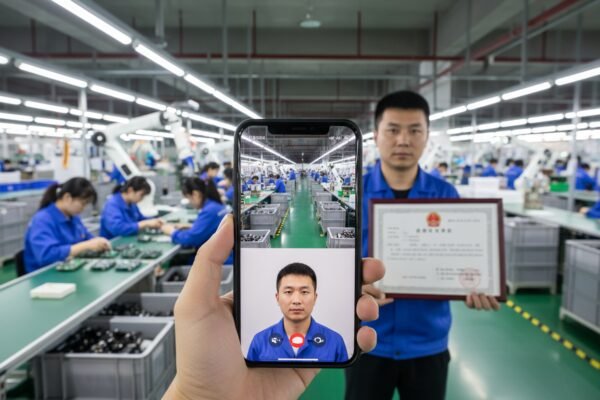
The Importance of "Factory Direct" Verification
Finding a true Original Equipment Manufacturer 2 (OEM) versus a trading company is the single most critical step in securing your supply chain. A trading company buys from the factory and sells to you, adding a margin that can range from 15% to 50%. While trading companies have their place—specifically for very small orders or complex product mixes—your sourcing agent must be honest about who they are finding.
When we vet suppliers for our clients, we often encounter "factories" that are merely offices in a high-rise building. A competent sourcing agent must possess the skills to peel back these layers. If your agent is relying solely on Alibaba gold badges 3 or website photos, they are failing you.
Scrutinizing the Business License
Your agent should be able to retrieve and translate the supplier’s business license 4. This is a public document in China, but it requires local knowledge to interpret. The key lies in the "Scope of Business 5" section.
- Manufacturer: The scope will include words like "Production" (生产), "Manufacturing" (制造), or "Processing" (加工).
- Trading Company: The scope will typically list "Wholesale" (批发), "Retail" (零售), or "Import and Export" (进出口), without any mention of production.
The Site Visit Test
The ultimate test of an agent's ability is their willingness to put you in front of the factory. If an agent is protective and refuses to let you video call the factory manager or visit the site (even virtually), it is a major red flag. They are likely afraid you will cut them out, or they are hiding the fact that the "factory" doesn't exist.
A capable agent adds value through project management and QC, not by hoarding contact information. They should facilitate a relationship where you own the supplier network.
Checklist: Factory vs. Trading Company Indicators
| Feature | Original Manufacturer (Factory) | Trading Company |
|---|---|---|
| Product Range | Narrow, specialized in one material or category. | Wide variety of unrelated products. |
| MOQ (Min Order) | High (requires setting up a production line). | Low (often holds stock). |
| Technical Answers | Slow but highly detailed and accurate. | Fast but generic or "yes to everything." |
| Location | Industrial parks or suburban zones. | Downtown office buildings. |
| Customization | Open to tooling and deep modification. | Prefers standard off-the-shelf items. |
What specific questions should I ask to test an agent's technical knowledge of my product?
When we calibrate our flight controllers, we know that one wrong spec ruins the batch. Your agent needs to speak the language of engineers, not just the language of sales.
Challenge the agent with technical inquiries about raw material specifications, common production defects, and specific manufacturing bottlenecks for your niche. An expert agent will explain the production process flow and quality control standards in detail, while a generalist will only offer vague assurances about price and delivery.

Moving Beyond Generalist Sourcing
Many sourcing agents claim to be able to source "anything." While the sourcing methodology (find, vet, ship) is transferable, the technical nuances are not. If you are sourcing consumer electronics, an agent who primarily deals in textiles will miss critical details regarding PCB layers, soldering standards, or battery certifications.
You are not looking for an agent who knows the product better than you do, but you are looking for one who can accurately translate your technical requirements into Chinese manufacturing reality. They need to understand what constitutes a "critical defect" versus a "cosmetic flaw" in your specific industry.
Probing Production Processes
To test their knowledge, ask them to describe the production flow for your product type. They should be able to outline the steps from raw material intake to final packaging.
For example, if you are making plastic injection molded parts 6, a knowledgeable agent should mention "mold flow analysis," "gate location," or "shrinkage rates." If they only talk about "getting the best price," they lack the depth required to protect your quality.
Questions to Validate Competency
Use the following questions to interview your potential agent. Their ability to answer these determines if they can prevent quality disasters before they happen.
Technical Competency Interview Grid
| Category | Question to Ask Agent | Good Answer Indicators | Bad Answer Indicators |
|---|---|---|---|
| Materials | "What are the common raw material grades used for this product in China?" | Specifies exact grades (e.g., "304 vs 201 Stainless Steel") and price impacts. | "We use the best material" or "Standard material." |
| Defects | "What are the top 3 quality issues you see with this product type?" | Specifics like "sink marks," "poor soldering," or "color fastness." | "We verify everything is perfect" or "No issues usually." |
| Bottlenecks | "Where does production usually slow down for this item?" | Mentions specific steps like "curing time," "plating," or "component sourcing." | "It depends on the factory" (vague). |
| Compliance | "What certifications are mandatory for exporting this to the US/EU?" | Lists FCC, CE, RoHS, UL, or specific ASTM standards. | "We can buy certificates" or "Not sure, need to check." |
Handling Technical Disputes
A strong agent acts as a technical buffer. When a factory claims a defect is "unavoidable," an agent with technical knowledge can push back, citing industry standards and alternative production methods. Without this knowledge, your agent is simply a messenger passing on the factory's excuses to you.
How can I be sure my sourcing agent’s factory audit process is rigorous enough for my brand?
Our engineers have found that a factory's website rarely matches reality. You need an agent who walks the floor, checks the machines, and verifies the workers' conditions personally.
Review their sample audit reports to ensure they cover ISO 9001 standards, social compliance, and machinery maintenance records. A rigorous process must include physical inspections of raw material storage and production lines, supported by photo evidence and interviews, rather than just a simple checklist of basic facility existence.
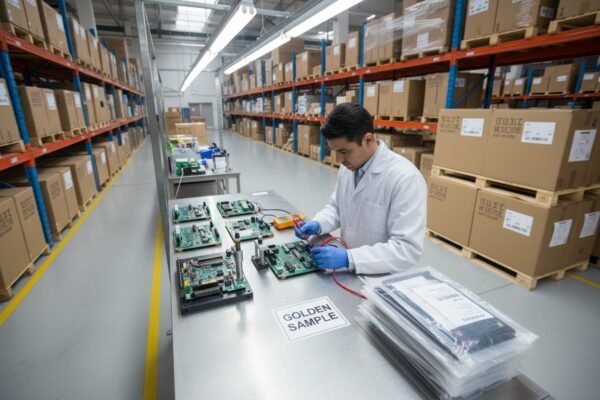
The Difference Between a Visit and an Audit
A "factory visit" is a handshake tour. A "factory audit" is a forensic investigation. Many low-quality sourcing agents will simply visit a factory, drink tea with the boss, look at the showroom, and call it "audited." This provides zero protection for your brand.
To evaluate an agent, ask to see a sanitized (anonymized) audit report from a previous client. This document tells you exactly how deep they look. If the report is just one page of "Pass/Fail" checkboxes, their process is insufficient.
Essential Audit Components
A professional audit conducted by a sourcing agent should cover three main pillars:
- Quality Management System (QMS): Does the factory follow ISO 9001? Do they have incoming quality control (IQC) for raw materials? ISO 9001 standards 7 Do they have records of machine calibration?
- Production Capacity: Does the factory have enough functional machines and workers to meet your order volume? Are they outsourcing any part of the process to other unknown workshops?
- Social Compliance: This is increasingly critical for Western brands. Does the factory use child labor 8? Are fire exits blocked? Are working hours excessive?
Audit Criteria Checklist
When evaluating your agent's process, verify that their standard audit includes the following specific checks. If these are missing, you are flying blind.
| Audit Section | What the Agent Must Verify | Why It Matters |
|---|---|---|
| Incoming Materials | Storage conditions and IQC records. | Prevents bad ingredients from entering the production line. |
| Production Line | Work instructions visible at each station. | Ensures workers aren't guessing how to assemble your product. |
| Quality Lab | Testing equipment (e.g., drop testers, color meters) is present and calibrated. | Proves they can actually test the product specs they promise. |
| Warehouse | Organization, moisture control, and "First-In-First-Out" system. | Prevents mold and shipping of old/damaged stock. |
| Management | Organizational chart and English proficiency. | Shows stability and ability to communicate. |
Visual Evidence is Non-Negotiable
A rigorous audit report must be filled with photos. You should see photos of the bathrooms, the dormitories, the broken machines in the corner, and the testing logs. If an agent sends you a text-only report, they likely didn't inspect the facility thoroughly. They should be your eyes, documenting the good, the bad, and the ugly so you can make an informed risk decision.
What steps will my sourcing agent take to manage my production timeline and prevent delays?
We know that in manufacturing, "next week" often means "next month." An effective agent actively drives the schedule rather than passively waiting for the factory's updates.
Confirm they utilize a critical path method that tracks raw material procurement, tooling, and pilot runs with specific dates. Your agent should perform inspections at 20% and 80% completion to identify bottlenecks early, providing weekly status reports that highlight potential risks before they become irreversible delivery delays.

Active vs. Passive Management
The most common complaint importers have is, "The factory said it would be ready on the 1st, but on the 2nd they told me they need two more weeks." This happens because the factory prioritizes clients who are shouting the loudest or monitoring the closest.
A high-value sourcing agent manages the timeline proactively. They don't just ask "When will it be done?"; they ask "Have the materials arrived?" "Has the mold been polished?" "Is the packaging printed?" By monitoring these sub-milestones, they can predict delays weeks in advance.
The "During Production" Inspection (DUPRO)
To ensure the timeline is real, your agent must physically verify progress. This is where the DUPRO (During Production Inspection) comes in.
- 10-20% Stage: The agent checks if the correct raw materials are on-site and if the first few units off the line match the Golden Sample. If there is a misunderstanding, it is caught here, saving weeks of rework.
- 50-80% Stage: The agent verifies that the daily output rate matches the deadline. If the factory needs to produce 1,000 units a day to finish on time but is only doing 500, the agent must intervene immediately.
Production Timeline Monitoring Table
Ask your prospective agent to fill out a hypothetical timeline for your product. It should look something like this:
| Milestone | Agent Action | Goal |
|---|---|---|
| Deposit Paid | Confirm receipt and raw material ordering. | Lock in the production slot. |
| Material Arrival | Photo verification of raw materials in warehouse. | Ensure no delays in starting assembly. |
| First Off Tool | Inspection of the first 5-10 units. | Catch tooling errors before mass production. |
| Mass Production | Mid-production check (DUPRO). | Verify speed and consistency. |
| Packaging | Verify barcodes and carton markings. | Prevent customs rejection or Amazon FBA issues. |
| Final Inspection | Pre-shipment Inspection 9 (PSI) when 100% packed. | Final quality gate before payment balance. |
Communication Cadence
Finally, evaluate how they communicate bad news. Delays happen in China—due to power cuts, holidays, or supply shortages. A bad agent hides this until the last minute, hoping to fix it. A good agent tells you immediately: "The battery supplier is 3 days late, which pushes assembly back. We are pushing them to air freight the batteries to the factory to recover time." This level of transparency allows you to adjust your marketing or logistics plans accordingly.
Conclusion
Evaluating a China sourcing agent is not about finding the person with the lowest service fee; it is about finding a partner who lowers your total risk. By verifying their ability to distinguish factories from traders, testing their technical competence, and auditing their quality control processes, you protect your brand from the chaos of cross-border manufacturing. Ask the hard questions now so you don't have to make apologies to your customers later.
Footnotes
1. Provides an overview of Shenzhen as a leading manufacturing hub. ↩︎
2. Defines OEM and explains its role in manufacturing and supply chains. ↩︎
3. Clarifies what Alibaba Gold Supplier status confirms and its limitations. ↩︎
4. Explains how to verify a Chinese company's business license online. ↩︎
5. Explains the importance and details of a company's business scope in China. ↩︎
6. Provides a comprehensive explanation of the plastic injection molding process. ↩︎
7. Introduces the ISO 9001 standard for quality management systems. ↩︎
8. Discusses the prevalence and impact of child labor in global supply chains. ↩︎
9. Explains the definition, procedure, and importance of pre-shipment inspection. ↩︎