Finding a reliable supplier is easy—until your order is delayed, quality drops, and your customer goes silent. I’ve learned this the hard way so you don’t have to.
To evaluate a factory's real production capability, I look beyond brochures and fancy PowerPoint slides. I rely on structured inspections, KPI tracking, and real-time factory behavior.
What you see on Alibaba or at a trade fair rarely reflects the full picture. If you want to avoid expensive mistakes, keep reading. I’m breaking down exactly how I inspect factories in China to determine whether they’re capable—or just pretending.
What questions should I ask during a factory visit?
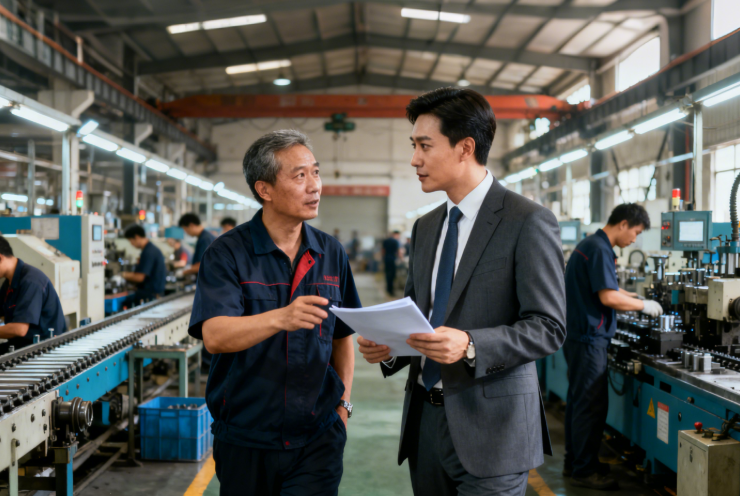
I’ve visited over a hundred factories in China. Many look similar on the surface. But asking the right questions helps me spot the difference between a true manufacturer and a trading company with a rented workshop.
During a factory visit, I ask about production lines, workforce stability, QC systems, ERP usage, and their handling of changeovers. Each answer gives me clues about the factory’s ability to meet complex, large-volume, or customized orders.
Start with core verification questions
Ask basic questions, but don’t underestimate their importance:
- When was the factory established?
- How many employees are there today?
- What’s the monthly output for your product type?
- What’s your main export market?
- Can I see your business license?
These are not just small talk. They help me verify the factory is legally registered, experienced, and has built systems beyond short-term survival.
Dive into workflow and process specifics
Next, I move to questions like:
- Can I walk through each step of the production process?
- Do you have standard operating procedures (SOPs)?
- Can I see how you handle incoming material inspection (IQC)?
- What’s your first-pass yield rate for this product?
- Do you have any existing ERP or MES systems?
Factories that stumble when answering these are usually not mature enough for long-term collaboration—especially if you’re working with OEM China sourcing or custom designs.
Ask situational and scenario-based questions
These questions test how the factory reacts under stress:
- What do you do when a key machine breaks down?
- How do you handle urgent orders or holiday peak seasons?
- How do you track delayed shipments and why do they happen?
Their answers show you how proactive—or reactive—they are. As a China sourcing agent, I pay attention to whether they blame others or offer clear, data-backed responses.
How do I assess if a supplier can handle large-volume orders?
Once I find a technically sound factory, the next question is: can they scale?
To assess scalability, I review production capacity, labor scalability, scheduling systems, sub-supplier reliability, and how they’ve historically handled seasonal volume spikes.
Capacity is not just numbers—it's system readiness
Many factories claim high monthly output. But I ask:
- How many active production lines do you have?
- What’s your peak vs. average monthly capacity?
- Can you show historical data on seasonal production volumes?
It’s easy to overpromise. What I want is evidence. For instance, if a factory says they can produce 50,000 units a month, I ask to see machine logs, worker shift schedules, and past delivery notes.
I examine human and equipment flexibility
Scalable production doesn’t just depend on machines. I look at:
- Can the factory add night shifts?
- Do they have standby workers or use labor dispatch platforms?
- Are their machines single-purpose or modular?
Factories that rely heavily on a small, specialized workforce may struggle with China product sourcing projects that need sudden ramp-ups or customization.
Evaluate sub-supplier networks
If your product uses parts or packaging from other factories, then the main factory’s supplier network becomes critical. I ask:
- Who supplies your key components?
- How many backup suppliers do you have?
- Do you hold safety stock or use JIT?
When I do Chinese supplier sourcing for clients, I check whether the factory has multiple qualified options or is entirely dependent on one low-cost provider.
What production KPIs should I look for?
Factories love to say they “care about quality.” But KPIs don’t lie.
I always ask for data on first-pass yield, defect rate, on-time delivery, and average lead time. These numbers tell me how well the factory plans, executes, and corrects mistakes.
First-Pass Yield (FPY)
This measures how many units pass quality control the first time. A low FPY means lots of rework, wasted time, and hidden quality issues. For complex electronics, I expect 90% or above. For simple products, 95%+ is realistic.
On-Time Delivery Rate
One of the biggest complaints buyers have about China factory sourcing is shipping delays. I ask:
- What’s your OTD (on-time delivery) rate in the last 12 months?
- What are your top reasons for delay?
- Can you show proof from real orders?
A professional factory will track this monthly. An average below 85% is a red flag.
Rejection Rate and Customer Complaints
Ask about:
- Rejection rate from incoming QC at the customer’s site
- How many quality complaints did they get last year?
- How were they resolved?
Many factories will hesitate or offer vague answers. That’s why I always ask for quality reports tied to real orders—especially if they have experience with export markets.
Can I verify equipment and workflow efficiency during inspection?
Seeing is believing. I never finalize a deal without inspecting the equipment.
Yes, I verify equipment condition, utilization rate, maintenance logs, and how workflow bottlenecks are handled. This tells me if the factory is just surviving—or operating with long-term quality and speed in mind.
Look beyond clean floors—inspect real data
Shiny floors don’t mean good machines. Here’s what I check:
- Equipment age and origin (brands like Panasonic, HAAS, Fanuc stand out)
- Machine maintenance logs (preventive vs. reactive)
- Spare parts availability and downtime history
Factories that track Mean Time Between Failure (MTBF) and Mean Time To Repair (MTTR) are rare—but always more reliable.
Trace production flow and spot bottlenecks
I walk through a real order being processed. I look at:
- Are workstations balanced?
- Are there visible queues at any step?
- Are materials being moved manually or via conveyor?
A lean production setup will minimize waiting, over-processing, and excess motion. This matters if your orders need fast turnaround or involve mass customization.
Ask for digital integration
Top-performing factories often use MES (Manufacturing Execution System). I ask:
- Can I see production dashboards?
- Can I see real-time data on machine status or yield?
If they use spreadsheets or whiteboards, that’s okay for simple products. But for large-scale China sourcing and logistics, I prefer tech-driven factories.
If you want to work with a China factory, don’t settle for video calls and brochures. Visit, verify, and vet everything—your supply chain depends on it.