
Every week, our team fields calls from brand founders who just lost a full season of sales because their shipment arrived two months late precise product specifications 1. The pain is real. The money lost is real. And almost always, the root cause is the same: poor expectation management between the buyer, the agent, and the factory.
China sourcing agents manage expectations and timelines by documenting precise product specifications upfront, vetting suppliers for capacity and reliability, monitoring production milestones on the ground, conducting multi-stage quality inspections, and coordinating end-to-end logistics with built-in time buffers to prevent costly delays.
In this article, I will walk you through exactly how a professional sourcing agent handles each stage of the process multi-stage quality inspections 2. You will learn what to ask, what to watch for, and how to protect your business from the most common pitfalls. Let's get into it.
How can I ensure my sourcing agent provides transparent updates on my project's progress?
When we onboard a new client at our Shenzhen office, the first thing we do is set up a communication framework end-to-end logistics 3. Without it, even the best sourcing plan falls apart in silence and confusion.
You can ensure transparent updates by agreeing on a fixed reporting schedule, requiring photo and video evidence at each production milestone, using shared tracking dashboards, and insisting on a single point of contact who speaks your language fluently.
Why Silence Is Your Biggest Enemy
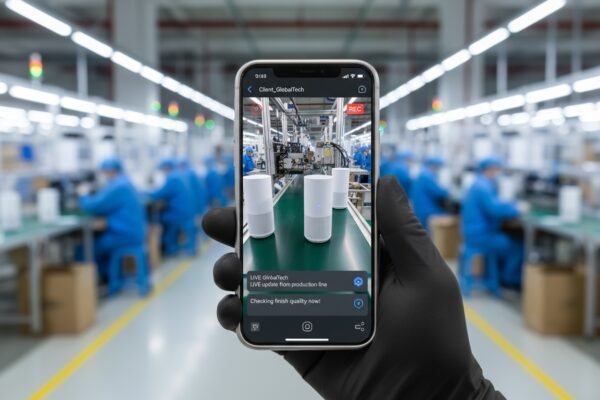
Most sourcing horror stories start the same way. You place an order, you get a confirmation, and then you hear nothing for six weeks guanxi 4. By the time you ask for an update, the factory has already made 5,000 units with the wrong color. This happens more often than you think.
A good sourcing agent prevents this by establishing a clear communication rhythm from day one. At our agency, we send structured updates at least twice a week during active production. Each update includes photos from the factory floor, a progress percentage, and a note on any issues or risks.
Set Up a Communication Agreement
Before production starts, you and your agent should agree on a few things in writing.
| Communication Element | Recommended Standard | Why It Matters |
|---|---|---|
| Update Frequency | 2–3 times per week during production | Catches problems early before they multiply |
| Update Format | Written report with photos/videos | Visual proof eliminates guesswork |
| Response Time | Within 12 hours on working days | Prevents bottlenecks in decision-making |
| Platform | WhatsApp, WeChat, or shared dashboard | Ensures real-time accessibility |
| Escalation Protocol | Direct call for urgent issues | Some problems cannot wait for email |
Demand Visual Evidence, Not Just Words
Words can be vague. Photos do not lie. Ask your agent to send you images of raw materials before production begins, shots of the production line during manufacturing, and close-ups of finished samples before bulk packing. Some agents now use live video calls so you can virtually walk through the factory. This is not overkill. This is basic risk management.
Use a Single Point of Contact
Confusion multiplies when you talk to three different people and get three different answers. Insist on having one dedicated project manager on the agent's side. That person should know your product inside and out. They should also be the one visiting the factory and reporting back to you. This creates accountability, which is the foundation of transparency.
The Role of Guanxi in Getting Honest Answers
Here is something many overseas buyers do not understand. In Chinese business culture 5, "guanxi" — relationships — shapes how information flows. A factory might tell a random buyer that everything is fine, even when it is not. But a sourcing agent who has a strong relationship with the factory owner will get the truth. They will hear about the delayed raw materials or the machine breakdown before it becomes a crisis. This is one of the invisible benefits of working with a local agent.
What strategies does my agent use to prevent production delays from hurting my business?
Our team has managed hundreds of production runs across Guangdong, Zhejiang, and Fujian. The one truth we have learned is this: delays are not a possibility. They are a certainty. The question is how you prepare for them.
A skilled agent prevents delays by building time buffers into the schedule, pre-qualifying factories for actual capacity, splitting large orders across multiple suppliers when needed, monitoring production milestones weekly, and having contingency plans for holidays, material shortages, and machine breakdowns.
Build Time Buffers Into Every Schedule
Here is a personal insight I always share with clients. If your absolute deadline is August delivery, never tell your sourcing agent that August is the deadline. Tell them July. And your agent should tell the factory June. Everyone in the chain needs breathing room. Factories in China juggle multiple orders at once. Your order is not their only priority. Buffer time is not a luxury. It is insurance.
A sourcing agent who has been through enough production cycles knows exactly where delays happen. They have seen the delayed fabric shipments, the week-long power outages in summer, the factory that shuts down for a wedding. These experiences — the mistakes they made with other clients, the problems they learned to avoid — are your greatest asset. You are paying for their scars, not just their service.
Know the Common Delay Triggers
| Delay Trigger | Typical Impact | Agent's Mitigation Strategy |
|---|---|---|
| Chinese New Year | 3–5 week production halt | Place orders 8–10 weeks before CNY |
| Raw Material Shortage | 1–3 weeks delay | Pre-order materials before production confirmation |
| Factory Overcommitment | 2–4 weeks delay | Verify current order load during factory audit 6 |
| Quality Failures in Bulk | 1–2 weeks for rework | Conduct in-process inspections at 30% and 60% completion |
| Customs Documentation Errors | 1–2 weeks at port | Prepare all export documents during production, not after |
| Power Rationing (Summer) | 1–2 weeks intermittent delays | Schedule production outside peak summer months if possible |
Diversify Your Supplier Base
Relying on a single factory is risky. If that factory has a machine breakdown or a labor dispute, your entire shipment is hostage. A smart agent will identify two or three qualified factories for your product category. Even if you only use one for the current order, having backups means you can pivot fast when problems arise.
Pre-Production Samples Are Non-Negotiable
Never approve bulk production without a confirmed sample. This sounds obvious. But under time pressure, many buyers skip this step. The result is almost always a disaster. Your agent should coordinate sample production, ship it to you for approval, and get your written sign-off before the factory cuts a single piece of material for the full run. This adds one to two weeks to the timeline, but it saves you from a five-figure mistake.
The Power of Being On the Ground
The single biggest advantage of a China-based sourcing agent is physical proximity to the factory. When a problem happens — and it will — your agent can be at the factory within hours. They can see the issue with their own eyes, talk to the production manager face to face, and push for an immediate solution. An email from 10,000 miles away simply cannot do this.
How do I align my specific quality requirements with the factory's manufacturing capabilities?
When we send our team to audit a new factory, the first thing they check is not the price list. It is the equipment on the floor and the skill of the workers. A factory can quote any price you want, but if their machines cannot hold your tolerances, the price means nothing.
You align quality requirements with factory capabilities by providing detailed written specifications with visual references, conducting a factory audit before placing orders, requesting golden samples as a benchmark, and implementing multi-stage quality inspections during production to catch deviations early.

Start With Crystal-Clear Specifications
Vague instructions produce vague results. If you tell a factory "make it smooth," you will get ten different interpretations of smooth. Instead, give them exact numbers. Surface roughness in microns. Pantone color codes. Torque specifications. Weight tolerances in grams. The more precise your spec sheet, the less room there is for error.
Your sourcing agent should help you create this document if you do not have one. They know what details Chinese factories need because they have seen what happens when those details are missing. A good spec sheet includes materials, dimensions, colors, functional requirements, packaging, labeling, and compliance standards.
The Golden Sample Concept
A golden sample is a physical reference that the factory keeps on the production line. It represents the exact quality you expect. Every worker on the line can pick it up, look at it, and compare it to what they are making. This is far more effective than a written document alone because factory workers respond to tangible examples. Your agent should ensure the golden sample is approved by you and stored at the factory before bulk production begins.
Conduct a Factory Audit Before You Commit
Not every factory can do what they claim. Some factories show you one production line during a visit and run your order on a completely different, lower-quality line. A proper audit checks the following:
| Audit Criteria | What to Look For | Red Flag |
|---|---|---|
| Equipment Age and Condition | Modern, well-maintained machines | Outdated equipment with visible wear |
| Worker Skill Level | Trained operators, clean workstations | High turnover, sloppy processes |
| Quality Control System | Dedicated QC team, testing equipment | No QC department or procedures |
| Production Capacity | Enough output for your order size | Factory clearly overloaded |
| Certifications | ISO 9001, ISO 14001, or industry-specific | No certifications or expired ones |
| Export Rights | Proper export license and documentation | Requires third-party export agent |
Multi-Stage Inspections
Waiting until everything is packed to inspect is like checking if the parachute works after you have jumped. Your agent should arrange inspections at multiple stages.
Pre-production inspection: Verify raw materials before manufacturing starts. Check material certificates, color matching, and quantities.
In-process inspection: Visit the factory when about 30% to 60% of production is done. This is the critical window. If something is wrong, you can still correct it without scrapping the entire batch.
Pre-shipment inspection: Conduct a final check when at least 80% of goods are packed. Use AQL sampling standards 7 to determine pass or fail.
When the Factory Cannot Meet Your Standards
Sometimes, the honest answer is that a particular factory cannot produce to your quality level. A good agent will tell you this upfront rather than let the factory try and fail. They will suggest alternative factories or help you adjust your specifications to match what is realistically achievable within your budget. This kind of honesty saves you time, money, and frustration.
How will my sourcing partner manage the end-to-end logistics to meet my delivery deadlines?
Coordinating shipments from our warehouse in Shenzhen to ports in Los Angeles or Hamburg has taught us one thing above all: logistics is where good production planning goes to die if you are not careful. Getting the product made right is only half the battle.
Your sourcing partner manages end-to-end logistics by coordinating packaging, warehouse consolidation, freight booking, export documentation, customs clearance, and last-mile delivery, often using DDP shipping to handle duties and taxes so your goods arrive at your door without surprises or delays.
The Full Logistics Chain Explained
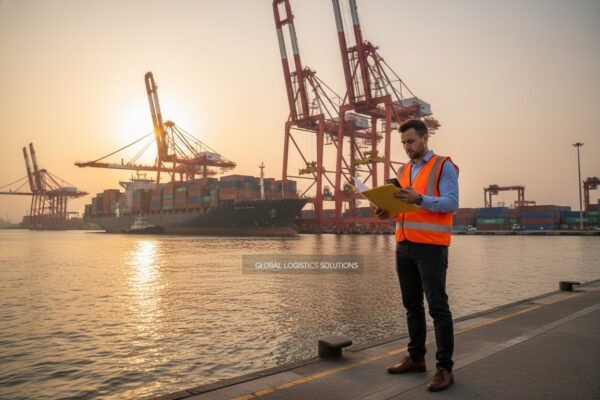
Many buyers think logistics means booking a shipping container. In reality, it is a chain of at least eight steps, and a failure at any link can delay your entire shipment.
Your agent should manage every one of these steps: collecting finished goods from the factory, transporting them to a consolidation warehouse, inspecting and repacking if needed, booking freight with a reliable forwarder, preparing all export documents, handling Chinese customs clearance, tracking the shipment in transit, and coordinating import customs clearance and delivery at your end.
DDP vs. FOB: Know What You Are Paying For
DDP (Delivered Duty Paid) 8 means the agent handles everything, including import duties and taxes, until the goods reach your designated location. FOB (Free on Board) 9 means the agent's responsibility ends once the goods are loaded onto the vessel in China. For SMEs without a customs broker or freight forwarder in their home country, DDP is usually the smarter choice.
| Logistics Term | Agent's Responsibility | Buyer's Responsibility |
|---|---|---|
| EXW (Ex Works) | None — buyer picks up at factory | Everything from factory gate onward |
| FOB (Free on Board) | Domestic transport, export customs | Ocean freight, import customs, delivery |
| CIF (Cost, Insurance, Freight) | Domestic transport, export customs, freight, insurance | Import customs, last-mile delivery |
| DDP (Delivered Duty Paid) | Everything including duties and taxes | Simply receive the goods |
Documentation That Cannot Be Wrong
A single error on a commercial invoice, packing list, or bill of lading can hold your shipment at customs for days or even weeks. Your agent must ensure that HS codes 10 are correct, declared values are accurate, and all certificates of origin or compliance documents are prepared before the goods leave China. For electronics, this often includes FCC or CE certifications. For toys, it may include CPSIA or EN 71 reports.
Shipping Timeline Realities
Buyers often underestimate how long shipping takes. Here is a realistic breakdown.
Sea freight from Shenzhen to Los Angeles takes about 14 to 18 days. Add 3 to 5 days for Chinese customs and port handling. Add another 5 to 10 days for US customs clearance and delivery to your warehouse. The total is often 25 to 35 days from the moment goods leave the factory. If you are shipping to Europe, add another week.
Air freight is faster — typically 5 to 8 days door to door — but costs four to six times more per kilogram. Your agent should advise you on the best mode based on your timeline and budget.
Contingency Planning for Logistics Disruptions
Port congestion, carrier delays, and customs holds are not rare events. They happen regularly. A prepared agent will book freight early, use reliable forwarders with track records, and always have a backup shipping route. They should also keep digital copies of all documents so that if anything is lost, replacements can be issued within hours, not days.
Post-Delivery Follow-Up
The best agents do not disappear after delivery. They follow up to confirm the goods arrived in good condition, check if quantities match, and document any issues for future reference. This feedback loop is what makes the next order smoother, faster, and more accurate. Over time, this continuous improvement cycle is what separates a great sourcing partner from a mediocre one.
Conclusion
Managing expectations and timelines in China sourcing is not about hoping for the best. It is about building systems — clear communication, realistic buffers, rigorous quality control, and reliable logistics — that protect your business at every step.
Footnotes
- Explains the importance and components of detailed product specifications in manufacturing. ↩︎
- Details different stages of quality control inspections in the production process. ↩︎
- Provides a comprehensive overview of end-to-end logistics in supply chain management. ↩︎
- Defines and explains the concept of guanxi and its significance in Chinese society and business. ↩︎
- Offers insights into the foundational aspects of Chinese business practices and etiquette. ↩︎
- Describes the purpose and key elements of conducting a factory audit for supplier evaluation. ↩︎
- Explains Acceptance Quality Limit (AQL) and its application in quality control inspections. ↩︎
- Clarifies the responsibilities and implications of DDP Incoterms for international shipping. ↩︎
- Details the definition and obligations associated with FOB Incoterms in global trade. ↩︎
- Authoritative guide on Harmonized System (HS) Codes. ↩︎