
When our team first started helping overseas buyers navigate the Chinese supply chain 1, we noticed a common struggle. Many business owners cannot tell if they are dealing with a solo freelancer or a legitimate sourcing company. This confusion leads to wasted money and failed projects.
Individual agents are solo freelancers who connect buyers to factories with limited resources and no legal backing. Professional sourcing companies are registered firms with teams, offices in manufacturing hubs, and full supply chain services including quality control, logistics, and legal accountability.
In this guide, we will break down the key differences between these two options. You will learn how to verify who you are working with, understand the risks, and choose the right partner for your business needs.
How can I verify if I am working with a solo freelancer or a legally registered sourcing agency?
From our experience working with hundreds of overseas clients, we see this question come up repeatedly. Many buyers assume they hired a company, only to discover later that one person handled everything from a home office.
You can verify a sourcing partner by checking China's AIC business registration database, requesting their business license, visiting their office, and asking for client references. Professional companies have registered addresses, team photos, and a 5+ year track record online.
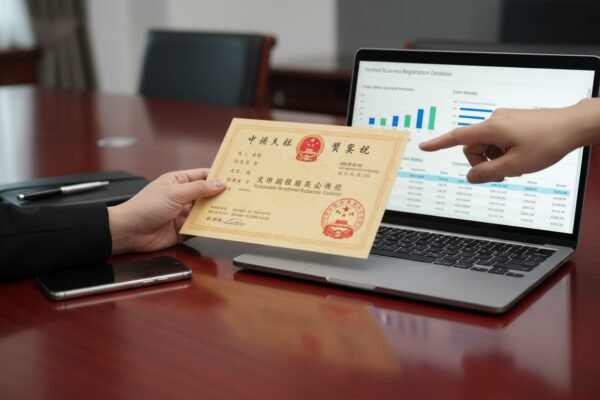
Start with Official Registration Checks
The first step is to confirm legal registration. Every legitimate sourcing company in China must register with the Administration for Industry and Commerce (AIC) 2. You can request a copy of their business license. The document shows the company name, registration number, legal representative, and registered capital.
Solo agents often cannot provide this document. They may work informally without any registration. This is a major red flag. If someone hesitates to share their business license 3, proceed with caution.
Look for Physical Office Presence
Professional sourcing companies maintain offices in manufacturing hubs 4 like Shenzhen, Dongguan, or Yiwu. They can arrange video tours of their workspace. You will see multiple team members, organized departments, and proper office equipment.
Individual agents typically work from home or coffee shops. They may show you a clean background on video calls, but they cannot demonstrate a functioning office environment. Ask for a virtual office tour. This simple request reveals a lot.
Verify Online Presence and Track Record
| Verification Method | Individual Agent | Professional Company |
|---|---|---|
| Official website | Rarely have one | Always have one |
| Google reviews | Few or none | Multiple verified reviews |
| LinkedIn presence | Personal profile only | Company page with employees |
| Client testimonials | Hard to verify | Documented case studies |
| Years in business | Often new | 5+ years typical |
Professional companies invest in their online presence. They publish case studies, maintain active social media, and respond to reviews. Individual agents often rely only on freelance platforms 5 like Fiverr or Upwork. Their digital footprint is minimal.
Request Client References
Ask for three recent client references. A legitimate sourcing company will provide contacts who can speak about their experience. Individual agents may struggle to offer references. They may give excuses or delay. This hesitation signals a problem.
When you speak with references, ask specific questions. Did the agent or company handle quality issues well? Were deliveries on time? How did they communicate during problems? These answers reveal the true service quality.
Use Small Test Orders First
Before committing to a large project, start with a small test order. We recommend spending $500 to $1,000 on a pilot project. This approach limits your risk while you evaluate the partner's performance.
For individual agents, consider using freelance platforms with built-in payment protection for your first transaction. This ensures you can dispute charges if things go wrong.
What are the risks to my supply chain if I hire an individual agent instead of a professional agency?
Our logistics team has witnessed supply chain disasters caused by poorly chosen sourcing partners. One client lost $40,000 because their solo agent disappeared mid-production. Understanding these risks helps you make smarter decisions.
Hiring individual agents creates risks including no legal recourse if disputes arise, limited backup if the agent becomes unavailable, poor quality control capabilities, potential IP theft, and inability to handle urgent production issues that require on-site presence.

No Legal Protection or Accountability
When you work with an unregistered individual, you have no legal entity to pursue if problems occur. legal recourse 6 If goods arrive defective, shipments go missing, or payments disappear, your options are extremely limited.
Professional companies operate under Chinese commercial law. They sign binding contracts. If they breach agreements, you can take legal action. This accountability creates strong motivation for them to perform well.
Single Point of Failure Risk
Individual agents are human. They get sick, have family emergencies, or simply burn out. When your only contact becomes unavailable during a critical production phase, your entire project stalls.
| Risk Factor | Individual Agent | Professional Company |
|---|---|---|
| Backup staff | None | Multiple team members |
| Sick day coverage | Project stops | Seamless handoff |
| Knowledge transfer | Lost if agent leaves | Documented processes |
| Peak season capacity | Overwhelmed | Scalable resources |
| 24/7 availability | Unlikely | Often available |
Professional companies have teams. When one person is unavailable, others step in. Knowledge is documented and shared. Your project continues regardless of individual circumstances.
Limited Quality Control Capabilities
Quality inspection requires systematic processes, trained inspectors, and proper equipment. Most individual agents lack these resources. They may conduct basic visual checks, but they cannot perform detailed technical inspections.
Our quality control department uses calibrated measuring tools, defect classification systems, and standardized reporting templates. Individual agents simply cannot match this level of rigor. They rely on factory self-inspection, which creates obvious conflicts of interest.
Intellectual Property Vulnerabilities
Protecting your designs and trade secrets requires formal agreements and legal knowledge. Intellectual Property Vulnerabilities 7 Professional sourcing companies offer NDA signing, trademark filing assistance, and supplier contract review. They understand Chinese IP law.
Individual agents often lack legal expertise. They may inadvertently share your designs with multiple factories. They cannot help you register trademarks or pursue infringement cases. Your competitive advantage becomes vulnerable.
Communication and Scalability Limitations
As your business grows, your sourcing needs become more complex. You need partners who can handle larger volumes, coordinate multiple suppliers, and manage international logistics. Individual agents hit capacity limits quickly.
Professional companies scale with you. They add project managers, expand warehouse space, and negotiate better rates as your volume increases. This growth partnership supports your long-term success.
How do the service capabilities and quality control standards differ for my business?
When we onboard new clients, we always explain the full scope of services we provide. Many buyers initially underestimate how much work goes into successful China sourcing. The service gap between agents and companies is substantial.
Professional sourcing companies offer end-to-end services including supplier audits, price negotiation, production monitoring, quality inspection, packaging, warehousing, and logistics coordination. Individual agents typically provide only supplier finding and basic order placement.

Comprehensive Service Offerings
Professional sourcing companies function as an extension of your business in China. They handle everything from initial supplier research to final delivery at your warehouse. This comprehensive approach saves you time and reduces coordination headaches.
Individual agents usually focus on one task: finding suppliers. They may help place orders, but they rarely offer quality inspection, production monitoring, or logistics management. You must coordinate these services yourself or hire additional help.
| Service Category | Individual Agent | Professional Company |
|---|---|---|
| Supplier sourcing | Yes | Yes |
| Factory audits | Sometimes | Always included |
| Price negotiation | Basic | Expert-level |
| Production monitoring | Rarely | Standard service |
| Quality inspection | Limited | Full AQL inspection |
| Packaging design | No | Often available |
| Warehousing | No | Included |
| Shipping coordination | Basic | Full logistics |
| Customs documentation | Rarely | Standard service |
| After-sales support | Minimal | Ongoing support |
Quality Control Standards and Processes
Quality control is where professional companies truly excel. They employ trained inspectors who follow international standards like AQL (Acceptable Quality Level) 8. They document every inspection with photos, measurements, and detailed reports.
Our QC team conducts pre-production inspections, inline inspections during manufacturing, and final random inspections before shipment. We catch defects early, when fixes are cheap and fast. Individual agents typically only check finished goods, missing opportunities to prevent problems.
Negotiation Power and Pricing Advantages
Professional sourcing companies handle large order volumes across many clients. This buying power translates into better prices from suppliers. Factories give discounts to partners who bring consistent business.
Individual agents lack this leverage. They represent one client at a time with modest order quantities. Suppliers quote them standard prices without special consideration. While agent fees may appear lower, the total cost often exceeds what you pay through a professional company.
Technology and Communication Tools
Modern sourcing requires sophisticated systems. Professional companies use supply chain management software, CRM platforms, and collaborative tools. These systems provide transparency into order status, inspection results, and shipping progress.
Individual agents typically manage everything through WeChat and spreadsheets. Information gets lost. Updates arrive inconsistently. You spend more time chasing information instead of growing your business.
Ethical Sourcing and Compliance
Many businesses now require social and environmental audits of their suppliers. Professional sourcing companies can arrange and manage these audits. They understand compliance requirements for different markets.
Individual agents rarely offer compliance services. They may not even understand what a BSCI or SEDEX audit 9 involves. If your customers or regulators require ethical sourcing documentation, you need a professional partner.
How can I ensure my project remains secure and accountable throughout the entire production process?
Throughout years of managing complex sourcing projects, our team has developed systems that keep everything on track. Security and accountability require proper structures, not just good intentions.
Ensure project security by signing detailed contracts with registered entities, using milestone-based payments, requiring regular photo and video updates, conducting surprise factory visits, and establishing clear escalation procedures for problems. Professional companies provide these safeguards systematically.
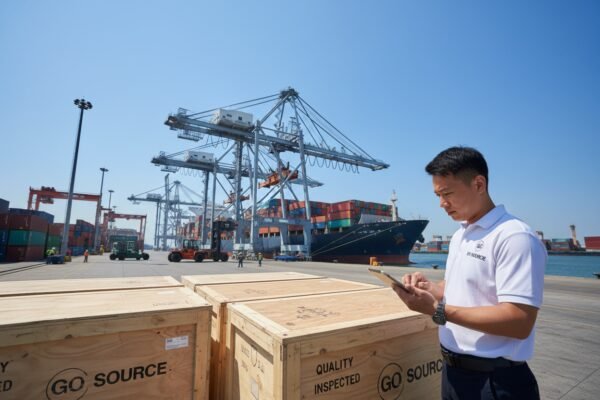
Contract Structure and Legal Framework
Every sourcing relationship should begin with a formal contract. This document specifies product requirements, quality standards, delivery timelines, payment terms, and dispute resolution procedures. Professional companies provide standard contracts that protect both parties.
Individual agents often work without written agreements. They rely on chat messages and verbal promises. When problems arise, you have no documentation to reference. Always insist on a signed contract, regardless of who you work with.
Payment Terms and Financial Security
Smart payment structures protect your money throughout the production process. We recommend the following approach:
- 30% deposit after contract signing
- 30% after pre-production sample approval
- 40% after quality inspection passes
This structure ensures the supplier stays motivated at each stage. It also limits your exposure if problems occur. Individual agents may push for larger upfront payments because they lack the financial reserves to front supplier costs.
Production Monitoring and Updates
Active monitoring catches problems early. Professional companies assign project managers who visit factories regularly. They send weekly updates with photos and progress reports. You always know where your order stands.
Individual agents may only check in at the beginning and end of production. Problems that develop mid-process go unnoticed until finished goods inspection. By then, fixing defects requires expensive rework or complete reproduction.
Factory Visit Rights
Your contract should guarantee factory visit rights. Professional sourcing companies facilitate visits and accompany you to translate. They have nothing to hide and want you to see their supplier relationships.
Red flags appear when any partner discourages factory visits. They may claim the factory does not allow visitors or suggest timing is bad. These excuses often hide problems like subcontracting to unauthorized facilities.
Escalation Procedures and Problem Resolution
Every project encounters challenges. What matters is how your partner handles them. Professional companies have established escalation procedures. Junior staff solve routine issues. Senior managers handle complex problems. Legal support addresses serious disputes.
Individual agents are the only escalation point. If they cannot solve a problem, you have nowhere else to turn. You become directly involved in factory disputes, which wastes your time and creates stress.
Documentation and Knowledge Preservation
Professional sourcing companies document everything. Supplier evaluations, inspection reports, shipping records, and communication logs create a complete project history. This documentation proves invaluable for future orders and potential disputes.
Individual agents keep information in their heads. If the relationship ends, that knowledge disappears. You start from scratch with a new partner, repeating the learning curve and potentially making the same mistakes.
Conclusion
Choosing between individual agents and professional sourcing companies depends on your specific needs, budget, and risk tolerance. For startups testing products with small orders, skilled individual agents offer affordable entry points. For growing businesses with complex requirements, professional companies provide security, scalability, and comprehensive services that protect your investment and support long-term success.
Footnotes
- Provides an authoritative overview of China's role in global supply chains and manufacturing. ↩︎
- Provides official information on China's primary business registration authority, now SAMR. ↩︎
- Explains the key information contained within a Chinese business license. ↩︎
- Identifies key industrial regions in China known for extensive manufacturing activities. ↩︎
- Provides a current list and description of top generalist freelance platforms, suitable for the anchor text. ↩︎
- Explains the concept of legal options available for dispute resolution. ↩︎
- Discusses the risks to intellectual property in global supply chains. ↩︎
- Provides information on a widely used international standard for quality inspection. ↩︎
- Explains common ethical and social compliance audits in global supply chains. ↩︎