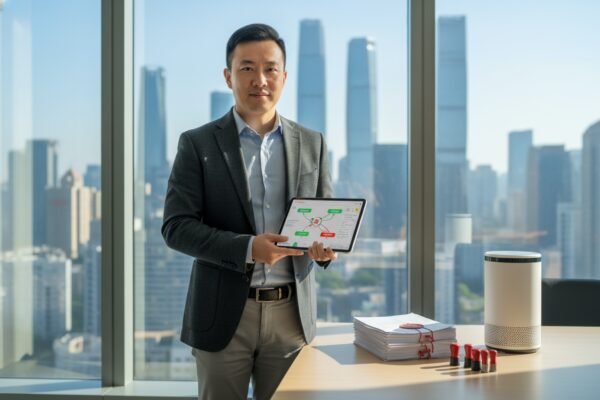
We have seen it happen on our own sourcing projects more times than we can count supplier risk and business continuity 1. A buyer finds a promising supplier on Alibaba, the sample looks perfect, and then the first bulk order arrives with defects, delays, or both.
China sourcing agents manage supplier risk and business continuity by verifying factories before orders are placed, enforcing multi-stage quality inspections during production, maintaining backup supplier networks, coordinating logistics and compliance documentation, and converting hidden risks into visible, contractually controlled checkpoints across the entire sourcing lifecycle.
This article walks you through exactly how a professional sourcing agent protects your business at every stage, from the first supplier search to the final delivery at your warehouse door multi-layered supplier vetting 2. If you source from China or plan to, this is the risk framework you need.
How do I vet Chinese manufacturers to minimize my financial and operational risks?
When we onboard a new client project, the supplier discovery phase is where we invest the most caution Trading company problem 3. A wrong factory choice can cost you an entire season of sales, not just one bad shipment.
You minimize financial and operational risks by conducting multi-layered supplier vetting that goes beyond online profiles. This includes verifying business licenses, confirming factory ownership, assessing real production capacity through on-site visits, checking export history, and identifying whether a supplier is a genuine manufacturer or a trading company reselling others' products.
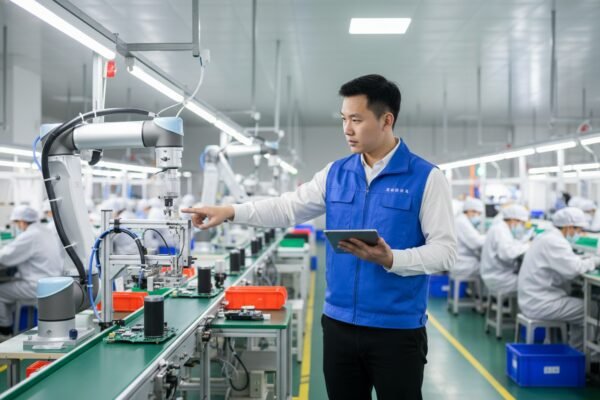
Why Online Vetting Alone Falls Short
Many buyers start their supplier search on platforms like Alibaba, Made-in-China, or Global Sources supply chain from unexpected disruptions 4. These platforms provide useful starting points. But they do not tell you the full story. A factory profile may show clean workshop photos, impressive certifications, and competitive pricing. However, the real questions remain unanswered. Does this factory actually own the equipment shown in those photos? Do they employ enough skilled workers to handle your order volume? Are they a real OEM manufacturer, or a middleman trading company that will subcontract your order to an unknown workshop?
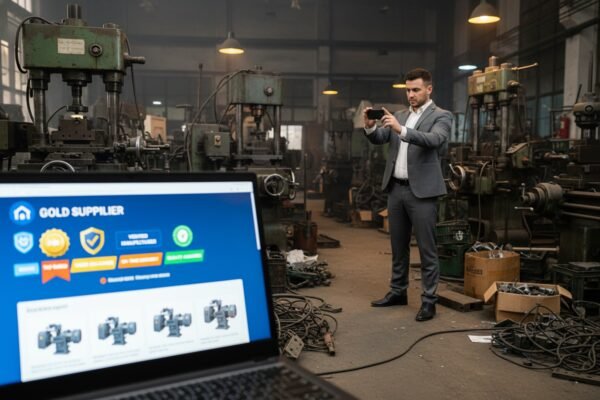
We have encountered cases where a supplier presented a Gold Supplier badge and ISO certifications 5 online, yet our on-site visit revealed a facility with outdated machinery and fewer than ten workers. Online verification is a filter, not a conclusion.
The Layers of Effective Supplier Due Diligence
A proper vetting process involves multiple checks. Here is a breakdown of what we examine and why each layer matters.
| Vetting Layer | What It Checks | Why It Matters |
|---|---|---|
| Business license verification 6 | Legal registration, registered capital, operating scope | Confirms the company is legally real and authorized to produce your product category |
| Factory ownership confirmation | Whether the supplier owns or leases the facility and equipment | Leased or shared equipment increases risk of capacity conflicts and quality inconsistency |
| Export qualification review | Customs registration, export history, destination markets | Proves the supplier has real experience shipping to your country and handling export paperwork |
| On-site factory visit | Equipment condition, workforce size, workflow organization, raw material storage | Reveals the true production capability versus what is claimed in brochures |
| Financial health check | Tax records, credit reports, recent order volume | Reduces the risk of placing money with a supplier that may go bankrupt mid-production |
| Trading company detection | Cross-referencing factory address, production staff, and online listings | Prevents you from paying a markup to a middleman who adds no production value |
The Trading Company Problem
One of the most common risks for overseas buyers is accidentally working with a trading company that poses as a factory. Trading companies are not inherently bad. But when a buyer believes they are dealing directly with a manufacturer, they lose visibility into the real production environment. They also lose negotiating power and quality control access.
A sourcing agent with local presence can physically visit the claimed factory address, speak to production managers, and verify whether the entity is truly making your product in-house. This single step can save tens of thousands of dollars in hidden markups and quality failures.
Background Diversity of the Agent Matters
Here is a point many buyers overlook. If your sourcing agent's background is limited to a single foreign trade company experience, their focus will likely lean heavily toward the sales stage. They know how to close a deal and negotiate a price. But they may lack the depth to evaluate production processes, quality systems, or engineering feasibility. An agent with a diversified background, someone who has worked in manufacturing, quality engineering, logistics, or product development, brings a wider lens to every project. They catch risks that a sales-focused agent simply does not see.
What strategies can my sourcing agent use to protect my supply chain from unexpected disruptions?
On several of our recent projects, clients came to us after experiencing sudden supplier shutdowns, shipping delays, and even factory relocations that happened without any warning. The disruption cost them far more than the product itself.
Your sourcing agent protects your supply chain by building redundancy into your supplier base, qualifying backup factories before you need them, negotiating flexible contract terms, monitoring geopolitical and logistics risks continuously, and coordinating total landed cost models so that disruptions do not silently destroy your margins.
Dual-Sourcing and Backup Factory Development
The most powerful continuity strategy is simple in concept but difficult without local support. You qualify more than one supplier for every critical product. This does not mean placing orders with two factories at once. It means having a second factory already vetted, sampled, and approved, ready to take over if your primary source fails.
In 2026, many procurement leaders treat this as standard practice. Geopolitical tensions, tariff shifts, and raw material volatility have made single-source dependency genuinely dangerous. A sourcing agent based in China can visit potential backup factories, run trial orders, and keep those relationships warm even during periods when no production is active.
Contingency Planning Beyond "Plan B"
Good agents do not just name an alternate supplier and call it a contingency plan. They build a structured response framework. This includes identifying which disruptions are most likely, what the impact timeline looks like, and what specific actions to trigger when a problem is detected.
| Disruption Type | Example Scenario | Agent Response |
|---|---|---|
| Supplier shutdown | Factory closes due to financial trouble or government inspection | Activate pre-qualified backup supplier; transfer tooling or molds if possible |
| Raw material shortage | Key component becomes unavailable or price spikes | Source alternative materials; negotiate with secondary suppliers for buffer stock |
| Logistics delay | Port congestion, container shortage, or route disruption | Reroute shipment; switch freight forwarder; adjust shipping mode (sea to air) |
| Tariff or policy change | New import duties imposed on product category | Evaluate alternative sourcing regions; adjust HS code strategy; recalculate landed cost |
| Quality failure at scale | Bulk production does not match approved sample | Halt shipment; coordinate rework or re-production; escalate root cause analysis |
Total Landed Cost vs. Unit Price Thinking
One of the biggest hidden risks in China sourcing is margin erosion. A supplier may quote you an attractive unit price. But if they consistently cause rework, delays, demurrage charges, or customs rejections, the true cost is far higher. We always advise clients to think in terms of total landed cost 7. This includes material cost, packaging, inland transport, freight, insurance, duties, inspection fees, and the cost of delays.
A sourcing agent helps you model this cost honestly. When you compare suppliers, you compare the full picture, not just the factory gate price. This is a business continuity issue. Because if your margins disappear due to hidden costs, the supply chain technically "works" but your business does not.
Communication Speed as a Continuity Tool
Disruptions become disasters when information moves slowly. A sourcing agent embedded in China operates in the same time zone as your suppliers. They can detect a problem on Monday morning, visit the factory by Tuesday, and have a corrective action plan by Wednesday. Without local presence, you might not hear about the issue until it is too late to fix.
Cultural and linguistic mediation also plays a real role. Chinese factory managers are often responsive but not proactive. They may not volunteer bad news. A skilled agent knows how to ask the right questions, read between the lines, and escalate issues before they become shipment failures.
How do I ensure consistent product quality and compliance through on-site factory audits?
We run factory audits regularly across multiple product categories, and the pattern we see is consistent. The gap between what a factory promises on paper and what they actually deliver on the production floor is where most quality disasters begin.
You ensure consistent quality and compliance by conducting structured factory audits that assess real production capability, not just certifications. This includes evaluating machinery, QC systems, worker training, process flow, raw material controls, and compliance documentation. Multi-stage inspections during production catch defects before they reach your warehouse.
Paper Capability vs. Real Production Capability
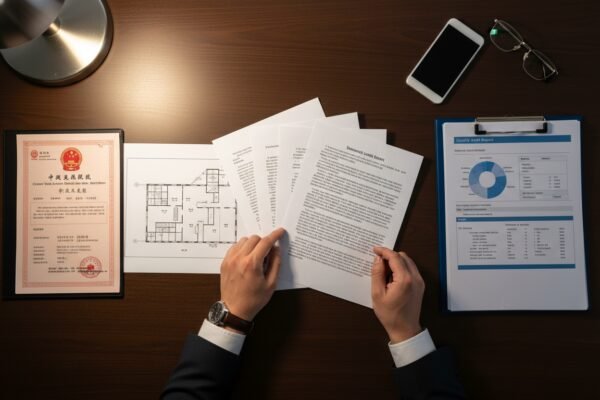
A factory may hold ISO 9001 certification 8 and display impressive test reports. But certifications describe management systems, not daily execution. During our audits, we check whether the quality system documented on paper is actually followed on the floor. Are incoming materials being inspected? Are workers following standard operating procedures? Is there a clear defect tracking system? Many factories have the right documents but lack the discipline to execute them consistently.
The Multi-Stage Inspection Model
Quality cannot be inspected into a product at the end of production. It must be built in at every stage. Here is how a professional sourcing agent structures QC across the production timeline.
| Inspection Stage | When It Happens | What It Covers |
|---|---|---|
| Pre-production inspection | Before mass production begins | Confirms raw materials, components, tooling, and color/finish samples match approved specifications |
| In-line inspection | During production (typically at 20-40% completion) | Checks work-in-progress for dimensional accuracy, assembly quality, and process adherence |
| Pre-shipment inspection 9 | After production, before packing and shipping | Verifies finished goods against approved samples, runs AQL sampling, confirms packaging and labeling |
| Container loading inspection | During packing into shipping container | Ensures correct quantities, proper packing methods, no damage, and accurate shipping marks |
Root Cause Analysis and Corrective Action
When defects are found, the job is not finished. Identifying the defect is only step one. The real value comes from root cause analysis. Why did the defect happen? Was it a material issue, a machine calibration problem, a worker training gap, or a process design flaw? We work directly with factory QC managers to trace the problem to its source and implement corrective actions. Over time, this creates a feedback loop that improves quality with each production run.
Compliance Documentation and Audit Readiness
For buyers selling into regulated markets like the United States or the European Union, compliance is not optional. Products may need to meet safety standards, carry specific certifications, and be supported by test reports. A sourcing agent ensures that compliance documents are prepared during production, not scrambled together after the goods are finished. This includes CE, FCC, UL, REACH, RoHS, CPSIA, and other applicable standards depending on the product category and destination market.
Digital QC systems are becoming more common in 2026. Some agents now use shared dashboards where buyers can see real-time defect rates, inspection results, and production status. This level of transparency was rare even a few years ago, and it dramatically reduces the risk of surprises at the shipment stage.
ESG and Ethical Compliance
Modern sourcing increasingly involves Environmental, Social, and Governance scrutiny. Buyers face pressure from regulators, retailers, and consumers to prove their supply chains are ethical. A sourcing agent can audit for labor conditions, environmental practices, and governance standards. This protects your brand reputation and keeps you aligned with evolving import requirements.
What happens to my production timeline if my primary supplier faces a business crisis?
We managed a project last year where a client's primary supplier suddenly lost its main raw material vendor due to an environmental compliance shutdown. The factory could not produce for six weeks. Without a backup plan, the client would have missed an entire product launch window.
If your primary supplier faces a business crisis and you have no contingency plan, your production timeline can be delayed by weeks or months. A sourcing agent mitigates this by maintaining pre-vetted backup suppliers, managing tooling and specification transfers, coordinating emergency production schedules, and keeping logistics flexible enough to recover lost time through expedited shipping.
The Real Cost of Supplier Failure
When a supplier goes down, the damage extends far beyond the factory floor. You face delayed deliveries to your customers. You risk stockouts that push buyers toward competitors. You may incur demurrage charges on booked containers that sit empty. If your product is seasonal or tied to a marketing campaign, the window can close entirely. The financial impact is often five to ten times the cost of the product itself.
How a Sourcing Agent Responds to a Crisis
A professional sourcing agent does not wait for a crisis to start planning. The response framework is built before any order is placed. Here is a typical crisis response sequence.
First, the agent confirms the nature and expected duration of the disruption. Is the factory temporarily paused, or is it a permanent closure? Second, the agent contacts the pre-qualified backup supplier and initiates a production transfer. Third, specifications, tooling, molds, and approved samples are shared with the backup factory. Fourth, a revised production timeline is drafted and communicated to the buyer. Fifth, logistics are adjusted. If time has been lost, the agent may recommend switching from sea freight to air freight for part of the order, or splitting the shipment across multiple batches.
Tooling and IP Considerations During Transfer
One critical detail that buyers often overlook is tooling ownership. If your molds and tooling are held at the primary factory, transferring production is not instant. The sourcing agent must negotiate the release of tooling, arrange transport, and confirm that the backup factory's machines are compatible. This is why we always advise clients to clarify tooling ownership in the original contract. If the contract states that tooling belongs to the buyer, retrieval is straightforward. If ownership is ambiguous, you may face delays or additional costs.
Intellectual property protection is also heightened during supplier transitions. When you share product files and specifications with a new factory, the exposure window for IP leakage increases. A good agent structures the transfer to minimize this risk, for example by splitting sensitive components across multiple suppliers or using non-disclosure agreements before any technical files are shared.
Building Resilience Into Your Timeline
The smartest buyers do not treat their production timeline as a rigid straight line. They build buffer time into their schedules. They plan for the possibility that something will go wrong. A sourcing agent helps by providing realistic lead-time estimates that include potential delays, rather than the optimistic timelines that factories tend to promise.
In 2026, we see more clients moving toward shorter contracts and smaller batch sizes. This approach reduces exposure. If a supplier fails mid-contract, the financial loss is contained. Combined with dual-sourcing 10 and active backup management, this creates a supply chain that can absorb shocks without collapsing.
Dynamic Inventory and Buffer Stock Strategies
Some advanced procurement teams now maintain strategically located buffer stocks. These might be held in a bonded warehouse in Shenzhen, a fulfillment center in the destination country, or even at the backup factory's facility. The goal is simple. If production stops, you still have enough inventory to cover demand while the backup plan activates. A sourcing agent coordinates this by monitoring inventory levels, forecasting replenishment needs, and aligning warehouse logistics with production schedules.
Conclusion
A China sourcing agent does not eliminate risk. They convert hidden, unmanaged risk into visible, testable, and contractually controlled risk. In a sourcing environment defined by volatility, that capability is not a luxury. It is essential infrastructure.
Footnotes
Related Reading
Related Reading
1. Explains how supplier risk mitigation integrates with business continuity planning for organizational resiliency. ↩︎
2. Describes a structured, multi-tiered approach to vetting suppliers, aligning with the article's concept. ↩︎
3. Explains the fundamental difference between trading companies and manufacturers, highlighting potential issues for buyers. ↩︎
4. Discusses strategies and challenges in mitigating supply chain disruptions, a core topic of the article. ↩︎
5. Provides an authoritative overview of ISO certifications, specifically ISO 9001, and their global recognition. ↩︎
6. Links directly to the official Chinese government portal for verifying business licenses and company information. ↩︎
7. Provides a comprehensive definition and breakdown of Total Landed Cost, crucial for accurate financial planning. ↩︎
8. Explains the purpose and benefits of ISO 9001 certification for quality management systems. ↩︎
9. Defines pre-shipment inspection as a critical quality control step before goods are shipped. ↩︎
10. Defines dual sourcing as a strategy for building supply chain resilience and reducing single-supplier dependency. ↩︎