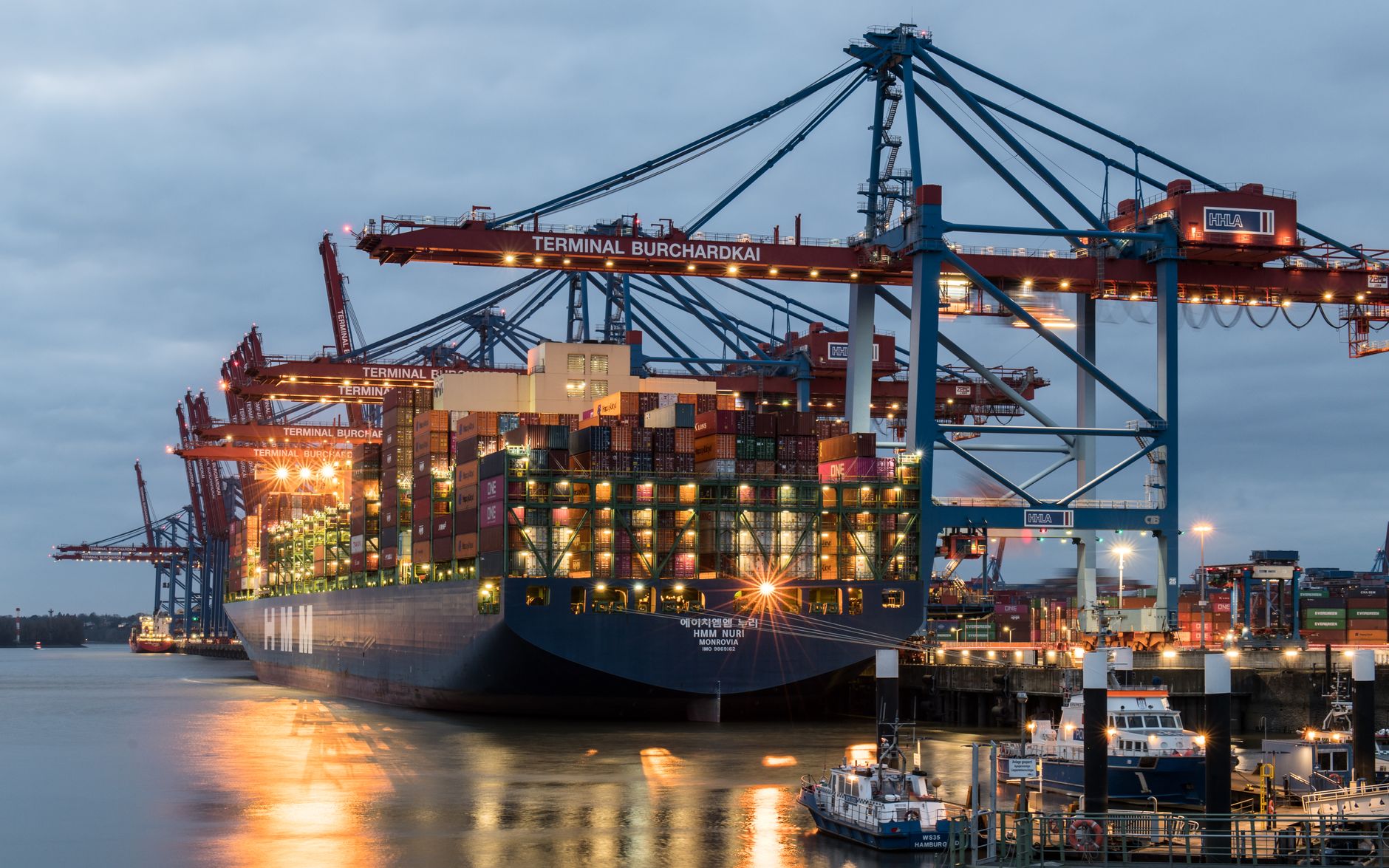
Featured answer: A sourcing agent can consolidate small parcels into bulk ocean or air shipments and pre-clear duties, replacing the duty-free channel that ended for China-origin goods.
If you built a direct-to-consumer business on the old USD 800 de minimis rule, the ground moved under you. Every China-origin parcel is now dutiable, which means your per-order shipping cost jumped and your customers may be paying duties at the door. The instinct is to look for another exemption. There isn't one. The practical fix is structural, and it is what a sourcing agent does every day: stop shipping a hundred little envelopes, start shipping one cleared shipment.
What actually changed with the de minimis exemption?
The exemption let any parcel under USD 800 enter the US without duties or formal entry data. For China-origin goods it is gone. Two consequences follow, and both hit small shippers harder than big ones. First, every parcel needs proper entry: classification, valuation, and duty payment, which adds a fixed handling cost to orders that used to carry none. Second, duties are now charged at full rates on the goods value, so a USD 40 accessory order can carry duty costs that destroy its margin. If your unit economics were built on duty-free entry, they are wrong today, and they will stay wrong until you restructure how the goods travel.
The policy timeline, briefly
The channel closed in stages, which is why some sellers were caught twice. Enforcement against China-origin goods came first, followed by the broader removal of the low-value exception, and carrier bulletins through mid-2026 confirmed that formal entry data is now required on every parcel regardless of value. The practical takeaway from the timeline is not the dates themselves. It is that each stage arrived with little grace period, and businesses that waited for clarity absorbed the cost of the waiting. The structure of the fix has been visible since the first stage, and it has not changed.
The data quality shift nobody planned for
There is also a quieter change that sellers notice only when it bites: data quality standards. Under the exemption, a vague product title like "phone gadget" cleared without comment. Under formal entry, every line needs an accurate description, a defensible value, and a classification that a customs officer could match to the physical goods. Sellers who treated their order data casually now meet that casualness as delays.
Why does consolidation change the duty math?
Duty rates do not drop when you consolidate, but everything around them does. A consolidated shipment enters as one commercial entry instead of a hundred parcels. You pay one broker fee instead of paying a per-parcel handling charge inside every courier bill. One HTS classification decision covers the whole batch instead of a hundred borderline calls. And the freight itself drops hard, because ocean and air rates per kilogram are far below parcel rates at the same weight. The table below shows the structural comparison.
| Parcel-by-parcel | Consolidated shipment | |
|---|---|---|
| Entries per 100 orders | ~100 | 1 |
| Broker / entry fees | Buried in each courier bill | One fee, spread across all units |
| Classification risk | 100 chances to misclassify | One reviewed decision |
| Freight cost per kg | High (parcel rates) | Much lower (bulk air or ocean) |
| Customer experience | Duty bills at the door | Duty prepaid, no surprises |
One honest note on what consolidation does not do: it does not reduce the duty rate itself. Your product still carries its full tariff stack. What it removes is the duplication cost of paying that stack a hundred times in small, badly priced increments.
What does pre-clearing duties look like in practice?
Pre-clearing means the paperwork and the money are handled before the goods move, not after they are stuck. In practice that is four steps. Confirm the correct HTS code and duty stack for the product before quoting. Build a commercial invoice that matches reality: real values, real descriptions, buyer and seller clearly stated. File the entry with a broker so duties are calculated and paid at import. Then choose who stands as importer of record, because that decision decides whose problem a customs question becomes. As a buying office we arrange and manage all four steps, and the duty and freight money itself stays on the buyer's side of the ledger; you see every cost before the goods move, which is exactly what the old exemption never asked you to learn.
Two details inside those steps deserve emphasis because they are where new consolidators stumble. The customs bond is the first: entries above the minimal threshold require one, and choosing between a single-entry bond and a continuous bond depends on your batch frequency; a continuous bond pays for itself quickly once you ship more than a few entries a year, and it removes a recurring approval from your timeline. The second is the entry filing window: import security filings happen before the goods load, not at arrival, so the document package has to be ready while production is still on the line. Both details are routine for an office that runs consolidations weekly, and both are invisible until the first time they go wrong.
What documents should you have ready before consolidating?
Consolidation rewards sellers who can produce a short, clean document set. The core five are simple, and most businesses already have rough versions of them. A commercial invoice per supplier, with real transaction values, currency, and Incoterms. A packing list that matches the carton count and weights your factory actually ships. Product specification sheets that describe materials and function in plain English, because those descriptions drive the classification decision. Certificates or test reports if your product category normally carries them. And your importer-side identifiers: importer number, plus a customs bond if your entry volume justifies a continuous bond over single-entry bonds.
When one of these is missing, the shipment does not stop, but it slows and accumulates small fees; when all five are ready, a consolidation cycle is boring, and boring is the goal. In our own workflow the document check happens before the factory books trucking, not at the port, because a missing sheet found on Tuesday costs a message, and the same sheet found on Friday costs a week.
A quick example of what "matching reality" means in practice. A seller we worked with listed a product as "stainless steel kitchen organizer." The factory quote, on inspection, was for a powder-coated carbon steel frame with stainless wire baskets on top. Both are legitimate products, but they sit in different classification territory and different duty expectations, and the difference would have been discovered by an officer rather than by us if the description had gone into the entry unexamined. The fix took one message and one revised specification sheet. Multiply that by every product in a batch, and the value of asking early becomes obvious.
How does the consolidated flow actually run, week by week?
A typical monthly rhythm looks like this. Week one: suppliers deliver finished goods to the consolidation warehouse, where each carton is checked against the packing list and photographed on arrival, because disputes about "it left the factory in perfect condition" need evidence. End of week one: cutoff. Everything received makes the batch; everything late rolls to the next one, which is why your suppliers need a written deadline, not a hope. Week two: the shipment is palletized, the export declaration is filed, and the freight booking is confirmed. Weeks two to four: transit, with the import entry documents filed in parallel so the goods can clear on arrival rather than after. Week four: delivery to your warehouse or 3PL.
Compare that with the parcel world, where every order traveled independently at full freight and cleared at full friction, and the trade becomes clear: you gave up instant dispatch and gained a repeatable, priced, predictable pipeline. Most sellers who switch keep a small express channel for samples and urgent replacements, and the two systems coexist without drama.
What happens when something goes wrong mid-cycle?
Real months include problems, and the batch structure handles them better than parcel mode does, provided someone is watching. A supplier misses the cutoff: their goods roll to the next batch, which is a one-week cost rather than a lost shipment, and the pattern becomes visible after two cycles so you can address the supplier with data instead of suspicion. A carton arrives damaged at the warehouse: it is caught at receiving, photographed, and claimed against the factory before export, instead of being discovered by your customer. A duty rate changes mid-cycle: only the pending entry is affected, and the recalculation happens on one declaration rather than across a hundred parcels. The common thread is that inside a batch, problems are caught at checkpoints where they are still cheap, and each one leaves a record. That record is also how a buying office improves the system cycle over cycle, instead of firefighting the same issue in a hundred separate parcels without ever seeing the pattern.
What does the math look like for a hundred orders?
Numbers make the trade concrete, so here is an illustrative sketch for a seller moving a hundred small orders per month, orders that would each have carried a USD 12 parcel rate under the old channel. Direct parcel mode now: a hundred parcels at roughly USD 14 each once duty handling and per-item clearance fees are included, about USD 1,400 per month, with duty paid separately by customers at the door. Consolidated mode: the same hundred orders, batched into one air shipment of roughly 90 chargeable kilograms at about USD 6 per kilogram, around USD 540 of freight; one broker entry at about USD 150; duty on the batch value paid once at import; and local delivery from the import point at a few hundred dollars. Even before counting the customer-experience difference, the batch mode lands at roughly half the parcel cost, and the gap widens as order value rises because duty handling per parcel does not scale with weight. The exact rates move with markets and lanes; the structure of the comparison does not. Run your own numbers with your real order profile before deciding, and if the arithmetic is hard to assemble, that is literally the job description of a sourcing office.
Should every small shipper switch to consolidation?
Not blindly. Consolidation changes your cadence: instead of shipping the day an order comes in, goods wait to fill a batch, so you are trading shipping speed for unit cost. If your customers expect delivery in three days, that trade needs thought. If your restock cycle is measured in weeks, as it is for most sellers of sourced goods, the trade is easy to win. There is also a middle path some sellers miss: keep express parcels for urgent samples and top-ups, and move replenishment stock into consolidated ocean or air. The two channels coexist, and the mix should follow your order profile, not a slogan.
A short checklist before you commit to the switch. Your restock cycle is measured in weeks, not hours. Your order values are high enough that per-parcel duty handling hurts. Your product data, titles, materials, values, is clean enough to survive a formal entry. You have, or can appoint, an importer of record. And you can accept a fixed weekly cutoff in exchange for roughly half your landed freight. Four or more yeses means the switch will pay; fewer means fix the gaps first, because consolidation amplifies whatever discipline you already have.
What changes on the supplier side?
Consolidation is not only a shipping decision; it changes what your factory owes you. The first shift is the cutoff discipline: a factory that used to ship the day production finished now delivers to the consolidation warehouse by a written deadline, and suppliers who treat that deadline loosely will poison the batch schedule faster than any customs issue. The second is packaging for palletization: goods that traveled as padded retail parcels now stack into cartons on a pallet, which means carton strength, consistent dimensions, and readable labels on two sides. The third is documentation speed: the commercial invoice and packing list must arrive with the goods, not a week after, because the entry cannot be filed from promises. None of these asks are unusual for factories that serve wholesale clients, and most suppliers adapt within one or two cycles. But set the expectations in writing at the start, because a consolidation schedule is a chain, and one loose link moves every other supplier's goods a week later too.
Where does the real money hide beyond freight and fees?
The visible savings are freight and entry fees. The less visible ones are usually bigger. Misclassification is the first: under parcel shipping, a courier's system guesses your HTS code, and guesses compound into overpaid duties that nobody audits, or underpaid duties that surface later as penalties. Consolidation forces one classification decision that a professional reviews, and once it is right, it stays right across every future batch. The second hidden cost is valuation discipline. Parcel mode tempts everyone into creative invoice values to soften duties, and that habit is now a liability, because low-value shipments still carry full data requirements and clearly flagged inconsistencies. One clean valuation standard, applied to one consolidated entry per batch, removes that exposure.
The third is the duty-payment currency effect: duties are assessed in USD on the customs value, so exchange rate movement between your supplier quote and the entry date lands on your margin. When the whole batch moves together, you can hedge or at least see that gap; across a hundred parcels it disappears into noise. The fourth is returns, which almost nobody models: a parcel that crossed a border with duty paid and then comes back needs a re-import or refund process, and careless sellers pay duty twice on the same jumper. In batch mode, returns flow back into the next consolidation at a fraction of the friction. None of this requires you to become a customs expert. It requires the shipment to be structured so that an expert's decisions are made once, visibly, and on the record. That is the actual service inside the phrase "pre-clear duties."
Conclusion
The end of de minimis did not just add a cost, it ended a shipping model. The replacement model already exists and runs at scale every day: consolidate the goods, classify them once, clear them once, and let the buyer see the full landed cost before anything moves. A sourcing agent's job is to run that structure for you. If your parcels still leave China one by one, the most profitable phone call you can make this week is the one that ends that habit. For the wider customs picture behind this change, see our guide to customs clearance and import duties, and if you are still auditing who you buy from, start with how to verify a Chinese supplier is a real factory.
Footnotes
- Carrier trade bulletins confirming the end of the low-value duty exception and new entry data requirements, issued through mid-2026.
- Customs and Border Protection guidance on formal entry requirements for low-value shipments.
- USTR notice of the Section 301 forced-labor action effective July 24, 2026, which sits underneath these shipping decisions as part of the duty stack.