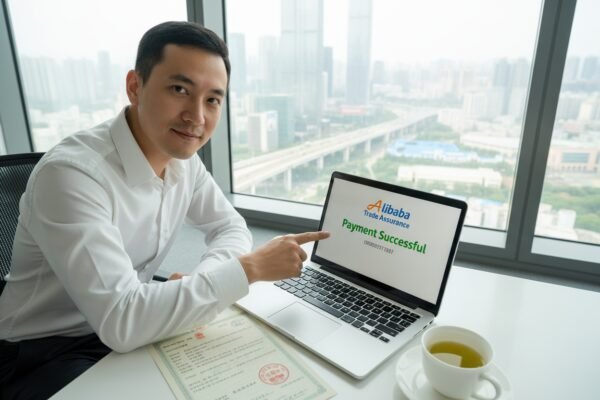
In our Shenzhen office, we frequently hear horror stories from clients who lost their capital to "agents" they met online but paid offline official company stamp (chop) 1. The promise of slightly lower fees often blinds buyers to the massive risks involved in leaving the platform's safety net.
To avoid off-platform scams, strictly use Alibaba Trade Assurance for the first few orders to secure your funds until delivery is verified. Always validate the agent’s business license against their bank account name, conduct live video factory audits, and never wire money via Western Union or to personal accounts.
Let's examine why agents push for this and how you can protect your business if you decide to proceed.
Why is my China sourcing agent insisting that I pay them off the Alibaba platform?
We often encounter intermediaries who claim that moving the transaction off Alibaba will save us significantly on service fees and taxes Letter of Credit (L/C) 2. While cost reduction is a valid business goal, we know that reputable partners rarely sacrifice security for a few percentage points.
Agents typically insist on off-platform payments to avoid Alibaba’s 2% to 3% transaction fees and to evade tax reporting requirements in China. However, scammers use this excuse to strip you of Trade Assurance protection, making it impossible for you to file a dispute or recover funds if they disappear.
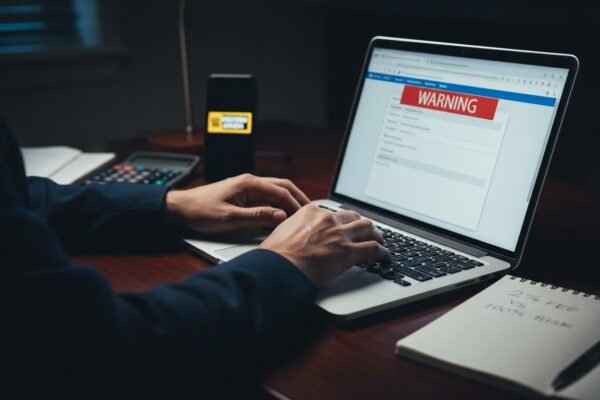
When a sourcing agent asks you to pay them directly via T/T (Bank Transfer) 3 or Western Union 4, they usually present a very logical argument. China Sourcing Agent 5 They will tell you that Alibaba charges high fees to the seller, and if you pay directly, they can offer you a 5% discount. For a small business owner importing electronics or beauty equipment, that 5% looks like pure profit FOB terms 6.
However, you must understand the difference between a legitimate business trying to save on overhead and a scammer setting a trap.
The "Fee Avoidance" Trap
In China, legitimate trading companies do pay taxes and platform fees. When we operate, we factor these costs into our pricing structure. If an agent is desperate to move you off-platform immediately, it signals that they either have cash flow issues or intend to defraud you.
A scammer knows that once you wire money to a private bank account or via Western Union, Alibaba cannot help you. The platform's dispute resolution team will not look at WeChat screenshots or private emails. You are on your own.
Legitimate vs. Fraudulent Motivations
Not every request to go off-platform is a scam, but the risk profile changes dramatically. A long-term partner might ask for T/T to save fees after two years of trust. A new contact asking for it on day one is a massive red flag.
Here is a breakdown of why agents ask for this and the associated risk levels:
Table 1: Reasons for Off-Platform Requests and Risk Analysis
| Reason Given by Agent | What It Really Means | Risk Level |
|---|---|---|
| "Alibaba fees are too high." | They want to save ~2% fees or cannot afford the cash flow delay of escrow. | High (for new agents) |
| "We can lower the declared value." | They are suggesting tax evasion/customs fraud to lower your duties. | Critical (Legal risk) |
| "Our company account is changing." | They want you to pay a personal account or a shell company. | Extreme (Likely scam) |
| "This product is restricted." | The item might violate platform policies (e.g., replicas), so they can't sell it openly. | High (Goods seizure risk) |
| "We have a long history." | You have traded successfully for years; they want to simplify admin work. | Low (Only for verified partners) |
If you are dealing with a "trading company" (middleman), which is far more common on Alibaba than actual factories, they often lack assets. If they run away with your money, there is no factory machinery to seize. Always start on the platform.
How can I verify a sourcing agent’s reputation before I agree to a private transaction?
When we vetting new suppliers for our clients, we don't just look at their website; we dig into government records and request real-time proof of existence. A flashy Alibaba profile means nothing if the company behind it is a shell.
You must verify their business license to ensure their scope includes sourcing, check that their Alibaba account is at least 3 years old, and demand a live video call to see their office and team. Crucially, ensure the beneficiary bank account name matches their business license name exactly.

Verifying a sourcing agent is different from verifying a factory. A factory has machines; an agent has relationships and knowledge. However, scammers often pose as agents because it requires low capital—they just need a laptop and a convincing script.
The "Bank Account" Litmus Test
This is the single most effective way to spot a scammer. If you must pay off-platform, the name on the bank account must match the business name on their business license exactly.
- Green Flag: Company Name: "Shenzhen Go Source Technology Co., Ltd." -> Bank Beneficiary: "Shenzhen Go Source Technology Co., Ltd."
- Red Flag: Company Name: "Shenzhen Go Source Technology Co., Ltd." -> Bank Beneficiary: "Wang Wei" (Personal Account) or "Hong Kong Global Trading Limited" (Offshore Shell Company).
If they ask you to pay a personal account, stop. In China, legitimate companies must receive foreign exchange through their corporate CITIC, Bank of China, or HSBC business accounts to process tax refunds legally.
Comprehensive Due Diligence Checklist
Don't rely on the "Gold Supplier" badge alone. These can be bought or rented. You need to perform a "stress test" on their identity.
- Video Call Verification: Do not accept pre-recorded videos. Call them on WhatsApp or WeChat. Ask them to walk around the office, show you the business license on the wall, and introduce you to a colleague. Scammers often work from home or internet cafes and will refuse this.
- References: Ask for the contact info of two current clients in the US or Europe. If they say "client privacy prevents this," ask for redacted Bills of Lading (B/L) 7 that show they have actually shipped goods before.
- Third-Party Audit: For a few hundred dollars, companies like AsiaInspection or V-Trust can visit the agent's registered address to verify they exist. Third-Party Audit 8
Table 2: Agent Verification Green vs. Red Flags
| Feature | Green Flag (Safe) | Red Flag (Danger) |
|---|---|---|
| Communication | Willing to video chat; transparent about fees. | Refuses video calls; pushes for text-only on WhatsApp. |
| Payment Info | Corporate bank account in mainland China. | Personal account, Western Union, or unrelated offshore company. |
| Knowledge | Knows specific product details and logistics. | Vague answers; claims "we can source anything." |
| Documents | Provides high-res Business License & Tax ID. | Sends blurry photos; claims documents are "confidential." |
| Professional domain (e.g., name@company.com). | Generic free email (e.g., company@163.com, gmail.com). |
What steps should I take to protect my payment if I don't use Alibaba Trade Assurance?
Our finance department enforces a strict protocol: no funds leave our accounts without a signed, stamped contract and a clear paper trail. Trust is built over years, but protection must be established from the very first dollar.
To protect your payment off-platform, you must execute a legally binding contract stamped with the agent’s official company chop and utilize traceable payment methods like Letters of Credit (L/C) or PayPal for Goods & Services. Avoid irreversible wire transfers for the full amount until goods have passed inspection.
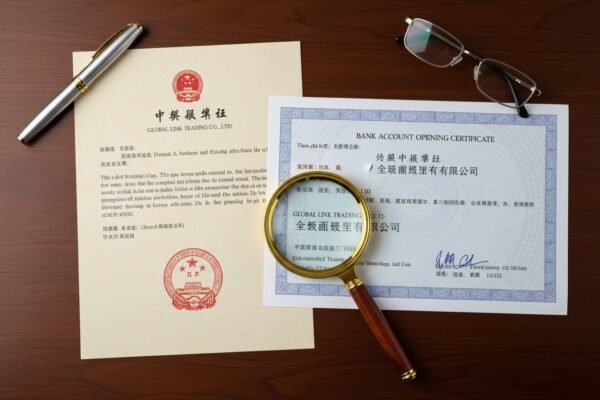
If you decide to bypass Alibaba Trade Assurance 9, you are essentially removing the "escrow" function. You need to replicate that security manually. You cannot rely on a handshake or a WeChat message.
The Power of the "Official Chop"
In China, a signature on a contract is less important than the official company stamp (chop). A contract without this red, circular stamp is often legally useless in Chinese courts.
- Action: Draft a contract detailing product specs, lead times, and penalties for delays.
- Requirement: Require the agent to print, stamp (with the red star in the center), sign, and scan the contract back to you.
Safe vs. Unsafe Payment Methods
Your choice of payment method determines your leverage. If you pay 100% upfront via T/T, you have zero leverage.
- PayPal (Goods & Services): Good for samples or small orders (<$2,000). You have buyer protection, but fees are high (~4%). Agents dislike this due to the risk of chargebacks.
- Letter of Credit (L/C): The safest method for large orders (>$50,000). The bank holds the money and only releases it when the agent presents shipping documents.
- Bank Transfer (T/T): The standard B2B method. Never pay 100% upfront. The standard is 30% deposit, 70% balance after quality inspection and before shipping.
Table 3: Payment Method Risk Assessment
| Payment Method | Buyer Protection | Fee Cost | Recommended For |
|---|---|---|---|
| Trade Assurance | High (Escrow) | Medium (~3%) | First 3-5 Orders |
| PayPal | Medium (Dispute system) | High (~4-5%) | Samples / Small Orders |
| Letter of Credit | High (Bank Guarantee) | High (Bank fees) | Large Orders (>$50k) |
| T/T (Bank Wire) | Low (Once sent, it's gone) | Low ($30-$50 flat) | Trusted, Long-term Partners |
| Western Union | None | Variable | Never |
| Crypto (USDT) | None | Low | Never |
Protecting the Deposit
Even with T/T, you can protect your 30% deposit. Ensure the contract states that the deposit is refundable if the pre-production sample is not approved. While enforcing this across borders is hard, legitimate agents will respect it to keep your business. Scammers will take the 30% and ghost you.
How do I maintain control over my product quality and lead times when working off-platform?
We know that a sourcing agent's job isn't done when the order is placed; it ends when the client sells the product. Without platform milestones to enforce discipline, we have to become proactive project managers to ensure factories don't prioritize other orders over ours.
Maintain control by hiring independent third-party inspection agencies to verify product quality before you release the final 70% payment. Link all payment milestones in your contract to the successful completion of these inspections and the submission of a valid Bill of Lading.
When you are on Alibaba, the platform sends you updates. Off-platform, you are in the dark unless you turn on the light. The biggest risk off-platform is not just theft, but quality fade—where the agent sends a perfect sample but the factory ships junk because they know you can't freeze the funds.
The "Golden Sample" Rule
Before mass production starts, you must have a "Golden Sample" signed and sealed. One copy stays with you, one with the agent/factory.
- Strategy: Your contract must state that the mass production units must match the Golden Sample exactly. Deviations beyond a certain percentage (e.g., 3%) result in a penalty or rework at the supplier's expense.
Third-Party Inspections: Your Eyes in China
You cannot rely on the agent to check their own work. They have a conflict of interest—they want the order shipped so they get paid.
- Solution: Hire companies like SGS, Intertek, or V-Trust.
- Cost: Approx $200-$300 per man-day.
- Leverage: Tell the agent: "I will transfer the 70% balance only after V-Trust issues a 'PASS' report."
- This forces the agent to pressure the factory to do a good job, because they know they won't get paid otherwise.
Managing Lead Times
Off-platform agents might delay your order to prioritize larger clients.
- Production Schedule: Demand a weekly production update with photos.
- Week 1: Raw materials arriving.
- Week 2: Molds created.
- Week 3: Assembly line running.
- Penalty Clauses: Your contract should include a "Late Delivery Penalty" clause (e.g., 1% of total value deducted for every week of delay, capped at 10%). Even if you rarely enforce it, its existence signals you are serious.
Third-Party Logistics (3PL)
Do not let the agent control the shipping if you don't trust them fully. If they arrange shipping (CIF/DDP terms), they control the Bill of Lading (B/L). If you dispute quality, they can hold your goods hostage.
- Control: Use FOB terms. You hire your own freight forwarder. Your forwarder collects the goods. Once the goods are with your forwarder, the agent loses physical control, giving you more security.
Conclusion
Avoiding scams requires a blend of skepticism and rigid process. Always verify your sourcing agent’s identity via video and legal documents, refuse irreversible payment methods for new partners, and never release the final payment until an independent inspector has validated the goods. By keeping the transaction on Alibaba initially or enforcing strict contracts and inspections off-platform, you ensure that your capital drives your business growth, not a scammer's wallet.
Footnotes
- Details the legal significance of a company chop in Chinese business practices. ↩︎
- Explains Letter of Credit as a secure payment instrument in international trade. ↩︎
- Describes Telegraphic Transfer (T/T) as a standard international payment method. ↩︎
- Details fraud warning signs associated with Western Union money transfers. ↩︎
- Defines the role and responsibilities of a sourcing agent in China. ↩︎
- Explains Free On Board (FOB) as an international shipping term under Incoterms. ↩︎
- Explains the Bill of Lading as a crucial legal document in shipping. ↩︎
- Describes the role of independent audits in verifying compliance and existence. ↩︎
- Explains Alibaba's buyer protection service for secure transactions. ↩︎