
Every week, our Shenzhen office fields calls from overseas buyers who tried sourcing electronics 1 from Huaqiangbei on their own — only to end up with wrong specs, fake components, or a vendor who simply vanished after taking payment.
Yes, reputable Huaqiangbei sourcing agents do maintain local teams in Shenzhen. These on-the-ground teams handle supplier verification, face-to-face negotiations, quality inspections, and logistics coordination — all critical tasks that remote agents simply cannot perform effectively in a fast-moving market with over 110,000 businesses.
But not every agent who claims to be "Shenzhen-based" actually has boots on the ground supplier verification 2. Below, we break down exactly how to verify a local presence, why it matters for quality control, how it solves communication bottlenecks, and the pricing advantages it unlocks.
How can I confirm my Huaqiangbei sourcing agent has a physical office and local team in Shenzhen?
Our team walks through the SEG Electronics buildings almost daily, and we can tell you firsthand — the difference between an agent with a real Shenzhen office and one operating remotely from another province is night and day.
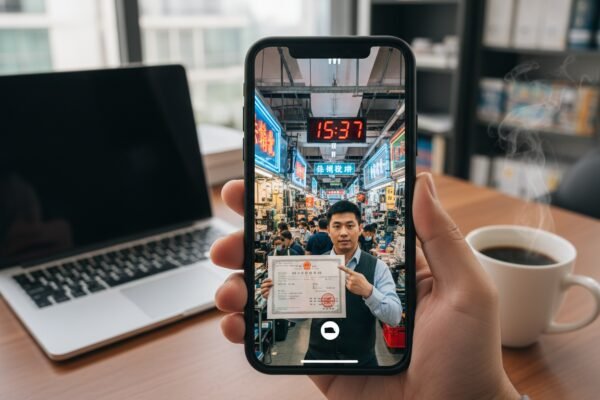
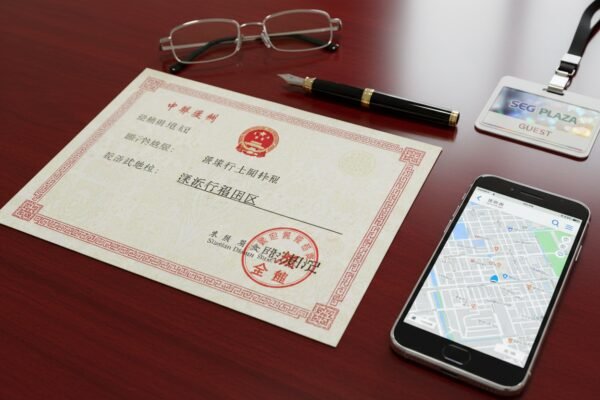
To confirm your Huaqiangbei sourcing agent has a local team, request a live video call from their office, ask for a verifiable Shenzhen business license, demand real-time market photos with timestamps, and check if they can arrange a same-day in-person meeting at a specific Huaqiangbei building.
Why Verification Matters More Than Ever
Huaqiangbei is not your typical wholesale market 3. It is a dense, high-turnover environment with over 110,000 businesses packed into a few city blocks. Vendors open and close shops constantly. Products cycle in and out weekly. An agent who is not physically present cannot keep up with this pace. They end up relying on outdated supplier lists and secondhand information.
In our experience helping U.S. and European brands source consumer electronics 4, we have seen "Shenzhen agents" who were actually based in Guangzhou, Changsha, or even overseas. They subcontract the ground work to freelancers. The result? Slow response times, no accountability, and zero leverage when something goes wrong.
A Practical Verification Checklist
Here is a step-by-step approach we recommend to every buyer before signing with an agent:
| Verification Step | What to Look For | Red Flag |
|---|---|---|
| Request a live video call | Agent walks through their office, shows team members | Refuses or delays repeatedly |
| Ask for Shenzhen business license 5 | Registered address in Futian or Nanshan district (near Huaqiangbei) | License shows a different city |
| Request real-time market photos | Timestamped photos from inside SEG, Huaqiangbei Plaza, or MingTong | Stock photos or old images |
| Propose a same-day meeting | Agent can meet you or a third party at a specific building within hours | Needs "a few days" to arrange |
| Check Google Maps / Baidu Maps | Office address shows a real commercial building | Address leads to a residential area |
| Ask about payment methods | Accepts WeChat Pay, Alipay, and bank transfer common in Shenzhen | Only accepts Western Union or crypto |
What a Real Local Team Looks Like
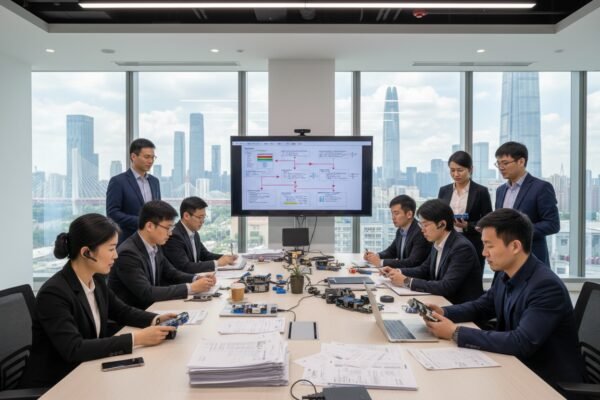
A genuine Shenzhen-based sourcing agent typically employs a mix of roles. You should expect at least a project manager who speaks English fluently, a local buyer who knows the Huaqiangbei buildings floor by floor, and a QC inspector 6 who can visit suppliers or factories on the same day. Our own team of 10 people covers all of these roles from our Shenzhen headquarters, and we can walk to most Huaqiangbei complexes in under 15 minutes.
One thing many buyers overlook: Huaqiangbei is almost entirely wholesalers, not factories. The actual manufacturing happens in Shenzhen's outskirts, Dongguan, and Huizhou — all within about 100 kilometers. So a local team does not just need market access. They need factory access too. If your agent cannot drive to a factory and send you live inspection photos within the same business day, their "local presence" is questionable.
Why do I need a local Shenzhen team to handle my quality control and factory audits on-site?
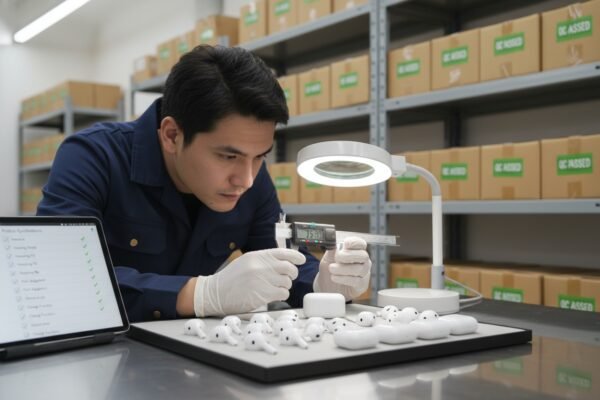
When we inspect a shipment of Bluetooth earbuds or LED ring lights at our Shenzhen warehouse, we regularly catch issues that no amount of remote checking could reveal — mismatched color temperatures, loose USB-C ports, or firmware that was not updated to the agreed version.
You need a local Shenzhen team for quality control because Huaqiangbei products range widely in authenticity and build quality. On-site inspectors can physically test units, verify specs against samples, catch counterfeit or refurbished components, and reject defective batches before they ship — saving you costly returns and brand damage.
The Reality of Quality Risks in Huaqiangbei
Huaqiangbei is a goldmine for electronics. It is also a minefield. Some vendors sell brand-new, factory-fresh goods. Others sell refurbished phones labeled as new. Some components are genuine; others are clones. Without a trained eye — and a trained hand holding a multimeter — you cannot tell the difference from a product photo.
Here is a breakdown of common quality issues we encounter:
| Quality Issue | How a Local Team Catches It | What Happens Without Local QC |
|---|---|---|
| Refurbished goods sold as new | Physical inspection of seals, battery cycles, screen quality | Buyer receives used products, faces customer complaints |
| Wrong specifications | On-site testing of voltage, capacity, connectivity | Products fail in the field, causing returns |
| Counterfeit components 7 | Cross-referencing supplier claims with known factory outputs | Brand reputation damage, potential legal liability |
| Cosmetic defects | Visual inspection under proper lighting | Scratched or dented units reach end customers |
| Packaging errors | Checking labels, manuals, barcodes before sealing | Customs delays or Amazon listing suspensions |
| Firmware mismatches | Powering on units, testing software version | Products malfunction, requiring costly remote updates |
Factory Audits Beyond Huaqiangbei
Here is something many first-time buyers do not realize. Huaqiangbei is a display and wholesale market. The factories are elsewhere. If you need custom production — your own logo, your own firmware, your own packaging — the work happens in industrial zones across Shenzhen, Dongguan, and Huizhou.
A local team can drive to these factories in one to two hours. They can walk the production floor. They can check if the factory actually owns the injection molds they claim to own. They can verify that the assembly line matches the capacity the sales representative promised. We do this routinely for our clients, and it is surprising how often the reality on the factory floor differs from the sales pitch.
Inline Inspection vs. Pre-Shipment Inspection
Smart buyers do not wait until goods are packed and ready to ship. They ask their local team to perform inline inspections — checking products during production, not after. This catches problems early when they are cheap to fix. A pre-shipment inspection is still important, but it should be the final confirmation, not the first line of defense.
For Amazon FBA sellers 8 especially, a single batch of defective units can tank your listing with negative reviews. The cost of a local QC team is a fraction of the cost of a product recall or a suspended Amazon account.
Can a local team in Shenzhen help me resolve the communication delays I face with factory sales representatives?
One of the biggest frustrations we hear from our U.S. and European clients is this: "I sent the factory a question three days ago and still have no answer." Time zones, language barriers, and cultural differences turn simple questions into week-long email chains.
A local Shenzhen team eliminates communication delays by speaking directly with factory representatives in Mandarin, visiting suppliers in person when messages go unanswered, and operating in the same time zone — converting what used to be days of back-and-forth into same-day resolutions.
Why Factory Sales Reps Are Slow to Respond
It is easy to blame the factory. But the truth is more nuanced. Many factory sales representatives handle dozens of inquiries at once. They prioritize large domestic orders over small international ones. When your question requires technical input — say, about a custom circuit board layout — the sales rep must consult the engineering team, translate the answer, and then reply. Each step adds delay.
Add the 12-to-15 hour time difference between Shenzhen and the U.S. East Coast, and you lose an entire business day with every exchange. A question sent Monday morning in New York arrives Monday night in Shenzhen. The factory replies Tuesday afternoon Shenzhen time. You see the response Tuesday morning New York time — if you are lucky.
How a Local Team Fixes This
A Shenzhen-based agent operates in real time with the factory. Here is what that looks like in practice:
- Your agent calls the factory directly on the phone. No waiting for email replies.
- If the factory does not pick up, your agent can physically visit within an hour or two.
- Technical questions get translated accurately the first time, avoiding the "matte finish vs. glossy finish" misunderstandings that plague remote communication.
- Your agent follows up on the same day, not the next business day.
A Real-World Communication Timeline Comparison
| Scenario | Without Local Team | With Local Shenzhen Team |
|---|---|---|
| Simple pricing inquiry | 2–3 days via email | Same-day phone call, answer within hours |
| Technical specification question | 3–5 days (multiple email rounds) | 1 day (agent visits factory or calls engineer) |
| Sample approval feedback | 5–7 days (shipping sample photos, waiting for reply) | 1–2 days (agent inspects sample in person, sends live video) |
| Urgent production issue | 7+ days (miscommunication, re-explanation) | Same day (agent goes to factory floor) |
| Payment or invoice dispute | 5–10 days (back-and-forth with finance dept) | 1–2 days (face-to-face resolution) |
The Cultural Factor
In Chinese business culture, relationships matter more than contracts. A factory is far more responsive to a local agent they see regularly than to a foreign buyer they have never met. Our team builds these relationships over years — sharing meals, visiting during Chinese New Year, attending trade shows together. This social capital translates directly into faster responses and better cooperation when you need it most.
Many of our clients used to spend hours each week chasing factory updates. After switching to a local agent model, they redirect that time to growing their business — marketing, product development, customer service. The communication problem does not just shrink. It largely disappears.
How will a local presence in Shenzhen help my agent secure better pricing and lead times for my orders?
In our decade of sourcing electronics from the Shenzhen-Dongguan-Huizhou manufacturing cluster, we have learned one thing clearly: the price a factory quotes you online is almost never the price you should pay. And the lead time they promise is almost never the lead time you will get — unless someone local is holding them accountable.
A local Shenzhen presence helps your agent secure 30–70% better pricing by cutting unnecessary middlemen, negotiating face-to-face in the vendor's own language, leveraging bulk relationships across multiple clients, and monitoring production schedules directly to ensure lead times are met rather than merely promised.
Why Prices Drop When Your Agent Is Local
Huaqiangbei is a layered ecosystem. At the top are retail-facing vendors who sell at the highest markup. Below them are wholesalers who supply those vendors. And below the wholesalers are the original manufacturers in Shenzhen's industrial districts, Dongguan, and Huizhou — almost all within a 100-kilometer radius.
When you source through an online platform like Alibaba, you often deal with a trading company pretending to be a factory. They add 20–40% markup. A local agent knows who the real manufacturers are. They visit the factory. They verify production capability. They negotiate directly with the factory owner, not a middleman.
Here is a key personal insight that I share with every client: markets like Yiwu and Huaqiangbei are both massive centralized sourcing hubs, but they are fundamentally different. Yiwu is a display-oriented wholesale market where goods come from factories scattered across the entire country. Huaqiangbei is different — there are essentially no factories inside the market itself. It is entirely wholesalers and traders. If your order volume is small or you do not need customization, Huaqiangbei is perfect for buying ready-made products at low MOQs, sometimes as low as a single unit. But if you need custom production, Huaqiangbei still has enormous value: you can spot trending products, source every electronic component you need for prototyping, and then tap into the surrounding factory belt for manufacturing. Nearly every category of electronics factory is concentrated within 100 kilometers of where we sit. That proximity is your biggest cost and speed advantage — and it is exactly why a local Shenzhen sourcing agent delivers the best results.
The Negotiation Advantage
Face-to-face negotiation in China is not just more effective — it is a different game entirely. When our buyers sit across the table from a supplier, they can read body language, build rapport, and push harder on pricing because the supplier sees a real person representing repeat business. Phone and email negotiations simply do not carry the same weight.
Local agents also consolidate volume. If your agent serves 20 clients buying similar components, they can combine orders to hit higher volume tiers and pass those price breaks along to you.
Lead Time Management
Pricing means nothing if your goods arrive late. Late shipments mean empty shelves, lost sales, and customers switching to competitors. A local team manages lead times in three ways:
- Pre-production check-ins. Before production starts, the agent confirms raw material availability and the factory's current workload.
- Weekly production visits. The agent or QC inspector visits the factory during production to verify progress against the schedule.
- Escalation power. If a factory falls behind, a local agent can show up unannounced, meet with the factory manager, and push for priority treatment. A foreign buyer sending angry emails has no such leverage.
Pricing Comparison: Direct Online vs. Local Agent
| Factor | Buying Online (Alibaba, etc.) | Buying via Local Shenzhen Agent |
|---|---|---|
| Supplier type | Often trading companies | Verified manufacturers |
| Price markup | 20–40% above factory price | Near-factory pricing |
| MOQ flexibility | Higher (500–1000 units typical) | Lower (1–300 units common via Huaqiangbei) |
| Negotiation leverage | Low (email-based, no relationship) | High (face-to-face, repeat business) |
| Lead time accuracy | Often delayed, hard to verify | Monitored on-site, higher accountability |
| Hidden costs | Unexpected shipping, quality failures | Transparent, pre-negotiated terms |
The bottom line is simple. Proximity equals power. When your agent can walk into a factory, sit down with the boss, and negotiate in Mandarin over tea, you get prices and timelines that a remote buyer will never see. This is not theory. It is what we do every week for clients sourcing consumer electronics, smart home devices, and beauty equipment from the Shenzhen manufacturing ecosystem.
Conclusion
Huaqiangbei sourcing agents 10 with real local teams in Shenzhen give you verified suppliers, reliable quality control, faster communication, and stronger pricing — advantages that no remote arrangement can match.
Footnotes
- Guide to procurement, supplier selection, and managing the electronics supply chain. ↩︎
- Explains best practices for supply chain due diligence and vetting potential suppliers. ↩︎
- Defines the concept and characteristics of a wholesale market compared to retail. ↩︎
- Provides a general overview and definition of the consumer electronics industry. ↩︎
- Explains requirements for foreign enterprises to register and obtain a business license in China. ↩︎
- Describes the duties and responsibilities of a quality control inspector. ↩︎
- Explains methodology to determine and mitigate risks of counterfeit electronic components. ↩︎
- Explains the official Fulfillment by Amazon (FBA) program for sellers. ↩︎
- Details the purpose, types, and importance of quality inspections in manufacturing. ↩︎
- Provides an overview of Huaqiangbei, a major electronics market in Shenzhen. ↩︎