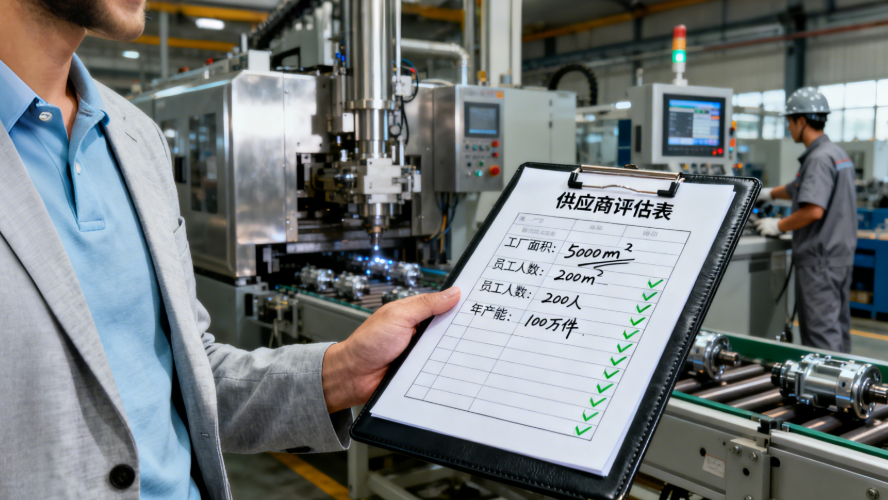
I often hear clients ask if I have a secret list of the best factories in China—and frankly, that’s a fair question.
Yes, professional China sourcing agents often provide a curated list of vetted factories, but this list is typically tailored, fluid, and based on ongoing performance reviews rather than being fixed or publicly ranked.
If you're expecting a fixed “top 10 factories in China” list, you might be disappointed. But if you're seeking a well-vetted, custom shortlist that fits your product and goals, you're in the right place.
How do I select factories to include in my vetted list?
I’ve been burned before—factories that looked good on paper failed during production. That’s why I created a stricter vetting system.
To select factories for my vetted list, I perform multi-step due diligence, including factory audits, production capacity analysis, compliance checks, and small test orders to verify actual capability.
Factory selection starts with a purpose
I don’t believe in a universal “best factory.” Instead, I focus on finding the best-fit factory for each project. The process begins by understanding the client's needs: product type, target market, expected order volume, compliance requirements, and price sensitivity. Based on that, I shortlist only those suppliers who can realistically meet those needs—not just ones that look good on Alibaba.
Step-by-step evaluation process
- Legal verification: I check each factory’s business license and registration. I verify whether the company is a manufacturer, not a trading company pretending to be one.
- Product match: I look for real production records for the specific product category. If the factory has never made your product type, it doesn’t go on the list.
- Audit visits: Either I or a third-party QC partner visits the factory. We look at production lines, quality control systems, and worker conditions. This is how I weed out those that don’t walk the talk.
- Sample checks: I ask for product samples. If a factory can’t deliver a decent sample, they’re likely to struggle during mass production.
- Trial orders: For many clients, I recommend starting with a small batch. The results of that first order often determine whether the supplier remains on my vetted list.
This whole system helps me support my clients with reliable China supplier sourcing, not just a list of names scraped from online directories.
What standards must a supplier meet to stay on my list?
I once had a supplier who aced the audit, but six months later, they missed three deadlines. Standards must evolve—and I’ve learned to enforce them strictly.
To stay on my vetted list, a supplier must maintain consistent quality, meet delivery timelines, offer transparent communication, and pass periodic re-evaluations and factory visits.
Performance metrics aren’t one-time checks
Being on my list is not a badge for life. I monitor each supplier's behavior across every project. If a factory slips—maybe delays orders or quality begins to drop—I’ll either warn them or remove them.
Key standards I enforce
- On-time delivery rate: A supplier must consistently hit agreed lead times. Even one major slip can put future business at risk.
- Pass rate in QC inspections: Quality must be measurable. I work with third-party inspection firms to ensure that every outgoing shipment meets expectations.
- Responsiveness: If a factory takes more than 48 hours to reply to urgent questions, I treat that as a risk signal. Poor communication causes errors.
- Flexibility: Some of my clients need last-minute changes or smaller MOQs. Factories that offer some level of flexibility score higher in my evaluations.
- Ethics and compliance: I won’t work with suppliers that have poor labor practices or are under investigation. For some clients, I also include ESG (Environmental, Social, Governance) indicators in the evaluation.
By applying these standards, I help buyers avoid common traps in OEM China sourcing—factories that look good at first but fail over time.
Can I provide product-specific factory recommendations?
I remember a buyer asking for a list of “top 5 factories for hair dryers.” I gave him something better—three suppliers who’d actually built award-winning tools for export.
Yes, I provide product-specific factory recommendations based on real manufacturing experience, not directory searches. These are often smaller, specialized factories that meet unique product and compliance needs.
Every product has its niche manufacturer
For niche products, like medical-grade grooming tools or Bluetooth-enabled home devices, you won’t find the right factories on Google. These products require precision, certifications, and experience with strict quality assurance standards.
So instead of a generic list, I use my network and sourcing experience to identify niche-capable factories. These are usually mid-sized operations—often not the cheapest—but with strong technical teams and a track record of delivering custom ODM or OEM solutions.
Why product-matching matters
A factory that excels in electric shavers might struggle with hair straighteners. Different processes, different components, different certifications. When a client needs a specific product category, I:
- Analyze their technical requirements
- Shortlist only factories that have made similar products at scale
- Verify their quality control data and past client references
- Request product samples and confirm material specs
- Coordinate a trial batch to validate the supplier’s claims
This approach allows me to deliver China product sourcing solutions that are not only reliable but also scalable for long-term growth.
How often do I review and update my factory database?
In one year alone, I removed five suppliers from my database. Some lost key engineers. Others let quality slip. One simply vanished.
I review my factory database quarterly and conduct real-time updates when serious performance issues arise. I remove suppliers who no longer meet my standards and replace them based on new audits and sourcing trips.
Keeping the list fresh is hard—but necessary
China’s manufacturing landscape changes quickly. Management teams rotate, equipment gets outdated, and sometimes even ownership shifts. If I relied on a static factory list, my clients would suffer.
That’s why I treat my vetted list like a live database. Here’s how I manage it:
- Quarterly reviews: I run a performance audit every quarter. It includes delivery performance, quality feedback from clients, and communication records.
- Real-time flags: If something goes wrong—like a failed QC inspection or a delayed order—I investigate immediately. If the root cause is systemic, I suspend or delist the factory.
- Sourcing trips: I visit suppliers regularly, especially when onboarding new factories. These visits often uncover new problems or confirm improvements.
- Client feedback: Every buyer I work with gives post-order reviews. These help me understand how a factory performs under pressure.
- Market shifts: I also add new suppliers based on client needs, industry shifts, or new government compliance requirements.
By constantly maintaining and refreshing my supplier pool, I help buyers stay ahead in China sourcing and logistics, where consistency and trust are rare but essential.
A vetted factory list is a powerful tool—but only if it evolves. I keep mine sharp, focused, and tailored for each client’s real-world needs.