article img, .entry-content img, .post-content img, .wp-block-image img, figure img, p img {max-width:100% !important; height:auto !important;}figure { max-width:100%; }img.top-image-square {width:280px; height:280px; object-fit:cover;border-radius:12px; box-shadow:0 2px 12px rgba(0,0,0,0.10);}@media (max-width:600px) {img.top-image-square { width:100%; height:auto; max-height:300px; }p:has(> img.top-image-square) { float:none !important; margin:0 auto 15px auto !important; text-align:center; }}.claim { background-color:#fff4f4; border-left:4px solid #e63946; border-radius:10px; padding:20px 24px; margin:24px 0; font-family:system-ui,sans-serif; line-height:1.6; position:relative; box-shadow:0 2px 6px rgba(0,0,0,0.03); }.claim-true { background-color:#eafaf0; border-left-color:#2ecc71; }.claim-icon { display:inline-block; font-size:18px; color:#e63946; margin-right:10px; vertical-align:middle; }.claim-true .claim-icon { color:#2ecc71; }.claim-title { display:flex; align-items:center; font-weight:600; font-size:16px; color:#222; }.claim-label { margin-left:auto; font-size:12px; background-color:#e63946; color:#fff; padding:3px 10px; border-radius:12px; font-weight:bold; }.claim-true .claim-label { background-color:#2ecc71; }.claim-explanation { margin-top:8px; color:#555; font-size:15px; }.claim-pair { margin:32px 0; }

Every week on our team calls, the same question keeps coming up from new clients who just finished their first product sample approval: "Now what about packaging?"
Yes, many China sourcing agents provide both packaging design and procurement services. Full-service agents can coordinate custom packaging concept adaptation, material sourcing, supplier matching, sample development, quality inspection, and final assembly — bridging the gap between your brand vision and manufacturing reality.
Packaging is no longer just a box around your product packaging design and procurement services 1. It is your brand's first handshake with the customer. But getting it right from China requires understanding design constraints, material options, supplier capabilities, and quality control steps custom retail packaging 2. Let me walk you through exactly how this works and what to expect at each stage.
Can my sourcing agent help me design custom retail packaging for my brand?
When we help clients develop packaging for consumer electronics or beauty tools, the biggest friction point is almost always the same: the concept looks stunning on screen but cannot be produced efficiently — or at all Eco-friendly packaging 3.
Yes, a capable sourcing agent can help you design custom retail packaging by adapting your brand concepts to real manufacturing constraints, coordinating dieline creation, selecting suitable materials, and managing the sample approval process from start to finish.
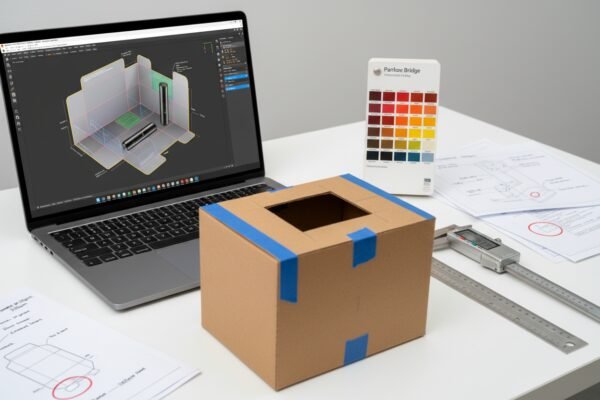
Why Concept Design Alone Is Not Enough
Here is something I have learned through years of coordinating between overseas brand teams and Chinese packaging factories. Whether it is packaging design or product design — and sometimes the packaging is a critical part of the product itself — the design must be deeply integrated with manufacturing processes and technical capabilities.
In many countries, especially in Europe and the United States, designers sit far from the production line. They create beautiful concepts, but they rarely consider how those concepts will become physical reality. The gap between a Photoshop mockup and a finished retail box can be enormous.
The best workflow looks like this: your in-house designer creates the concept — ideally after understanding basic manufacturing constraints — and then hands it to a China-based design team or your sourcing agent's packaging specialists. They produce precise 3D models, accurate dielines 4, and print-ready files that work within the factory's capabilities.
Packaging design follows the same principle. A designer who understands what embossing can and cannot do, which paper stocks fold cleanly, and how UV coating behaves on different substrates will produce a design that actually gets made. A designer who doesn't will produce a design that requires endless revisions and still disappoints.
What a Sourcing Agent Actually Does for Packaging Design
Most sourcing agents do not have a full creative branding studio. That is not their role. Here is what they typically handle:
| Service | What the Agent Does | What You Still Need to Provide |
|---|---|---|
| Artwork adaptation | Adjusts your files to match print specs and dieline dimensions | Brand guidelines, logos, color codes |
| Material recommendation | Suggests cardboard weight, finish, and structure based on product type | General preference (e.g., rigid box, folding carton) |
| Dieline coordination | Works with the factory to create accurate cutting templates | Approval of final dimensions |
| Print readiness | Ensures CMYK conversion 5, bleed, and resolution are correct | High-resolution source artwork |
| Structural design | Recommends box style, insert type, and closure method | Product dimensions and weight |
Agent vs. Design Studio vs. Factory
This is a key distinction many importers miss. A factory may offer "free packaging design," but that usually means they plug your logo into a standard template. A design studio may create award-winning packaging, but they have no idea whether the factory can produce it at your target price and MOQ. A sourcing agent bridges both worlds — managing the conversation between your creative team and the production floor.
For our clients in the consumer electronics space, we often see that the product's unboxing experience is a major brand differentiator. A sourcing agent who understands both sides — design intent and factory reality — saves weeks of back-and-forth and prevents costly mistakes.
How do I manage the procurement of specialized packaging materials through an agent?
When we source packaging for products like smart home devices or beauty equipment, the material choices can make or break the customer's perception of quality — and the product's survival during transit.
Managing specialized packaging procurement through an agent involves defining your material requirements, letting the agent identify and vet packaging suppliers, comparing options on cost and MOQ, approving samples, and coordinating production timelines to sync with your product manufacturing schedule.
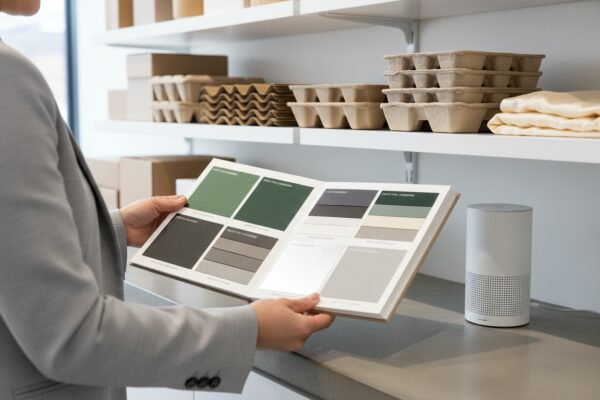
The Procurement Process Step by Step
Packaging procurement is not just about finding a box factory. It involves matching the right material, finish, and structure to your product, brand, and budget. Here is how a well-organized procurement process works through a sourcing agent:
- You share product dimensions, weight, fragility, and brand requirements.
- The agent recommends packaging types and identifies two to four potential suppliers.
- Suppliers provide quotations with material options, MOQs, and lead times.
- The agent compares options and presents a summary for your decision.
- You approve a direction. The agent orders samples.
- Samples arrive. You review and request revisions if needed.
- Final approval triggers mass production.
- The agent coordinates delivery to the product factory or warehouse for assembly.
Material Options and Trade-offs
Many importers assume "packaging" means corrugated cardboard 6. In reality, the options are wide. Here is a comparison of common packaging material types we work with:
| Material Type | Best For | MOQ Range | Cost Level | Durability |
|---|---|---|---|---|
| Corrugated cardboard | Shipping boxes, e-commerce mailers | 500–1,000 pcs | Low | High for transit |
| Rigid paperboard | Premium retail boxes, electronics | 500–2,000 pcs | Medium-High | Medium |
| Folding carton (SBS) | Retail shelf packaging, cosmetics | 1,000–3,000 pcs | Medium | Medium |
| Plastic clamshell | Blister packs, small accessories | 2,000–5,000 pcs | Low-Medium | High |
| Fabric/leather box | Luxury gift sets, high-end tools | 300–1,000 pcs | High | Low for transit |
| Kraft paper pouch | Eco-friendly, lightweight products | 1,000–5,000 pcs | Low | Low |
Low MOQ: Benefits and Hidden Costs
One of the most common requests we receive is for low MOQ packaging. Startups and small brands love it — and many agents now support it. But there are trade-offs. Low minimums often mean higher per-unit costs, limited material choices, and simpler printing methods like digital print instead of offset. Screen printing and hot foil stamping 7 may not be available below certain quantities.
The smart approach is to discuss your growth plan with your agent. If you plan to reorder, starting with a slightly higher MOQ can lock in better pricing and open up more finishing options.
Syncing Packaging and Product Timelines
A common mistake is ordering packaging too late. If your product is ready but packaging is still in production, you face warehousing costs and shipping delays. A good sourcing agent starts packaging procurement in parallel with product manufacturing, ensuring both arrive at the assembly point on schedule.
Will my sourcing partner handle the quality inspection of my packaging before shipment?
On more than one occasion, we have caught packaging defects — misaligned printing, wrong color tones, weak glue on magnetic closures — that would have destroyed the unboxing experience and triggered customer complaints. Inspection is not optional.
Yes, most full-service sourcing agents include packaging quality inspection as part of their pre-shipment process. This typically covers print accuracy, color matching, dimensional checks, structural integrity, material verification, and transit durability testing before goods leave China.
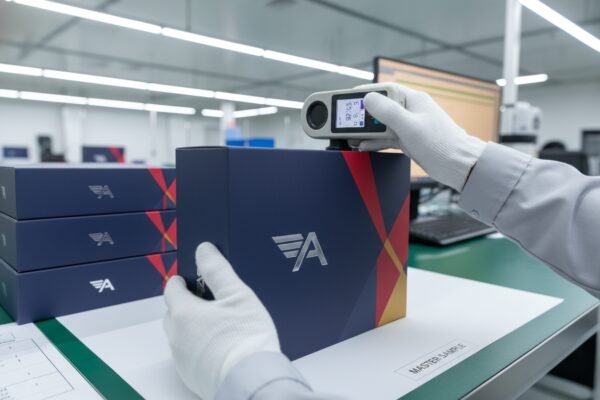
What Packaging QC Actually Covers
Packaging inspection is more detailed than many importers expect. It is not just about checking if the box looks right. It involves multiple checkpoints that catch problems before they reach your customer or your Amazon warehouse.
Here is what a thorough packaging QC process includes:
- Print quality: Color accuracy against Pantone or CMYK references, text sharpness, registration alignment, no smudging or ink spots.
- Dimensions: Box dimensions match dieline specs. Inserts fit the product snugly. Lids close properly.
- Material verification: Paper weight, board thickness, and finish match the approved sample.
- Structural integrity: Boxes do not collapse under stacking. Magnetic closures hold. Tabs lock securely.
- Barcode and label checks: UPC/EAN codes scan correctly. Labels are straight, legible, and in the correct position.
- Transit testing: Drop tests, compression tests, and vibration simulation for shipping cartons.
Inspection Levels and Standards
Most agents follow AQL (Acceptable Quality Level) standards 8 for packaging inspection, just as they would for product inspection. The typical inspection levels are:
| Inspection Type | When It Happens | What It Covers |
|---|---|---|
| Initial sample check | After first samples produced | Design accuracy, material, print quality |
| During production inspection | At 30–50% of production | Consistency, color drift, structural issues |
| Pre-shipment inspection | After production is complete | Full AQL sampling of finished packaging |
| Loading inspection | At the warehouse/container | Packaging condition, correct quantities, labeling |
Common Defects We Catch
From our experience coordinating inspections for consumer electronics and beauty tool brands, here are the most frequent packaging defects:
- Color shifts between the sample and mass production run, especially on large solid-color surfaces.
- Glue failure on rigid boxes, causing lids to detach during transit.
- Inserts that are slightly too tight or too loose, causing the product to shift or get stuck.
- Miscut dielines that result in uneven edges or poor folding.
- Missing or incorrect compliance labels, which can cause customs delays or FBA rejections.
Platform-Specific Requirements
If you sell on Amazon, your packaging must meet FBA requirements 9. This includes scannable barcodes, suffocation warnings on poly bags, and specific labeling formats. A sourcing agent familiar with Amazon's rules can save you from costly rejections at the fulfillment center. We routinely check these requirements as part of our standard packaging QC for e-commerce clients.
Can I integrate my product assembly and final packaging into a single sourcing service?
One of the most time-consuming challenges our clients face is coordinating multiple suppliers — the product factory ships to one location, the packaging arrives from another, and someone has to put it all together before export.
Yes, many full-service sourcing agents offer integrated product assembly and final packaging as a single coordinated service. This includes receiving components from multiple suppliers, assembling products, inserting them into custom packaging, labeling, kitting, and preparing everything for export in one workflow.
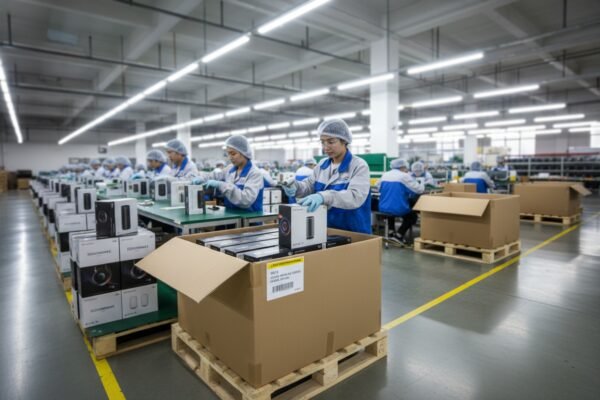
Why Integration Matters
When product sourcing and packaging sourcing happen separately, you end up managing two timelines, two sets of suppliers, and two potential failure points. If the product is ready but the packaging is late, you pay for warehousing. If the packaging arrives first and the product has quality issues, the packaging may need revisions too.
Integration solves this by putting one team — your sourcing agent — in charge of the entire flow. They coordinate timelines, manage communications with both the product factory and the packaging supplier, and handle assembly at a central warehouse.
What Integrated Service Looks Like
Here is the typical workflow for a bundled product-and-packaging service:
- Product arrives at the agent's warehouse from the manufacturer.
- Packaging materials arrive from the packaging supplier.
- Inserts, labels, manuals, and accessories arrive from their respective sources.
- The agent's warehouse team assembles everything: product into insert, insert into box, manual and accessories added, box sealed, barcode applied.
- Assembled units undergo final inspection.
- Finished goods are packed into shipping cartons and prepared for export.
Who Benefits Most from Integration
Not every importer needs this service. But for certain business models, it is a game-changer:
- Amazon sellers who need retail-ready, FBA-compliant packaging with specific labeling.
- Private label brands building custom gift sets or bundled kits from multiple component suppliers.
- Distributors importing products from one factory but adding their own branded packaging.
- Startups with limited staff who cannot manage multiple supplier relationships overseas.
- Companies sourcing accessories separately from the main product — such as a beauty tool plus replacement heads, a carry case, and a charging cable.
Cost and Complexity Considerations
Integration is not free. Warehouse handling, assembly labor, and additional QC steps add to your total cost. But when you compare it against the alternative — shipping components to your own country and assembling there — the savings are almost always significant.
Here is a rough comparison:
| Approach | Handling Cost | Transit Cost | Lead Time | Risk Level |
|---|---|---|---|---|
| Assemble in China via agent | Low-Medium | Standard (one shipment) | Shorter | Lower (one point of control) |
| Ship components separately, assemble at destination | Low at origin, High at destination | Higher (multiple shipments) | Longer | Higher (multiple failure points) |
| Factory handles everything | Lowest (if they can) | Standard | Varies | Medium (less flexibility) |
The first approach — assembly in China through your sourcing agent — is often the best balance of cost, speed, and control. It is especially practical when your product factory does not offer packaging services or when you source packaging from a different supplier than your product.
Trends Shaping Integrated Services
The sourcing industry is evolving fast. Here are a few trends we see in 2025 and 2026:
- Kitting and bundling services are now standard offerings from many full-service agents.
- Eco-friendly packaging demand is growing. Agents are sourcing recyclable inserts, soy-based inks, and FSC-certified paper.
- Smart packaging features like QR codes for product authentication, NFC tags for customer engagement, and tamper-evident seals are becoming more common.
- Warehousing plus repackaging allows brands to hold inventory in China and ship in smaller batches, reducing upfront capital.
- Resilient supply chains mean agents are now diversifying packaging suppliers and maintaining backup options for critical materials.
One more thing worth noting: some agents also help protect your packaging designs through intellectual property guidance, including trademark registration in China. This matters if your packaging is a key part of your brand identity and you want to prevent counterfeiting.
Conclusion
Packaging design and procurement are now core services offered by many China sourcing agents — not just optional extras. Choose an agent who bridges design, manufacturing, QC, and logistics into one seamless workflow.
Footnotes
Related Reading
1. Market research report on packaging design and procurement services. ↩︎
2. The original URL was an unknown HTTP error. This replacement from cefBox offers an ultimate guide to custom packaging for retail products, which is highly relevant to the original anchor text. ↩︎
3. Defines eco-friendly packaging and its benefits for businesses and the environment. ↩︎
4. Explains the importance and components of dielines in printing and packaging production. ↩︎
5. Wikipedia article detailing the CMYK color model used in color printing. ↩︎
6. Wikipedia article explaining corrugated fiberboard, commonly known as corrugated cardboard. ↩︎
7. Wikipedia article defining hot stamping, also known as hot foil stamping. ↩︎
8. Defines AQL and its role in quality control and inspection processes. ↩︎
9. The original URL was a 404 error. This replacement from SellerApp offers a complete and current guide to Amazon FBA packaging requirements. ↩︎
10. Comprehensive guide to quality inspections in manufacturing processes. ↩︎
{
"@context": "https://schema.org",
"@type": "FAQPage",
"mainEntity": [
{
"@type": "Question",
"name": "Do China Sourcing Agents Provide Packaging Design and Procurement Services?",
"acceptedAnswer": {
"@type": "Answer",
"text": "Yes, many China sourcing agents provide both packaging design and procurement services. Full-service agents can coordinate custom packaging concept adaptation, material sourcing, supplier matching, sample development, quality inspection, and final assembly — bridging the gap between your brand vision and manufacturing reality."
}
},
{
"@type": "Question",
"name": "Can my sourcing agent help me design custom retail packaging for my brand?",
"acceptedAnswer": {
"@type": "Answer",
"text": "Yes, a capable sourcing agent can help you design custom retail packaging by adapting your brand concepts to real manufacturing constraints, coordinating dieline creation, selecting suitable materials, and managing the sample approval process from start to finish."
}
},
{
"@type": "Question",
"name": "How do I manage the procurement of specialized packaging materials through an agent?",
"acceptedAnswer": {
"@type": "Answer",
"text": "Managing specialized packaging procurement through an agent involves defining your material requirements, letting the agent identify and vet packaging suppliers, comparing options on cost and MOQ, approving samples, and coordinating production timelines to sync with your product manufacturing schedule."
}
},
{
"@type": "Question",
"name": "Will my sourcing partner handle the quality inspection of my packaging before shipment?",
"acceptedAnswer": {
"@type": "Answer",
"text": "Yes, most full-service sourcing agents include packaging quality inspection as part of their pre-shipment process. This typically covers print accuracy, color matching, dimensional checks, structural integrity, material verification, and transit durability testing before goods leave China."
}
},
{
"@type": "Question",
"name": "Can I integrate my product assembly and final packaging into a single sourcing service?",
"acceptedAnswer": {
"@type": "Answer",
"text": "Yes, many full-service sourcing agents offer integrated product assembly and final packaging as a single coordinated service. This includes receiving components from multiple suppliers, assembling products, inserting them into custom packaging, labeling, kitting, and preparing everything for export in one workflow."
}
}
]
}