
Every week, our team fields calls from buyers who lost thousands on unverified electronics suppliers they found online smart home devices 1. The pain is real. Wasted deposits, failed inspections, and months of delay can sink a product launch before it even starts.
To find reliable China electronics suppliers, work with a sourcing agent who has a physical presence in China, verified factory networks, and end-to-end service capabilities. A good agent handles supplier verification, price negotiation, quality control, and logistics so you avoid fraud and costly mistakes.
In this guide, we break down the exact steps, tools, and criteria you need to evaluate a sourcing agent and use them effectively technical specifications 2. Whether you are sourcing consumer electronics 3, smart home devices, or beauty equipment, these principles apply across the board. Let's walk through it together.
How do I choose a sourcing agent who can effectively bridge the communication gap with my electronics suppliers?
When our sourcing team works with U.S. founders, we see the same pattern repeat: a buyer sends a detailed spec sheet, the supplier says "OK, no problem," and the final product looks nothing like what was discussed. This communication gap costs real money.
Choose a sourcing agent with bilingual staff, a physical China office, and experience in your specific electronics category. The agent should translate not just language but also technical specifications, cultural expectations, and business norms to prevent misunderstandings that lead to production errors.
Why Language Alone Is Not Enough
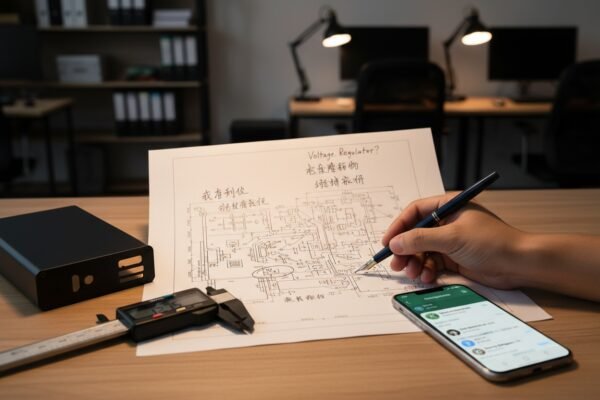
Many buyers think the communication gap is just about English and Mandarin. It is not. Chinese suppliers often say "yes" to avoid confrontation, even when they do not fully understand a request. A skilled sourcing agent recognizes this cultural dynamic 4 and asks clarifying follow-up questions. They restate specifications in concrete terms the factory floor can act on. They also convert Western measurement standards 5, packaging requirements, and compliance language into formats that Chinese manufacturers use daily.
We have seen cases where a buyer requested "matte black" on a device housing. The supplier interpreted this differently than expected because the buyer's reference sample was never shared. Our team stepped in, sent physical color samples, and confirmed finish specifications in Chinese technical terms. The result was a perfect match on the first production run.
What to Look for in a Sourcing Agent's Communication Setup
Not every agent is built to handle electronics. Here is a quick comparison of what separates an effective agent from a generic one:
| Criteria | Effective Sourcing Agent | Generic Sourcing Agent |
|---|---|---|
| Language capability | Bilingual team fluent in technical electronics terms | Basic English translation only |
| Response time | Within 24 hours across time zones | Slow or inconsistent replies |
| Communication tools | WhatsApp, WeChat, email, video calls | Email only |
| Specification handling | Translates specs into factory-ready documents | Forwards buyer specs without adaptation |
| Cultural mediation | Proactively flags misunderstandings | Assumes both sides agree |
| China office presence | Full-time staff in manufacturing hubs like Shenzhen | Remote freelancers with no local base |
Asking the Right Questions Before You Hire
Before you sign with any agent, ask these questions:
- Do you have a physical office in China? Where exactly?
- Can you share references from electronics buyers you have served?
- How do you handle specification discrepancies between the buyer and the supplier?
- What is your team's background in electronics sourcing specifically?
- Will I have direct access to the supplier's contact information?
That last question matters a lot. At Go Source, we do not hide supplier information from our clients. We are not a trading company or middleman. Many of our clients already have direct contact with their suppliers and still ask us to step in. They need us to negotiate contracts, visit factories, inspect goods, and arrange logistics. We are fully transparent with our clients about supplier details and factory-gate pricing. If an agent refuses to share supplier information, that is a red flag.
What steps will my sourcing agent take to ensure my electronics meet strict quality and safety standards?
Our quality inspection team has rejected entire batches of circuit boards because a single component failed safety testing. In electronics, one overlooked defect can mean product recalls 6, liability lawsuits, or permanent brand damage. The stakes are high.
A qualified sourcing agent implements a multi-stage quality control process: pre-production sample approval, in-line production inspections, final random inspections using AQL standards, and compliance verification for certifications like CE, FCC, and RoHS before shipment leaves the factory.

The Multi-Stage Quality Control Process
Quality control for electronics is not a single checkpoint. It is a process that runs from before production starts to the moment goods are loaded for shipping. Here is how a thorough sourcing agent structures it:
Stage 1 — Pre-Production. The agent reviews your product specifications with the factory. They confirm that raw materials, components, and tooling match approved samples. This stage catches problems before any money is spent on mass production.
Stage 2 — During Production (In-Line Inspection). When about 20–30% of the order is complete, the agent visits the factory floor. They check that assembly procedures match the agreed process. They test early units for function, appearance, and dimensional accuracy. Finding a defect here saves the entire batch.
Stage 3 — Pre-Shipment Inspection. After production finishes, the agent conducts a final random inspection based on AQL (Acceptable Quality Level) sampling standards. AQL sampling standards 7 They pull units at random, test electrical performance, check cosmetic quality, verify labeling, and confirm packaging meets your requirements.
Stage 4 — Compliance Verification. For electronics heading to the U.S., Europe, or Australia, specific certifications are mandatory. Your agent should verify that test reports from accredited labs are valid and that the product's certification markings are correct.
Key Certifications for Electronics
| Certification | Region | What It Covers |
|---|---|---|
| FCC | United States | Electromagnetic interference and radio frequency emissions |
| CE | European Union | Health, safety, and environmental protection standards |
| RoHS | European Union | Restriction of hazardous substances in electronics |
| UL | United States / Global | Product safety testing and certification |
| SAA | Australia | Electrical safety and EMC compliance |
| CCC | China (domestic) | Mandatory product certification for Chinese market |
Your sourcing agent should know which certifications apply to your product and your target market. They should request test reports from the factory, verify them against the certifying lab's database, and flag any discrepancies.
What Happens When Quality Fails
If the pre-shipment inspection reveals defects beyond the agreed AQL tolerance, a good agent does not simply report the failure and wait. They negotiate corrective actions with the factory. This might include reworking defective units, replacing components, or in extreme cases, restarting a portion of production. The agent documents every step with photos, videos, and written reports that you can review remotely.
We once caught a batch of Bluetooth speakers where the charging port was misaligned on 12% of units. Our inspector flagged it at the in-line stage. The factory corrected the tooling within two days, and the final batch passed with a defect rate under 1%. Without that mid-production check, the entire order would have shipped defective.
How can a sourcing agent help me avoid production delays and manage my end-to-end logistics?
We have coordinated shipments for clients who needed goods to clear U.S. customs within a specific two-week window to hit a retail launch date. One missed deadline meant losing a six-figure purchase order. Production delays and logistics failures are not abstract risks. They are business killers.
A sourcing agent prevents production delays by setting clear timelines with factories, conducting progress checks during manufacturing, and managing end-to-end logistics including freight booking, customs documentation, and final-mile delivery coordination to meet your deadlines consistently.
Why Production Delays Happen in China
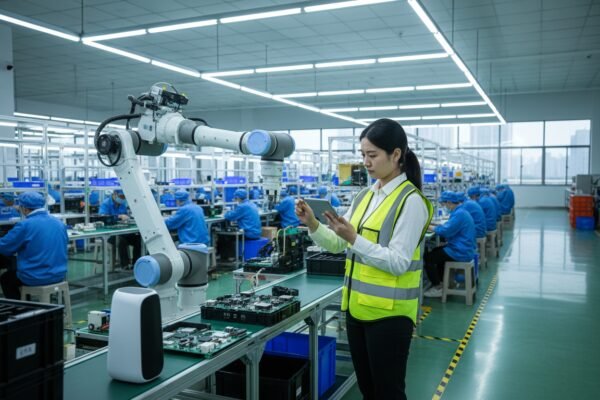
Understanding the root causes of delay helps you work with your agent to prevent them. The most common reasons include:
- Raw material shortages. Component supply chains for electronics are complex. A single chip shortage can halt an entire line.
- Factory overcommitment. Some factories accept more orders than they can handle, especially during peak season (August–November).
- Unclear specifications. Ambiguous requirements force the factory to stop production and seek clarification, adding days or weeks.
- Holiday shutdowns. Chinese New Year 8 typically shuts down factories for 2–4 weeks. Factories also slow before and after other holidays.
- Quality rework. If in-line inspections catch problems, rework adds time to the schedule.
A proactive sourcing agent anticipates these risks. They build buffer time into production schedules. They confirm material availability before production starts. And they monitor progress weekly, not just at the beginning and end.
End-to-End Logistics Management
Once production is complete, the logistics chain has many links that can break. Here is a typical flow and where your agent adds value:
| Logistics Stage | What the Agent Does |
|---|---|
| Factory pickup | Arranges local transport from factory to port or warehouse |
| Export customs | Prepares commercial invoices, packing lists, and export declarations |
| Freight booking | Selects air, sea, or rail freight based on cost, speed, and cargo type |
| Shipping coordination | Tracks container or cargo status in real time |
| Import customs | Prepares documents for destination country clearance (HS codes, duties, compliance certificates) |
| Final-mile delivery | Coordinates delivery to your warehouse, Amazon FBA, or distribution center |
Planning Around Chinese Holidays
One thing many first-time importers miss is the Chinese holiday calendar. If you do not plan around it, your timeline will slip by weeks. Your sourcing agent should alert you to these periods well in advance and help you place orders early.
Chinese New Year is the biggest disruption. Factories wind down one to two weeks before the holiday and ramp up slowly afterward. Workers often switch jobs after the holiday, so quality can dip in the first few weeks back. A good agent accounts for all of this when setting your production schedule.
Real-Time Tracking and Communication
Modern sourcing agents use digital tools to keep you informed. At our company, we share production progress photos, inspection reports, and shipping tracking numbers through a simple shared folder and messaging system. You should never have to wonder where your order stands. If your agent goes quiet during production, that is a warning sign.
How do I know if my sourcing agent is actually finding me the most cost-effective original manufacturers?
We field this question from nearly every new client. They have been burned before — paying what they thought was a factory price, only to discover their "manufacturer" was actually a trading company adding a 20–30% markup. The frustration is justified.
Verify your agent's integrity by requesting full supplier transparency, including factory names, addresses, business licenses, and factory-gate pricing. A trustworthy agent shares this information openly, allows you to attend factory visits, and earns revenue through service fees rather than hidden price markups.
How to Spot a Trading Company Disguised as a Factory
This is one of the biggest traps in China sourcing. A trading company buys from the real factory and resells to you at a markup. They often have professional websites, Alibaba Gold Supplier badges, and convincing sales teams. But they do not manufacture anything. Here is how to tell the difference:
- Ask for a factory tour. Real manufacturers welcome visits. Trading companies make excuses or show you a factory they do not own.
- Check the business license. A manufacturing license (生产型) is different from a trading license (贸易型). Your agent should verify this.
- Request production photos during manufacturing. A real factory can show you your specific order on their production line.
- Compare pricing. If your agent gets quotes from multiple sources and one is significantly higher, that source may be a middleman.
The Transparency Test
Here is a simple framework to evaluate whether your sourcing agent is truly finding you the best deal:
| Transparency Indicator | Good Sign | Red Flag |
|---|---|---|
| Supplier name and address shared | Yes, with business license copy | Agent refuses to disclose supplier identity |
| Factory-gate price 9 visible | Agent shows original quote from factory | Agent only shares a final "bundled" price |
| Factory visit invitation | Agent encourages and arranges visits | Agent discourages visits or makes excuses |
| Multiple supplier quotes | Agent provides 3–5 comparative quotes | Agent insists on a single supplier with no comparison |
| Commission structure | Agent charges a clear, separate service fee | Agent's fee is hidden inside the product price |
| Ongoing supplier access | Client can contact supplier directly | Agent blocks all direct communication |
At Go Source, we do not hide anything. Our clients know the supplier name, the factory address, and the exact factory-gate price. Our service fee is separate and transparent. Many of our clients have already established direct contact with their suppliers, yet they still rely on us for contract negotiation, factory audits, quality inspections, and logistics. That is because our value comes from our expertise and execution — not from controlling information.
Getting Comparative Quotes
A reliable sourcing agent does not just find one supplier and call it a day. They should build a shortlist of three to five qualified manufacturers for your product. Each quote should break down unit cost, tooling fees, MOQ, lead time, and payment terms. This comparison gives you leverage in negotiation and confidence that you are paying a fair market price.
We also recommend asking your agent to revisit pricing after the first order. Once a supplier sees you as a repeat buyer, there is room to negotiate better terms. Your agent should proactively push for these improvements.
Why the Cheapest Quote Is Not Always the Best
Cost-effectiveness is not the same as cheapest price. A factory quoting 15% below everyone else may be cutting corners on components, skipping quality tests, or using uncertified materials. Your agent should flag unusually low quotes and investigate. The goal is to find the supplier that offers the best balance of price, quality, reliability, and compliance.
Conclusion
Finding reliable China electronics suppliers requires more than browsing online platforms. A skilled sourcing agent with transparency, local presence, and end-to-end capabilities protects your investment and keeps your supply chain running smoothly 10.
Footnotes
- Replaced with a Wikipedia page providing a comprehensive definition of smart devices, which encompasses smart home devices, from an authoritative source. ↩︎
- Details the importance of clear technical specifications in product development. ↩︎
- Provides a general overview of the consumer electronics market. ↩︎
- Replaced with an article from Harvard Business Review, an authoritative source, that discusses cultural dynamics and their impact on relationships in a global business context. ↩︎
- Information on common international measurement systems and their importance in trade. ↩︎
- Discusses the causes, consequences, and prevention of product recalls in electronics. ↩︎
- Explains the methodology and application of Acceptable Quality Level in quality control. ↩︎
- Details the impact of Chinese New Year factory shutdowns on manufacturing and logistics. ↩︎
- Defines and explains the significance of factory-gate pricing in procurement. ↩︎
- Highlights best practices for efficient and resilient supply chain management. ↩︎