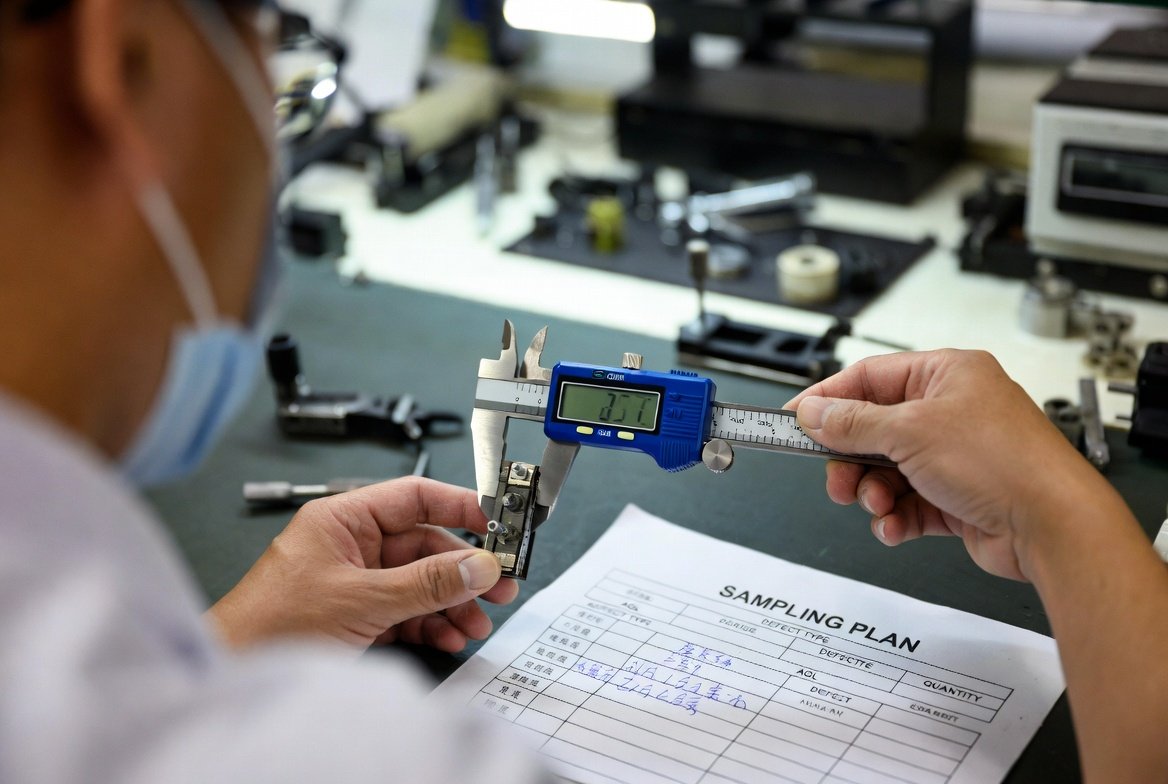
When quality slips, refunds, delays, and angry customers show up fast. I have been there. I reduce that risk by planning checks early, not just at the end.
I offer structured quality assurance that starts before any order and continues through production to pre-shipment checks, with clear standards, photos, and test evidence. I focus on catching defects early, setting measurable rules, and keeping proof that your product meets your spec and market needs.
If you only run one final inspection, you often learn the bad news too late. A better plan is simple: verify the supplier, lock the spec, check the process, and document every step.
Do I use AQL standards for inspection?
Bad sampling can create a false sense of safety. I have seen a “clean” batch fail in the market because the inspection plan was too loose. I use AQL sampling so decisions are based on math, not feelings.
Yes. I use AQL standards when sampling makes sense, and I set the AQL level based on product risk, defect types, and order size. I agree the sampling plan before production, define what counts as critical/major/minor defects, and report results with photos and pass/fail logic.
What AQL does well, and what it cannot do
AQL is a sampling method. It helps answer one question: “Based on a sample, do we accept this lot?” It is useful when order quantities are large and unit price is low to mid. It is also useful when the product is stable and the process is repeatable.
AQL does not guarantee that every unit is perfect. A sample can miss a rare defect. This is why I do not treat AQL as a magic shield. I treat it as one tool inside a wider Quality control China sourcing plan.
How I choose AQL levels in a practical way
I start with risk. If a defect can cause injury, fire, electric shock, choking, or legal exposure, I classify it as “critical.” For critical defects, the target is often zero acceptance. For major defects (product does not work, key function fails, wrong part), the AQL is tighter. For minor defects (small cosmetic marks), it can be looser.
I also look at:
Value per unit: high value often needs stricter rules.
Quantity: larger lots usually justify sampling, but only if process control is stable.
Product maturity: new designs need tighter checks and more stages.
When I require 100% inspection instead of AQL
For high-value products with low to medium quantities, I often ask the factory to do 100% inspection at key points. This matches a simple reality: when each unit matters, sampling is not enough. For low-price, high-volume items, factories usually prefer sampling. In that case, I push for tighter AQL plus added process checks, so the factory does not “inspect quality in” at the end.
How results are reported and used
After inspection, I provide an inspection report that includes:
sample size and standard used
defect list with counts by category
photos, measurements, and test outcomes
clear pass/fail conclusion tied to the agreed AQL
If it fails, I do not stop at “fail.” I ask for root cause, corrective action, and proof of rework or re-sorting. This is where a China sourcing agent adds value: not by blaming, but by forcing closure with evidence.
How do I handle tolerance thresholds and test plans?
Loose tolerances create endless arguments. I have watched teams fight over “it looks fine” versus “it is wrong.” I avoid that by making tolerance and testing rules measurable and written.
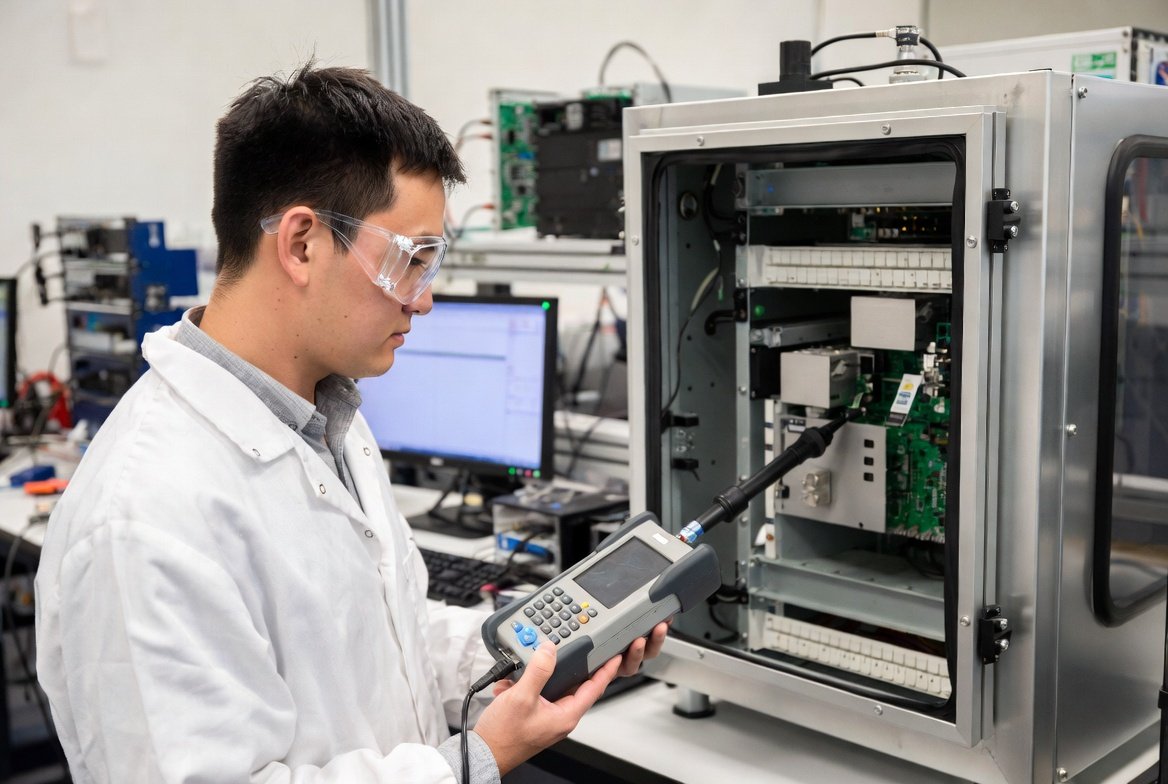
I handle tolerances by turning your needs into numeric limits, measurement methods, and acceptance rules, then building a test plan that matches the product’s real use. I confirm tools, fixtures, and test steps with the factory, and I validate results with repeatable checks and documented records.
Start with a spec that can be inspected
A spec should not read like a wish. It should read like a checklist. I break requirements into categories such as dimensions, materials, function, safety, labeling, and packaging. Then I add measurable limits.
Examples of tolerance work that often gets missed:
Fit and assembly: gap, alignment, snap force, screw torque
Electrical items: voltage range, current draw, temperature rise
Cosmetics: scratch length limits, color delta, allowable marks area
Packaging: drop test level, carton strength, barcode placement
If a requirement cannot be measured, it will be argued later. I try to remove that future argument.
Agree on measurement methods, not only the numbers
Two people can measure the same part and get different results. So I define:
the tool (caliper, gauge, scale, multimeter)
where to measure (point A to point B, not “around here”)
the environment if it matters (temperature, humidity)
the sampling points within a lot
This matters most when tolerances are tight. It also matters when the factory uses different fixtures than the buyer expects.
Build a test plan that matches use, not just the lab
A test plan should reflect how the customer uses the product. I split tests into:
functional tests: does it do the job, every time?
stress tests: what happens under load, heat, vibration, or long use?
safety checks: sharp edges, insulation, stability, materials risks
packaging tests: can it survive shipping and handling?
I also separate “factory tests” from “inspection tests.” The factory should test every unit for key functions when possible. The inspection then verifies that the factory test is real and that output matches the agreed rules.
Control plans during production
Tolerances and tests are not only for final inspection. I often add checkpoints:
Pre-production: confirm materials, components, and golden sample.
In-process: verify critical dimensions before full output ramps.
Pre-shipment: confirm finished goods, labeling, and packaging.
When defects appear, I ask a basic question: “Is this a people issue, a method issue, a machine issue, or a material issue?” Then I push for a fix that changes the process, not only the batch.
Why this links to supplier capability
A strong test plan is only useful if the supplier can execute it. This is where China supplier verification becomes part of quality. If a factory lacks calibration control, trained QC staff, or stable processes, then tight tolerances will fail no matter how good the paperwork looks.
Can I support certifications like CE or FCC?
Certification talk can become a trap. I have seen buyers assume a logo means compliance, then customs or platforms ask for test reports. A safer path is to treat compliance as a project with clear scope and proof.
Yes. I can support CE or FCC work by mapping your product to likely directives or rules, setting a compliance test plan, and coordinating third-party lab testing where required. I collect test reports, track label and documentation needs, and align production materials so the tested sample matches the shipped product.
What “support” really means in practice
I do not “issue” CE or FCC by myself. Those are legal and technical frameworks. What I can do is manage the steps so the project does not drift.
Support usually includes:
confirming the target market and sales channel requirements
identifying which product versions must be tested (color, adapter type, firmware)
selecting a lab and setting timelines
ensuring the submitted sample matches mass production intent
collecting and checking the report package for completeness
Avoid the biggest compliance mistake: testing the wrong sample
A common failure is testing a prototype, then changing parts in mass production. If the capacitor, plastic resin, power supply, or firmware changes, the compliance risk changes too.
So I set controls such as:
an approved BOM version tied to the tested sample
a rule that any change needs review before shipment
traceable records for key components (like power supplies and batteries)
Understand the limits of “factory certificates”
Factories may show ISO documents or past test reports. Those can be useful signals, but they are not proof that your exact product version is compliant today. I treat them as background, not as the final answer.
Timing and cost control without cutting corners
Compliance projects can burn time. To reduce delays, I try to front-load decisions:
clarify target standards early
plan pre-checks before formal lab testing
keep packaging and labeling drafts ready, so the report does not arrive to a design that is already outdated
Where CE/FCC intersects with quality
Compliance and quality overlap. If a factory has poor process control, it may ship units that drift from the tested design. That creates risk even if the first sample passed. This is another reason I use multi-stage inspections and process monitoring, not only a final check.

What documentation do I provide for quality validation?
Without evidence, quality becomes a debate. I have had cases where a buyer, a factory, and a warehouse all told different stories. Documentation makes the story single and checkable.
I provide structured documentation that links your specification to inspection results, defect evidence, and corrective actions. This can include audit notes, golden sample approval records, inspection reports with photos, measurement logs, test summaries, and traceable shipment details, so you can validate quality decisions with clear proof.
The core documents that keep decisions clean
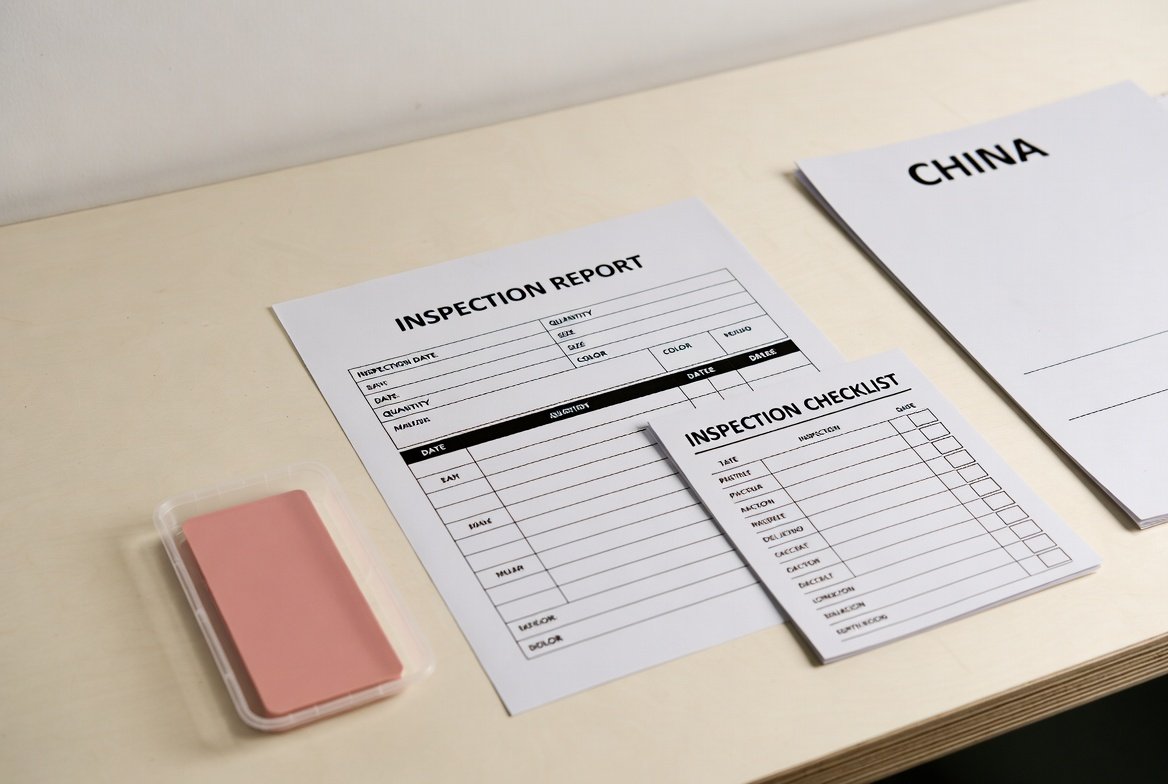
For most projects, I keep a simple “quality file” with:
product specification sheet (what the product must be)
inspection checklist (how we check it)
defect classification rules (what counts as critical/major/minor)
inspection reports (what we found)
corrective action records (what changed after a fail)
This structure keeps the project from turning into scattered screenshots and chat logs.
Inspection reports that are actually useful
A good report is not just a pass/fail stamp. I include:
sample size, method, and acceptance criteria
photos of defects with clear labels
measurements with units and tolerance references
function test outcomes and failure rates
packaging checks, carton marks, and label photos
When a buyer needs to explain a delay to their own customer, these details matter.
Corrective actions and follow-up
When defects are found, I document:
the defect description and frequency
suspected cause and where it happened
the factory’s proposed fix
proof that the fix was applied (rework logs, re-inspection results)
If the factory only promises “we will be careful next time,” I treat that as no fix. A fix should change a step, a tool, a check, or a material.
Traceability for repeat orders
For repeat projects, I keep references that help consistency:
golden sample photos and notes
approved packaging samples
supplier change history (new line, new material, new operator training)
defect trend tracking across shipments
This helps reduce “same product, different outcome” problems. It also helps when a buyer changes suppliers or adds a backup factory.
Why documentation is part of risk management
Quality validation is not only about catching defects. It is also about protecting the buyer when there is a dispute. Clear records make it easier to negotiate rework, claim credits, or stop shipment before payment is released.
Final Thoughts
Quality is not one inspection. It is a chain of clear standards, early checks, and proof. If you share your product type and target market, I can outline a practical QA plan you can use with any supplier.
Footnote
Pre Shipment Inspection in China - PSI Services - JS Sourcing
Pre-Shipment Inspection in China | What Importers Must Know - Silq
Pre-Shipment Inspection (PSI) Services in China - Jonble Company
Pre-Shipment Inspection Suppliers in China: Guide for B2B Buyers
JingSourcing vs China Inspection Companies | Service & Cost
China Pre Shipment Inspection Service - IMEX Sourcing Services