How do I calculate the true landed cost of a China order under the 2026 tariff stack?
Featured answer: Landed cost equals EXW price plus freight plus duty (MFN, Section 301, and the 12.5% forced-labor tariff) plus handling fees; model it as a stack, never a single rate.
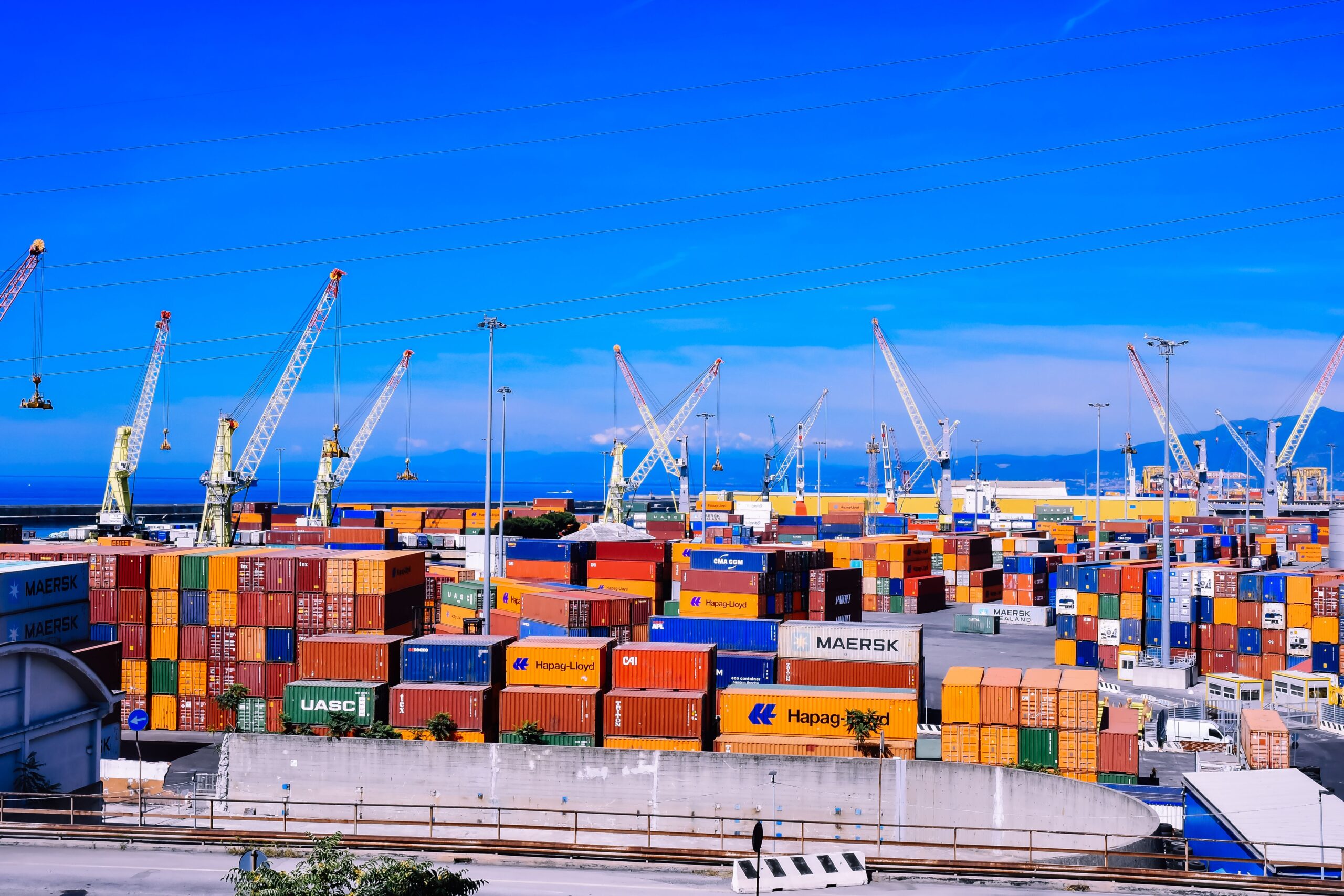
Landed cost equals EXW price plus freight plus duty (MFN, Section 301, and the 12.5% forced-labor tariff) plus handling fees; model it as a stack, never a single rate.
Most buyers who get a China quote wrong do not fail on the price. They fail because they treated the duty line as one number. In 2026 that number is not one number. It is a stack of independent layers, each with its own legal basis, its own rate, and its own exceptions, and layers can change in a single quarter. If you model the stack correctly, your margin survives policy shocks. If you model a single rate, every tariff headline becomes an emergency. Here is the stack, and the arithmetic that goes with it.
What counts as the "base" before any duty applies?
Why EXW is the only clean starting point
Start from EXW, the ex-works factory price, because that is where your costs and the supplier's costs cleanly separate. Quotes on FOB or CIF terms already bundle inland trucking and export fees into the price, which makes it harder to see what the supplier actually earns and easier for padding to hide. From EXW, add the real transport legs: inland haulage to port, export clearance on the China side, then international freight, where ocean and air follow different economics and air charges on volume weight can exceed the goods value for bulky light items. Insurance is optional but cheap; self-insuring a USD 30,000 container to save USD 60 is not a strategy. Only after goods value and movement costs are stacked do duties enter, and duties always apply to the customs value, which follows its own rules and is not simply your EXW figure.
The China-side costs most buyers forget
Between EXW and the vessel, there are at least four cost buckets that do not appear on a Western importer's standard template. Inland haulage from factory to port varies by distance: a shipment from Dongguan to Shenzhen Yantian might cost CNY 800 to 1,500, while the same truck from Wenzhou to Ningbo can run CNY 2,500 because the route is longer and less competitive. Export clearance includes the customs declaration fee, the CIQ inspection fee if your product falls under a regulated category, and the occasional terminal handling charge that the forwarder passes through. If your supplier handles these, they are buried in the FOB markup; if you handle them, you need the invoice. The VAT rebate is the mirror side: many products still qualify for a refund of the 13% value-added tax paid upstream, and the supplier's quoted EXW may already assume that rebate. If you negotiate from a post-rebate number while your competitor negotiates from pre-rebate, you are starting from different floors.
How customs value is really determined
Customs value in the United States is based on transaction value, which sounds simple but has enough edge cases to fill a manual. Related-party transactions trigger a transfer-pricing review if the price looks out of line with identical goods sold to unrelated buyers. Royalties and license fees paid to the supplier or a third party often have to be added to the customs value if they are a condition of sale. Assist value, the cost of tools, molds, or materials you provide to the supplier to make the product, can also be rolled in. Buyers who treat customs value as "whatever is on the commercial invoice" routinely under-declare by 5% to 15% without realizing it, and that under-declaration becomes a penalty if CBP audits the entry.
How do the 2026 duty layers actually stack?
The five layers you need to check
As of September 2026, a China-origin consumer product typically carries four possible layers, and you confirm each one for your specific HTS code.
| Layer | What it is | Typical range | Stacking rule |
|---|---|---|---|
| MFN base duty | The standard WTO rate for the product | 0% to ~20% by product | Always applies first |
| Section 301 (2018 actions) | China-specific tariffs on thousands of lines | 7.5% to 100% by product | Stacks on MFN |
| Section 301 forced-labor tier | New layer since Jul 24, 2026, replacing the expired Section 122 surcharge | 12.5% for China | Stacks on Section 301 |
| Section 232 | Steel, aluminum, copper, autos, semiconductors and derivatives | 10% to 50% | Stacks on MFN; forced-labor stacking is product-specific |
| AD/CVD orders | Antidumping and countervailing duties on specific products | Case by case | Stacks independently on top of all other layers |
Why the arithmetic is multiplicative, not additive
Two subtleties decide whether your arithmetic is right. The forced-labor tier and the legacy Section 301 stack fully, so a 25% line becomes 37.5%. But whether the forced-labor tier stacks on top of Section 232 duties is product-specific, and the sources disagree on the edge cases, so confirm that layer with your broker rather than assuming. Antidumping and countervailing orders sit outside all of this and stack again, and they are the layer that surprises people most, because they apply by product and country of production even when the rate looks reasonable on paper. A product that carries a 3% MFN rate, a 25% Section 301 rate, a 12.5% forced-labor rate, and a 15% AD order ends up with an effective duty burden of 61.9% on the customs value, not 55.5%. That 6.4 percentage point gap is the difference between a viable margin and a loss.
The timeline of recent changes
The stack has moved fast. The IEEPA tariffs announced in April 2025 were struck down by the courts in mid-2026, and refunds are being processed for entries made under those rates. The Section 122 surcharge expired on July 24, 2026, but the forced-labor tier appeared the same week. The semiconductor Section 301 action is scheduled to reach 50% in 2027 for advanced logic chips, with downstream effects on anything that contains them. Each shift created a window of uncertainty: brokers did not know which rate to apply, CBP systems lagged by days, and importers who had not modeled the stack as separate layers could not quickly recalculate. The buyers who kept each layer in its own spreadsheet cell updated the value in one place and reran the model in under a minute.
Where do buyers most often misclassify their goods?
Material versus function confusion
Classification is where the stack is won or lost, and the errors cluster into three patterns. The first is material-versus-function confusion: a kitchen timer made mostly of plastic and a kitchen timer made mostly of stainless steel can carry different lines, and buyers who classify by what the product does instead of how the tariff schedule splits materials leave money on the table in both directions. A plastic timer might enter under 3926.90 at 5.3% MFN, while a stainless steel timer enters under 9105.91 at 3.9% MFN but carries a 25% Section 301 rate because the clock category was targeted. The plastic timer pays more base duty but avoids the 301 layer; the steel timer pays less base duty but gets hit with the full stack. The right answer depends on your product mix and your expected volume, not on a single "correct" code.
Multi-material products and essential character
The second is multi-material products: an item that combines textiles, electronics, and plastic housing does not get an average; the schedule has rules for which component gives the product its essential character, and getting that judgment wrong is one of the most common audit findings. A fitness tracker with a textile band and a plastic case might be classified as a watch if the electronic module is the main value, or as a textile article if the band is considered the defining feature. CBP rulings on similar products can be your best defense, but only if you cite the correct ruling number and the product facts match closely enough.
Kit and set logic
The third is kit and set logic: bundling a product with accessories can move the whole bundle to a different line, sometimes better, sometimes dramatically worse. A flashlight sold alone carries one rate; the same flashlight in a retail blister pack with batteries and a lanyard might be classified as a set under General Rule of Interpretation 3(b), and the essential character test applies again. Some importers deliberately unbundle at origin to keep each component in its optimal line, then repackage in a US fulfillment center. That strategy adds labor and logistics cost, but for high-volume lines the duty savings can justify it.
The one-hour defense
The practical defense is unglamorous. Write down the candidate lines, note which component or criterion drives each candidate, and ask your broker to confirm in writing before the first entry. That one-hour exercise at the start of a product line protects every shipment that follows, and it gives you a written position to stand on if an officer later sees it differently. If you use a buying office, this is exactly the kind of pre-shipment work they should be doing before the first PO is cut.
Where do handling fees enter the stack?
Per-entry versus per-unit economics
After the goods land, three fees attach before the product reaches your warehouse. Entry and brokerage fees are charged per entry, which is why consolidated shipments spread them thinner. A single entry for a 40-foot container might cost USD 250 in brokerage; the same shipment split into ten separate entries because the supplier shipped partials without warning costs USD 2,500. This is one reason why experienced buyers negotiate shipment consolidation into the supplier agreement.
Merchandise processing fee and harbor maintenance fee
Merchandise processing fees follow the customs value under a formula with a cap: 0.3464% of the entered value, with a minimum of USD 27.75 and a maximum of USD 538.40 per entry as of 2026. The harbor maintenance fee adds another 0.125% on ocean shipments only. Neither is large on a per-shipment basis, but both are easy to forget in a quick mental model. Then come destination-side costs: port fees, drayage, and delivery, which vary more by US port than most buyers expect. Drayage from the Port of Los Angeles to a warehouse in City of Industry might cost USD 350; the same move from the Port of New York and New Jersey to a warehouse in New Jersey can be USD 500 because of bridge tolls and driver detention rules.
The hidden 3% to 8% wedge
None of these are duties, but all of them are landed cost, and together they often add 3% to 8% on small shipments. Buyers who model only duties and freight systematically underprice by exactly this wedge. For a USD 50,000 order, that is USD 1,500 to USD 4,000 of margin that never made it into the pricing model.
What does a worked example look like?
The baseline scenario
Take a USD 10,000 EXW order of a consumer product on a 25% legacy Section 301 line, ocean freight at USD 1,800, and entry plus handling at USD 450. The customs value lands near USD 11,800 after inland and export costs. MFN at 6% is USD 708. Legacy Section 301 at 25% is USD 2,950. The forced-labor tier at 12.5% is USD 1,475. Total duties: USD 5,133. Landed cost: about USD 17,383, which is 73.8% above the factory price.
Sensitivity to supplier concessions
Run that arithmetic before you negotiate, and you will notice something important: a supplier concession of 3% moves your landed cost by roughly USD 300, while a misclassified HTS code can move it by thousands. The stack rewards attention in a specific order: classification first, duty layers second, negotiation third. A buyer who spends an hour confirming the HTS code before the first quote request saves more money than a buyer who spends a week negotiating a 5% price reduction on the wrong code.
Stress-testing the model
A useful sensitivity pass takes ten extra minutes. Rerun the model with freight up 20%, with the certificate price of your category's test reports included, and with duty rates one tier higher. If the business survives all three scenarios, your price has room to breathe; if any of them sinks it, you have found the assumption your sourcing plan actually depends on. For example, if the forced-labor tier rises from 12.5% to 20% on your product line, the same USD 10,000 order sees duties jump from USD 5,133 to USD 5,900, and landed cost crosses USD 18,000. That is an 8.6% increase in total landed cost from a single policy layer shift. If your retail price is already tight, that shift erases your margin.
What does a realistic cost model look like in a spreadsheet?

The eight-column discipline
Keep it to one row per product and eight columns, and resist the temptation to build a monster. Factory price in RMB and in USD. Inland and export charges. Freight by mode, with the chargeable weight formula written out, because air moves on volume weight and the formula is where surprises live. Insurance. Customs value basis. Each duty layer on its own line, with the HTS code and the source of the rate noted beside it, so a colleague can re-check it without calling you. Handling and delivery. And a dated note of which policy assumption the model used, because in 2026 the layer values have a version history.
Volume weight: the air freight trap
The chargeable weight formula for air freight is critical: volume weight equals length times width times height in centimeters, divided by 5,000. A carton that measures 60 by 40 by 30 centimeters has a volume weight of 14.4 kilograms. If the actual gross weight is 8 kilograms, the airline charges for 14.4. For light, bulky products like home decor, seasonal decorations, or soft goods, the volume weight multiplier can push air freight cost above the product value. Ocean freight uses the same concept but divides by 1,000 for cubic meters, which is why ocean is almost always cheaper for non-urgent shipments.
Why every assumption needs a date
The discipline that makes the sheet valuable is not complexity; it is that every number has a source and every assumption has a date. When the forced-labor tier replaced the Section 122 surcharge in July 2026, buyers who had dated their duty cells knew exactly which shipments were affected and which were already in transit under the old rate. Buyers who had a single "duty" cell spent a week reconstructing their exposure.
Which mistakes actually burn importers on this stack?
Single-rate thinking
The first killer is single-rate thinking, where a buyer anchors on one headline percentage and ignores that layers multiply on the customs value, not the factory price. A common version of this mistake is asking the supplier for a "delivered price to Los Angeles" and treating that number as comparable across quotes. Unless every supplier is using the same freight forwarder, the same HTS code, and the same insurance terms, those delivered prices are not comparable. They are bundles of different assumptions wearing the same label.
Category blindness
The second is category blindness: the semiconductor 301 action, scheduled to reach 50% in 2027, and the 232 metals and auto lines mean two nearly identical products can carry wildly different stacks based on one HTS digit. A stainless steel water bottle and an aluminum water bottle look the same to a consumer, but the steel bottle may carry a 25% Section 301 rate plus a 25% Section 232 rate, while the aluminum bottle carries only the 301 rate. That one-digit difference in the HTS code changes the landed cost by thousands of dollars per container.
Treating policy as permanent or temporary
The third is treating policy as permanent or as temporary. The record so far argues for permanence: the IEEPA tariffs were struck down and refunded, the Section 122 surcharge expired on schedule, and both times a replacement layer appeared within a day. Duties paid under the struck-down IEEPA rules are being refunded, which is real money, but only if your entries were clean enough to claim it. That is the quiet argument for doing this properly: the buyers who modeled the stack, classified honestly, and kept clean entries are the ones who can actually collect a refund when policy shifts.
The compliance bonus nobody talks about
There is a less obvious benefit to clean entries. CBP's Importer Compliance Assessment program rates importers on entry accuracy, and a high error rate triggers targeted audits. Audits are expensive even when you win: they consume staff time, delay shipments, and create reputational risk with your broker and forwarder. The buyers who treat classification and valuation as core competencies, not afterthoughts, stay off that list. In a world where the stack changes quarterly, that discipline is a competitive advantage.
Conclusion
Landed cost in 2026 is a stack, and the stack is knowable. Fix your base at EXW, add the transport legs, then climb the duty layers one at a time with your broker confirming each. Build the model once in a spreadsheet, update the layer values as policy moves, and every future quote becomes an update instead of a crisis. For the downstream half of this arithmetic, see our guide to customs clearance and import duties and our walkthrough of landed cost into US warehouses. If you would rather have that model built and maintained for you, that is precisely the kind of work a buying office does between shipments.
Related reading: How do I verify a Chinese supplier is a real factory, not a middleman? | What should I assume about Section 301 tariffs when pricing a China order?
Last updated: September 2026. Duty rates and policy layers change frequently; confirm current values with your customs broker before finalizing any quote.
Footnotes
- USTR — Section 301 actions and tariff notices: batch rates, exclusions, and the four-year review.
- Federal Register — Section 301 notices, including the July 24, 2026 forced-labor tier that replaced the Section 122 surcharge.
- Federal Register — Section 232 proclamations: steel, aluminum, copper, autos, and semiconductors.
- USITC — Harmonized Tariff Schedule lookup: confirm your specific 10-digit line and base MFN rate.
- CBP — CROSS binding ruling database: classification precedent you can cite to your broker.
- ITA — AD/CVD case database: active antidumping and countervailing orders by product and country.
- CBP — User fee schedule: current merchandise processing fee and harbor maintenance fee rates.