
Every week, our team fields calls from brand founders who tried going direct to Chinese factories for custom products — and hit a wall non-disclosure agreements 1. Wrong specs, surprise costs, radio silence mid-production. The frustration is real, and the financial risk is even worse.
Using a China sourcing agent for product customization gives you lower costs through expert negotiation, reliable quality control via on-site inspections, clear communication across language barriers, intellectual property protection, and faster time-to-market — all without the expense and complexity of managing overseas manufacturing yourself.
In this article, we break down exactly how a sourcing agent turns product customization from a risky gamble into a strategic advantage cultural nuances 2. Whether you are launching a private label line or refining a niche electronic gadget, the sections below cover protection, communication, quality, and pricing — the four pillars that matter most.
How can a sourcing agent help me protect my unique industrial designs during the customization process?
Our engineers spend months perfecting product designs for clients, and we have seen firsthand how quickly a unique concept can leak to copycats if proper safeguards are missing technical documents 3. industrial designs 4 Losing control of your design in China is not a hypothetical — it is the number one fear for founders entering customization.
A sourcing agent protects your industrial designs by enforcing non-disclosure agreements with factories, conducting supplier background checks, splitting production across multiple vendors, and overseeing the entire process on-site to ensure your proprietary information never leaves authorized hands.
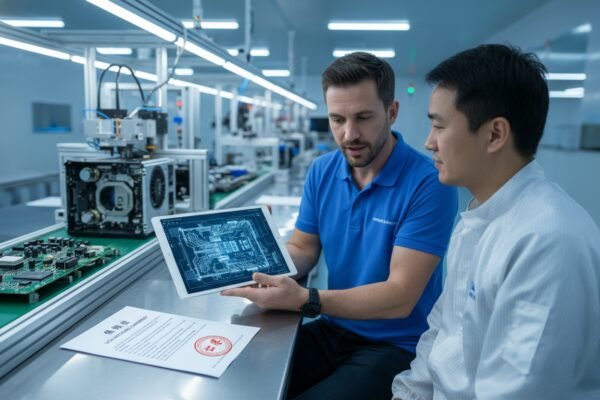
Why IP Leaks Happen in China
Most IP problems do not come from malice. They come from loose processes. A factory worker shares a CAD file with a friend at another plant AQL sampling methods 5. A sales rep shows your sample to another buyer to win more orders. Without someone on the ground enforcing rules, these leaks happen quietly and quickly private label products 6.
A professional sourcing agent acts as your gatekeeper. At our office in Shenzhen, we require every factory partner to sign a bilingual NDA before any design file is shared. We also register key design elements with the China National Intellectual Property Administration 7 when needed. This is not optional — it is step one.
Practical Steps an Agent Takes
Here is a breakdown of the typical IP protection workflow a sourcing agent manages:
| Step | Action | Why It Matters |
|---|---|---|
| 1. NDA Execution | Bilingual NDA signed before any specs are shared | Creates legal enforceability in Chinese courts |
| 2. Supplier Vetting | Background check on factory ownership, history, and existing clients | Identifies factories that serve your competitors |
| 3. Design Segmentation | Split molds, PCBs, or key components across 2–3 suppliers | No single factory holds the complete product blueprint |
| 4. On-Site Monitoring | Agent staff present during sampling and pilot runs | Prevents unauthorized copying or photography of designs |
| 5. Mold Ownership Agreement 8 | Written contract stating you own all tooling and molds | Stops factories from reusing your mold after the order ends |
The Role of Mold and Tooling Ownership
One detail many first-time importers overlook is mold ownership. If you pay for a custom injection mold but the contract does not explicitly state you own it, the factory may legally use it to produce goods for other buyers. We always draft a separate mold ownership clause in Mandarin and English. This small step saves enormous headaches later.
What Happens Without an Agent
Without a sourcing partner, you are relying on a factory's goodwill. Some factories are trustworthy. Many are not equipped to handle Western-level IP expectations. An agent fills that gap — not by being suspicious of every supplier, but by creating systems that remove temptation and ambiguity.
We once helped a U.S.-based beauty equipment brand discover that their previous factory had been selling a nearly identical device under a different label on Alibaba. Our team caught it during a routine factory audit. That is the kind of oversight that protects your investment.
Will an agent help me bridge the communication gap when I request complex technical features?
When we coordinate production for clients in the U.S. and Europe, the trickiest part is rarely the manufacturing itself — it is making sure the factory understands exactly what the client wants. A single mistranslated spec can ruin an entire batch.
Yes, a sourcing agent bridges the communication gap by translating technical documents, interpreting cultural nuances, managing time-zone differences, and ensuring your complex feature requirements are clearly understood and confirmed by the factory before production begins.

Language Is Only Part of the Problem
Most people assume the communication barrier is just about Mandarin versus English. It goes deeper. Chinese factory managers often say "yes" to avoid confrontation, even when they do not fully understand a request. This cultural habit leads to assumptions on both sides — and assumptions lead to defective products.
A good sourcing agent does not just translate words. They translate intent. When a client says "I need a matte finish with a soft-touch coating," our team explains the exact texture, references a physical sample, and confirms the factory's material supplier can deliver that specific coating. We follow up with photos and test pieces before mass production starts.
Real Scenarios Where Communication Fails
Here are common communication breakdowns we have resolved for clients:
| Scenario | What the Client Said | What the Factory Understood | Agent's Fix |
|---|---|---|---|
| Color Matching | "Match Pantone 2935 C" | "Use a blue that looks close" | Provided physical Pantone swatch and required color-match proof before production |
| Voltage Spec | "Must work on 110V U.S. outlets" | "Standard voltage is fine" | Confirmed with factory engineer that transformer and plug type both meet UL standards |
| Packaging Insert | "Include a QR code linking to our app" | "Print a QR code on the box" | Clarified QR must link to a specific URL, tested scan before print approval |
| Material Grade | "Use food-grade silicone" | "Use standard silicone" | Requested FDA-compliant material certificate from raw material supplier |
How Time Zones and Holidays Create Gaps
China operates on a single time zone (GMT+8), and factories observe holidays like Chinese New Year (often a 2–3 week shutdown), Mid-Autumn Festival, and National Day. If you are in New York, there is a 12–13 hour gap. Emails sent at 3 PM Eastern arrive at 3 AM in Shenzhen.
A sourcing agent manages this by working overlapping hours, sending consolidated updates, and pre-scheduling factory check-ins around holiday calendars. We maintain a shared project tracker that both the client and factory can access, so no one is left guessing.
Technical Document Translation
Complex features often require engineering drawings, bill-of-materials documents, or firmware specifications. Machine translation tools like Google Translate fail badly on technical jargon. Our bilingual engineers review every document, annotate unclear terms, and hold video calls with factory engineers to walk through each specification line by line. This process adds a day or two upfront but saves weeks of rework later.
How does a sourcing partner ensure my custom quality standards are met to prevent defective shipments?
In our warehouse, we have inspected thousands of units before they ship to clients — and we still find issues that would have cost brands thousands in returns. Quality is not something you verify once. It is a system that runs from the first sample to the last carton.
A sourcing partner ensures your custom quality standards are met by establishing detailed inspection criteria, conducting pre-production, in-line, and pre-shipment inspections, performing factory audits, and using standardized AQL sampling methods to catch defects before goods leave China.
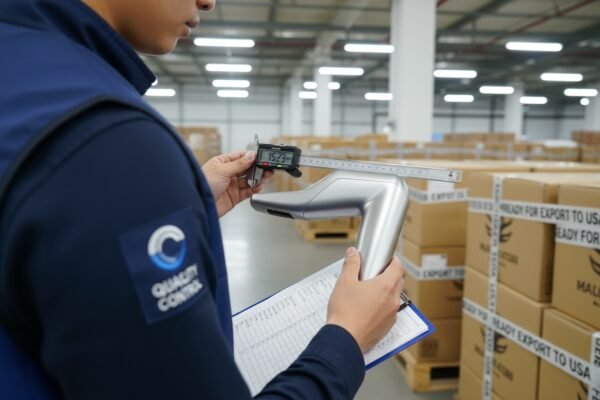
The Three-Stage Quality Control Process
Reliable quality control is not a single checkpoint. It is a three-stage process that catches problems at the earliest possible moment.
Stage 1: Pre-Production Inspection. Before mass production begins, the agent checks raw materials, components, and confirmed samples against your approved golden sample. This prevents the factory from substituting cheaper materials.
Stage 2: In-Line Inspection. During production — usually when 30–40% of units are complete — the agent visits the factory floor to test random units. This is where issues like misaligned parts, inconsistent colors, or firmware bugs get caught early enough to fix without scrapping the entire batch.
Stage 3: Pre-Shipment Inspection. After production, a final inspection uses AQL (Acceptable Quality Level) sampling. The industry standard for consumer products is AQL 2.5 for major defects and AQL 4.0 for minor defects. If the batch fails, the agent negotiates rework or replacement before shipment.
AQL Sampling Explained Simply
| Order Size (Units) | Sample Size (AQL General Level II) | Max Major Defects Allowed (AQL 2.5) | Max Minor Defects Allowed (AQL 4.0) |
|---|---|---|---|
| 150–280 | 32 | 2 | 3 |
| 281–500 | 50 | 3 | 5 |
| 501–1,200 | 80 | 5 | 7 |
| 1,201–3,200 | 125 | 7 | 10 |
| 3,201–10,000 | 200 | 10 | 14 |
This table gives you a practical reference. Your agent should share the exact AQL level used and the inspection report with photos and data for every shipment.
Factory Audits and Supplier Vetting
Before we onboard any factory for a client's custom order, we conduct a thorough facility audit. This covers production capacity, equipment condition, worker training, existing certifications (ISO 9001 9, BSCI, etc.), and past order history. We also check for red flags like excessive subcontracting — where a factory outsources parts of your order to unvetted third parties without telling you.
What Happens When Defects Are Found
Defects are inevitable in manufacturing. What matters is how they are handled. A sourcing agent acts as your advocate. When our QC team finds defects above the agreed threshold, we issue a formal rejection report to the factory and negotiate one of three outcomes: full rework of defective units, a replacement batch at the factory's cost, or a price reduction proportional to the defect rate. The client never has to accept a substandard shipment.
The Cost of Skipping QC
Some buyers skip professional inspection to save a few hundred dollars. The math never works out. A single defective shipment of 1,000 consumer electronics units could cost $15,000–$30,000 in returns, refunds, and lost customer trust. Spending $300–$500 on a pre-shipment inspection is not an expense — it is insurance.
Can a professional agent help me negotiate better pricing for my customized private label products?
Our procurement team negotiates with Chinese factories every single day, and we consistently see a pattern: buyers who go direct pay 10–30% more than they need to. Factories price based on who they are dealing with, and an experienced local agent changes that dynamic completely.
Yes, a professional agent leverages deep supplier networks, local market knowledge, bulk purchasing strategies, and competitive bidding among multiple factories to negotiate significantly lower prices for your customized private label products than you could typically achieve on your own.
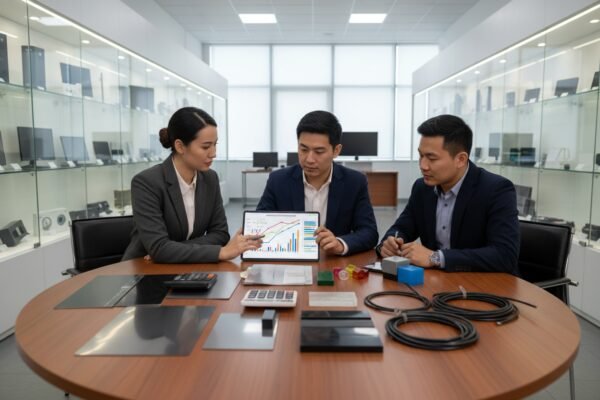
Why Factories Quote Higher Prices to Foreign Buyers
Chinese manufacturers routinely add a markup of 15–30% when they detect a buyer is overseas and unfamiliar with local pricing. This is not necessarily dishonest — it accounts for the perceived extra communication effort, potential payment risks, and the assumption that foreign buyers have higher budgets. A sourcing agent removes this premium instantly because the factory sees a local business partner, not a distant foreign buyer.
The Currency and Supply Chain Advantage
One advantage many buyers overlook is the exchange rate. China's macroeconomic policies have kept the RMB at a level that benefits international purchasers. More importantly, China's supply chain 10 is arguably the most complete in the world. There are virtually no broken links or missing components. Almost any part, raw material, or sub-assembly can be sourced domestically. This eliminates the import costs that factories in other countries face when they need specialized components from abroad. The result is a compounding cost advantage that flows directly to your product's price.
How an Agent Structures a Negotiation
A professional sourcing agent does not just ask for a lower price. They build a negotiation strategy:
- Competitive Bidding. The agent sends your specs to 3–5 qualified factories and compares quotes side by side.
- Cost Breakdown Analysis. The agent requests an itemized cost breakdown (materials, labor, overhead, profit margin) from each factory to identify inflated line items.
- MOQ Optimization. By understanding production economics, the agent negotiates minimum order quantities that hit price-break thresholds without over-committing your capital.
- Long-Term Commitment Leverage. Factories offer better prices to buyers who signal ongoing orders. Your agent frames the relationship as a long-term partnership, not a one-time purchase.
- Payment Term Negotiation. Standard terms are 30% deposit, 70% before shipment. Agents often negotiate 30/70 with a quality-hold clause, protecting your cash flow.
Pricing Comparison: Direct vs. Agent-Assisted
| Cost Factor | Direct Buyer (Typical) | Agent-Assisted Buyer |
|---|---|---|
| Factory Unit Price | Higher (foreign buyer markup) | Lower (local partner pricing) |
| Sample Costs | Often non-refundable | Frequently negotiated as refundable against first order |
| Shipping Quotes | Standard rates | Bulk-negotiated freight rates from agent's logistics partners |
| Tooling/Mold Fees | Full price upfront | Amortized across order volume or partially subsidized |
| Payment Protection | Wire transfer, limited recourse | Escrow options, quality-hold clauses |
| Hidden Fees | Surprise charges for packaging, labeling, certificates | All costs itemized and agreed upfront |
Reduced R&D Investment Through Smart Customization
One of the biggest cost advantages of working with a China sourcing agent is that you do not need to design a product from scratch. Many factories already have mature product platforms — tested electronics, proven mold designs, established firmware. Your agent helps you customize these existing platforms with your branding, specific features, or material upgrades. This approach slashes R&D costs by 40–70% compared to ground-up development while still giving you a differentiated product.
The Risks of Chasing the Lowest Price
A word of caution: the cheapest quote is not always the best deal. We have seen buyers switch to rock-bottom factories only to face quality disasters, missed deadlines, and ultimately higher total costs. A good agent balances price with factory reliability. They know which suppliers deliver consistently and which ones cut corners when margins get tight. This judgment comes from years of local experience — something no amount of Alibaba browsing can replace.
Conclusion
Product customization through a China sourcing agent gives you real, measurable advantages in design protection, communication clarity, quality assurance, and pricing. The right partner turns complexity into competitive edge.
Footnotes
1. Explains the purpose, types, and legal enforceability of NDAs. ↩︎
2. Explores the impact of cultural differences, particularly in China, on business communication. ↩︎
3. Provides a comprehensive overview of what technical documents are and their various types. ↩︎
4. Official WIPO page defining and explaining industrial design protection. ↩︎
5. Replaced HTTP 405 with an authoritative quality control and inspection company's guide to AQL. ↩︎
6. Defines private label products and outlines their advantages for retailers. ↩︎
7. Official website of China's primary intellectual property regulator. ↩︎
8. Discusses the critical importance of tooling and mold ownership agreements in international manufacturing. ↩︎
9. Official ISO page providing requirements and benefits of the quality management system standard. ↩︎
10. Provides an overview of China's supply chain ecosystem and its global significance. ↩︎