
Every week, our team in Shenzhen ships dozens of containers to clients worldwide, and the question we hear most often is about customs and duties customs brokers 1. New importers lose sleep over confusing tariff codes, unexpected fees, and shipments stuck at port. It feels overwhelming—because it is, until you understand how the process actually works.
When you use a China sourcing agent, they coordinate the entire import process by preparing shipping documents, classifying your products with correct HS codes, partnering with customs brokers and freight forwarders, and often handling duties and taxes under DDP terms so your goods arrive without you dealing directly with customs authorities.
In this guide, we break down exactly how customs clearance and import duties work when you partner with a sourcing agent. We cover duty calculations, documentation, delay prevention, and legal ways to reduce costs. Let's get into it.
How do I calculate the total import duties and taxes for my specific products?
When we prepare export documents for our clients' orders, duty calculations come up every single time. Getting this wrong means surprise costs that eat into your margins—or worse, fines from customs authorities.
To calculate total import duties and taxes, identify your product's HS code, determine the CIF (Cost, Insurance, Freight) value, apply the duty rate for that HS code in your country, then add VAT or sales tax on top of the combined CIF value plus duty amount.

What Is an HS Code and Why Does It Matter?
The Harmonized System (HS) code is a 6-to-10 digit number that classifies every traded product globally. Your country's customs authority uses this code to determine the exact duty rate. Get the HS code wrong, and you could pay 20–50% more or less than you should. Underpaying triggers penalties. Overpaying wastes money.
Our team cross-checks HS codes 2 before every shipment leaves China. We have seen clients get hit with fines because a previous supplier classified a "smart home hub" under generic electronics instead of wireless communication devices. The duty rate difference was 8%.
The Landed Cost Formula
Here is a simplified formula most importers use:
Landed Cost = Product Cost + Freight + Insurance + Import Duty + VAT/Sales Tax + Customs Broker Fee + Local Delivery + 10% Contingency Buffer
The "dutiable value" typically includes your product cost, freight, insurance, commissions (except buying commissions), packing costs, and any materials you supplied to the manufacturer.
Sample Duty Calculation
Let's say you import $10,000 worth of consumer electronics from China to the United States.
| Cost Component | Amount (USD) |
|---|---|
| Product Cost (FOB) | $10,000 |
| Ocean Freight | $1,200 |
| Insurance | $100 |
| CIF Value (Dutiable Value) | $11,300 |
| Import Duty (e.g., 3.9% for HS 8517) | $440.70 |
| Merchandise Processing Fee (0.3464%) | $39.12 |
| Harbor Maintenance Fee (0.125%) | $14.13 |
| Total Duties & Fees | $493.95 |
| Customs Broker Fee | $150 |
| Local Delivery | $300 |
| Total Landed Cost | $12,243.95 |
This does not include any additional tariffs such as Section 301 duties 3, which can add 7.5% to 25% on many Chinese goods as of 2025. Your sourcing agent or customs broker should flag these before you place your order.
Country-Specific Differences
Duty structures vary by destination. UK importers need an EORI number 4 and pay VAT at 20% on the CIF value 5 plus duty. EU importers face similar VAT structures. Australian importers pay GST at 10%. Always confirm the specific rates for your country before committing to a purchase.
Will my sourcing agent manage the entire customs clearance and documentation process for me?
From our experience shipping thousands of orders, about 80–90% of customs delays trace back to document errors. Missing a single certificate can hold your container at port for weeks, costing you storage fees and lost sales.
Most sourcing agents manage document preparation and coordinate with freight forwarders and customs brokers on your behalf. Under DDP (Delivered Duty Paid) terms, the agent handles everything from export clearance in China to import clearance at your destination, including duty payment and final delivery.

The Six Steps of Customs Clearance
Here is what happens when your container arrives at the destination port:
- Arrival Notice – The shipping line notifies the consignee or their broker that the cargo has arrived.
- Document Submission – Your customs broker files the entry with customs, submitting the commercial invoice, packing list, bill of lading 6, and any required certificates.
- Duty Assessment – Customs reviews the documents, verifies the HS codes, and calculates duties owed.
- Inspection (if selected) – Some shipments are flagged for physical or X-ray inspection. This is random or risk-based.
- Duty Payment – Duties and taxes are paid. The broker usually advances this on your behalf.
- Cargo Release – Customs releases the goods. They move to your warehouse or Amazon FBA center.
What Documents Does Your Agent Prepare?
| Document | Purpose | Who Prepares It |
|---|---|---|
| Commercial Invoice | States product value, quantity, terms | Sourcing agent / Supplier |
| Packing List | Details carton count, weight, dimensions | Sourcing agent / Supplier |
| Bill of Lading (B/L) | Proof of shipment contract | Freight forwarder |
| Certificate of Origin 7 | Proves manufacturing country | Sourcing agent arranges |
| HS Code Classification | Determines duty rate | Sourcing agent / Broker |
| Export License (if needed) | Required for restricted goods | Sourcing agent in China |
| FDA/EPA/USDA Certificates | Required for regulated products in U.S. | Agent coordinates with labs |
| Fumigation Certificate | Required for wood packaging | Agent arranges in China |
DDP vs. FOB: Who Handles What?
For new buyers, we almost always recommend DDP shipping. It lets you focus on marketing and selling while the agent and freight forwarder handle all customs and duties. You pay one price. The goods show up at your door.
Under FOB (Free On Board) 8, the supplier handles China export clearance, but you are responsible for freight, import customs, duties, and delivery. You need your own customs broker.
Here is the honest trade-off. DDP is simpler but sometimes more expensive because the agent builds in a margin on duties and freight. FOB gives you more control and cost transparency, but you need to manage the import side yourself or hire a broker directly.
Some experienced importers argue that agents overpromise on DDP and hide volatile duty costs in inflated quotes. That is a fair criticism. The solution is to ask your agent for a cost breakdown showing freight, duties, and their service fee as separate line items. A good agent will provide this transparency.
What About Self-Filing?
Some importers ask if they can skip the broker and file customs entries themselves. Technically, yes. The U.S. allows self-filing through ACE (Automated Commercial Environment), and UK importers can use the HMRC portal. But for shipments above a few hundred dollars, this is risky. One mistake in HS classification or valuation can trigger audits, penalties, or seizures. We strongly recommend using a licensed customs broker, especially for your first few shipments.
How can I prevent my shipment from getting stuck or delayed during the import process?
We have seen a single missing fumigation certificate hold a 40-foot container at port for 12 days. The storage fees alone cost the client over $1,500. Delays like this are preventable—if you plan ahead.
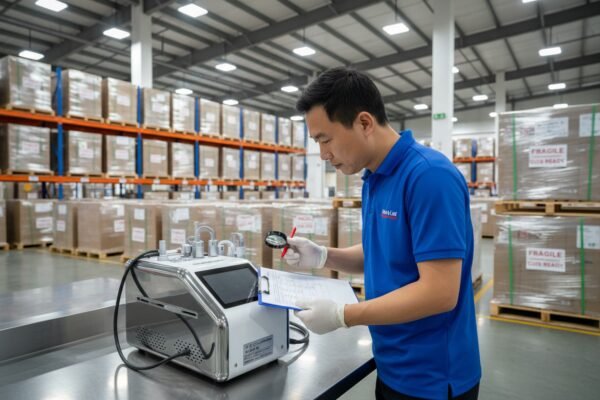
To prevent customs delays, ensure all documents are accurate and complete before shipment, verify HS codes with your broker in advance, confirm product compliance with destination country regulations (FDA, EPA, CE), and choose a sourcing agent with a proven track record of smooth clearances.
The Most Common Causes of Delays
Based on what we see regularly, here are the top reasons shipments get stuck:
- Incorrect or missing documents. A packing list that does not match the commercial invoice triggers an immediate review.
- Wrong HS code classification. Customs flags shipments where the declared code does not match the actual product.
- Undervaluation. Declaring a lower value to reduce duties is illegal. Customs agencies use databases to spot suspiciously low prices. Penalties include fines up to the shipment value and potential seizure.
- Missing compliance certificates. Products entering the U.S. may need FDA clearance (food, cosmetics, medical devices), EPA approval (certain electronics, chemicals), or USDA certification (wood, agricultural products).
- Wood packaging without fumigation. ISPM-15 regulations 10 require all solid wood packaging to be heat-treated or fumigated. A missing stamp can halt your entire shipment.
A Pre-Shipment Checklist
Before any container leaves our warehouse, we run through this checklist with our clients:
- Commercial invoice matches the purchase order exactly.
- Packing list matches carton counts, weights, and dimensions.
- HS codes are verified with the destination country broker.
- All required certificates are in hand (not "in progress").
- Product labels meet destination country requirements.
- Wood packaging has ISPM-15 stamps.
- The bill of lading has correct consignee details.
- Any special import permits are secured before shipping.
What Happens If Something Goes Wrong?
If your shipment gets flagged, your customs broker files a response with supporting documents. This can take days or weeks. In the worst case—like undervaluation or counterfeit goods—customs can seize and destroy the shipment.
A good sourcing agent acts as your first line of defense. They verify documents, check compliance, and catch errors before the goods leave China. This is far cheaper than fixing problems at the destination port.
We always build in a 10% contingency buffer in our cost estimates for clients. Unexpected inspection fees, storage charges, or document correction costs happen. Planning for them keeps you from scrambling.
The Role of Pre-Shipment Inspection
Quality issues can also cause customs rejections. If your product fails a safety test at port, it gets sent back or destroyed. Pre-shipment inspection in China—checking product quality, labeling, and packaging before the container is sealed—eliminates this risk at the source. Our QC team inspects every order using AQL sampling standards before shipping.
Can a sourcing agent help me find ways to legally minimize my customs and duty expenses?
When we quote landed costs for our clients, one of the first things we do is look for legal ways to bring that number down. Even a 2–3% reduction in duties on a $50,000 order saves $1,000–$1,500. Over a year of repeat orders, that adds up fast.
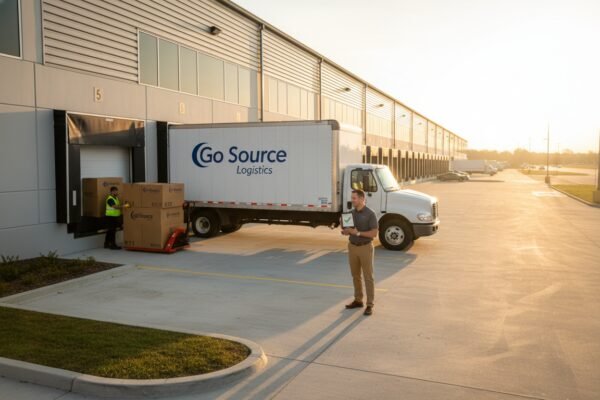
Yes, a skilled sourcing agent can legally reduce your customs and duty expenses by ensuring accurate HS code classification, using certificates of origin for preferential tariff rates, optimizing declared values to exclude non-dutiable charges, and advising on Incoterm structures that minimize your tax exposure.
Accurate HS Code Classification
This is the single biggest opportunity. Many products can be legitimately classified under more than one HS code. A power bank, for example, might fall under "lithium-ion batteries" or "portable electronic accessories" depending on its primary function. The duty rates for these two codes can differ by 5–10%. A knowledgeable sourcing agent works with your customs broker to find the most accurate—and most favorable—classification.
This is not about gaming the system. It is about making sure you are not overpaying because of a lazy or incorrect classification.
Certificates of Origin and Trade Agreements
Some destination countries offer preferential duty rates for products that meet certain origin criteria. While China does not benefit from many preferential agreements with the U.S. currently, other markets like Australia (ChAFTA), South Korea, and ASEAN countries do have free trade agreements with China that can significantly reduce duties.
A good sourcing agent knows which agreements apply and arranges the correct Certificate of Origin to qualify for reduced rates.
Structuring Your Invoice Correctly
Certain costs are legally excludable from the dutiable value. For example:
| Includable in Dutiable Value | Excludable from Dutiable Value |
|---|---|
| Product cost | Buying agent commissions |
| Selling commissions | Post-import freight (from port to warehouse) |
| Packing and container costs | Import duties and taxes themselves |
| Freight to port (CIF basis) | Construction/installation costs |
| Buyer-supplied materials | International buying office costs |
Structuring your commercial invoice to properly separate these costs is legal and can reduce your duty bill. Your sourcing agent and customs broker should work together on this.
DDP vs. FOB for Cost Optimization
As mentioned earlier, DDP is simpler but sometimes hides inflated costs. If you are shipping regularly and your volumes justify it, switching to FOB with your own customs broker can save money. You see every cost line item and negotiate each one independently.
For newer importers doing fewer than 5 shipments per year, DDP usually makes more sense. The time you save is worth the small premium.
Watch for Tariff Changes
Trade policy shifts constantly. The U.S.-China Section 301 tariffs have changed multiple times since 2018. In 2025, some product categories face 25% additional tariffs while others have exemptions. A proactive sourcing agent monitors these changes and alerts you before you place orders. We send tariff update summaries to our clients whenever significant changes are announced.
A Note on Undervaluation
We need to be direct about this. Some agents or suppliers offer to undervalue your invoice to reduce duties. This is illegal in every country. Customs authorities maintain price databases and use algorithms to flag suspicious values. If caught, you face fines, shipment seizure, and potential criminal charges. No legitimate sourcing agent will suggest this.
Conclusion
Customs clearance and import duties do not have to be a mystery. With the right sourcing agent handling documentation, HS codes, compliance, and logistics, you can focus on growing your business instead of fighting paperwork at the port.
Footnotes
1. Explains the role and responsibilities of customs brokers in international trade. ↩︎
2. Provides information on the international Harmonized System for product classification. ↩︎
3. Details the U.S. Section 301 tariffs on Chinese goods and their background. ↩︎
4. Explains the purpose and requirement of an EORI number for UK trade. ↩︎
5. Defines Cost, Insurance, and Freight (CIF) as an Incoterm in international shipping. ↩︎
6. Defines the Bill of Lading as a crucial legal document in shipping. ↩︎
7. Authoritative information on Certificates of Origin from the International Chamber of Commerce (ICC). ↩︎
8. Authoritative legal definition of Free On Board (FOB) from the Legal Information Institute (LII) at Cornell Law School. ↩︎
9. Describes the responsibilities under Delivered Duty Paid (DDP) Incoterms. ↩︎
10. Details the international standard for phytosanitary measures for wood packaging material. ↩︎