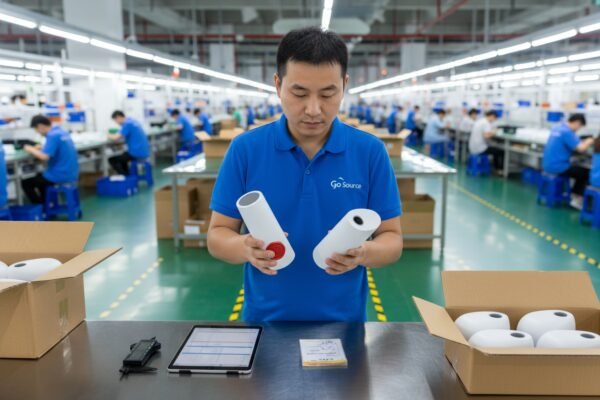
Every week on our sourcing team's group chat, the same nightmare pops up — a client receives 5,000 units that look nothing like the sample they approved three months ago.
China sourcing agents ensure mass production matches approved samples through a multi-stage quality control process that includes factory audits, pre-production sample verification, in-process inspections, raw material checks, and final pre-shipment inspections. Each stage uses the approved golden sample as the benchmark for comparison.
Below, I will walk you through the exact steps a reliable sourcing agent takes to protect your product quality — from preventing quality fade 1 to resolving discrepancies when things go wrong.
How can my sourcing agent prevent quality fade once mass production begins?
We see it all the time when managing production for our clients' consumer electronics orders — the first batch is perfect, and by the third batch, materials get thinner, finishes get rougher, and tolerances start slipping quality control process 2.
Your sourcing agent can prevent quality fade by locking down material specifications in contracts, conducting regular in-process inspections at multiple production stages, retaining a golden sample for ongoing comparison, and implementing batch-to-batch consistency checks throughout the entire production run.
What Is Quality Fade and Why Does It Happen?
Quality fade is the gradual, often deliberate, decline in product quality over successive production runs AQL standards 3. It does not happen overnight. Instead, the factory slowly substitutes cheaper materials, skips finishing steps, or loosens tolerances. They do this to increase their margins. You may not notice it in the second or third order. But by the fifth order, your product looks and feels different.
This is especially common when buyers stop visiting the factory or reduce inspection frequency. The factory interprets this as a signal that you are not watching closely.
The Golden Sample Is Your Best Weapon
Here is a personal insight I always share with clients: You must keep a golden sample. This is the gold standard for mass production. If you are working with a sourcing agent for the first time and you do not yet know their exact level of experience, ask them to send you the pre-production sample before approving mass production. Yes, international courier fees are expensive. But this step alone can save you from thousands of dollars in losses.
Your golden sample 4 should be stored in three places:
- One with you (the buyer)
- One with your sourcing agent
- One at the factory
Every inspection during mass production should reference this physical sample.
Key Strategies to Stop Quality Fade
| Strategy | What It Does | When to Apply |
|---|---|---|
| Material specification lock-in 5 | Lists exact material grades, thicknesses, and sources in the contract | Before production starts |
| In-process random inspections | Catches deviations while production is still running | During production (20%-80% completion) |
| Batch-to-batch comparison | Compares current batch against golden sample and previous batches | At every new production batch |
| Surprise factory visits | Prevents factories from relaxing standards when they think no one is watching | Randomly throughout the relationship |
| Penalty clauses in contracts | Creates financial consequences for quality deviations | Written into the initial agreement |
Don't Rely on Trust Alone
Many buyers make the mistake of trusting the factory after one good order. Trust is good. But verification is better. A strong sourcing agent builds systems that do not depend on trust. They depend on data, physical checks, and contractual accountability.
When we manage procurement projects at Go Source, we assign a dedicated QC coordinator to each order. This person tracks the production timeline, schedules inspections, and flags any deviation from the approved specifications. The factory knows someone is always watching.
What specific inspection steps will my agent take to verify the final goods match my golden sample?
In our experience coordinating shipments for U.S.-based electronics brands, the final inspection is where everything comes together — or falls apart.
A thorough sourcing agent will conduct a multi-point final inspection including visual comparison against the golden sample, dimensional measurement checks, functional testing, packaging verification, and random sampling based on AQL standards to confirm that mass-produced goods match the approved specifications before shipment.

The Multi-Stage Inspection Process
A good sourcing agent does not wait until the goods are packed and ready to ship. They inspect at multiple stages. Here is the full sequence:
Stage 1: Pre-Production Inspection. Before the factory starts cutting, molding, or assembling, your agent checks the raw materials. Pre-Production Inspection 6 Are the plastics the right grade? Is the PCB substrate correct? Do the components match the BOM (Bill of Materials 7)?
Stage 2: During-Production Inspection (DUPRO). When production reaches about 20% to 40% completion, your agent visits the factory floor. They pull units off the line and compare them to the golden sample. This is the most cost-effective inspection point because problems caught here can still be fixed without scrapping the entire batch.
Stage 3: Pre-Shipment Inspection (PSI). When at least 80% of the order is finished and packed, your agent conducts a comprehensive final check. This is the last line of defense.
What Happens During a Pre-Shipment Inspection?
| Check Type | Method | Pass/Fail Criteria |
|---|---|---|
| Visual appearance | Side-by-side comparison with golden sample | No visible color, texture, or finish deviation |
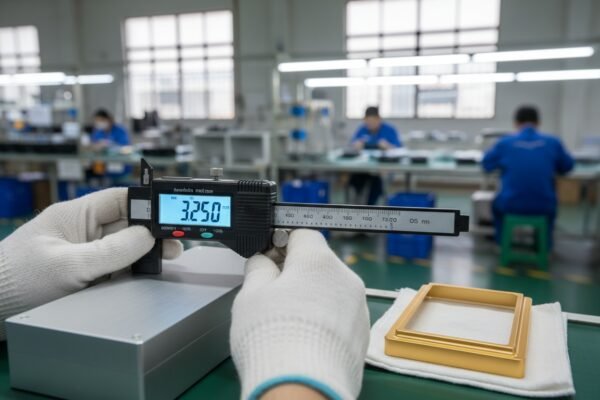
| Dimensional accuracy | Calipers, gauges, measuring tools | Within ±0.5mm or buyer-defined tolerance |
| Functional testing | Power on, operate all features, stress test | 100% of sampled units must function correctly |
| Labeling and markings | Visual check of logos, barcodes, compliance marks | Must match approved artwork exactly |
| Packaging integrity | Drop test, box crush test, inner packing check | No damage to product after standard handling simulation |
| Quantity verification | Count cartons and units per carton | Must match PO quantity ±0% |
AQL Sampling vs. 100% Inspection
Most agents use AQL (Acceptable Quality Level) sampling. This is a statistical method where you inspect a random sample from the total batch. For example, on an order of 5,000 units, your agent might inspect 200 randomly selected units.
However, some agents — like our team at Go Source — offer 1-by-1 inspections for high-value electronics. This means every single unit gets checked. It costs more time, but for products like beauty devices or smart home controllers where a single defective unit can trigger a product return or safety complaint, it is worth it.
The Human Factor Matters
Here is something most people overlook: the quality of the inspector matters as much as the inspection process. A paper-based QC officer who simply ticks boxes will miss things. An experienced, hands-on inspector — even someone described in the industry as "the old lady with calipers" — will catch defects that automated checklists miss. At Go Source, our inspectors physically handle and test each sampled unit rather than relying solely on visual spot checks.
How do I ensure my sourcing partner is conducting rigorous on-site checks at the factory?
When we first started working with overseas clients at Go Source, one question kept coming up: "How do I know you actually went to the factory?"
You can verify your sourcing partner's on-site rigor by requesting timestamped photo and video reports, demanding geotagged inspection evidence, asking for real-time communication during factory visits, reviewing detailed defect logs, and occasionally hiring an independent third-party to cross-check your agent's findings.

The Trust Problem in Remote Sourcing
If you are sitting in Texas or Munich, you have no way to physically see what happens inside a factory in Shenzhen or Dongguan. You are relying entirely on your agent's word. This creates a trust gap.
Some agents exploit this gap. They may send recycled photos, skip factory visits, or rush through inspections. This is not common among professional agents, but it does happen — especially with freelance or low-cost agents found on gig platforms.
How to Hold Your Agent Accountable
Here are specific actions you can take:
Request geotagged, timestamped evidence. Every inspection photo should include metadata showing the date, time, and GPS location. If your agent pushes back on this, that is a red flag.
Ask for video walkthroughs. A 5-minute video of the factory floor during your production run tells you more than 50 photos. You can see the working conditions, the number of workers on your line, and the general organization of the facility.
Schedule live video calls during inspections. Tools like WhatsApp or WeChat video allow you to join the inspection in real time. You can ask the inspector to zoom in on specific areas or test specific functions while you watch.
Review defect logs with specifics. A good inspection report does not just say "3 defects found." It says: "Unit #47 — scratched housing on left panel, 2mm x 5mm. Unit #112 — power button unresponsive after 10 presses. Unit #203 — label misaligned by 3mm." Specificity proves thoroughness.
When to Bring in a Third Party
| Scenario | Recommended Action |
|---|---|
| First order with a new agent | Hire an independent third-party inspector to cross-check |
| Order value exceeds $50,000 | Add a third-party pre-shipment inspection 8 |
| Agent refuses to provide geotagged evidence | Replace the agent immediately |
| Product has strict safety/compliance requirements | Use a CPSC-certified or CNAS-accredited lab |
| Previous order had quality issues | Double up with both agent QC and third-party QC |
The Hybrid Approach Works Best
In our experience, the most successful importers use a hybrid model. They rely on their sourcing agent for day-to-day production oversight and in-process inspections 9. Then they bring in an independent third-party for the final pre-shipment inspection.
This creates a system of checks and balances. The agent knows their work will be verified. The third-party provides an unbiased second opinion. And you, the buyer, get two layers of protection.
Some buyers worry this is overkill. It is not. The cost of a third-party inspection is typically $200-$400 per man-day. The cost of receiving 5,000 defective units is tens of thousands of dollars — plus the damage to your brand reputation.
Red Flags That Your Agent Is Cutting Corners
Watch for these warning signs:
- Inspection reports arrive suspiciously fast (same day the factory finishes packing)
- Photos are blurry or show only finished cartons, not open products
- The agent discourages you from hiring third-party inspectors
- Defect reports consistently show zero defects (no production run is perfect)
- The agent cannot answer specific technical questions about your product
What is the process for resolving discrepancies if my mass-produced electronics don't meet the approved specs?
Our team has managed hundreds of electronics orders over the years, and here is the uncomfortable truth — discrepancies happen even with the best QC systems in place.
When mass-produced electronics don't meet approved specs, your sourcing agent should immediately halt shipment, document all discrepancies with photographic evidence, negotiate rework or replacement with the factory, arrange re-inspection after corrections, and only release goods once they match the golden sample standards.

Step-by-Step Discrepancy Resolution Process
When your agent finds that goods do not match the approved sample, there is a clear process that should follow. Here is how it works in practice:
Step 1: Stop everything. A competent agent has the authority to halt production or hold shipment. This prevents defective goods from being loaded onto a container. At Go Source, our inspectors carry explicit stop-shipment authority. This is non-negotiable.
Step 2: Document thoroughly. Every discrepancy gets photographed, measured, and logged. The documentation includes the defect type, severity (critical, major, or minor), quantity affected, and comparison photos against the golden sample.
Step 3: Classify the defects. Not all defects are equal. A critical defect (safety hazard or complete malfunction) requires 100% rejection. A major defect (functional issue or significant cosmetic flaw) usually requires rework. A minor defect (small cosmetic imperfection) might be acceptable within AQL limits.
Defect Classification and Response Guide
| Defect Severity | Examples | Typical Response | Buyer's Decision Required? |
|---|---|---|---|
| Critical | Electrical short circuit, sharp edges, wrong voltage | 100% rejection, full rework or remake | Yes — buyer must approve next steps |
| Major | Button malfunction, color mismatch, missing component | Rework affected units, re-inspect full batch | Yes — buyer reviews rework plan |
| Minor | Light scratches on inner surface, slight label offset | Accept within AQL or request touch-up | Optional — agent can handle per pre-agreed tolerance |
Negotiating with the Factory
This is where your sourcing agent earns their fee. Negotiating rework or replacement with a Chinese factory requires cultural fluency, relationship leverage, and contractual backing.
Here is what a strong agent will do:
- Reference the original contract specifications and golden sample
- Present photographic evidence that is objective and undeniable
- Propose a specific corrective action plan with deadlines
- Negotiate who bears the cost (factory, buyer, or split)
- Set a re-inspection date and define pass criteria
In most cases, if the discrepancy is clearly the factory's fault and the contract is well-written, the factory will agree to rework at their own cost. If the specs were ambiguous or the buyer changed requirements mid-production, the cost may be shared.
What If the Factory Refuses to Fix the Problem?
This does happen. Some factories, especially near the end of a payment cycle, will rush goods out and resist rework requests. In this situation, your agent should:
- Withhold the remaining payment (typically 30% balance is held until after inspection)
- Escalate to factory management, not just the sales contact
- Threaten to file a formal complaint with the relevant industry association
- In extreme cases, engage a local attorney or mediation service
The best protection is prevention. A well-drafted purchase agreement with clear penalty clauses, defined tolerances, and payment milestones tied to inspection results gives your agent real leverage.
Preventing Future Discrepancies
After resolving the immediate issue, a good agent conducts a root cause analysis 10. Why did the discrepancy happen? Was it a material substitution? A machine calibration error? A miscommunication about specs? The answer shapes what changes are made for the next order.
At Go Source, we update the production control plan after every quality incident. We tighten specifications where needed, add extra inspection points, and sometimes recommend switching to a more capable factory if the current one repeatedly fails.
Conclusion
Quality control is not a single event. It is a system that runs from the first sample approval to the last carton loaded. Keep your golden sample, verify your agent's work, and never stop watching.
Footnotes
- Explains the deliberate and gradual reduction in product quality by suppliers. ↩︎
- Replaced HTTP 404 with an authoritative Wikipedia definition of quality control process. ↩︎
- Defines Acceptable Quality Level as a statistical sampling process for evaluating quality. ↩︎
- Describes the master reference model used as a benchmark for mass production. ↩︎
- Details the importance of precise material requirements in purchasing and contracts. ↩︎
- Replaced HTTP unknown with a working URL providing a clear definition of pre-production inspection. ↩︎
- Replaced HTTP 403 with an authoritative Wikipedia definition of Bill of Materials. ↩︎
- Describes the final quality check performed on completed goods before shipment. ↩︎
- Highlights quality control measures performed during manufacturing to catch early defects. ↩︎
- Defines the systematic process used to identify the underlying causes of problems. ↩︎