
Every year, we help dozens of US-based SMEs source electronics and electrical products from China A2LA-accredited testing labs 1. The scariest calls we get? They come from founders whose shipments got rejected at US customs because of invalid UL or FCC documentation 2—often traced back to an agent who didn't understand compliance.
To evaluate a China sourcing agent for US certifications like UL and FCC, verify their hands-on experience with accredited testing labs, ask for past certification case studies, review the documentation they provide, and test their technical knowledge with specific compliance questions before signing any agreement.
This guide breaks down exactly how to vet a sourcing agent's certification capabilities—step by step. Whether you're importing LED lights, power adapters, or Bluetooth devices, the stakes are too high to guess. Let's walk through what to look for, what to ask, and what red flags to avoid.
How can I verify if a sourcing agent truly understands the technical requirements for my UL and FCC certifications?
When we coordinate factory audits for clients needing UL-listed products, we see the same pattern over and over. Agents who lack real certification knowledge tend to say "no problem" to every technical question—and that should worry you.
You can verify a sourcing agent's technical understanding by asking them to explain the specific UL or FCC testing standards for your product category, name the accredited labs they work with, and walk you through a real certification timeline they managed from start to finish.

Start With Product-Specific Standards
UL and FCC are not one-size-fits-all certifications. UL covers product safety—think fire risk, electrical shock, and component integrity. FCC covers electromagnetic interference and radio frequency emissions. A competent agent should know which specific standard applies to your product.
For example, if you're sourcing a laptop charger, the relevant UL standard is UL 62368-1 3 (which replaced UL 60950-1). For a Bluetooth speaker, the FCC requires testing under Part 15 Subpart C 4 for intentional radiators. If your agent can't name these without Googling, that's a problem.
Ask About Testing Labs
Legitimate agents work with NVLAP-accredited or A2LA-accredited testing labs 5 in China. Labs like Intertek, TÜV, SGS, and Bureau Veritas have offices in Shenzhen, Guangzhou, and Shanghai. Some Chinese labs like BTL and CTTL are also recognized. Ask your agent which labs they've used. Then verify those labs on the UL or FCC database.
The Showroom Test
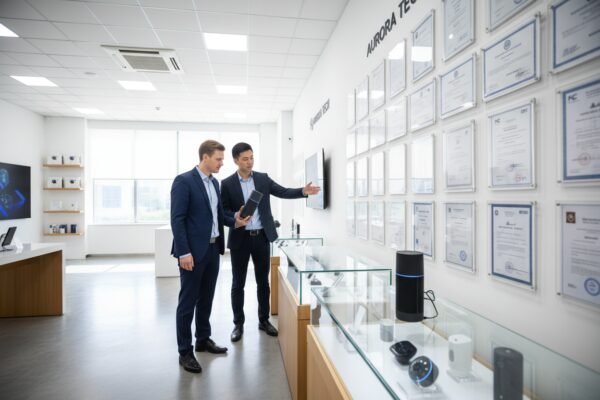
Here's something I learned from years of visiting factories in the Pearl River Delta. When you visit a factory, the staff will always guide you through their showroom. There's usually a wall displaying patents and certification documents. Most buyers glance at it and move on. Don't do that. Slow down. Read the certificate numbers. Check the expiration dates. Ask which products the certificates actually cover. A good agent will encourage this scrutiny. A bad one will rush you past it.
Timeline and Cost Awareness
A knowledgeable agent should be able to give you realistic estimates for certification timelines and costs.
| Certification | Typical Testing Timeline | Estimated Cost Range | Key Standard |
|---|---|---|---|
| UL (Safety) | 6–10 weeks | $8,000–$20,000 | UL 62368-1, UL 60335 |
| FCC (EMC) | 4–6 weeks | $3,000–$10,000 | 47 CFR Part 15 |
| FCC + UL Combined | 8–12 weeks | $12,000–$25,000 | Varies by product |
If an agent promises UL certification in two weeks for $2,000, walk away. That's not how it works.
What specific questions should I ask to test an agent's experience with US regulatory compliance?
In our work coordinating between US buyers and Chinese suppliers, we've found that the right questions can expose an inexperienced agent within minutes. The trick is to ask questions where vague answers reveal a lack of depth.
Ask your sourcing agent to describe a specific product they helped certify, the testing lab used, the standards tested against, how they handled a test failure, and whether they can provide references from US clients who successfully imported certified products.
The Five Critical Questions
Here are five questions that separate real experts from pretenders. Use them in your first call or meeting.
| Question | What a Good Answer Looks Like | Red Flag Answer |
|---|---|---|
| "Which UL standard applies to my product?" | Names the exact standard (e.g., UL 2054 for batteries) | "We can do UL, no problem" |
| "Which testing lab did you use for your last FCC project?" | Names a specific lab with location details | "We have many labs" |
| "What happens if a product fails the first test?" | Explains re-engineering, component swaps, and retest process | "It won't fail" |
| "Can you show me a sample FCC Grant of Equipment Authorization 6?" | Provides a real example with FCC ID | Avoids the question |
| "How do you verify component-level UL recognition?" | Explains UL's component recognition program (cULus) | Doesn't understand the question |
Go Beyond Surface-Level Answers
When an agent says they "handle certifications," dig deeper. Ask them to explain the difference between FCC Verification, FCC Supplier's Declaration of Conformity (SDoC), and FCC Certification 7. These are three different approval pathways under FCC Part 15, and each applies to different product types. An agent who doesn't know the difference will likely mishandle your filing.
Request Case Studies
Any agent with real experience can share at least one detailed case study. Ask for the product type, the certification obtained, the timeline, any issues encountered, and how they were resolved. If they can't share specifics—even anonymized ones—they probably haven't done it.
Check for Proactive Knowledge
The best agents don't just respond to your questions. They bring up issues you haven't thought of. For example, a great agent might ask you: "Are you planning to sell this in California? Because you may also need CEC Title 20 compliance for energy efficiency." Or: "Your product has a lithium battery—have you considered UN38.3 transportation testing?" This kind of proactive thinking is hard to fake.
Verify Through Third Parties
Ask the agent for references from US-based clients. Then actually call those clients. Ask them specifically about the certification process—not just general sourcing quality. You want to know if the agent managed the testing lab relationship, handled documentation correctly, and communicated issues promptly.
How does my sourcing agent ensure that the factory's production line consistently meets my certification standards?
Our team runs in-process inspections at factories across Guangdong almost every week. One thing we've learned is that getting a product certified is only half the battle. The real challenge is making sure the factory doesn't quietly swap cheaper components after certification is done.
Your sourcing agent should implement multi-phase quality control—including pre-production BOM verification, in-process inspections, and pre-shipment testing—to confirm that every production batch uses the same certified components and meets the same standards as the original test samples.
The Component Substitution Problem
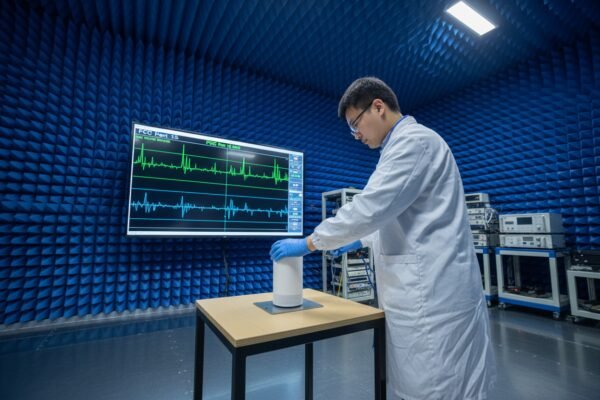
This is the number one risk in China manufacturing for certified products. A factory gets UL certification using high-quality capacitors from a recognized supplier. Six months later, they switch to a cheaper capacitor to save $0.03 per unit. The product still looks the same. It still works. But it's no longer compliant. And if something goes wrong—a fire, an injury—you're liable.
A competent sourcing agent prevents this by verifying the Bill of Materials (BOM) 8 at every production run.
Multi-Phase Inspection Framework
Here's the inspection framework we use for certified products:
| Inspection Phase | What's Checked | When It Happens |
|---|---|---|
| Pre-Production | BOM verification against certified components, raw material certificates, production tooling | Before production starts |
| In-Process (DUPRO) | Component assembly, soldering quality, safety-critical features, labeling accuracy | During production (30–50% completion) |
| Pre-Shipment (Final) | Finished product testing, packaging, UL/FCC labels, shipping marks, documentation | After production, before shipping |
| Ongoing Monitoring | Random audits, annual factory re-assessments, component traceability | Quarterly or semi-annually |
BOM Verification Is Non-Negotiable
Your agent should request a copy of the BOM that was submitted with the UL or FCC test report. Before each production run, they should compare the factory's actual purchase orders for components against this certified BOM. Any deviation—even a different component brand with the same specs—needs to be flagged and approved through the proper certification channels.
Labeling and Marking
UL and FCC have strict requirements for product labeling. The UL mark must appear in the correct format. The FCC ID must be displayed on the product or in the user manual (depending on the product type). Your agent should check these during in-process inspection, not just at final inspection. Catching a labeling error after 10,000 units are packed is expensive.
Digital Traceability
In 2025, more agents are adopting digital tools for compliance tracking. Some use shared dashboards where you can see real-time inspection photos, component purchase records, and test results. A few forward-thinking agents are even exploring blockchain-based traceability for certification documents. This isn't standard yet, but it's worth asking about.
What If the Factory Refuses Inspection?
This happens more than you'd think. If a factory pushes back against in-process inspections—especially for certified products—that's a major red flag. A good agent will insist on access as a condition of the contract. Our team builds inspection rights directly into supplier agreements before any purchase orders are placed.
What documentation should I expect my agent to provide to prove a supplier's UL or FCC validity?
When we prepare compliance packages for our clients' shipments to the US, documentation is where everything comes together. You can have a perfectly manufactured product, but if the paperwork is wrong or incomplete, US Customs and Border Protection can hold your shipment—or reject it entirely.
Your sourcing agent should provide the original UL test report with certificate number, FCC Grant of Equipment Authorization or SDoC with FCC ID, accredited lab test reports, factory audit records, BOM documentation, and product labeling proof—all verifiable through official UL and FCC databases.
The Complete Documentation Checklist
Don't accept vague assurances. Ask for specific documents and verify them yourself. Here's what a complete compliance package looks like:
For UL Certification:
- UL Certificate of Compliance with the certificate holder's name, product category, and file number
- UL test report from an accredited lab (look for the lab's NVLAP accreditation number)
- UL Follow-Up Services Procedure (this proves UL conducts ongoing factory inspections)
- Component recognition cards for safety-critical parts (e.g., transformers, fuses, PCBs)
For FCC Certification:
- FCC Grant of Equipment Authorization (for products requiring certification)
- FCC ID number that matches the product and is searchable on the FCC's Equipment Authorization System (EAS)
- EMC test report from an accredited lab, showing compliance with the applicable Part 15 limits
- For SDoC products: the supplier's written declaration and supporting test data
How to Verify Documents
Every document your agent provides should be independently verifiable:
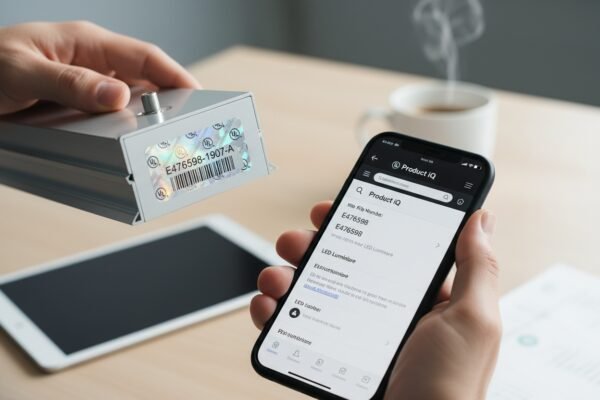
- UL certificates: Search the UL Product iQ database 9 (iq.ulprospector.com) using the file number or certificate holder name
- FCC IDs: Search the FCC Equipment Authorization System (apps.fcc.gov/oetcf/eas/reports/GenericSearch.cfm) using the FCC ID
- Lab accreditation: Verify the testing lab's accreditation through NVLAP, A2LA, or the lab's own website
If any document can't be verified through these public databases, treat it as suspect.
Watch Out for Shared or Borrowed Certificates
One common scam involves factories showing you a UL or FCC certificate that belongs to a different factory or a different product. The certificate might be real—but it doesn't cover your product. Always check that the certificate holder name matches the factory name, and that the product description on the certificate matches what you're buying.
Ongoing Documentation Requirements
Certification isn't a one-time event. UL requires ongoing Follow-Up Services, which means UL inspectors visit the factory periodically. Your agent should be able to confirm that these inspections are current. For FCC, if you make any changes to the product design, a new test report may be needed. Your agent should track this and alert you proactively.
Intellectual Property Protection During Testing
When your product goes through certification testing, detailed designs, schematics, and specifications are shared with third-party labs. Ask your agent what measures they take to protect your IP during this phase. NDAs with the testing lab, restricted access to test data, and clear contractual language about data ownership are all standard practices that a professional agent should have in place.
Building a Service Agreement for Certification Compliance
Before engaging any agent, put certification responsibilities in writing. Your service agreement should include:
- A clause specifying which certifications the agent is responsible for coordinating
- QC inspection protocols tied to certification standards
- Penalties or remedies if non-compliant products are shipped
- Data retention requirements for test reports and factory audit records
- IP protection obligations during the certification process
A trial order in the $5,000–$10,000 range is a smart way to test an agent's documentation capabilities before committing to larger volumes. Pay close attention to the completeness and accuracy of the compliance package they deliver with that first shipment.
Conclusion
Evaluating a China sourcing agent for UL and FCC certifications comes down to testing their technical depth, verifying their documentation, and confirming their quality control systems through real evidence—not promises. Do your homework before your first purchase order.
Footnotes
1. Official website of the American Association for Laboratory Accreditation, a recognized accreditation body. ↩︎
2. Explains FCC equipment authorization procedures and documentation requirements. ↩︎
3. Official page for UL 62368-1, detailing its scope for audio/video and ICT equipment safety. ↩︎
4. Direct link to the Code of Federal Regulations, Title 47, Part 15, Subpart C for intentional radiators. ↩︎
5. NIST's National Voluntary Laboratory Accreditation Program provides third-party accreditation for testing and calibration laboratories. ↩︎
6. Official FCC page explaining equipment authorization, including the grant process. ↩︎
7. Explains the different FCC equipment authorization procedures, including SDoC and Certification. ↩︎
8. Provides a comprehensive definition and explanation of a Bill of Materials in manufacturing. ↩︎
9. Replaced with the official and accessible UL Product iQ database URL. ↩︎