
Over the years working inside China's supply chain 1, we have watched buyers lose tens of thousands of dollars because their sourcing agent never truly controlled the raw materials going into production. The problem is real, painful, and far more common than most importers realize supplier auditing process 2. Factories rarely volunteer honest details about where their materials come from or what grades they actually use. Without a structured way to evaluate your agent's raw material procurement control 3, you are essentially flying blind.
To evaluate a China sourcing agent's raw material procurement control, you should verify their supplier auditing process, review material testing reports, confirm on-site inspection capabilities, check traceability documentation, and assess their ability to prevent unauthorized material substitutions throughout the production cycle.
In this article, we break down the specific steps, red flags, and verification methods you need pre-production material sampling 4. Each section answers a key question that importers ask us every week. Let's get into it.
How can I verify that my sourcing agent is actually auditing the raw material suppliers?
When we coordinate factory audits from our Shenzhen office, one thing becomes clear fast: many agents claim they audit suppliers, but few actually do it with any rigor incoming material inspections 5. The gap between what agents promise and what they deliver can cost you an entire production run.
You can verify your agent's auditing activity by requesting dated audit reports with photos, checking for third-party audit certifications, asking for supplier visit logs, and cross-referencing factory details on platforms like QCC.com to confirm the agent has real, documented contact with the raw material suppliers.

What a Real Audit Looks Like
A genuine raw material supplier audit is not a phone call Material Safety Data Sheet 6. It is a physical visit. Your agent should walk the supplier's facility, check storage conditions, verify business licenses, and review production capacity. At our company, we photograph each stage and compile a report within 48 hours. If your agent cannot produce this kind of evidence, they likely are not doing the work.
Here are the key documents you should demand from your agent after any supplier audit:
Essential Audit Documentation Checklist
| Document | What It Proves | Red Flag If Missing |
|---|---|---|
| Business license copy | Supplier is legally registered | Agent may be using unverified sources |
| QCC.com verification screenshot | Company registration data is real | Possible fake supplier identity |
| Dated facility photos | Agent physically visited the site | Audit may be fabricated |
| Raw material stock records | Supplier maintains proper inventory | Risk of supply disruptions |
| Previous QC test results | Supplier has quality history | No track record to evaluate |
| ISO or industry certifications | Supplier meets international standards | Higher defect risk |
Cross-Check with Independent Sources
Do not rely solely on your agent's word. Use QCC.com yourself to verify the supplier's registration number, registered capital, and legal representative. Industry data suggests that fake licenses are detected in roughly 25% of initial supplier contacts. Running a quick QCC check catches about 95% of these fakes. You can also ask your agent to provide references from other clients who have used the same raw material supplier. If they hesitate, that is a warning sign.
Ask Technical Questions
One trick we use internally is testing agents with specific technical questions about the raw materials. For example, if you are sourcing stainless steel components, ask your agent what grade the supplier uses, what the carbon content tolerance is, and whether they have mill certificates 7. An agent who truly audits suppliers will answer these questions confidently. An agent who is just passing messages will stumble.
Another powerful verification method is requesting that your agent provide a video walkthrough of the raw material supplier's warehouse or production floor. Live video calls during visits are now common and easy to arrange. If your agent resists this, ask yourself why.
What specific steps should my agent take to prevent sub-standard materials from entering production?
In our day-to-day production management work, we have seen how a single batch of sub-standard fabric or impure resin can ruin thousands of finished units. Prevention starts long before the factory floor. Your agent needs a systematic, multi-stage approach.
Your agent should implement pre-production material sampling, conduct incoming material inspections at the factory gate, require certificates of analysis for each batch, perform in-process spot checks, and maintain a documented rejection protocol for any materials that fail to meet your agreed specifications.

The Multi-Stage Quality Gate System
Think of raw material quality control as a series of gates. Each gate is a checkpoint. If material fails at any gate, it does not move forward. Here is how a competent agent structures these gates:
Gate 1 — Pre-Production Sample Approval. Before mass production, your agent should obtain raw material samples from the intended supplier. These samples get tested against your specifications. Only after you approve should the factory order in bulk.
Gate 2 — Incoming Material Inspection. When raw materials arrive at the factory, your agent or their QC inspector should be present. They check quantities, visual quality, labeling, and compare against the approved sample. Any discrepancy triggers a hold.
Gate 3 — In-Process Spot Checks. During production, your agent should randomly pull materials from the line and verify they match the approved batch. This catches mid-run substitutions, which happen more often than most buyers expect.
Gate 4 — Pre-Shipment Material Verification. Before the finished goods ship, your agent should verify that the materials in the final product match the original specifications. This can involve destructive testing on random units.
Common Sub-Standard Material Problems
| Problem | How It Happens | How Your Agent Should Prevent It |
|---|---|---|
| Lower grade metal alloy | Factory buys cheaper alloy to save cost | Require mill certificates and test hardness on arrival |
| Contaminated chemicals | Supplier mixes batches or stores improperly | Demand certificates of analysis 8 per batch |
| Thinner fabric weight | Mill produces lighter weight to increase margins | Weigh incoming fabric rolls against spec sheet |
| Recycled plastic mixed in | Factory blends virgin and recycled resin | Conduct melt flow index tests on random pellet samples |
| Wrong color dye lot | Supplier sends inconsistent dye batches | Use Pantone matching under standardized lighting |
Why a Rejection Protocol Matters
Your agent must have a clear, written process for rejecting sub-standard materials. This means: documenting the defect, photographing evidence, notifying you immediately, quarantining the rejected materials, and negotiating replacement or refund with the supplier. Without this protocol, bad materials quietly enter production, and you only find out when customers complain.
Industry data shows that third-party quality control 9 reduces defect rates by 50% to 70% in raw material procurement. That is a massive difference. If your agent does not have a structured QC process, you are accepting unnecessary risk.
We always tell our clients: the cost of prevention is a fraction of the cost of failure. A $200 material test can save you a $20,000 recall.
How do I ensure my agent isn't allowing the factory to swap my specified materials for cheaper alternatives?
This is the question that keeps importers awake at night. From our experience managing production across dozens of factories in Guangdong and Zhejiang, material swapping is not rare. It is a systematic temptation for factories looking to protect their margins. The truth is, getting honest information about raw materials directly from the factory is extremely difficult. You can only get the full picture of the supply chain by approaching it from a different angle — through the independent, third-party perspective of a sourcing agent who conducts research at the raw material markets themselves.
To prevent material swaps, require your agent to lock material specifications in the purchase contract, conduct independent material market research, perform random testing during production, maintain a retained reference sample system, and use traceability tools that track materials from supplier to finished product.
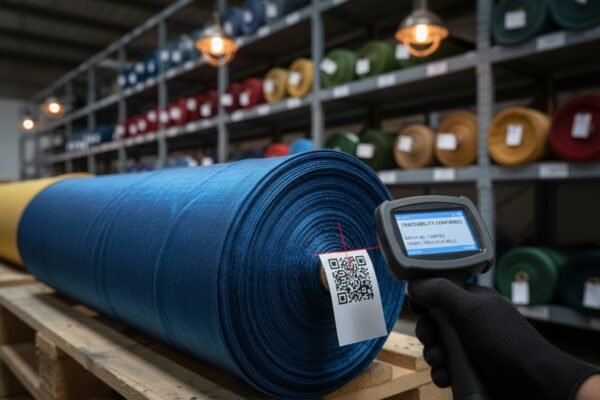
Lock Specifications in the Contract
Your purchase contract 10 should list the exact material specification. This means grade, composition, origin, supplier name, and brand if applicable. Vague descriptions like "stainless steel" or "cotton fabric" are not enough. You need "SUS 304 stainless steel from Tsingshan Steel" or "100% combed cotton, 180 GSM, from Luthai Textile." When the contract is specific, your agent has legal and practical grounds to reject substitutions.
Independent Raw Material Market Research
This is where a great agent earns their fee. Rather than relying on the factory's claims about material costs and availability, your agent should visit the actual raw material markets. In Shenzhen, Yiwu, Guangzhou, and other manufacturing hubs, there are specialized markets for almost every material category. An agent who visits these markets can verify current pricing, check which suppliers the factory claims to use, and identify whether the factory's material claims make economic sense.
For example, if a factory says they are using a premium imported resin but quoting you a price that only makes sense with domestic recycled resin, your agent should catch that mismatch. This kind of market intelligence is invaluable.
The Retained Reference Sample System
Here is a practical tool we use with every client:
| Step | Action | Purpose |
|---|---|---|
| 1 | Obtain approved raw material samples before production | Establish baseline |
| 2 | Seal and label samples with date and batch number | Create tamper-proof reference |
| 3 | Store one set with the agent, one set with the buyer | Enable independent comparison |
| 4 | Pull random production materials and compare against reference | Detect any substitution |
| 5 | Document all comparisons with photos and test results | Build evidence trail |
This system works because it gives you a physical benchmark. If the factory swaps materials, a side-by-side comparison with the reference sample will reveal the difference. The key is that your agent — not the factory — controls the reference samples.
Random and Unannounced Testing
Scheduled inspections are useful, but they have a weakness: the factory knows when they are coming. For material swap detection, unannounced visits are more effective. Your agent should have the right to enter the factory and pull samples at any time during production. If your contract does not include this right, add it before the next order.
Some agents also use third-party labs for blind testing. They send production samples to an independent lab without telling the factory. The lab tests for composition, purity, weight, or whatever parameters matter for your product. This eliminates any chance of the factory gaming the test.
Digital Traceability Tools
In 2025, more agents are adopting digital traceability systems. These tools track raw materials from the supplier's warehouse to the factory floor using QR codes, batch tracking software, or even blockchain-based platforms. While not every product justifies this level of tracking, high-value or regulated products benefit enormously. Ask your agent whether they offer or support digital traceability, and evaluate the depth of their system.
What kind of testing reports should I expect my agent to provide before mass production begins?
Before we greenlight any mass production run for our clients, we require a specific set of testing reports. These reports are your last line of defense. They confirm that the materials going into your product are exactly what you specified. Without them, you are gambling.
Before mass production, your agent should provide raw material certificates of analysis, third-party lab test reports for composition and safety, pre-production sample test results against your specifications, supplier mill certificates or material data sheets, and any regulatory compliance certifications required for your target export market.

Types of Reports and What They Tell You
Not all testing reports are equal. Some are generated by the supplier themselves, which introduces bias. Others come from accredited third-party labs, which carry far more weight. Here is a breakdown:
Certificate of Analysis (COA): Issued by the raw material supplier. It lists the chemical composition, physical properties, and batch number of the material. Useful as a starting point, but not sufficient on its own because the supplier controls the data.
Mill Certificate (MTC): Common for metals. It certifies the grade, heat number, and mechanical properties of a specific batch. Always cross-reference the heat number on the certificate with the markings on the actual material.
Third-Party Lab Report: Issued by an independent, accredited laboratory such as SGS, Bureau Veritas, Intertek, or TÜV. This is the gold standard. The lab tests the actual material sample and reports results objectively. Your agent should arrange this testing proactively.
Material Safety Data Sheet (MSDS): Required for chemicals, coatings, adhesives, and similar materials. It lists hazardous components and safety handling procedures. Essential for regulatory compliance.
Regulatory Compliance Certificates: Depending on your market, you may need REACH, RoHS, CPSIA, FDA, or other certifications for your raw materials. Your agent should know which ones apply and ensure the supplier provides current, valid certificates.
What to Look for in a Testing Report
| Element | What to Check | Why It Matters |
|---|---|---|
| Lab accreditation | CNAS, ILAC, or ISO 17025 accredited | Ensures the lab meets international standards |
| Sample identification | Matches your material spec and batch number | Confirms the right material was tested |
| Test date | Recent, within the production timeline | Old reports may not reflect current batch quality |
| Test parameters | Cover all your critical specifications | Incomplete testing leaves gaps |
| Pass/fail criteria | Clearly stated and aligned with your standards | Ambiguous criteria allow interpretation games |
| Lab signature and seal | Present and verifiable | Unsigned reports may be fabricated |
How Many Reports Do You Need?
For a standard production run, we recommend a minimum of three types of reports: the supplier's COA, a third-party lab test on the actual material batch, and any market-specific compliance certificate. For high-risk products — anything that touches the body, goes into food contact, or involves electrical safety — add IEC, UL, or FDA testing as appropriate.
Timing Matters
Reports should arrive before mass production starts, not after. The sequence is: your agent collects raw material samples, sends them for testing, receives results, shares results with you, and only then authorizes the factory to begin production. If your agent is sending reports after production is already underway, the reports are worthless as a prevention tool. They become damage assessment instead.
One more tip: keep a digital archive of every testing report linked to the purchase order number. Over time, this archive becomes a powerful tool for tracking supplier consistency and identifying early signs of quality drift.
Conclusion
Evaluating your China sourcing agent's raw material procurement control comes down to evidence, systems, and independence. Demand audits, testing reports, retained samples, and unannounced checks. Your supply chain transparency depends on it.
Footnotes
1. Discusses technological advancements and transformation within China's global supply chain. ↩︎
2. Defines, details requirements, types, and the complete process of conducting a supplier audit. ↩︎
3. Explains the process and strategies for effective raw material procurement in supply chain management. ↩︎
4. Explains the purpose and process of pre-production samples in manufacturing quality control. ↩︎
5. Describes the process, purpose, and best practices for incoming material inspections. ↩︎
6. Explains the purpose and importance of Material Safety Data Sheets for hazardous chemicals. ↩︎
7. Provides a comprehensive definition and explanation of mill test reports in the metals industry. ↩︎
8. Explains the importance and typical contents of a Certificate of Analysis for product quality. ↩︎
9. Highlights the importance and benefits of independent third-party testing for quality control. ↩︎
10. Details how to write a material purchase specification for clarity in contracts. ↩︎