
Running a sourcing agency 1 in Shenzhen, our team sees the same problem almost every week. Buyers come to us frustrated, sometimes angry, because they suspect their previous agent inflated factory prices by 20–30% tooling amortization 2. They paid too much and had no way to prove it.
To get transparent original factory quotes, request an itemized cost breakdown including raw materials, labor, overhead, tooling, and the agent's service fee listed separately. Use a service-fee model instead of commission-based pricing, and cross-verify quotes by contacting multiple factories or visiting suppliers directly.
In this guide, I will walk you through practical steps to verify factory pricing, spot hidden markups, and choose the right agent model. Every tip comes from real experience handling procurement for SMEs across the US, Germany, Australia, and Mexico. Let's dig in.
How can I verify that the quote my agent provided is the actual factory price?
When we handle procurement for our clients, we encourage them to ask tough questions. Most buyers feel uncomfortable challenging their agent. But silence is exactly what dishonest agents count on.
You can verify actual factory pricing by requesting the original factory invoice or proforma in Chinese (RMB), cross-referencing quotes from two to three factories for the same product, and asking your agent to arrange a direct video call or factory visit where pricing is discussed openly.
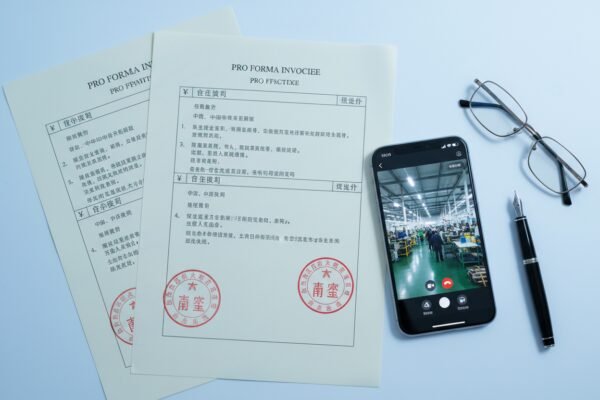
Request the Original Factory Proforma Invoice
The simplest way to verify pricing is to ask your agent for the factory's original proforma invoice. This document is issued by the factory, not the agent. It shows the price in RMB, the factory's name, and their bank details. If your agent refuses to share this, that is a red flag.
At our agency, we provide clients with the factory's original quote alongside our service fee. This way, you see exactly what the factory charges and what the agent charges. No guessing.
Cross-Reference with Multiple Factories
Never rely on a single quote. Ask your agent to source quotes from at least two to three factories for the same product. Use a unified RFQ template 3 so every factory quotes on the same specs. This makes comparison easy.
If one factory quotes $2.50 per unit and another quotes $4.00 for the exact same specs, something is off. Either the specs were communicated differently, or someone is padding the numbers.
Use Direct Communication as a Verification Tool
Here is a tip from our own experience: tell your agent that you plan to visit China in the coming months and that you want to tour several factories in the same product category. Even if you are not fully committed to traveling, this simple statement changes the dynamic. Agents who inflate prices know they will be exposed during a factory visit. Just mentioning a future visit keeps everyone honest.
You can also request a three-way video call between you, the agent, and the factory manager. During the call, ask the factory manager to confirm the quoted unit price. Most factories are happy to do this.
Quote Verification Checklist
| Verification Method | Difficulty | Effectiveness |
|---|---|---|
| Request original factory proforma invoice 4 (in RMB) | Easy | High |
| Cross-reference quotes from 2–3 factories | Medium | High |
| Mention upcoming China visit to your agent | Easy | Medium–High |
| Arrange a three-way video call with factory | Medium | High |
| Hire a third-party audit firm to verify pricing | Hard | Very High |
| Check Alibaba or Made-in-China for benchmark prices | Easy | Medium |
Professional suppliers and agents typically respond to RFQs within 48 hours. Smaller factories may need up to 72 hours. If your agent takes a week to share a simple quote, ask why.
What specific cost breakdown should I request to ensure my sourcing process is transparent?
Our team prepares detailed cost breakdowns for every project we manage. We learned early on that vague quotes cause disputes later. A single line item saying "$3.20 per unit FOB Shenzhen" tells you almost nothing.
Request an itemized breakdown covering raw materials, labor, mold or tooling amortization, factory overhead, packaging, factory profit margin, agent service fee, and logistics costs. Each line should be priced separately so you can identify exactly where your money goes and negotiate specific components.

The Anatomy of a Transparent Quote
A truly transparent quote is not one number. It is a structured document. Here is what each component means and why it matters.
Raw materials are typically the largest cost driver. For a plastic product, this includes the resin type and weight per unit. For electronics, it covers PCBs, chips, connectors, and other components. Ask your agent to list materials separately.
Labor includes assembly, soldering, finishing, and packing. Factories in major hubs like Shenzhen charge higher labor 5 rates than those in inland cities. Knowing the labor portion helps you evaluate whether the factory is in an expensive or affordable region.
Mold and tooling amortization is critical for custom products. A mold might cost $5,000. If you order 10,000 units, the mold cost is $0.50 per unit. If you order 50,000 units, it drops to $0.10. This should always be shown separately.
Factory overhead covers rent, utilities, equipment depreciation, and management salaries. It is usually baked into the unit price, but a transparent factory will show it as a percentage.
Factory profit margin is the markup the factory itself adds. This is normal and expected. Typical factory margins range from 5–15% depending on the product category and order volume.
Agent service fee should be its own line item. This is the fee your sourcing agent charges for their work. More on this in the pricing model section below.
Sample Cost Breakdown Template
| Cost Component | Example (per unit) | Notes |
|---|---|---|
| Raw materials 6 | $1.20 | Specify material type and weight |
| Labor (assembly + finishing) | $0.45 | Includes QC labor at factory |
| Mold amortization | $0.10 | Based on 50,000-unit run |
| Factory overhead 7 | $0.30 | Rent, utilities, equipment |
| Packaging (inner + outer carton) | $0.15 | Custom print adds cost |
| Factory profit | $0.30 | ~10% margin |
| Factory EXW price | $2.50 | Total before agent and logistics |
| Agent service fee | $0.25 | Flat fee model, 10% of EXW |
| Inland transport to port | $0.05 | Truck to Shenzhen port |
| FOB Shenzhen price | $2.80 | Ready for ocean freight |
Why EXW Is Your Best Baseline
EXW means "Ex Works." It is the price at the factory gate before any transport, export duties, or agent fees. When you compare quotes, always compare at EXW level. FOB prices can vary because different agents include different services in their FOB calculation.
By standardizing on EXW, you remove variables. You see the factory's true cost. Everything else—agent fee, inland freight, export handling—gets added on top, line by line.
Include Certification and Compliance Costs
In 2025, more global markets require CE, UL, FDA, or RoHS certifications. These tests cost money. A single UL certification test can run $3,000–$10,000 depending on the product. If your factory already holds the certificate, the cost may be zero. If not, it must be factored in.
Ask your agent whether testing and certification costs are included in the quote or billed separately. This is a common area where hidden costs appear.
In our years of running procurement for overseas buyers, we have seen every trick in the book. Some agents inflate material costs. Others take kickbacks from factories. A few even create fake factory names to hide their real supplier. The good news? These tactics leave traces if you know where to look.
Spot hidden markups by comparing quotes from multiple independent sources, checking for inflated material or tooling costs against market rates, watching for vague line items like "miscellaneous fees," and asking factories directly whether they pay commissions to your agent. Sudden price drops when you mention visiting China also signal prior inflation.

Common Markup Tactics and How to Detect Them
Let me walk you through the most common tactics agents use to hide markups, and how to catch them.
Inflated material costs. An agent tells you that ABS plastic costs $2.00 per kg when the actual market rate is $1.40. Unless you check commodity prices on platforms like Alibaba or ICIS, you would never know. Always benchmark key raw material prices independently.
Phantom tooling charges. The agent says a new mold costs $8,000. The factory actually charged $5,000. The agent pockets $3,000. Ask the factory to send you the tooling invoice directly. Better yet, ask your agent to put you on copy when the factory sends the tooling quote.
Kickback arrangements. Some agents negotiate a secret rebate with the factory. The factory quotes you $3.00 per unit, but the real price is $2.60. The factory sends $0.40 per unit back to the agent. This is extremely common and very hard to detect without direct factory communication.
Miscellaneous fees. Watch for vague charges like "handling fee," "documentation fee," or "quality management surcharge." Legitimate costs have specific names and specific amounts. Vague labels are often padding.
Red Flags to Watch For
| Red Flag | What It Might Mean | Your Action |
|---|---|---|
| Agent refuses to share factory name or contact | Agent fears you will contact factory directly | Insist on factory identity or switch agents |
| Quote arrives only in USD, never in RMB | Markup may be hidden in currency conversion | Request the original RMB quote |
| Unusually fast agreement on your target price | Price may have been inflated from the start | Cross-check with independent quotes |
| Agent discourages factory visits | Agent may be hiding the real supplier or price | Plan a visit or hire a third-party auditor |
| Vague line items like "service charge" without detail | Could be double-charging for agent fees | Demand itemized explanation |
| Price drops sharply when you mention visiting China | Original quote was likely inflated | Use this as leverage for honest pricing |
The "Future Visit" Strategy
Here is a practical tip our founder Allen often shares with clients. Casually mention to your sourcing agent that your team may visit China in the next few months. Say you plan to visit several factories in the same product category to compare capabilities and pricing.
You do not need to book flights. You do not need a firm date. Just planting the seed is enough. An honest agent will welcome the visit. A dishonest one will suddenly become more "flexible" on pricing. If prices drop 10–15% right after you mention a visit, you know the earlier quotes were padded.
Benchmark Against Industry Norms
Different product categories have different typical margins. Consumer electronics factories usually operate on 5–8% net margins. Textile factories might run 8–12%. If your agent's quote implies a factory margin of 25%, something is wrong—unless it is a highly customized or low-volume product.
You can also use tools like Alibaba's price range feature. Search for your product, filter by verified manufacturers, and check the price range. This gives you a rough benchmark. It is not perfect, but it flags quotes that are wildly out of range.
Audit Your Agent's Track Record
Ask for references from other buyers in your product category. Contact them. Ask specific questions: Did the agent's quotes match what you found when you contacted factories independently? Were there surprise fees? Did the agent provide original factory invoices?
A reputable agent with a strong track record will happily connect you with past clients. Reluctance to provide references is itself a red flag.
Why should I choose a service-fee model to protect my original factory pricing?
When we built our agency model at Go Source, we deliberately chose a transparent service-fee structure. We had seen too many buyers burned by commission-based agents who had every incentive to push higher prices. The math is simple: if an agent earns 10% of the factory price, a higher factory price means a bigger paycheck for the agent.
A service-fee model protects original factory pricing because the agent's compensation is fixed and independent of the product cost. The agent has no financial incentive to inflate quotes, recommend expensive suppliers, or accept factory kickbacks. This structure aligns the agent's interests with yours—finding the best price, not the highest one.

Comparing Agent Pricing Models
There are four main pricing models used by China sourcing agents in 2025. Each has trade-offs. Here is how they compare.
| Pricing Model | How It Works | Transparency Level | Best For |
|---|---|---|---|
| Flat service fee | Agent charges a fixed fee per project or per month ($300–$1,000) | Very High | Small to mid-size orders, clear scope |
| Commission (% of order value) | Agent earns 1–10% of the total purchase value | Low–Medium | Large, ongoing orders with trusted agents |
| Project-based fee | Fixed price for a defined project with milestone payments | High | Custom products, one-off developments |
| Blind markup | Agent buys from factory and resells to you at a higher price | Very Low | Buyer has no alternative (not recommended) |
Why Commissions Create Conflicts of Interest
The commission model is the most common in the industry. It seems fair on the surface—the agent only earns when you place an order. But the incentive structure is flawed.
If your agent earns 7% commission, they make $700 on a $10,000 order. If they can steer you to a factory that charges $12,000, they make $840. That is a 20% raise for the agent, paid entirely by you. The agent has zero motivation to negotiate a lower price on your behalf.
Even worse, some factories offer agents a secret kickback on top of the buyer's commission. The factory raises its quote by 5%, gives that 5% to the agent, and the buyer never knows. This double-dipping is shockingly common.
How the Service-Fee Model Works in Practice
With a flat service fee, the agent charges you a fixed amount—say $500 per sourcing project or $800–$1,000 per month as a retainer. This fee covers supplier identification, RFQ management, negotiation, and coordination.
Because the fee is fixed, the agent earns the same amount whether your factory quote is $2.00 or $5.00 per unit. There is no incentive to inflate. In fact, the agent is motivated to find you the best price because that is what keeps you coming back.
At Go Source, our service fee is clearly stated in our contract. It appears as a separate line item on every quote. Our clients see the factory's original EXW price and our fee side by side. No hidden math.
Project-Based Pricing for Custom Products
For custom or one-off projects—new product development, tooling, sampling—a project-based fee makes the most sense. The agent quotes a fixed price for the entire project, broken into milestones. You pay 30–50% upfront for tooling and samples, and the balance upon approval.
This model gained popularity after the post-pandemic supply chain disruptions. Buyers wanted more accountability. Milestone payments ensure the agent delivers results before receiving full payment. If the sampling phase fails, you have not paid for production management yet.
When Commissions Still Make Sense
To be fair, commission-based pricing 8 is not always bad. If you have a long-term relationship with a deeply trusted agent and your orders are large and recurring, a small commission (1–3%) can be efficient. The key is trust, transparency, and the ability to verify factory invoices independently.
For most SME buyers placing their first or second orders with a new agent, however, a service-fee model 9 is safer. It removes the biggest source of conflict from day one.
Choosing the Right Model for Your Situation
If you are a small business testing a new product in China for the first time, start with a flat fee. You will pay a known amount upfront, and every factory quote you receive will be the real factory price. As your relationship grows and trust builds, you can renegotiate terms.
If you are scaling to large volumes with a proven agent, a small commission may work—but only if you retain the right to see original factory invoices and cross-reference pricing.
Conclusion
Transparent factory pricing is not a luxury. It is a basic right for every buyer sourcing from China. Use itemized cost breakdown 10s, cross-reference quotes, choose a service-fee agent, and never hesitate to ask for original factory invoices.
Footnotes
1. Explains the role and services provided by a sourcing agent in international trade. ↩︎
2. Replaced HTTP 404 with a relevant article specifically discussing the benefits and concept of tooling cost amortization. ↩︎
3. Replaced HTTP 406 with a working, informative article providing steps to create an RFQ template. ↩︎
4. Explains the purpose and importance of a proforma invoice in international trade. ↩︎
5. Explains labor costs within manufacturing, including direct and indirect components. ↩︎
6. Defines raw materials and their significance in manufacturing and supply chains. ↩︎
7. Defines factory overhead as indirect costs essential for production but not directly traceable to a product. ↩︎
8. Explains the commission-based pricing model and its potential conflicts of interest for agents. ↩︎
9. Describes the service-fee model as a transparent compensation structure for sourcing agents. ↩︎
10. Replaced HTTP 404 with an authoritative Wikipedia page defining cost breakdown analysis, which directly relates to an itemized cost breakdown. ↩︎