
Every week, our team in Shenzhen ships dozens of sample packages to buyers across the United States. The process sounds simple, but we have watched first-time importers lose weeks and hundreds of dollars to customs holds, wrong HS codes 1, and damaged goods that arrived without any inspection.
To ship samples from China to the US using a sourcing agent, you need to select a reliable agent who can coordinate with suppliers, inspect sample quality, consolidate packages, choose the right express courier like DHL or FedEx, prepare customs documents, and track the shipment until it reaches your door—typically within 3 to 7 business days.
Below, we break down the real costs, consolidation tricks, fastest shipping methods, and quality inspection steps so you can get your samples without stress or surprise fees.
How much will it cost me to ship product samples from China to the US?
When we quote sample shipments from our Shenzhen warehouse, the number one question is always about cost. Buyers expect a flat rate, but the truth is more layered than that.
Shipping product samples from China to the US typically costs between $30 and $150 for small parcels under 2 kg via express courier. Costs depend on package weight, dimensions, shipping speed, and whether your sourcing agent negotiates discounted corporate rates with carriers like DHL or FedEx.
What Drives the Cost?
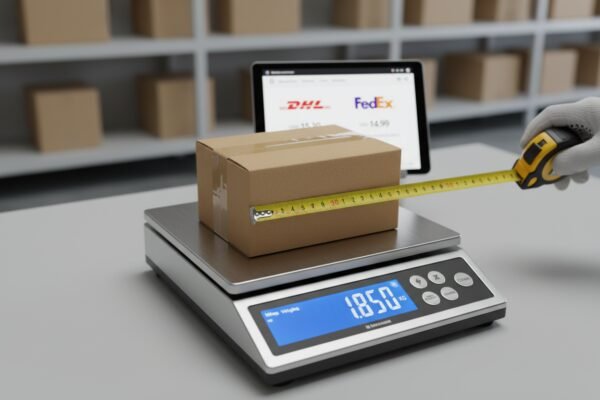
Several factors determine your final bill. Weight is the most obvious one. But courier companies also use "volumetric weight 2," which means a large but light box can cost more than a small heavy one. Our logistics team always repacks samples into the smallest box possible to keep costs down.
Here is a breakdown of factors:
- Actual weight vs. volumetric weight — couriers charge whichever is higher.
- Shipping method — express is fast but expensive; air freight 3 is cheaper for heavier loads.
- Destination zip code — remote US areas may trigger surcharges.
- Insurance — optional, but recommended for fragile or high-value prototypes.
- Agent service fee — most agents charge 5–10% of shipment value or a flat handling fee.
Cost Comparison Table
| Shipping Method | Weight Range | Estimated Cost | Transit Time |
|---|---|---|---|
| DHL Express | 0.5–2 kg | $30–$80 | 3–5 days |
| FedEx International Priority | 0.5–2 kg | $35–$90 | 3–5 days |
| UPS Worldwide Express | 0.5–2 kg | $40–$95 | 3–6 days |
| EMS (China Post Express) | 0.5–2 kg | $20–$50 | 7–15 days |
| Air Freight (via forwarder) | 10–50 kg | $5–$8 per kg | 5–10 days |
Hidden Costs to Watch
Many first-time importers forget about duties and taxes. The good news: the US has a de minimis threshold of $800 4 under Section 321. Samples valued below $800 are usually duty-free. But if your sample contains restricted materials—lithium batteries, food items, cosmetics—additional compliance costs may apply. An FDA-regulated product 5, for example, may need prior notice filing, which your agent should handle.
From our experience shipping electronics prototypes, we always ask our clients to declare the sample value honestly but accurately. Over-declaring invites unnecessary duty. Under-declaring risks customs seizure. Your sourcing agent should prepare a proper commercial invoice 6 stating "sample with no commercial value" or the actual declared value, whichever is appropriate.
One more thing to keep in mind: Chinese holidays like Golden Week 7 (early October) and Chinese New Year (January or February) can delay pickup by a week or more. Plan around these dates.
Can my sourcing agent consolidate samples from multiple suppliers to save me money?
Our warehouse receives samples from three, five, sometimes ten different factories for the same client. Shipping each one separately would be a waste of money and a headache to track.
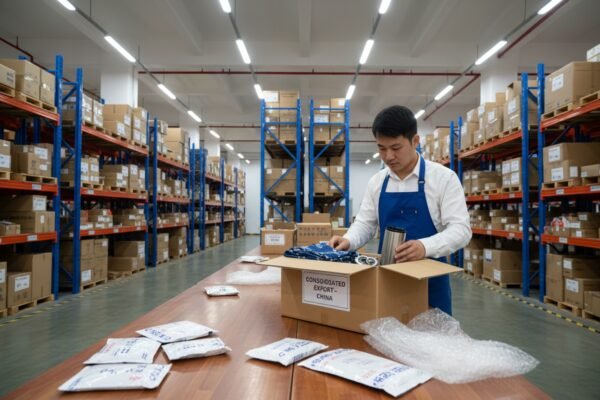
Yes, a good sourcing agent can consolidate samples from multiple Chinese suppliers into one shipment, saving you 30–50% on international shipping costs. The agent collects all samples at a local warehouse, inspects them, repacks them together, and ships one parcel to your US address.
How Consolidation Works Step by Step
The process is straightforward. Your agent gives each supplier a domestic shipping address—usually the agent's warehouse in Shenzhen, Yiwu, or Guangzhou. Suppliers ship samples domestically within China using local couriers, which costs only $1–$5 per package. Once all samples arrive at the warehouse, the agent inspects, photographs, and repacks everything into one international shipment.
Here is what the timeline looks like:
- Day 1–2: You confirm sample orders with multiple suppliers.
- Day 3–5: Suppliers ship to agent's warehouse via domestic courier.
- Day 5–6: Agent receives, inspects, and photographs all samples.
- Day 6–7: Agent repacks into one box and ships internationally.
- Day 10–13: You receive the consolidated package in the US.
Cost Savings Example
| Scenario | Number of Packages | Shipping Cost | Total |
|---|---|---|---|
| Ship separately (DHL) | 4 packages at $45 each | $45 × 4 | $180 |
| Consolidate (DHL) | 1 package at $85 | $85 × 1 | $85 |
| You save | — | — | $95 |
In this example, consolidation saved 53%. The savings grow even more when you have five or more suppliers. Domestic shipping within China is incredibly cheap, so routing everything to one warehouse before international shipment almost always makes financial sense.
When Consolidation Does Not Work
There are a few exceptions. If one supplier's sample is urgent and others are not ready, waiting for consolidation defeats the purpose. Also, samples that require different shipping conditions—say, a food product needing cold chain and an electronic device—should not be packed together. Your agent should flag these situations early.
Another consideration: if samples come from factories in very different regions of China, domestic transit to the consolidation warehouse might add 2–3 extra days. For most buyers, that trade-off is worth the savings. But if speed is your top priority, discuss this with your agent before committing.
We always recommend consolidation as the default approach for sample sourcing. It is one of the simplest ways your agent adds tangible value beyond just finding suppliers.
Which express shipping method should I choose for the fastest delivery of my China samples?
When our clients need prototypes in hand before a product launch meeting or a buyer presentation, every day counts. We have tested every major courier route out of Shenzhen, and the differences in speed and reliability can surprise you.
For the fastest delivery of samples from China to the US, choose DHL Express or FedEx International Priority. Both consistently deliver within 3 to 5 business days door-to-door, include customs clearance, and provide real-time tracking. DHL often edges ahead for shipments originating from southern China.
Head-to-Head Comparison of Express Couriers
Not all express services are equal. Here is how the top four options compare for a typical sample shipment from Shenzhen to a US metro area:
| Courier | Typical Transit | Door-to-Door | Customs Included | Tracking | Best For |
|---|---|---|---|---|---|
| DHL Express | 3–4 days | Yes | Yes | Real-time | Speed and reliability from South China |
| FedEx International Priority | 3–5 days | Yes | Yes | Real-time | Heavy samples, strong US network |
| UPS Worldwide Express | 3–6 days | Yes | Yes | Real-time | Large parcels, US inland delivery |
| TNT (FedEx subsidiary) | 4–7 days | Yes | Partial | Real-time | Budget express option |
| EMS (China Post) | 7–15 days | Yes | Buyer handles | Basic | Low cost, not speed-critical |
Why DHL Often Wins for Samples
From our daily operations, DHL has the most direct flights from Shenzhen and Hong Kong to major US hubs. Their customs clearance process is highly automated. For packages under 2 kg, DHL consistently delivers in 3 business days to Los Angeles, New York, and Chicago. FedEx is a close second and sometimes better for heavier packages because their volumetric weight calculations can be more favorable.
A Practical Tip from Our Team
Here is something we learned over years of shipping: when samples are ready, ship them immediately. A conservative estimate for express delivery from Shenzhen to the US is about 5 days, though it can be faster. Use that transit window wisely. While your samples are in the air, prepare and verify all your documents—invoices, sample specification sheets, and approval forms. Also use this time to coordinate with the supplier on pre-production details: raw materials, accessories, component sourcing, and production line scheduling. The moment your buyer receives the sample and confirms approval, you can immediately proceed with payment and kick off production. This overlap saves you an entire week in your project timeline.
When to Avoid Express
Express is not always the best choice. If you need 20 kg or more of samples—say, a range of fabric swatches or multiple furniture parts—air freight through a forwarder is cheaper. You will pay $5–$8 per kg instead of $15–$30 per kg via express. The trade-off is an extra 2–5 days and more paperwork. Your sourcing agent can help you decide the tipping point.
For sea freight, it rarely makes sense for samples. At 15–40 days transit time, it is simply too slow for prototyping purposes. The only exception might be large construction material samples or heavy machinery parts where speed does not matter.
How do I ensure my sourcing agent inspects my samples before they are shipped to me?
Our quality team checks every sample that passes through our Shenzhen warehouse. But we know that not every agent does this. Some simply forward what the factory sends without even opening the box. That is a risk you cannot afford.
To ensure your sourcing agent inspects samples before shipping, provide a clear checklist of specifications—dimensions, materials, colors, functionality—and require photo or video evidence of the inspection. A professional agent will send you a detailed report with images before dispatching the shipment.

Why Pre-Shipment Inspection Matters for Samples
You might think inspection is only important for bulk orders. That is wrong. A sample sets the standard for your entire production run. If the sample has a flaw you do not catch, that flaw will be replicated thousands of times. Receiving a bad sample in the US means sending it back, waiting for a new one, and losing 2–4 weeks. Having your agent inspect it in China catches problems before they cross the ocean.
What Your Inspection Checklist Should Include
Give your agent a clear, written checklist. Do not rely on verbal instructions. Here is a template you can adapt:
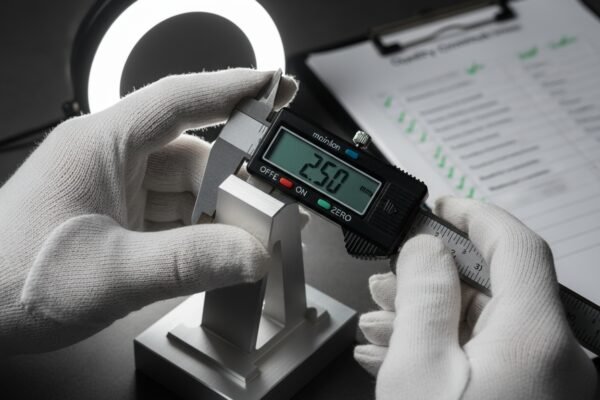
- Dimensions: Length, width, height, weight—with acceptable tolerance ranges.
- Materials: Type of plastic, metal, fabric, etc. Does it match the agreed specification?
- Color: Compare against a Pantone code or approved color swatch.
- Functionality: Does the product work as intended? Test moving parts, electronics, buttons.
- Labeling and printing: Check logos, text, barcodes, and packaging artwork.
- Packaging condition: Is the sample protected enough for international transit?
- Compliance marks: CE, FCC, or other relevant certifications if required.
How to Hold Your Agent Accountable
Request these deliverables before any sample ships:
- Photo report — At least 5–10 photos showing the sample from multiple angles, close-ups of key features, and any defects.
- Measurement log — Written record of dimensions compared to your spec sheet.
- Video walkthrough — A 1–2 minute video showing the sample in use or being tested. This is especially useful for mechanical or electronic products.
- Written summary — A short report noting whether the sample passes, fails, or needs minor corrections.
If your agent cannot provide these, they are not doing their job. A professional sourcing agency treats the sample stage with the same seriousness as final production inspection. At our operation, we actually go a step further—we sometimes use 3D scans or detailed macro photography for precision components.
What Happens When a Sample Fails Inspection?
If the sample does not meet your specifications, your agent should not ship it. Instead, they should communicate the issues directly to the supplier with photographic evidence and your feedback. A good agent will push the supplier to produce a revised sample quickly. This back-and-forth happens entirely within China, saving you international shipping costs and days of waiting.
Some agents also offer preliminary compliance consulting. For example, if your product has lithium batteries, your agent should verify that the sample meets UN38.3 testing requirements 9 before shipping. If you are importing food-contact materials, they should confirm FDA-compliant material certificates are available. Catching these issues at the sample stage prevents expensive surprises during mass production.
Conclusion
Shipping samples from China to the US does not have to be complicated. A reliable sourcing agent handles inspection, consolidation, documentation, and courier selection—saving you time, money, and costly mistakes. Start with a clear spec sheet, choose express shipping for speed, and always demand a pre-shipment inspection report before your samples leave China.
Footnotes
1. Explains the purpose and structure of Harmonized System codes for international trade. ↩︎
2. Explains volumetric weight, its calculation, and impact on shipping costs. ↩︎
3. Provides a comprehensive guide to air freight shipping, its benefits, and process. ↩︎
4. Official information from CBP regarding the Section 321 de minimis exemption and its enforcement. ↩︎
5. Lists and describes the various product categories regulated by the U.S. Food and Drug Administration. ↩︎
6. Replaced with an authoritative government source (Trade.gov) providing information on commercial invoices for export and import clearance. ↩︎
7. Replaced with a comprehensive and authoritative Wikipedia page detailing China's Golden Week holidays. ↩︎
8. Defines express courier service, its benefits, and how it differs from other shipping methods. ↩︎
9. Explains UN 38.3 testing for lithium batteries, ensuring safety during transportation. ↩︎