
Every week, our sourcing team in Shenzhen fields calls from overseas buyers who feel stuck paying too much for products they found on Alibaba. China sourcing agents 1 They know China has competitive pricing, but they also sense they are leaving money on the table. The gap between what you pay and what you could pay is often wider than you think.
China sourcing agents negotiate better prices by leveraging local market knowledge, established supplier relationships, raw material cost tracking, and competitive bidding across multiple factories. They benchmark horizontally among similar suppliers and trace costs vertically to materials and labor, securing clients 10–25% savings on average.
In this article, I will break down the exact tactics our team uses, explain why local presence matters, and show you how to protect quality while driving costs down. Let's get into it.
How can a sourcing agent help me get lower prices than I find on Alibaba?
When our procurement team compares Alibaba quotes to the prices we secure directly from factory floors, the difference still surprises many first-time clients. Alibaba is a starting point, not the finish line.
A sourcing agent helps you get lower prices than Alibaba by bypassing trading companies, accessing original manufacturers directly, benchmarking quotes from 4–5 competing factories, and leveraging volume commitments and repeat-order relationships that individual buyers simply cannot replicate on their own.
Why Alibaba Prices Are Rarely the Best Prices
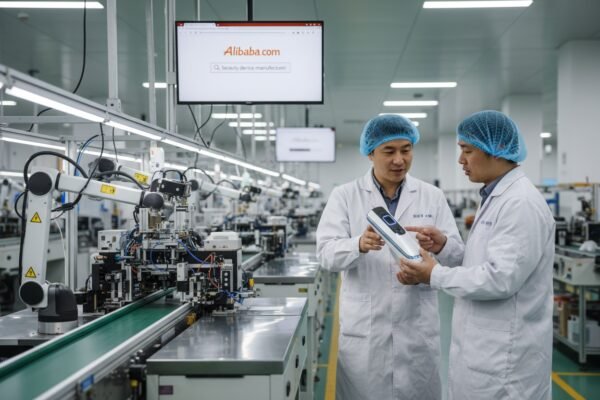
Most listings on Alibaba come from trading companies 2, not actual factories. These middlemen add a 15–30% markup before you even start negotiating. Even when you do find a real manufacturer on Alibaba, they list their highest defensible price. They assume most inquiries will go nowhere, so they price for maximum margin on one-off orders.
Our team in Shenzhen cuts through this layer. We visit industrial zones, attend local trade fairs, and maintain a database of verified factories. When a client needs beauty equipment or consumer electronics, we do not start on Alibaba. We start with the factories we already know and trust.
The Power of Multi-Supplier Benchmarking
One of the simplest but most effective things we do is request quotes from four to five factories for the same product. This gives us a price range. We can immediately spot which supplier is inflating costs and which one is offering a fair deal. The table below shows a real-world example of how benchmarking works.
| Supplier | Unit Price (1,000 pcs) | MOQ | Lead Time | Notes |
|---|---|---|---|---|
| Factory A | $5.80 | 1,000 | 25 days | Trading company markup |
| Factory B | $4.60 | 2,000 | 30 days | Direct manufacturer |
| Factory C | $4.20 | 3,000 | 28 days | Direct manufacturer, repeat partner |
| Factory D | $5.10 | 1,000 | 20 days | Small factory, flexible MOQ |
| Factory E | $4.40 | 2,000 | 25 days | New factory, eager for orders |
With this data, we know the fair market price sits between $4.20 and $4.60. Factory A is clearly a middleman. Factory C offers the best price because of our long-term relationship, but Factory E might match that price to win a new client. This kind of horizontal comparison is something a buyer sitting in Texas or Berlin simply cannot do efficiently.
Direct Access to Original Equipment Manufacturers
When we trace the supply chain vertically, we often find that the Alibaba supplier is two steps removed from the actual production line. By going direct to the OEM, we eliminate unnecessary fees. Original Equipment Manufacturers 3 We also gain the ability to discuss tooling, material substitutions, and production scheduling face-to-face. This transparency alone can save 10–20% compared to Alibaba quotes.
We also track raw material prices 4 in real time. If the cost of ABS plastic drops by 8% in a quarter, we pass that saving on to our clients. Most overseas buyers would never notice this shift. But our team monitors commodity indexes and uses that data as leverage in every negotiation.
What specific negotiation tactics will my agent use to reduce my manufacturing costs?
During hundreds of supplier negotiations our team has conducted over the years, we have refined a set of tactics that consistently deliver results. Price is just one variable in a much larger equation.
Your sourcing agent will use strategic anchoring, volume-tiered pricing, MOQ reduction requests, phased ordering commitments, payment term adjustments, and value engineering to reduce manufacturing costs. These tactics work together to lower your per-unit price while building a cooperative relationship with the supplier.

Strategic Anchoring
Anchoring means starting the negotiation with a specific, realistic but low offer. We never throw out an insultingly low number. That destroys trust. Instead, we use our benchmarking data to propose a price that is fair but below the supplier's opening ask. For example, if five factories quote between $4.20 and $5.80, we might open at $3.90 with a justification tied to our order volume and repeat business potential. The supplier counters, and we meet somewhere around $4.10–$4.30.
Volume Commitments and Phased Ordering
Suppliers love predictable demand. Volume Commitments 5 When we tell a factory, "My client will order 2,000 units now and 5,000 units per quarter for the next year," the factory sees long-term revenue. They are willing to drop their margin per unit because the total profit is higher. This tactic alone can reduce unit costs by 10–30%.
Phased ordering is especially useful for new products. We negotiate a smaller first batch at a slightly higher price, then lock in a significantly lower price for future orders. This reduces risk for the buyer and gives the supplier confidence in continued business.
| Tactic | Typical Savings | Best For |
|---|---|---|
| Strategic Anchoring 6 | 5–10% | All order sizes |
| Volume Commitment | 10–30% | Large or recurring orders |
| Phased Ordering | 5–15% on future batches | New product launches |
| MOQ Reduction | Higher unit price, lower total spend | Small brands, test orders |
| Payment Term Adjustment | 3–8% | Cash-rich buyers |
| Value Engineering 7 | 5–20% | Products with flexible specs |
MOQ Negotiation
Many Chinese factories set high minimum order quantities to justify their setup costs. Our agents negotiate MOQ reductions of 20–50% for test orders. Yes, the per-unit price might be 5–10% higher on a smaller batch. But this lets you test the market without committing $50,000 upfront. Once the product sells well, you scale up and unlock the volume discounts.
Payment Terms as a Negotiation Tool
Cash flow matters to Chinese factories. If you can pay 50% upfront instead of the standard 30%, many suppliers will lower their price by 3–8%. Conversely, if you need extended payment terms like net-60, expect to pay a premium. Our team helps clients choose the payment structure that maximizes savings based on their financial position.
Value Engineering
This is where our technical knowledge shines. We work with the factory's engineering team to suggest material substitutions or design tweaks that reduce production costs. For instance, switching from a stainless steel housing to a high-grade aluminum alloy might save $1.50 per unit without affecting performance. We have done this on dozens of consumer electronics projects where the client saved 12–18% just through smart material choices.
Cultural Negotiation: The Role of Guanxi
In China, business relationships run on guanxi 8 — personal trust built over time. Our team invests in these relationships year-round. We visit factories during holidays, attend supplier dinners, and maintain open communication even between orders. This relational capital pays off during negotiations. A supplier who trusts us is more likely to offer priority pricing, faster lead times, and flexible terms.
Some Western buyers dismiss guanxi as unnecessary. But in practice, it is one of the most powerful negotiation tools available. During peak production seasons, factories prioritize orders from agents they trust. That means our clients get their goods on time while competitors face delays.
How do I ensure my agent lowers the price without compromising my product quality?
From our years of managing production for overseas brands, we have seen what happens when price cuts go too far. A client saves $0.50 per unit, then faces a 15% defect rate that wipes out all those savings and damages their brand.
To ensure your agent lowers prices without sacrificing quality, establish clear product specifications upfront, require third-party inspections, set defect tolerance rates in contracts, demand material certifications, and use golden samples as quality benchmarks throughout production.

Define Specifications Before Negotiation Begins
The number one mistake buyers make is negotiating price before locking down specifications. If you tell a factory "make it cheaper" without defining what "good" looks like, they will find ways to cut costs that hurt your product. We always create a detailed product specification sheet before any price discussion begins. This includes material grades, dimensional tolerances, color standards, functional requirements, and packaging details.
The Golden Sample System
Before mass production, we require the factory to produce a golden sample 9 — a reference unit that represents the exact quality standard expected. This sample is approved by the client and kept at both our office and the factory. During production, our QC team compares random units against the golden sample. Any deviation triggers a stop and review.
Third-Party and In-House Inspections
Our Shenzhen team conducts inspections at three stages: during production, pre-shipment, and sometimes at the raw material stage. For clients who want extra assurance, we coordinate with third-party inspection firms like SGS or Bureau Veritas. This layered approach catches quality issues before they become expensive problems.
| Quality Control Stage | What We Check | When It Happens |
|---|---|---|
| Raw Material Inspection | Material certifications, grade verification | Before production starts |
| During Production (DUPRO) | Assembly quality, dimensions, functionality | At 20–40% production completion |
| Pre-Shipment Inspection (PSI) | AQL sampling, cosmetic checks, packaging | After production, before shipping |
| Golden Sample Comparison | Visual and functional match to approved sample | Throughout all stages |
Contractual Safeguards
We include specific clauses in every purchase order: defect tolerance rates (typically AQL 2.5 for major defects), material specifications, and penalties for non-compliance. If a factory delivers goods below standard, they are responsible for rework or replacement at their cost. These clauses are standard in our contracts and give suppliers a clear financial incentive to maintain quality.
Value Engineering Done Right
When we suggest material substitutions or design changes to lower costs, we always test the alternative first. We request samples with the new material, run functional tests, and only approve the change if it meets or exceeds the original specification. Cost reduction should never mean quality reduction. It means finding smarter ways to achieve the same result.
Our experience with consumer electronics and smart home products has taught us that buyers who invest in upfront quality control save far more in the long run. Returns, warranty claims, and brand damage cost ten times more than a proper inspection program.
Why does a local sourcing team have more leverage with Chinese suppliers than I do?
When our team walks into a factory in Dongguan or Yiwu, we speak the same language — literally and culturally. That changes everything about the power dynamic at the negotiation table.
A local sourcing team has more leverage because they communicate in Mandarin, understand Chinese business culture and pricing structures, conduct face-to-face factory audits, track real-time raw material costs, and maintain long-term supplier relationships that unlock preferential pricing and priority production slots.

Language and Cultural Fluency
Negotiation in China is not just about numbers. It is about how you present those numbers, when you push, and when you concede. Our team understands the unspoken rules. We know that losing face in front of a factory owner's team will kill a deal. We know that sharing a meal before discussing price is not wasted time — it is an investment. These cultural elements are invisible to most overseas buyers but critical to outcomes.
When you negotiate through email or a translator on Alibaba, nuance is lost. A phrase meant to express flexibility might come across as weakness. A direct demand for a lower price might be seen as disrespectful. Our local team navigates these subtleties naturally.
On-the-Ground Factory Audits
We do not rely on factory-provided photos or self-reported certifications. We visit. We walk production lines, check equipment conditions, review worker training records, and examine raw material storage. This physical presence gives us two advantages: first, we verify that the factory can actually produce what they promise. Second, the factory knows we are watching. Suppliers behave differently when they know a local team will show up unannounced.
Real-Time Cost Intelligence
Our team monitors raw material prices, labor cost trends, and logistics rates across China. When aluminum prices drop 12%, we know it before the factory passes that saving along (or tries not to). When labor costs in Guangdong rise due to new regulations, we factor that into our negotiation expectations. This data-driven approach means we never negotiate blind.
In 2026, we also use AI-driven benchmarking tools that analyze pricing patterns across thousands of transactions. These tools flag when a supplier's quote deviates significantly from market norms. Combining human relationships with data analytics gives us a negotiation edge that no overseas buyer can replicate alone.
Repeat Relationships and Preferred Client Status
We place orders with many of our factory partners every month. This volume and consistency makes us a preferred client. Preferred clients get first access to production capacity during busy seasons, faster sample turnaround, and — most importantly — better prices. A new buyer sending one inquiry through Alibaba will never receive the same treatment.
The ROI of Using a Local Agent
Some buyers worry that the agent's commission eats into their savings. Let's look at the numbers honestly.
| Scenario | Unit Price | Agent Fee (7%) | Net Cost Per Unit | Annual Cost (10,000 units) |
|---|---|---|---|---|
| DIY via Alibaba | $5.80 | $0.00 | $5.80 | $58,000 |
| With Sourcing Agent | $4.30 | $0.30 | $4.60 | $46,000 |
| Net Savings with Agent | — | — | $1.20/unit | $12,000/year |
Even after paying the agent's commission, the client saves $12,000 per year on a single product line. That does not include the value of avoided quality failures, faster lead times, and reduced communication headaches. For brands and distributors importing regularly, the ROI is clear.
The 2026 Landscape
Supply chain resilience 10 is now a top priority. Our team helps clients diversify across multiple factories and even across regions. We negotiate flexible MOQs so smaller brands can test new suppliers without overcommitting. We also integrate sustainability requirements into negotiations — securing eco-friendly material options or compliance certifications that open doors to European and North American markets.
The sourcing agent market itself is evolving. More agents now offer performance-based fee structures tied to actual savings achieved. This aligns the agent's incentives directly with the client's goals. At Go Source, we believe transparency in pricing and results is the foundation of a lasting partnership.
Conclusion
Getting better prices from Chinese suppliers is not about squeezing factories. It is about smart preparation, local expertise, and building relationships that reward both sides over time. A skilled sourcing agent turns all of these elements into real savings for your business.
Footnotes
- Defines the role and services of China sourcing agents. ↩︎
- Authoritative Wikipedia definition. ↩︎
- Provides a definition of Original Equipment Manufacturer (OEM). ↩︎
- Offers data and analysis on global commodity and raw material markets. ↩︎
- Defines volume commitments in business contracts and their benefits. ↩︎
- Explains the concept of anchoring bias in negotiation strategies. ↩︎
- Authoritative Wikipedia definition. ↩︎
- Authoritative Wikipedia definition. ↩︎
- Explains the role of a golden sample in manufacturing quality control. ↩︎
- Defines supply chain resilience and its importance in modern business. ↩︎