
Every week, our team in Shenzhen fields calls from overseas buyers who have been burned—late shipments, fake factories, defective goods 1 sitting in a warehouse thousands of miles from where they were made.
To find reliable China suppliers and manage your supply chain, work with a mid-to-senior-level sourcing agent who can verify factories, negotiate pricing, conduct quality inspections, and coordinate logistics end-to-end. A good agent acts as your eyes, ears, and hands on the ground in China, reducing fraud risk and keeping production on track.
But not all sourcing agents are created equal. Some just forward your emails to a factory. Others actually manage your entire supply chain. In this guide, we break down how to find the right suppliers, avoid costly mistakes, and use a sourcing agent to protect your business at every step.
How do I find a reliable China sourcing agent who truly understands my quality standards?
When we onboard a new client for consumer electronics or smart home products, the first thing we ask is: "What went wrong with your last supplier?" The answers are almost always the same—miscommunication, ignored specs, and zero accountability Pre-production inspection 2.
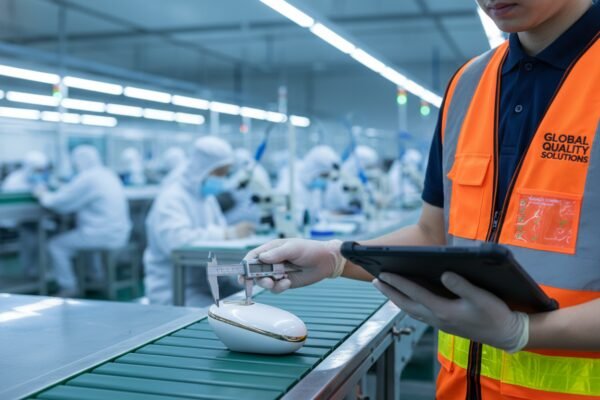
A reliable China sourcing agent should have direct factory access, fluent cross-cultural communication skills, a structured vetting process, and a clear quality control protocol tailored to your product category. Look for agents with verifiable audit records, transparent pricing, and references from buyers in your specific industry.
Why Most Buyers Struggle to Find the Right Agent
The sourcing agent market in China is fragmented. There are freelancers on Fiverr, trading companies pretending to be agents, and full-service agencies like ours with dedicated teams. The problem is that from the outside, they all look the same. A flashy website does not mean a capable team.
Here is the truth from our experience working with U.S. and European brands: supplier fraud 3 affects 20–30% of first-time China importers, with average losses between $50,000 and $300,000 per incident. That is not a small number for an SME founder who is betting on a product launch.
What to Look For in a Sourcing Agent
Start with these concrete checkpoints:
| Criteria | What It Means | Red Flag If Missing |
|---|---|---|
| On-site factory audit capability | Agent can physically visit and inspect factories | They only send you photos from Alibaba |
| Transparent fee structure | Clear percentage or flat fee, no hidden markups | Vague answers about how they get paid |
| Industry-specific experience | Track record in your product category | Claims to source "everything" |
| Cross-cultural communication | Fluent English, understands Western business norms | Slow replies, unclear emails |
| Quality control process | Defined pre-production, in-line, and pre-shipment inspections | No mention of QC at all |
| References or case studies | Verifiable clients you can contact | Refuses to share any past work |
How to Verify an Agent Before You Commit
Before signing any agreement, ask for a sample audit report. A professional agent will have templates showing how they score factories on production capacity, certifications, labor practices, and equipment condition. When we conduct audits for our clients, we check business licenses against China's National Enterprise Credit Information Publicity System 4. About 15–20% of entries show administrative penalties—often for tax evasion or fake registrations. This is something you cannot check from overseas without help.
Also, start small. Give the agent a trial project. Ask them to source quotes from three factories for a specific product. See how they communicate, how detailed their reports are, and how quickly they respond. This one small test will tell you more than any sales call.
The Agent Tier System
There are different levels of sourcing agents, and this is something most buyers do not realize. A junior agent is essentially an order follower—they place your order and track shipping. A mid-level agent negotiates, inspects, and manages timelines. A senior-level agent manages your entire supply chain, identifies risks before they become problems, and builds long-term supplier relationships on your behalf. Only mid-to-senior agents can truly "manage" a supply chain. Make sure you know which level you are hiring.
What is the best way to manage my production timeline and avoid shipping delays from China?
Our production management team tracks over a dozen active orders at any given time, and the number one complaint we hear from new clients is: "My last supplier promised 30 days and delivered in 75."
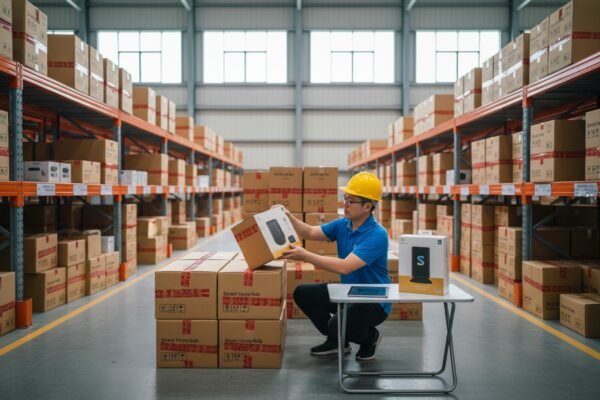
To manage your production timeline effectively, establish clear milestones with penalty clauses, require weekly photo and video updates, conduct in-line inspections at 30% and 70% completion, and use a sourcing agent who physically visits the factory to verify progress. Proactive monitoring prevents delays before they snowball.
Why Delays Happen So Often
Delays from Chinese factories are rarely random. They follow predictable patterns. The most common causes are:
- Overbooked production lines. Factories accept more orders than they can handle, especially during peak seasons like Q3 before holiday demand.
- Raw material shortages. The factory quoted you a timeline but had not secured materials yet.
- Unclear specifications. Ambiguous product requirements lead to rework, which pushes everything back.
- No real accountability. Without someone on the ground checking, factories prioritize their biggest clients first.
When we manage production for our clients, we build a timeline with hard checkpoints. We do not wait until the delivery date to find out there is a problem. We catch it early.
A Production Timeline Framework
Here is a simplified version of the framework we use:
| Phase | Action | Timeline | Who Checks |
|---|---|---|---|
| Pre-production | Confirm specs, approve samples, sign contract with milestones | Week 1–2 | Buyer + Agent |
| Material procurement | Verify raw materials are ordered and received | Week 2–3 | Agent (on-site) |
| Early production | In-line inspection 5 at 30% completion | Week 4 | Agent (factory visit) |
| Mid production | In-line inspection at 70% completion | Week 5–6 | Agent (factory visit) |
| Pre-shipment | Final QC inspection, defect rate check | Week 7 | Agent (on-site) |
| Shipping | Coordinate freight forwarder, confirm documents | Week 7–8 | Agent + Buyer |
The Power of Penalty Clauses
Many buyers skip this step. A well-written contract should include a late delivery penalty 6—typically 1–2% of the order value per week of delay, capped at a reasonable amount. This is standard in Chinese manufacturing contracts 7. It does not guarantee on-time delivery, but it shifts the financial risk and gives you leverage. Our team helps clients draft these clauses in both English and Chinese to ensure enforceability.
Communication Is the Real Fix
The deeper issue behind most delays is communication breakdown. Factory sales reps often say "no problem" even when there is a problem, because they do not want to lose the order. A sourcing agent who speaks both languages and understands both business cultures can cut through this. When we notice a factory going quiet—fewer updates, vague answers—we escalate immediately. Silence from a factory is almost always a bad sign.
We also recommend using shared project management tools or even simple spreadsheets where both sides update status weekly. Visibility kills delays.
Can a sourcing agent help me reduce my total procurement costs without sacrificing product stability?
We often hear from founders who tried to cut costs by going directly to the cheapest factory on Alibaba—only to end up paying double after quality failures, returns, and re-orders.
Yes, a skilled sourcing agent reduces total procurement costs by 10–25% through factory-direct pricing negotiations, consolidated shipping, alternative material recommendations, and defect prevention. The key is reducing hidden costs—rework, returns, delays, and lost customers—not just the unit price on a quote.
The True Cost of Cheap Sourcing
Unit price is only one part of your total cost. When we analyze a client's procurement spend, we look at the full picture:
- Factory gate price
- Quality failure rate and rework costs
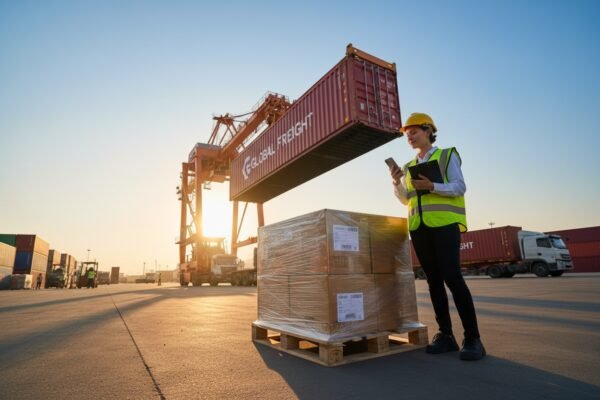
- Shipping and logistics fees
- Customs duties and tariffs
- Communication overhead (your time has a cost)
- Delay penalties and lost sales
A product that costs $2.00 per unit from Factory A might actually cost you $3.50 when you account for a 15% defect rate and a two-week shipping delay. Meanwhile, Factory B charges $2.30 per unit but delivers on time with a 2% defect rate. Your real cost from Factory B is lower.
How Agents Drive Down Costs
Here are the specific ways a sourcing agent saves you money:
| Cost-Saving Method | How It Works | Typical Savings |
|---|---|---|
| Factory-direct negotiation | Agent bypasses trading companies, goes to the actual manufacturer | 5–15% off unit price |
| Volume consolidation | Combining orders from multiple clients to hit MOQ thresholds | 3–8% off unit price |
| Alternative material sourcing | Suggesting equivalent but cheaper materials without quality loss | 5–10% on material costs |
| Defect prevention via QC | Catching issues before shipment avoids costly returns and rework | Saves $5,000–$50,000 per order |
| Logistics optimization | Choosing the right shipping method, consolidating containers | 10–20% on freight |
| Tariff planning | Advising on HS codes, free trade zones, and routing strategies | Varies by product |
The Cost of Not Using an Agent
Some experienced importers argue that agent fees—typically 5–15% of order value—are too high. They prefer to source directly. For large enterprises with their own China offices, this can work. But for SMEs without on-the-ground presence, the math tells a different story.
Consider this: sourcing agent usage has grown 25% year-over-year since 2022, and 60% of U.S. and EU importers now employ agents for China sourcing. This is not because businesses enjoy paying fees. It is because the total cost of managing quality, logistics, and communication without help almost always exceeds the agent's commission.
When DIY Sourcing Makes Sense
We are honest with our clients. If you are ordering low-risk, commoditized products with established specs and you have a trusted factory you have worked with for years, you may not need a full-service agent. But if you are launching a new product, entering a new category, or working with a factory for the first time, the risk of going alone is high. A $500 factory audit can save you $50,000 in bad inventory.
The smartest buyers we work with think about total cost of ownership 8, not just purchase price. That mindset shift is where real savings begin.
How do I ensure my sourcing partner provides the rigorous quality control my brand requires?
When we set up QC protocols for a new client's product line, the first question we ask is not "What AQL do you want?" It is "What would happen to your brand if a defective batch reached your customers?"
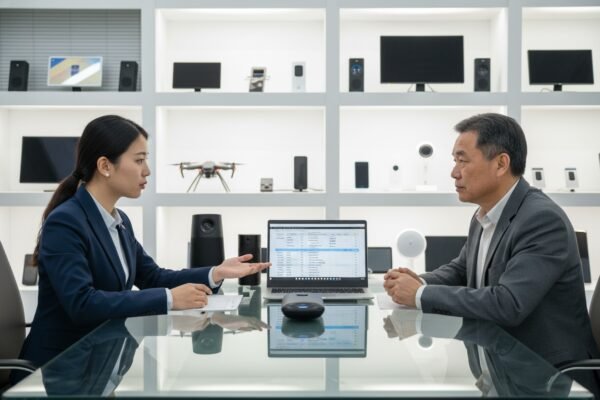
Ensure rigorous quality control by defining clear product specifications upfront, requiring AQL-based inspections at multiple production stages, mandating third-party or agent-led factory audits, and establishing a documented corrective action process. Your sourcing partner should provide photo and video evidence for every inspection and flag issues before shipment, not after.
Why Quality Control Fails
Most QC failures we see trace back to one root cause: vague specifications. If your product spec sheet does not define acceptable tolerances for dimensions, color, material composition, and packaging, the factory will interpret things their own way. And their interpretation will almost always favor speed and cost savings over precision.
The second biggest cause is inspecting too late. Many buyers only do a pre-shipment inspection. By that point, the entire batch is finished. If defects are systemic, your only options are to accept the goods, negotiate a discount, or reject the shipment and start over. None of those options are good.
A Multi-Stage QC Framework
Here is the QC framework we use for our clients:
Pre-production inspection. Before the factory begins, we verify that raw materials match the approved samples. We check material certificates, color swatches, and component specs. This catches problems at the cheapest point to fix them.
In-line inspection at 30% completion. We visit the factory floor and pull random units from the production line. We check dimensions, assembly quality, and functionality against the spec sheet. If something is off, the factory can correct it before 70% of the order is affected.
In-line inspection at 70% completion. A second check confirms that corrections from the first inspection were implemented and that quality remains consistent as production scales.
Pre-shipment inspection. This is the final gate. We use AQL (Acceptable Quality Level) sampling 9—typically AQL 2.5 for major defects and AQL 4.0 for minor defects. Every inspection comes with a detailed report including photos, measurements, and a pass/fail recommendation.
What a Good QC Report Looks Like
A professional QC report is not a one-page summary. It should include:
- Product description and order details
- Sample size and AQL level used
- Photos of defects found (close-up and in context)
- Measurements compared against spec tolerances
- Functional test results
- Packaging inspection
- Overall pass, fail, or conditional pass recommendation
When we deliver reports to our clients, we include a clear summary at the top so decision-makers can act quickly. The detailed data is below for anyone who wants to dig deeper.
Building a Culture of Accountability
Quality control is not just about inspections. It is about building a relationship with the factory where quality is expected, not negotiated. We do this by providing clear feedback after every inspection, rewarding factories that consistently perform well with repeat orders, and phasing out factories that do not improve after corrective action requests.
Over time, the best factories we work with internalize our clients' standards. They know what "good" looks like because we have shown them—repeatedly, with data. That is the difference between a transactional sourcing relationship and a true supply chain partnership.
Proactive IP protection 10 is also part of this picture. We advise clients to register patents and trademarks in China early, and we work with legal networks to enforce those rights when needed. Protecting your designs is protecting your quality.
Conclusion
Finding reliable China suppliers and managing your supply chain is not about luck. It is about systems, verification, and having the right partner on the ground. A skilled sourcing agent turns chaos into a controlled, repeatable process.
Footnotes
- Wikipedia provides a comprehensive and authoritative definition of product defect, which is relevant to the context of 'defective goods' in the article. ↩︎
- Defines and explains the importance of inspections before mass production begins. ↩︎
- Provides statistics and insights on the prevalence of supply chain fraud. ↩︎
- Government resource explaining China's official platform for company information. ↩︎
- Explains the process and benefits of quality checks conducted during manufacturing. ↩︎
- Government regulation outlining policies for liquidated damages in contracts. ↩︎
- Specialized legal guidance on drafting enforceable manufacturing agreements in China. ↩︎
- Professional organization's definition and importance of TCO in procurement. ↩︎
- Explains the international standard (ISO 2859-1) for AQL sampling in quality inspection. ↩︎
- Official definition and overview of intellectual property from the global authority. ↩︎