
Every year, our team sees European buyers lose thousands of euros at customs because their sourcing agent never verified compliance properly EMC Directive 2014/30/EU 1. The shipment gets held, the product gets flagged, and the brand takes the hit. It is a painful, expensive problem — and it is almost always preventable.
To ensure EU product compliance when using a China sourcing agent, you must verify that your agent actively validates CE marking, RoHS, REACH, and other applicable certifications by collecting original test reports, factory audit records, and Declarations of Conformity directly from accredited labs — not just from the factory's sales team.
This guide breaks down exactly what you need to check, what documents to demand, which lab tests matter, and how to protect your brand if something goes wrong. Let's walk through it step by step.
How can I verify that my sourcing agent is actually validating CE and RoHS certifications?
We have worked with dozens of European clients who came to us after a previous agent simply forwarded a PDF certificate without checking if it was real. That single oversight cost them weeks of customs delays and tens of thousands in lost revenue.
You can verify your agent's certification work by requesting original lab test report numbers, cross-checking them with the issuing laboratory's online database, and asking your agent to provide photographic evidence of the certification marks on both the product and its packaging before shipment.
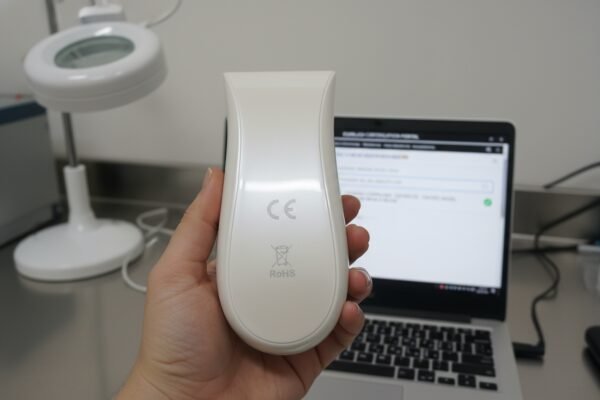
Why Forwarded Certificates Are Not Enough
A common trap in China sourcing is that many factories will hand over CE or RoHS certificates that look legitimate but are either expired, belong to a different product model, or were never issued by an accredited body. In our experience screening factories for European clients, we have seen certificates that list testing labs which do not even exist. Your sourcing agent must go beyond surface-level checks.
The first thing we do is request the full test report — not just the certificate summary page. A genuine CE test report will list the specific directive tested against (such as the Low Voltage Directive 2014/35/EU 2 or EMC Directive 2014/30/EU), the product model number, the date of testing, and the accredited lab's identification number. We then cross-reference the lab's accreditation status on the official IECEE CB Scheme website 3 or the national accreditation body's database.
Red Flags to Watch For
Here are specific warning signs that a certificate may not be valid:
| Red Flag | What It Means | What to Do |
|---|---|---|
| Certificate has no lab accreditation number | The testing body may not be recognized by EU authorities | Ask for accreditation proof or reject the report |
| Product model on certificate does not match yours | The test does not cover your specific product | Request testing for your exact SKU |
| Certificate is older than 3 years with no updates | Standards may have been revised since testing | Request re-testing against current directives |
| Only a "self-declaration" is provided for high-risk products | Some product categories require third-party testing | Confirm the conformity assessment route for your product category |
| Factory refuses to share the full test report | They may be hiding non-compliance or test failures | Treat this as a deal-breaker |
How to Hold Your Agent Accountable
You should build certification verification into your service contract with your sourcing agent. Specify that the agent must provide the full test report number, the name and accreditation ID of the testing lab, and photographic proof of CE and RoHS markings on the actual product — not a rendering or a sample image. Set a clause that states the agent must replace or refund if certifications are found to be fraudulent.
In our own workflow, we only shortlist factories that already hold valid EU certifications. If a factory has never exported to Europe, we will not recommend it for a European order. Some factories claim they can meet EU standards, but whether they actually can is often just a guess. That risk is far too high for our clients.
What specific compliance documents should I ask my agent to collect from the Chinese factory?
When our team onboards a new European client, the first question we always ask is: "What exactly are you importing, and which EU member states are you selling into?" The answer determines the exact documentation stack required — and it is more extensive than most buyers expect.
Your agent should collect the EU Declaration of Conformity (DoC), the full technical file, third-party test reports for CE/RoHS/REACH, material safety data sheets, product labeling proofs, user instructions in local EU languages, and packaging compliance documentation — all before the first shipment leaves China.
The Core Document Checklist
EU regulations require that importers — not manufacturers — bear primary legal responsibility for placing compliant products on the market. This means your sourcing agent is essentially your first line of defense. Here is a detailed breakdown of what documents should be in your file:
| Document | Purpose | Who Creates It | Retention Period |
|---|---|---|---|
| EU Declaration of Conformity (DoC) 4 | Legally declares the product meets all applicable EU directives | Manufacturer or Authorized Representative | 10 years after last product placed on market |
| Technical File / Technical Documentation | Contains design details, risk assessments, test results, and standards applied | Manufacturer | 10 years |
| Third-Party Test Reports (CE, RoHS, REACH) | Proves the product has been tested by an accredited lab | Accredited testing laboratory | 10 years |
| Material Safety Data Sheets (MSDS/SDS) | Details chemical composition for REACH compliance 5 | Manufacturer or chemical supplier | Duration of product life on market |
| Labeling and Marking Proofs | Shows CE mark, importer info, product traceability codes on product/packaging | Manufacturer, verified by importer | Ongoing |
| User Instructions in EU Languages | Required under General Product Safety Regulation (GPSR) 6 | Manufacturer, translated by importer or agent | Ongoing |
| Packaging Compliance Documentation (PPWR) | Declares packaging meets EU Packaging and Packaging Waste Regulation | Packaging producer or importer | 10 years |
New Documents for 2025–2026
The regulatory landscape is shifting fast. Starting in December 2024, the General Product Safety Regulation (GPSR) is in full force, requiring more detailed safety documentation for consumer products — especially those sold online. By mid-2026, the EU Digital Product Passport (DPP) 7 will begin rolling out for certain sectors like electronics and textiles, requiring digital traceability data embedded in or linked to each product.
The Packaging and Packaging Waste Regulation (PPWR) 8 core provisions apply from August 12, 2026. If your product ships in any packaging, your agent must collect a DoC from the packaging manufacturer. If the packaging comes from China, the EU importer must hold that DoC.
Do Not Rely on the Factory's Word Alone
One mistake we see repeatedly is buyers trusting a factory's verbal assurance that "all documents are ready." In reality, many Chinese factories do not fully understand what a DoC requires or what a complete technical file looks like. Your agent needs to physically review these documents, check for completeness, and flag anything missing before production begins — not after the container is loaded.
We always request document drafts during the sampling stage. This gives us time to correct errors and ensure the factory understands exactly what is needed. Waiting until mass production is finished is a recipe for delays and customs problems.
How do I ensure my sourcing agent performs the right lab tests to meet EU safety standards?
Our quality team has seen agents order the cheapest lab test available and call it "EU compliant." The problem is that a generic safety test for the domestic Chinese market is not the same as an EN-standard test accepted in the EU. The wrong test wastes your money and gives you a false sense of security.
Ensure your sourcing agent uses EU-accredited or ILAC-recognized laboratories, tests against the exact EN harmonized standards listed in the applicable EU directives for your product category, and provides you with the full lab report — including pass/fail results for every individual test parameter — before shipment.

Matching the Right Test to the Right Directive
EU compliance is not one test. It is a series of tests mapped to specific directives and harmonized standards. If your sourcing agent does not know which directive applies to your product, they cannot order the correct tests. Here is a simplified mapping for common consumer product categories:
| Product Category | Key EU Directive(s) | Core Harmonized Standards | Key Tests |
|---|---|---|---|
| Consumer Electronics | LVD 2014/35/EU, EMC 2014/30/EU, RoHS 2011/65/EU | EN 62368-1, EN 55032, EN 55035 | Electrical safety, EMC emissions, EMC immunity, RoHS substance limits |
| Toys | Toy Safety Directive 2009/48/EC | EN 71-1, EN 71-2, EN 71-3 | Mechanical/physical, flammability, migration of chemical elements |
| Smart Home Devices | RED 2014/53/EU, LVD, EMC, RoHS | EN 62368-1, EN 300 328, EN 301 489 | Radio frequency, safety, EMC, SAR (if applicable) |
| Beauty Equipment | LVD, EMC, RoHS, MDR (if medical) | EN 60335-2-23, EN 55014 | Electrical safety, EMC, material safety |
| Packaging (from 2026) | PPWR | TBD (EU developing standards) | Recyclability, heavy metals, material composition |
Choosing the Right Lab
Not all labs are equal. A test report from a non-accredited lab will not be accepted by EU customs or market surveillance authorities. Your agent should use labs accredited under ISO/IEC 17025 9, preferably recognized by ILAC (International Laboratory Accreditation Cooperation) or specifically notified bodies listed in the EU NANDO database.
In China, well-known accredited labs include SGS, TÜV, Bureau Veritas, and Intertek. There are also reputable Chinese domestic labs like CNAS-accredited facilities, but your agent must confirm that the specific test scope is covered under their accreditation.
Pre-Production vs. Pre-Shipment Testing
We recommend a two-stage testing approach. First, test the engineering sample or golden sample before mass production starts. This catches design-level issues early. Second, pull random samples from the finished production batch and run a shortened verification test. This confirms that the mass-produced units match the tested sample.
If your agent only tests after production is complete and the product fails, you face a terrible choice: rework the entire batch (costly and slow), ship and hope customs does not check (extremely risky, with a 48.6% non-compliance rate in recent EU inspections), or scrap the order entirely.
PFAS and REACH: The Chemical Tests Many Agents Miss
REACH compliance requires testing for substances of very high concern (SVHCs). The candidate list is updated twice a year. As of 2025, it includes over 200 substances. Your agent must ensure the factory tests against the current list, not an outdated one.
PFAS (per- and polyfluoroalkyl substances) restrictions are tightening, especially for food contact materials and packaging. If your product or its packaging touches food, your agent needs to request specific PFAS migration testing. Many agents are not yet aware of this requirement, so you need to ask proactively.
How can I protect my brand if my sourcing agent recommends a supplier that fails EU customs?
We once had a client come to us after their previous agent sourced electronic grooming tools from a factory that provided fake RoHS certificates. The entire shipment was detained at Hamburg port. The client lost the goods, the shipping cost, and three months of sales. Worse, their brand name was flagged in the EU RAPEX safety alert system.
Protect your brand by requiring your sourcing agent to sign a compliance accountability clause in your service agreement, securing product liability insurance that covers EU regulatory failures, appointing an EU Authorized Representative, and maintaining your own independent audit trail of all compliance documents separate from the agent's records.

Contractual Protection: Your First Shield
Your service agreement with your sourcing agent should include specific compliance obligations. Do not rely on vague language like "agent will ensure quality." Instead, include clauses that define:
- The agent's obligation to verify all EU compliance documents before shipment.
- Financial liability if the agent recommends a supplier whose products fail EU customs due to missing or fraudulent certifications.
- A requirement for the agent to carry professional liability insurance or provide a compliance guarantee bond.
- The agent's duty to disclose any known compliance risks before order placement.
Many agents will push back on liability clauses. That is actually a useful signal. An agent confident in their compliance process will accept reasonable accountability terms. An agent who refuses likely does not have a robust verification system.
Appoint an EU Authorized Representative
Under the GPSR and various EU product directives, if you are a non-EU manufacturer or importer without an EU presence, you must designate an EU Authorized Representative 10. This person or entity is your legal point of contact for EU market surveillance authorities. They must have access to your DoC and technical documentation, and they must be able to respond to authority requests.
If your sourcing agent does not mention this requirement, it is a warning sign that they may not fully understand the EU compliance landscape.
Build Your Own Compliance File
Never rely solely on your agent to hold your compliance documents. Maintain your own digital archive that includes:
- Every test report, with lab accreditation details
- Every DoC, signed and dated
- Factory audit reports and photographs
- Correspondence confirming compliance commitments
- Shipping and customs documentation
If a problem arises, you need to demonstrate due diligence to EU authorities. Having your own independent records shows that you took reasonable steps to ensure compliance — which can be the difference between a warning and a market ban.
Insurance and Financial Buffers
Product liability insurance that specifically covers regulatory non-compliance in the EU is essential. Standard product liability policies may not cover customs detentions or recalls triggered by regulatory failures. Work with an insurance broker who understands EU product law and ensure your policy explicitly covers:
- Customs detention costs (storage, re-export, or destruction fees)
- Product recall and notification costs
- Legal defense costs in EU member states
- Loss of profit from market removal
The 2026 Enforcement Reality
EU enforcement is getting stricter, not softer. Recent inspection data shows that 48.6% of inspected products were found non-compliant, leading to customs detentions and market removals. The GPSR has expanded the scope of market surveillance to cover online sales and digital products. Fulfillment service providers are now required to suspend services for products that fail compliance checks.
Starting in 2026, the PPWR, ESPR with Digital Product Passports, and tightened Ecodesign requirements for categories like iron, steel, and electronics will add new layers of enforcement. If your sourcing agent is not already preparing for these changes, you are behind.
We take a hard line on this: we only screen factories that already hold EU certification credentials. If a factory has no experience with European exports, we will not recommend it for our European clients. Some factories say they can meet EU standards, but whether they actually can is often just a guess — and that kind of guesswork creates unacceptable risk for our clients.
Conclusion
EU compliance is not optional, and it is not something you can outsource blindly to a sourcing agent. Verify certifications yourself, demand complete documentation, insist on accredited lab testing, and build contractual and financial safeguards to protect your brand at every step.
Footnotes
- Official text of the EU Electromagnetic Compatibility Directive. ↩︎
- Official text of the EU Low Voltage Directive. ↩︎
- Official website for the IECEE CB Scheme, detailing its operation. ↩︎
- Replaced HTTP 404 with an authoritative source from europa.eu covering the EU Declaration of Conformity. ↩︎
- Official European Commission page explaining the REACH Regulation. ↩︎
- Official text of the EU General Product Safety Regulation. ↩︎
- Official EU portal explaining the Digital Product Passport initiative. ↩︎
- Official text of the EU Packaging and Packaging Waste Regulation. ↩︎
- Wikipedia provides a comprehensive overview of the ISO/IEC 17025 standard for laboratories. ↩︎
- Explains the roles and requirements for an EU Authorized Representative. ↩︎