
Every year, our team at Go Source handles dozens of custom product projects for overseas brands. We've seen firsthand what happens when design files land in the wrong hands—knockoffs appear on Alibaba within weeks, and the original brand loses months of R&D investment overnight.
To protect product designs when sourcing from China, you need a layered strategy: register your IP in China first, use enforceable NNN agreements drafted in Mandarin, fragment production across multiple factories, and partner with a sourcing agent who conducts on-site audits and quality control at every stage.
This guide breaks down the exact steps you should take—and the questions you should ask your sourcing agent—before sharing any proprietary design with a Chinese factory. Let's walk through each critical layer of protection.
How can I ensure my sourcing agent uses enforceable NNN agreements to protect my proprietary designs?
When we onboard a new client with a custom product, one of the first questions we hear is about NDAs. The truth is, a standard Western NDA is almost useless in a Chinese court. We've learned this the hard way through years of navigating the Chinese supply chain 1.
Your sourcing agent should use a China-specific NNN (Non-Disclosure, Non-Use, Non-Circumvention) agreement, drafted in Mandarin by a qualified Chinese IP lawyer, with dispute resolution set in a Chinese jurisdiction. This is the only contract format Chinese courts consistently enforce.
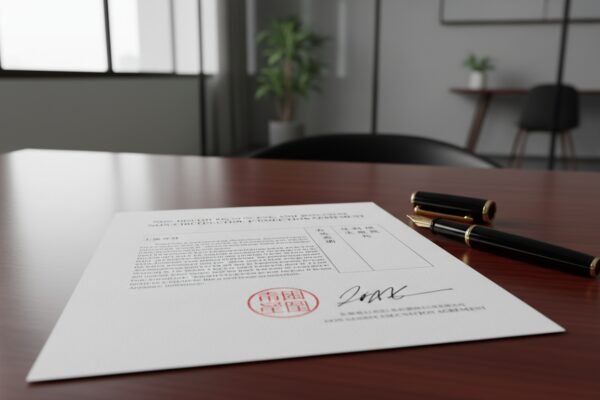
Why NDAs Fail in China
A typical NDA written in English under U.S. or EU law has almost no teeth in China. Chinese courts do not enforce foreign judgments easily. Even if you win a case in your home country, collecting damages from a Chinese factory is nearly impossible. The factory knows this. That is why they often sign your NDA without hesitation—it means nothing to them.
An NNN agreement is different. It is governed by Chinese law, written in Mandarin (the legally binding language in Chinese courts), and it addresses three specific risks:
- Non-Disclosure: The factory cannot share your designs with third parties.
- Non-Use: The factory cannot use your designs to manufacture products for itself or others.
- Non-Circumvention: The factory cannot bypass you to sell directly to your customers.
What to Ask Your Sourcing Agent
Before signing anything, ask your agent these questions:
| Question | Why It Matters |
|---|---|
| Is the NNN agreement drafted in Mandarin? | Chinese courts require Mandarin as the governing language for enforceability. |
| Does it specify a Chinese court or arbitration body (e.g., CIETAC) for disputes? | Foreign courts cannot enforce judgments against Chinese companies easily. |
| Does it include liquidated damages clauses 2? | Fixed penalty amounts deter violations because the factory knows the exact cost of breach. |
| Was it reviewed by a Chinese IP lawyer? | Only a lawyer licensed in China understands current enforcement nuances. |
| Does it cover subcontractors? | Factories often outsource parts of production. Your NNN must bind the entire chain. |
The Cost of Getting It Right
A properly drafted NNN agreement costs between $1,500 and $5,000 from a reputable Chinese IP law firm. That might seem steep for a small brand. But compare that to the cost of a competitor selling your exact product at half price six months after launch. We've seen clients lose entire product lines this way. The upfront legal investment pays for itself many times over.
A Personal Note on Signing NDAs
From my own experience managing sourcing projects, I want to be direct: signing an NDA is a must, but it is only the first layer. You also need patent protection 3 in your target market. If your budget allows, consider filing patents in other key markets—and even in China itself. Factories absolutely can and do take your design, produce it quietly, and sell it domestically or through back channels. It happens more often than most brands realize.
What steps should my agent take to prevent the factory from selling my private molds to competitors?
In our production management work, mold ownership is one of the most disputed issues we deal with. A client pays $15,000 for a custom injection mold, and two months later, a competing product with an identical shell shows up online. The factory used the same mold. It's infuriating—and preventable.
Your sourcing agent should secure a written mold ownership agreement, physically mark all molds with your company identifiers, negotiate mold storage terms, and conduct periodic factory visits to confirm your molds are not being used for unauthorized production runs.
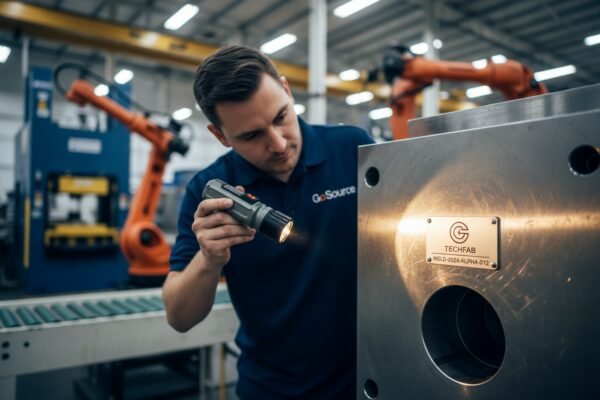
Mold Ownership Must Be in Writing
In China, possession often equals ownership in practice. If your mold sits in a factory without clear documentation, the factory may claim it as their asset—especially if a dispute arises. Your sourcing agent must ensure a separate mold ownership agreement 5 exists, written in Mandarin, clearly stating:
- You own the mold.
- The factory is the custodian, not the owner.
- The mold cannot be used for any order not authorized by you.
- You have the right to retrieve the mold at any time.
Physical Identification
Every mold should be engraved or stamped with your company name, logo, or a unique serial number. This creates a physical chain of evidence. If the mold ends up in another factory or is used without permission, identification marks make legal action far simpler.
The "Divide and Conquer" Strategy
One of the most effective tactics we use at Go Source is production fragmentation 6. Instead of having one factory produce your entire product, we split it across two or three suppliers. Factory A makes the housing. Factory B handles the electronics. Factory C does final assembly. No single factory has the complete product blueprint.
| Strategy | Protection Level | Trade-off |
|---|---|---|
| Single factory, full production | Low—factory sees everything | Simple logistics, faster turnaround |
| Two factories, split components | Medium—each sees only part | Moderate coordination effort |
| Three+ factories, full fragmentation | High—no factory can replicate the whole product | Higher logistics cost, longer lead time |
This approach reduces copycat risk by up to 80%, according to industry estimates. It requires more coordination from your sourcing agent, but that is exactly what a good agent is for.
Regular Mold Audits
Your agent should physically visit the factory at least once per quarter to verify mold condition and check production logs. We've caught unauthorized production runs during unannounced visits. If the factory knows someone is watching, they are far less likely to risk using your molds for side jobs.
What Happens If a Factory Refuses to Return Your Mold?
This is more common than you think. Some factories hold molds hostage to force continued orders. If your mold ownership agreement is in place and properly drafted, your agent can involve a Chinese lawyer to issue a formal demand. In most cases, factories comply once legal pressure is applied. Without that agreement, you have very little leverage.
How do I verify that a sourcing agent has the right systems in place to keep my product blueprints confidential?
When we share our internal QC workflows with prospective clients, one thing surprises them: information security 7 is just as important as product quality in our daily operations. A sourcing agent handles sensitive data every day—3D files, BOM lists, pricing structures. If those leak, the damage can be catastrophic.
Verify your sourcing agent's confidentiality systems by checking their internal data handling policies, staff NDA practices, secure file-sharing methods, and whether they limit design access on a need-to-know basis across their team and supplier network.
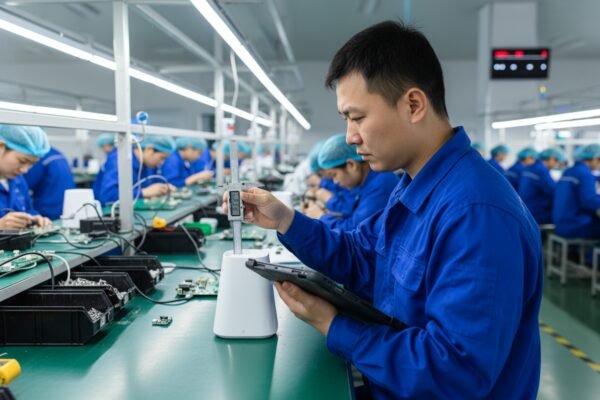
Internal Data Handling Policies
A professional sourcing agent should have documented procedures for how they store, share, and dispose of client design files. Ask for their data security policy in writing. If they don't have one, that's a red flag. At Go Source, we use encrypted cloud storage 8 with role-based access. Only team members directly working on your project can view your files.
Staff-Level NDAs
Every employee at your sourcing agent's company who touches your project should sign an internal NDA. This is non-negotiable. Staff turnover is common in China's sourcing industry. When someone leaves, you need assurance that your data leaves with the company's legal protections intact.
Secure Communication Channels
Avoid sharing full product blueprints over platforms like WeChat or generic email without encryption. Your agent should offer secure file transfer options. Some agents now use blockchain-based platforms or password-protected portals for design sharing, which create an audit trail.
| Confidentiality Check | What to Look For | Red Flag |
|---|---|---|
| Data storage | Encrypted cloud with access control | Files stored on personal devices or open drives |
| Staff NDAs | All project members sign individual NDAs | No internal confidentiality agreements |
| File sharing | Secure portals, password protection, or encrypted email | Full designs sent via WeChat groups |
| Need-to-know access | Only relevant team members see your files | Entire office has access to all client data |
| Supplier disclosure | Agent shares only what each factory needs | Full blueprints sent to every potential supplier |
Digital Watermarking
Consider asking your agent to add digital watermarks or unique identifiers to design files before sharing them with any factory. If a leak occurs, you can trace the source. This is a growing practice among brands that invest heavily in industrial design.
The Trust Factor
Systems matter, but so does trust. Visit your sourcing agent's office if possible. Meet the team. Understand their culture around confidentiality. In our experience, agents with a strong international team—people who understand both Chinese business norms and Western IP expectations—are far more reliable on this front. A good agent treats your design like their own competitive advantage, because in a way, it is. If your product succeeds, so does the agent's reputation.
On-Site Engineers
Some agents, including our team, place engineers or QC staff directly at the factory during production. These on-site representatives serve a dual purpose: they ensure product quality and they monitor for unauthorized activities like extra production runs or design file sharing. It's an added cost, but for high-value or highly original products, it's a worthwhile investment.
Should I rely on my sourcing agent to help me register my intellectual property rights within China?
In many of our client projects, especially for consumer electronics and smart home products, we encounter a recurring problem: the brand owner has patents in the U.S. or EU but nothing registered in China. They assume their foreign IP offers some protection. It does not—at least not within China.
Your sourcing agent can and should assist with coordinating Chinese IP registration, including trademarks, design patents, and utility patents through CNIPA. However, the actual filing must be handled by a licensed Chinese IP attorney—your agent's role is to facilitate, not replace legal counsel.

China's "First-to-File" System
China operates on a first-to-file basis 9. This means whoever registers a trademark or patent first owns it—regardless of who invented or used it first. We've seen cases where a factory registers a client's brand name in China before the client does. Once that happens, the factory legally owns the name in China and can block you from selling your own products there—or even manufacturing them.
What Your Agent Should Help With
A good sourcing agent bridges the gap between you and the Chinese legal system. Here's what that looks like in practice:
- Recommending reputable Chinese IP lawyers. Your agent should have vetted legal contacts.
- Coordinating translations. Patent and trademark filings require precise Mandarin translations.
- Monitoring for infringement. Agents with factory-level relationships can spot copycat products early.
- Recording IP with Chinese Customs (GACC). This allows customs officers to seize counterfeit exports. In 2023, GACC seized over 45 million counterfeit items. Firms with registered IP reported 70% higher interception rates.
Types of IP Registration in China
| IP Type | Covers | Timeline | Cost Estimate |
|---|---|---|---|
| Trademark (CNIPA 10) | Brand name, logo | 9–12 months | $500–$2,000 |
| Design Patent | Product appearance, shape | 6–8 months | $1,000–$3,000 |
| Utility Model Patent | Functional innovation | 6–10 months | $1,500–$4,000 |
| Invention Patent | Core technology | 18–24 months | $3,000–$8,000 |
| Copyright | Software, artistic works | 1–3 months | $300–$1,000 |
Should the Agent Handle This Alone?
No. Your sourcing agent is not a law firm. They should facilitate and coordinate, but the actual filing must go through a licensed Chinese patent attorney. Be wary of any agent who claims they can "handle everything" without involving legal professionals. That said, a great agent adds enormous value by knowing which lawyers deliver results and by managing the process so you don't have to navigate Chinese bureaucracy alone.
The Bottom Line on IP in China
If you're spending money on custom product development in China, budget for Chinese IP registration. Trademark filings are affordable and essential. Design patents protect your product's appearance. And recording your IP with customs gives you an active enforcement tool. In 2024, foreign filings at CNIPA reached 1.5 million—up 15% year-over-year. Smart brands are investing in this layer of protection because enforcement in China has genuinely improved.
From personal experience, I strongly recommend this: if your budget allows, register patents not only in your home market but also in China. The risk of a factory producing your design and quietly selling it domestically is real. It happens. And without Chinese IP rights, you have almost no recourse.
Conclusion
Protecting your product designs when sourcing from China requires legal agreements, smart production strategies, and a trusted sourcing agent who implements all of these layers on your behalf every single day.
Footnotes
- Provides an overview of the Chinese supply chain, its complexities and challenges. ↩︎
- Defines liquidated damages clauses and their role in contract enforcement. ↩︎
- Provides an overview of patent protection and its benefits from WIPO. ↩︎
- Explains the purpose and enforceability of NNN agreements in China for IP protection. ↩︎
- Details the importance and key provisions of mold ownership agreements in China manufacturing. ↩︎
- Explains the strategy of production fragmentation to mitigate risks in manufacturing. ↩︎
- Provides best practices for businesses to maintain information security and protect sensitive data. ↩︎
- Explains the benefits and features of encrypted cloud storage for data protection. ↩︎
- Explains China's first-to-file IP system and its critical implications for innovators. ↩︎
- Identifies CNIPA as the official body for intellectual property administration in China. ↩︎