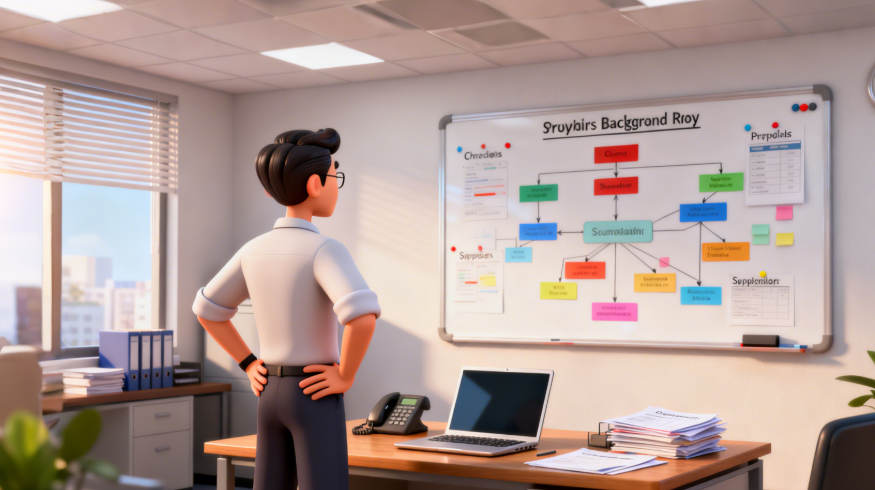
When I started sourcing products from China, I constantly feared dealing with fraudulent factories or unreliable suppliers. I needed a way to separate the good from the risky — fast.
China sourcing agents handle supplier background checks by verifying business licenses in national databases, assessing financial and legal compliance, visiting factories, and checking certifications and past performance. This ensures reliable supply chains.
A good supplier background check is not just a checkbox. It’s the backbone of risk management. In the sections below, I’ll explain what I do as a sourcing agent to investigate and verify every supplier — before the first dollar changes hands. Let's go sourcing in China!
What government platforms do I use to check supplier credibility?
When I first tried verifying Chinese suppliers, I was overwhelmed by the amount of inconsistent data online. Most websites looked polished, but I needed hard facts, not polished sales pages.
To check supplier credibility in China, sourcing agents rely on government-run platforms like the National Enterprise Credit Information Publicity System and CNCA for license and certification verification.
Start with National-Level Databases
The National Enterprise Credit Information Publicity System (www.gsxt.gov.cn) is the go-to source. It is the official registry where every legally operating business in China is recorded. Here, I check if a company is currently “active,” who its legal representative is, its capital, and when it was established.
In addition to the business license, I also use:
- CNCA (www.cnca.gov.cn) to verify if the ISO or other certification is legitimate and still valid.
- China Judgments Online and the Execution Information Disclosure Platform to look for any past lawsuits or enforcement actions.
These tools are all open and free. But they’re in Chinese, so I either use them myself (since I read Chinese) or translate the critical parts for clients.
Supplement with Third-Party Platforms
To get a fuller picture, I check Qichacha (qcc.com) and Tianyancha (tianyancha.com). These are not government platforms, but they aggregate public data from various authorities and include:
- Intellectual property registrations
- Court and legal records
- News mentions
- Ownership changes
- Industry affiliation
I always cross-verify data between platforms to catch inconsistencies. If the supplier’s name, registration address, or legal rep differs across sources, that’s a red flag. Let's go sourcing in China!
Can I access legal or financial records of a Chinese factory?
I’ve had clients ask me, “Can you tell if this factory is in debt or had any lawsuits?” The short answer: yes, to an extent — but you have to know where to look and what to ask for.
You can access legal and financial records of a Chinese factory using public data, financial reports shared by suppliers, and third-party credit reports from agencies like Dun & Bradstreet.
Legal Records Are Public — But Fragmented
Court rulings in China are published online at China Judgments Online (wenshu.court.gov.cn). This includes civil disputes, labor lawsuits, and commercial litigation. Another useful tool is the China Enforcement Information Online system, where you can see if a supplier is on the “dishonest entity” list — similar to a blacklist.
Being on this list could mean the factory has unpaid debts, violated court orders, or is involved in fraud.
Accessing Financial Records Requires Supplier Cooperation
Privately held Chinese factories don’t publish financial reports the way public companies do. So, I ask for:
- Past 2–3 years of financial statements
- Bank credit references
- Tax filings or VAT invoices
If a supplier hesitates or refuses, that’s usually a sign something is off.
Use Third-Party Credit Reports
When sourcing for higher-risk or high-volume projects, I also order credit reports from agencies like:
- Dun & Bradstreet (D&B)
- Sinosure
- Huarong Credit
These reports reveal payment history, credit limits, export history, and risk ratings. While these services cost money, they can prevent costly mistakes.
How do I verify past performance and client reviews?
Once, I had a supplier who looked great on paper. But when I asked about previous customers, the conversation changed. That made me dig deeper — and saved my client from a poor deal.
To verify past performance, sourcing agents request client references, inspect B2B platform reviews, and assess export history to evaluate a supplier’s reliability and track record.
Ask for Real Client References
One of the most direct ways to verify a supplier’s claims is to ask for past or current client references. I always request at least two references, ideally from companies in the same country or industry as my client.
Then, I contact these companies to ask:
- Were they satisfied with the product quality?
- Were deadlines met?
- How was after-sales support?
If the supplier hesitates to provide contacts, that’s usually a red flag. Let's go sourcing in China!
Use B2B Platform Feedback
Platforms like Alibaba, Made-in-China, and Globalsources include star ratings and feedback from past buyers. But I don’t take these at face value. I look for patterns — do multiple people mention similar issues like late delivery or poor quality?
Export History Analysis
Another trick is to examine customs and shipping data. Tools like Import Genius or Panjiva can show if a supplier has exported similar goods to your country before.
If they’ve been supplying similar products to the U.S. or Europe, that usually means they’re familiar with safety and regulatory standards. It’s also a good indicator of OEM China sourcing capability.
What red flags should I watch for in background checks?
Sometimes, it’s not what the supplier says — but what they don’t say. Over the years, I’ve spotted patterns that usually lead to problems down the road.
Common red flags in background checks include inconsistent registration data, refusal to share documents, overly aggressive payment terms, and a lack of production capability proof.
Inconsistent or Missing Legal Info
Always cross-verify the supplier’s business license with the name on the invoice and company stamp. If names don’t match, it could mean they’re using a shell company.
I also watch out for:
- Frequent ownership changes
- Short operating history (less than 1–2 years)
- Registered capital under RMB 500,000 (too low for factories)
Refusal to Share Documents or Factory Photos
If a supplier avoids sharing basic paperwork like ISO certificates or factory photos, that’s a red flag. Legitimate manufacturers are usually happy to show off their capabilities.
In China product sourcing, transparency is often a signal of professionalism.
Payment Red Flags
I avoid suppliers who:
- Ask for 100% payment upfront
- Demand full payment before production
- Refuse Alibaba Trade Assurance or similar escrow options
Good suppliers usually accept 30/70 terms or Letter of Credit (LC) for large orders.
Operational Red Flags
I also pay attention to:
- Office address located in residential buildings
- Phone numbers that don’t match region code
- No Chinese-language website (for local legitimacy)
And finally, if everything seems too perfect — no negative reviews, no legal cases, no delays ever — it’s probably too good to be true.
A supplier background check isn’t a formality. It’s the foundation of trust. I never skip it, because a missed detail today could cost thousands tomorrow. Let's go sourcing in China!