
Every week, our team in Shenzhen reviews procurement quotes from dozens of Chinese factories. Request for quotation 1 And every week, we catch costs that were never supposed to be visible to the buyer. The problem is real: hidden fees 2 in Chinese factory quotes silently destroy profit margins, and most importers don't even know they're paying them until it's far too late.
Professional China sourcing agents avoid hidden costs by demanding full factory quote disclosure, auditing invoices against actual production expenses, rejecting supplier kickbacks through contractual clauses, and providing buyers with transparent, itemized breakdowns of every procurement expense from unit price to landed cost.
In this guide, I'll walk you through exactly where these hidden costs hide, how a skilled sourcing agent catches them, and what you can do right now to protect your bottom line. Let's break it down section by section.
When we help clients compare quotes from three or four factories, the differences are rarely just about price. The real gap is in what each quote leaves out. That silence is where hidden fees live.
The most common hidden fees in Chinese factory quotes include undisclosed supplier kickbacks of 10–30%, exchange rate manipulation of 2–3%, mold and tooling surcharges, packaging upgrades, quality control rework costs of 5–15%, and post-quote add-ons for shipping, handling, and documentation that can inflate your total landed cost by 24% or more.
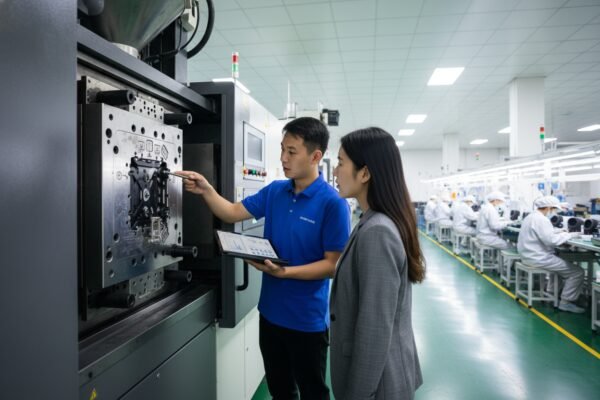
The "Too Good to Be True" Unit Price
Here's a pattern we see constantly. A factory sends a quote with a unit price 3 that looks unbeatable. The buyer gets excited. But that quote only covers raw material and basic assembly. It doesn't include packaging, labeling, inner cartons, export palletizing, or even the cost of the mold. Each of these shows up later as a separate invoice.
In our experience coordinating production for consumer electronics buyers in the U.S. and Europe, the initial factory quote often represents only 40–60% of the true landed cost. The rest appears gradually, almost invisibly.
Where the Fees Actually Hide
Let me lay out the most common hidden cost categories we encounter:
| Hidden Fee Type | Typical Range | How It Appears |
|---|---|---|
| Supplier kickbacks to agents 4 | 10–30% on unit price | Inflated unit cost; never disclosed |
| Exchange rate manipulation | 2–3% skim | Agent or supplier pockets the difference |
| Mold/tooling surcharges | $500–$5,000+ | Billed separately after order confirmation |
| Packaging & labeling upgrades | 5–10% of unit cost | Added as "optional" then made mandatory |
| QC rework and scrap | 5–15% of order value | Charged after production failures |
| Shipping & handling add-ons | Varies widely | Port fees, demurrage, documentation |
| Payment processing fees | 1–3% per transaction | Bank wire or PayPal surcharges |
A Real-World Example
Imagine you place a $10,000 order through an agent who claims "zero commission." The factory's real price is $9 per unit. But the agent has a private deal: the factory invoices $10 per unit, and the extra $1 goes back to the agent. That's a hidden $1,000 markup. You never see the original factory quote. You never know the difference.
This is why I always tell clients: ask your agent if you can visit the factory. Ask if you can contact the supplier directly. If the agent hesitates, something is wrong. If the agent says yes without flinching, that's a sign of honesty and transparency.
The 24% Rule
Industry data suggests that for accurate budgeting, you should add approximately 24% on top of any initial Chinese factory quote. This covers logistics, quality control 5, administrative costs, tariffs, and unforeseen delays. If your sourcing agent isn't helping you calculate this total landed cost 6 upfront, you're flying blind.
How does my sourcing agent identify and eliminate undisclosed markups in the production process?
Our procurement team runs side-by-side comparisons on every project. We request the factory's internal cost sheet 7, cross-check it against raw material market rates, and flag anything that doesn't add up. This process catches markups that most buyers would never see.
A skilled sourcing agent identifies undisclosed markups by obtaining original factory quotes, cross-referencing material costs against market benchmarks, auditing invoices at every production milestone, inserting anti-kickback clauses into contracts, and maintaining direct communication channels between the buyer and the supplier.

Step 1: Demanding Factory Quote Transparency
The first thing a professional agent does is request the factory's direct quote — not a filtered version. This quote should show the raw material cost, labor, overhead, packaging, and profit margin as separate line items. If a factory only provides a lump-sum number, that's a red flag.
At Go Source, we make it standard practice to share the factory's original quotation with our clients. You see exactly what the factory charges. Our commission is listed separately. There's no room for hidden markups because everything is visible.
Step 2: Market Price Benchmarking
Good agents know the going rate for common materials. If a factory quotes $3.50/kg for ABS plastic when the market rate is $2.80/kg, that's a markup. Our team tracks commodity prices weekly. We flag discrepancies and negotiate them down before the order is placed.
Step 3: Invoice Auditing
During production, invoices for materials, components, and subcontracted processes should match the original quote. We audit these at key milestones — after sampling, after pilot production, and before final shipment. Any unexplained cost increase gets challenged immediately.
Step 4: Anti-Kickback Contract Clauses
This is non-negotiable for us. Every contract we sign with a factory includes a clause that explicitly prohibits kickbacks, rebates, or commissions paid to any third party without the buyer's written consent. Violation means contract termination. This single clause eliminates the most common form of hidden markup in Chinese procurement.
| Agent Strategy | Purpose | Buyer Benefit |
|---|---|---|
| Original factory quote sharing | Eliminates price inflation | Full visibility of true costs |
| Material cost benchmarking | Catches above-market pricing | Lower unit costs |
| Milestone invoice audits | Prevents mid-production add-ons | Budget accuracy |
| Anti-kickback contract clause | Blocks secret commissions | Honest pricing |
| Direct buyer-supplier communication | Removes information asymmetry | Trust and verification |
The "Zero-Cost Agent" Trap
Some agents advertise that their services are free. No commission. No fees. This should immediately raise questions. If the agent isn't charging you, they're charging someone — and that someone is usually the factory, which means you're paying for it through an inflated unit price.
Data from the sourcing industry shows that "zero-cost" agents typically embed 10–30% hidden commissions inside the factory price. A transparent agent who charges 5–10% commission or a flat fee of $500–$1,000 per project will almost always save you more money in the long run.
Commission vs. Flat Fee vs. Zero-Cost Models
| Fee Model | Typical Cost | Risk Level | Transparency |
|---|---|---|---|
| Commission-based | 5–10% of order value | Low–Medium | High if disclosed |
| Flat fee per project | $500–$1,000 | Low | Very high |
| Monthly retainer | $300–$1,000/month | Low | High |
| Zero-cost / "free" | $0 visible | Very high | Very low |
| Hybrid (flat + commission) | Varies | Low | Highest |
The hybrid model — a small flat fee plus a transparent commission — tends to align incentives best. The agent earns more when they find you better deals, and the flat fee ensures they're accountable even on small orders.
Can a professional agent help me avoid the surprise logistics and handling costs that eat into my margins?
When we ship consumer electronics from our warehouse in Shenzhen to buyers in the United States, the logistics chain has at least a dozen points where unexpected charges can appear. Most first-time importers only budget for the freight quote. They forget about everything else.
Yes, a professional sourcing agent prevents surprise logistics costs by pre-calculating full landed costs — including freight, customs duties, port handling, warehousing, demurrage, insurance, and documentation fees — and by negotiating consolidated shipping rates and scheduling shipments during off-peak seasons to reduce overall expenses.

The Iceberg Below the Freight Quote
Your freight forwarder gives you a number. Let's say it's $2,500 for a 20-foot container from Shenzhen to Los Angeles. That sounds straightforward. But here's what that quote might not include:
- Origin charges: Pickup from factory, loading, container stuffing, export customs clearance.
- Documentation fees: Bill of lading, certificate of origin, phytosanitary certificates.
- Destination charges: Port handling, chassis fees, container drayage to your warehouse.
- Customs duties and tariffs: These vary by product and can add 5–25% or more.
- Demurrage and detention: If you're late picking up the container, you pay daily fees.
- Insurance: Often excluded from basic freight quotes.
- Warehousing: If goods arrive before you're ready, storage fees accumulate fast.
How a Good Agent Manages This
A professional sourcing agent doesn't just find you a factory. They coordinate the entire supply chain from production floor to your warehouse door. Here's what that looks like in practice:
First, we calculate the total landed cost before you commit to the order. This means adding freight, duties, insurance, handling, and a buffer for delays. We use the 24% adder rule as a baseline and adjust based on the specific product and trade route.
Second, we consolidate shipments. If you're ordering from multiple factories, we bring everything to our Shenzhen warehouse, inspect it, repack if needed, and ship it together. This cuts per-unit shipping costs dramatically.
Third, we time shipments strategically. Shipping rates fluctuate seasonally. Rates from China spike in August through October. We advise clients to place orders early and ship during low-season windows when possible. Some clients take advantage of our free 3-month warehousing to buy during low season and ship when rates drop.
Tariff Awareness in 2025–2026
With evolving U.S.–China tariffs, duty costs are no longer stable. A product classified under one HTS code 8 might face a 7.5% duty, while a slightly different classification could trigger 25%. We work with licensed customs brokers 9 to ensure correct classification before shipment — not after, when reclassification penalties can be severe.
For clients like Youssef, who sources high-quality electronic tools from China while shifting low-cost consumables to Southeast Asia, this tariff awareness is critical. We help map which products still make sense to source from China and which should be diversified.
The Real Cost of "Cheap" Shipping
I've seen buyers choose the cheapest freight forwarder and end up paying double. The forwarder missed a document. The container sat at port for two weeks. Demurrage charges alone exceeded the original freight cost. A professional agent prevents this by managing documentation proactively and maintaining relationships with reliable logistics partners.
How do I ensure my sourcing partner is providing a fully transparent breakdown of all my procurement expenses?
Over the years, we've developed a simple transparency test that our clients can use with any sourcing agent — including us. It starts with one direct question and builds from there. The goal is to leave no room for hidden numbers.
To ensure full transparency, demand itemized cost breakdowns separating factory price, agent commission, logistics, duties, and QC fees. Request direct factory contact, insist on original supplier quotes, require anti-kickback contract clauses, and compare quotes from at least three agents before committing to any procurement partnership.
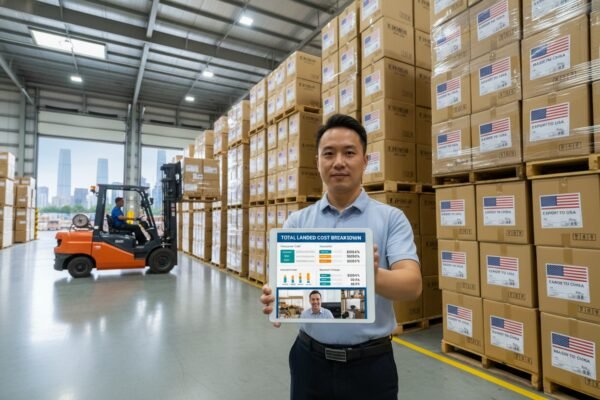
The One Question That Reveals Everything
Here's my personal insight, and I share this freely with every prospective client: ask your sourcing agent two simple questions. "Can I visit the factory?" and "Can I contact the supplier directly?"
If the agent hesitates, deflects, or makes excuses — there's something they don't want you to see. Maybe they've inflated the price. Maybe the "factory" is actually a trading company. Maybe they're receiving kickbacks.
If the agent says yes without hesitation, that's a strong signal of honesty. At Go Source, we encourage factory visits. We facilitate direct communication between buyers and suppliers. We have nothing to hide because our commission is stated upfront and our value comes from managing the process, not from secret margins.
Building a Transparency Framework
Transparency isn't just about trust. It's a system. Here's how to build one:
1. Require itemized quotes. Every quote should break down: raw materials, labor, overhead, packaging, tooling, agent commission, shipping estimate, and duty estimate. If a line item is missing, ask why.
2. Cross-reference with market data. Use platforms like Alibaba, Made-in-China, or Global Sources to get ballpark pricing from multiple suppliers. If your agent's quote is 20% higher than the market average, demand an explanation.
3. Insist on original factory documentation. Ask for the factory's proforma invoice 10, not just the agent's summary. The proforma should come directly from the factory with their letterhead.
4. Write transparency into the contract. Include clauses that require full disclosure of all supplier payments, prohibit undisclosed commissions, and grant you the right to audit invoices.
5. Compare three agents minimum. Never commit to the first agent you talk to. Get proposals from at least three. Compare not just price, but the level of detail in their quotes. The most transparent agent usually provides the most detailed breakdown.
Technology Is Changing the Game
In 2025–2026, technology is making hidden costs harder to sustain. AI-powered audit tools can scan invoices and flag anomalies in seconds. Blockchain-based payment systems create immutable records of every transaction in the supply chain, making unauthorized cost additions visible to all parties.
Some forward-thinking agents now offer real-time dashboards where buyers can track every dollar spent — from factory payment to shipping invoice to customs clearance. This level of visibility was unimaginable five years ago. It's becoming the standard for professional sourcing partnerships.
Your Transparency Checklist
Use this checklist before signing with any China sourcing agent:
- Agent discloses their fee structure in writing (commission %, flat fee, or hybrid).
- Agent provides original factory quotes with supplier name and contact info.
- Contract includes anti-kickback and full-disclosure clauses.
- Agent welcomes factory visits and direct buyer-supplier communication.
- Itemized cost breakdown includes unit price, tooling, packaging, QC, logistics, duties, and agent fees.
- Agent provides a total landed cost estimate, not just a unit price.
- Agent offers invoice audit access at production milestones.
- You've compared proposals from at least three agents.
Template Contract Clause for Transparency
Here's a clause you can adapt for your own agreements:
"The Agent shall disclose to the Buyer all quotations received from suppliers, including original factory pricing, and shall not receive any commission, rebate, kickback, or financial benefit from any supplier without the Buyer's prior written consent. The Buyer reserves the right to audit all invoices, payment records, and supplier communications related to this procurement project."
This single paragraph, added to your sourcing agreement, eliminates most of the structural incentives for hidden costs.
Conclusion
Hidden costs in China procurement are real, but they are entirely avoidable. Work with a sourcing agent who welcomes your questions, shares original factory quotes, and puts transparency into the contract.
Footnotes
- Replaced HTTP 404 with an authoritative Wikipedia definition of 'Request for quotation', which is synonymous with 'procurement quotes'. ↩︎
- Explains why businesses use hidden fees and their impact. ↩︎
- Replaced HTTP 403 with an authoritative Wikipedia definition of 'unit price'. ↩︎
- Explains kickback schemes in procurement and their negative impact. ↩︎
- Details the process and importance of quality control in manufacturing. ↩︎
- Defines total landed cost and its importance in supply chain. ↩︎
- Describes the components and purpose of a manufacturing cost sheet. ↩︎
- Defines HTS codes and their use in customs duties calculation. ↩︎
- Explains the role of customs brokers in international shipping compliance. ↩︎
- Explains what a proforma invoice is and its purpose. ↩︎